

Shonen TCG · Guides
One Piece TCG Life Cards: Face-Down, Damage and Triggers
Getting hit hands you a card. That one rule decides when you block and when you just take it.
Our callYour Life is a face-down stack of cards, not a counter: each hit adds the top one to your hand, and you only lose when you take damage with none left.
One Piece TCG life cards are a face-down stack from the top of your deck, as many as your Leader's Life value. Each hit on your Leader puts the top one into your hand, and you lose only when your Leader takes damage with no Life cards left. So a hit costs you a point of Life and pays you a card, and that trade is what you're weighing every time you decide whether to block.
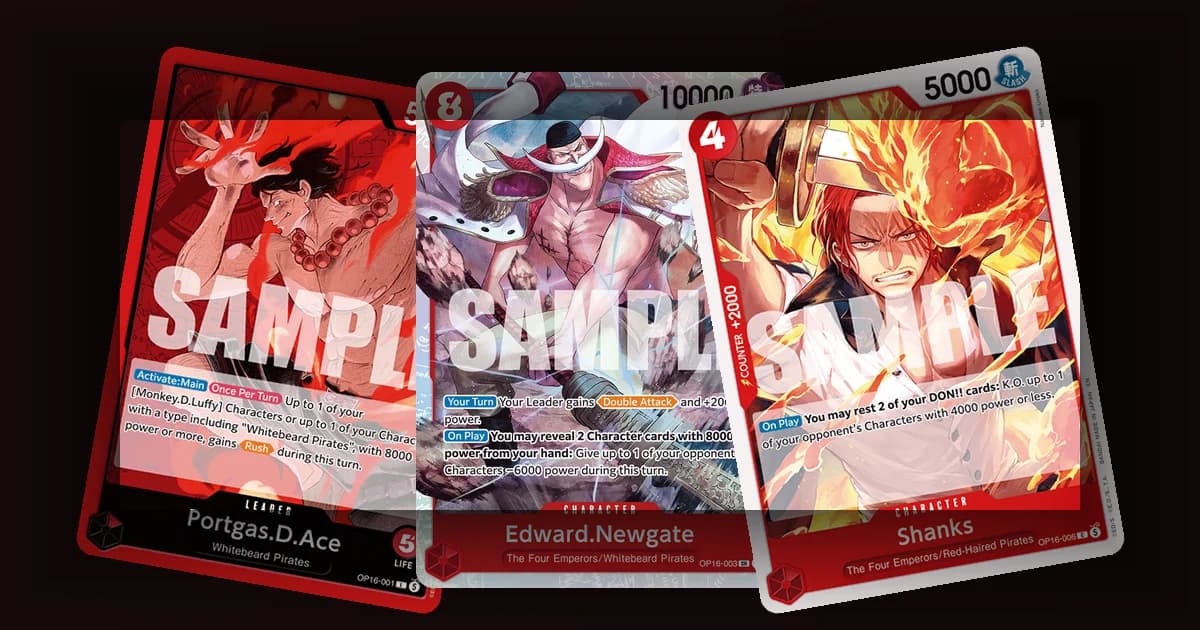
Updated October 16, 2026: every rule re-checked against the Comprehensive Rules, Version 1.2.1 (last updated August 28, 2026). We added which Leaders start at 4 Life and which at 5 (in the four newest sets it follows color count, not deck speed), corrected an image caption that called a Character a Leader, and cut the repeated summaries.
How One Piece TCG life cards are set up
Setup runs in a fixed order. You draw your opening 5, get one chance to redraw, and only then place your Life: cards from the top of your deck, face-down, as many as the Life value printed on your Leader. They go in so the card that was on top of the deck ends up at the bottom of the Life area, and nobody looks at them.
After that the Life area is a secret zone. Neither player can check the cards or change their order unless an effect allows it, and when a card leaves Life it comes off the top. Some effects add a card to Life face-up; that card is treated as open information, so both players can see it.
Only Leaders have a Life value, and effects can push it above the printed number. Damage never changes the number on the card. It just empties the stack.
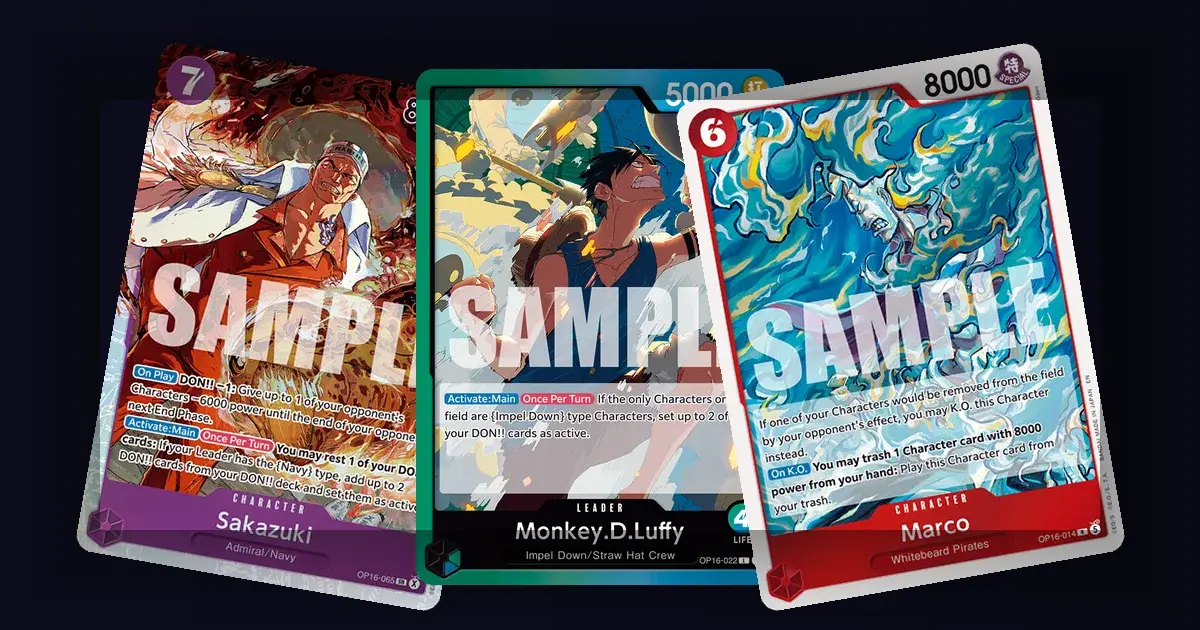
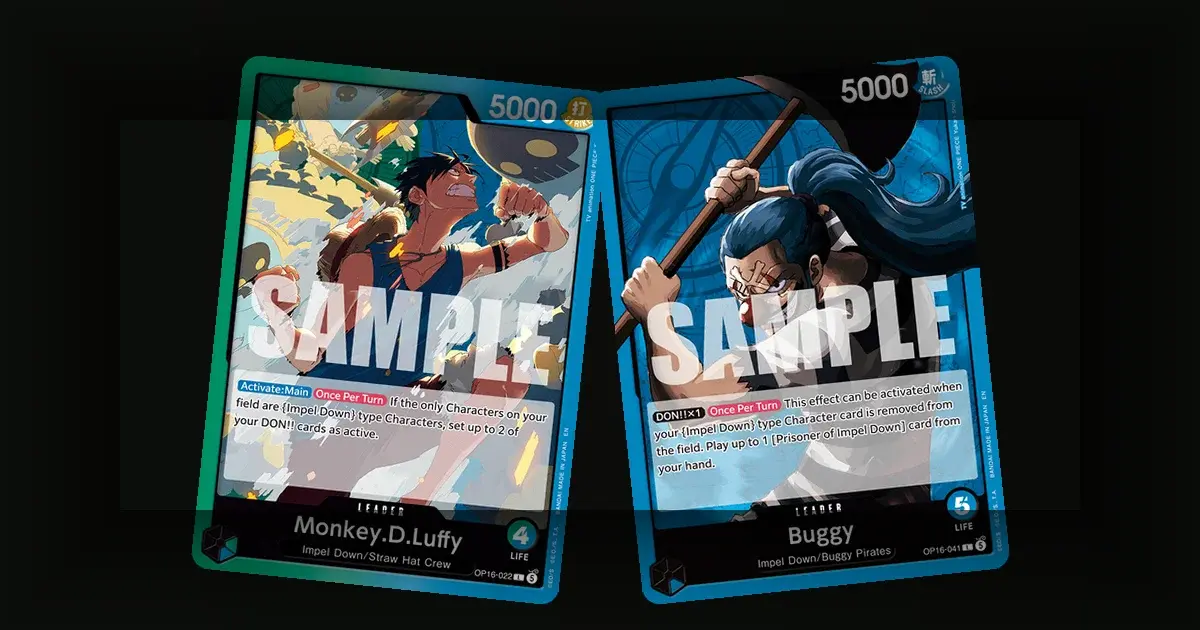
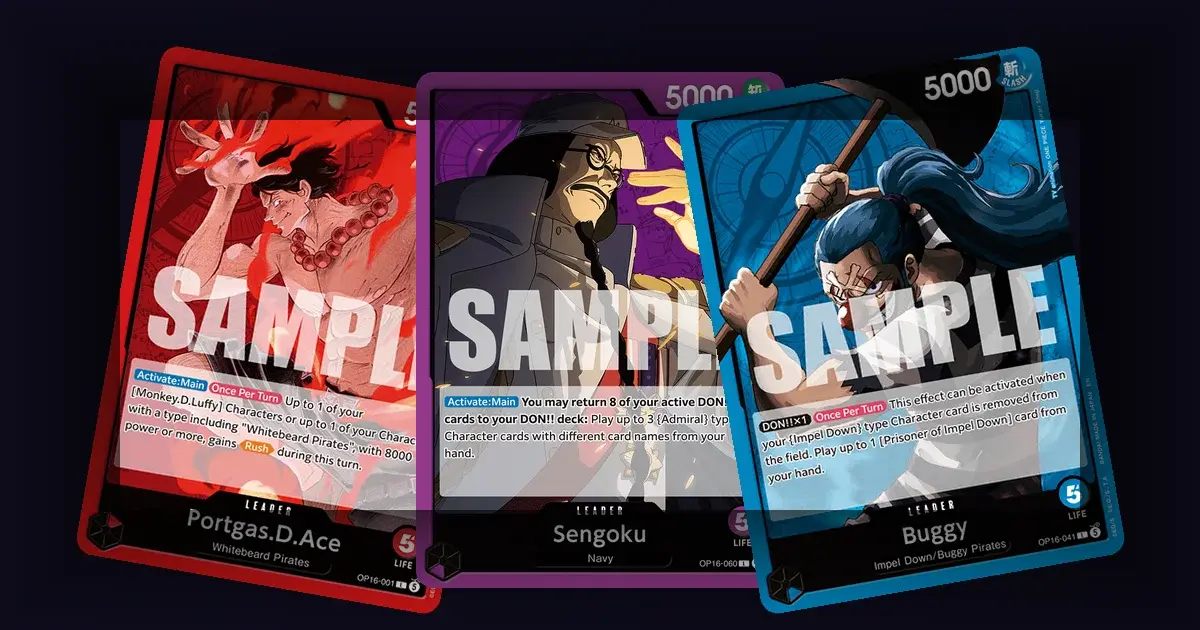
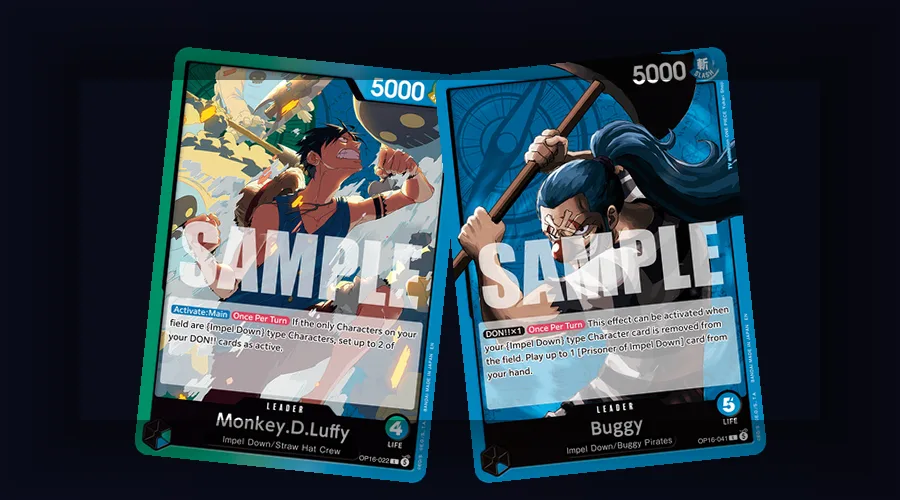 Image: official Bandai sample cards (OP16), via the One Piece Card Game site. Green/Blue Luffy prints 4 Life; mono-Blue Buggy prints 5.
4 Life or 5: it's about colors
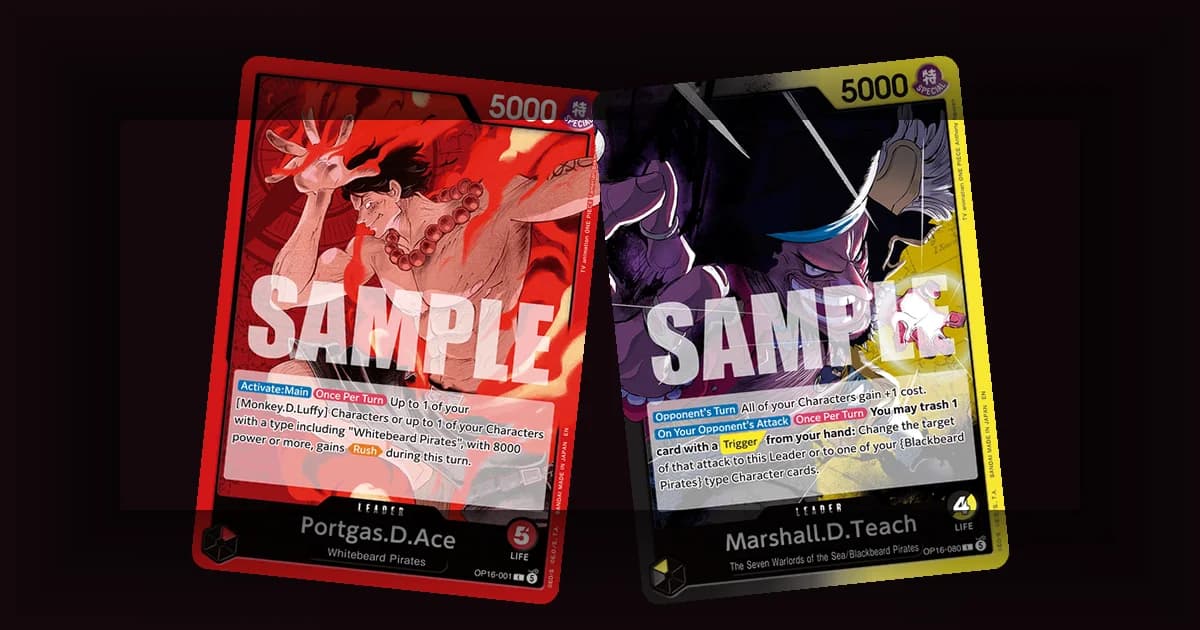
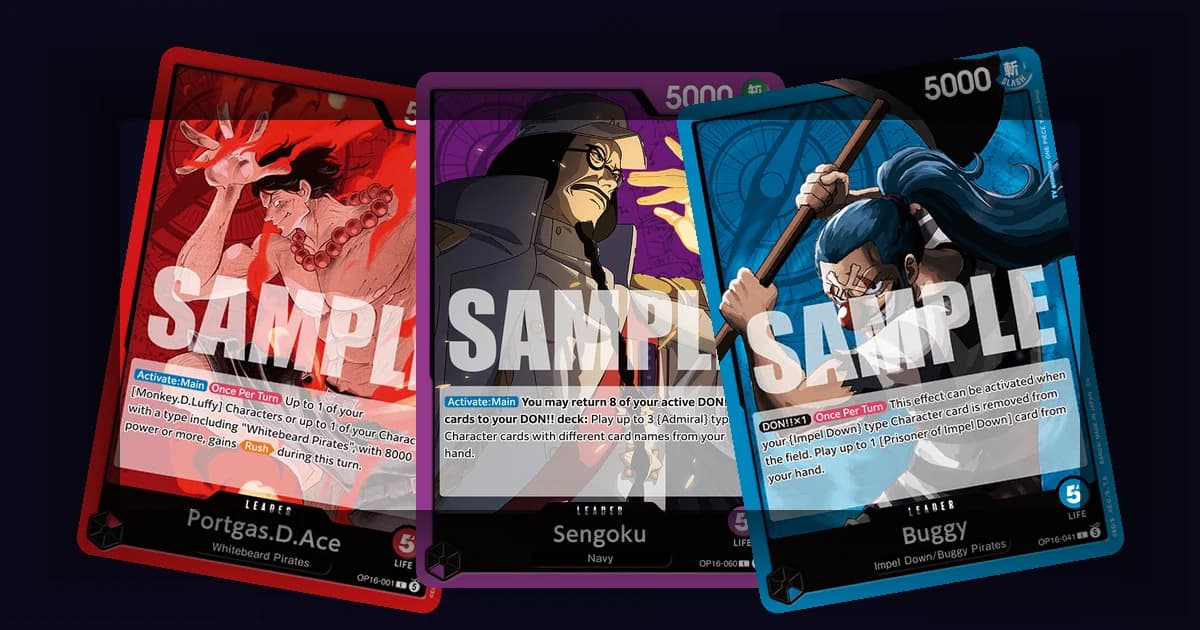
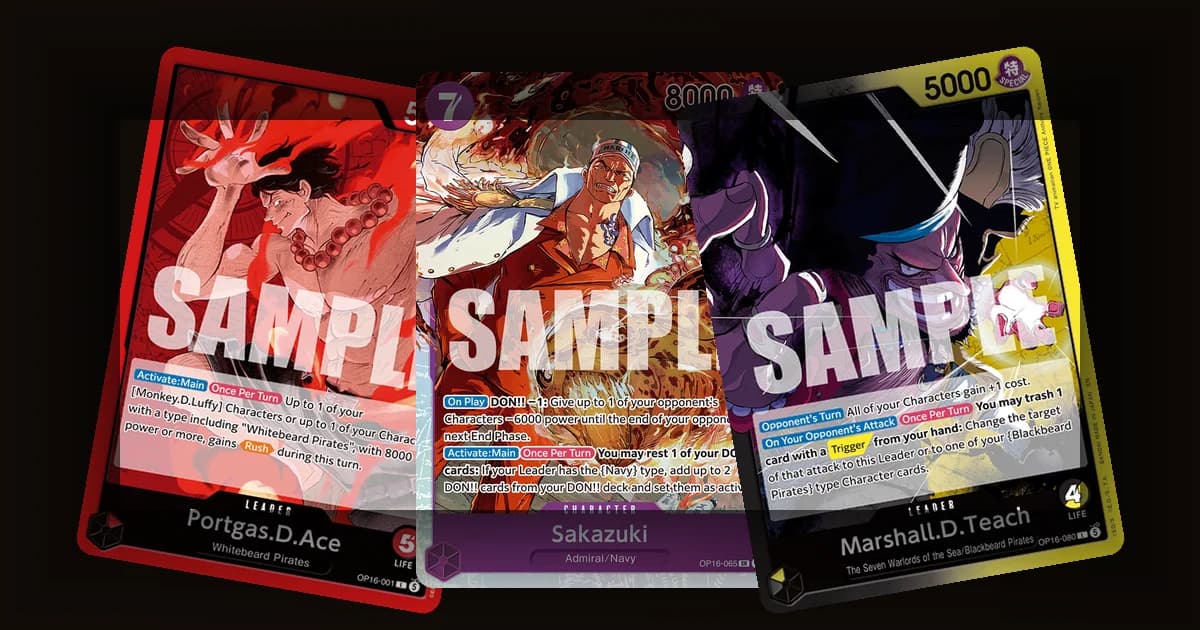
The old rule of thumb was "aggro Leaders get 4, control Leaders get 5." The recent sets don't bear that out. We went through all 25 Leaders in OP14 to OP17 on Limitless TCG's card pages: every two-color Leader has 4 Life and every single-color Leader has 5. Black/Yellow Teach, Red/Blue Lucy and Green/Blue Luffy sit at 4; mono-Purple Sengoku, mono-Red Ace and mono-Blue Buggy sit at 5, whatever speed they play at.
So when you pick a two-color Leader you're paying for the wider card pool with one fewer card of cushion. That's the trade to keep in mind, not the deck's archetype.
Taking damage: Life goes to your hand
When an attack beats your Leader, 1 damage is dealt. If you have at least 1 Life card, the top one moves to your hand. That's the whole procedure, and it's why OPTCG combat feels different from a points-based game: the player who's behind on Life is also the player drawing extra cards.
The card you pick up can be a Counter for the next swing, the Character you needed, or removal. Damage is a resource transfer as much as a countdown.
Monarctica's one-minute short shows the same thing on a real board:
Triggers: free effects off the top
A card with [Trigger] gives you a choice when it comes off your Life: reveal it and activate the Trigger instead of adding it to your hand, or skip the effect and add it to your hand without showing it. Typical Triggers play the card itself, K.O. something, or bounce a Character.
You can't choose which Life cards have Triggers, since Life is dealt blind off the top. What you can choose is how many Trigger cards go in the deck, which decides how scary your Life is to attack into. If an effect stops the Life card from going to your hand at all, the Trigger can't be used either.
GODEEPER: Triggers and Counters together make up your whole defense. One Piece TCG Counter Mechanic Explained
Banish and Double Attack change the price of a hit
Two keywords make a hit cost more than one card's worth:
| Keyword | What happens when it damages your Leader | Rule |
|---|---|---|
| [Double Attack] | 2 damage instead of 1, so 2 Life cards come off | 10-1-2-1 |
| [Banish] | The Life card is trashed instead of going to your hand, and its Trigger doesn't activate | 10-1-3-1 |
Banish is the one that flips the math. Against a Banish attacker, taking the hit gives you nothing back, no card and no Trigger, so a Blocker or a Counter is usually the better spend.
Zero Life doesn't mean you lost
The rule beginners get wrong most often: having 0 Life cards doesn't lose the game. The defeat condition is your Leader taking damage while you have 0 Life cards. At zero you're still playing, but any attack that connects ends it. The other way to lose is having 0 cards left in your deck.
At zero you're defending every swing. Keep an active Blocker, hold Counters, and count the opponent's DON!! so you know how much power they can put on each attacker.
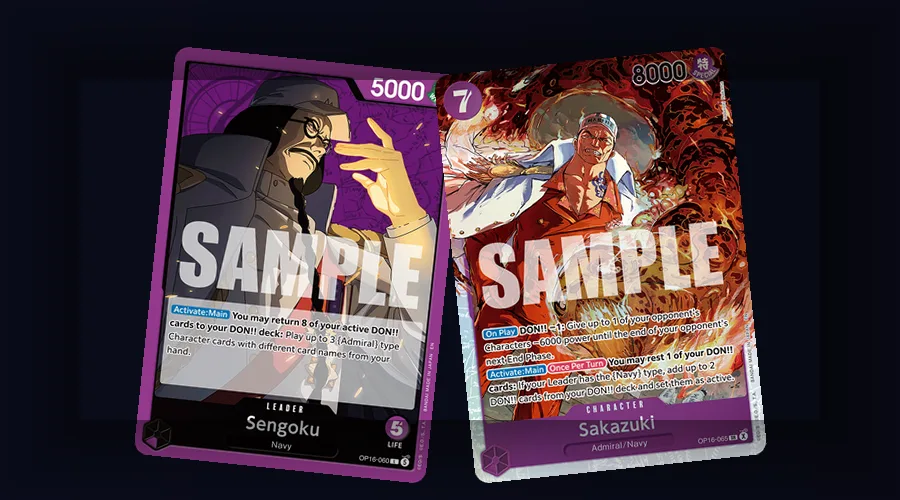 Image: official Bandai sample cards (OP16), via the One Piece Card Game site. Only the Leader on the left has a Life value; Sakazuki is a Character.
Block or take it?
Every attack on your Leader asks the same question. Our rule of thumb:
- Take it when you're high on Life, the attacker has no Banish or Double Attack, and blocking would cost you a Character you need. The card you pick up usually beats the point of Life.
- Block or Counter when you're at 1 or 0 Life, or the attacker has Banish or Double Attack.
Players who win events say the same thing in fewer words. One prerelease winner titled their r/OnePieceTCG write-up "Take life early and save your counter for board!", and a reply from u/iDontWannaBeOnReddit described the same plan: "i won mine by mostly protecting board and playing minus power to make them lose more hand to protect theirs."
Our take: treat your first two or three Life cards as extra draws and your last two as the game. We'd take early hits on the Leader to keep Characters on the board, then switch hard to blocking once you're at 2. And if you're on a two-color Leader, start that switch one card earlier, because you began with 4.
SHOP: Building around Life Trigger value? Check current One Piece TCG singles prices on TCGPlayer. Shop TCGplayer →
Related reading
- How to play One Piece TCG: the full turn that Life damage sits in.
- One Piece TCG attacking rules: the battle steps before damage is dealt.
- One Piece TCG keywords explained: Double Attack, Banish and Trigger in detail.
- DON!! system explained: counting DON!! to read lethal.
- One Piece TCG deck building guide: how many Triggers and Counters to run.
How we checked this: 19 facts checked on October 16, 2026, against the One Piece Card Game Comprehensive Rules, Version 1.2.1 (sections 1-2, 2-9, 3-10, 4-6, 5-2, 7-1-4, 9-2 and 10-1), plus Life values for all 25 OP14 to OP17 Leaders from Limitless TCG's card pages. Last reviewed: October 16, 2026.
Was this guide helpful?
About the author
Pen name for the Shonen TCG desk's tournament coverage, format analysis and cross-game comparisons.
- Results taken from event pages and standings
- Other games checked against their own official rules
- Opinions marked as ours, with the reason
Keep reading
One Piece TCG Keywords Explained: Rush, Blocker & More
Guides · 9 min
One Piece TCG How to Read a Card: 6 Things to Check
Guides · 6 min
One Piece TCG Attacking Rules: Targets, Blocks and Ties
Guides · 6 min
One Piece TCG DON Cards: 10 Per Deck, Rest or Attach
Guides · 6 min
One Piece TCG Mulligan Guide: Rules and Which Hands to Keep
Guides · 6 min
One Piece TCG Common Beginner Mistakes: 9 to Avoid
Guides · 7 min
OP-16 Japanese vs English Price Guide: Which to Buy
Guides · 10 min
OP-16 Where to Buy: Post-Launch Buying Guide for 2026
Guides · 10 min
Disclaimer
This article is published for informational and entertainment purposes. It does not constitute professional financial, legal, or technical advice. Game performance, online services, patch schedules, and store listings change. Verify critical details (pricing, system requirements, regional availability) with publishers and storefronts before you buy. Affiliate links, where present, help support our editorial work and are labelled in our affiliate disclosure.