Loading…


Shonen TCG · Guides
OP-16 Sengoku Deck Tech Week 1: Three Admirals Purple
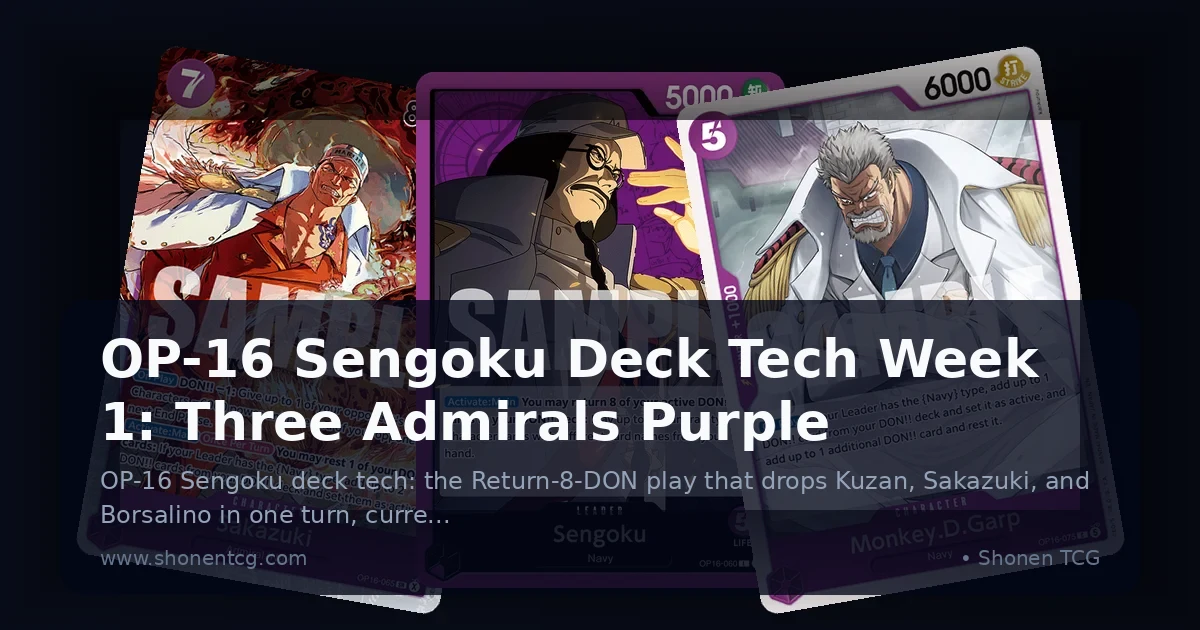
The OP-16 Sengoku deck tech conversation keeps circling back to representation, not results: 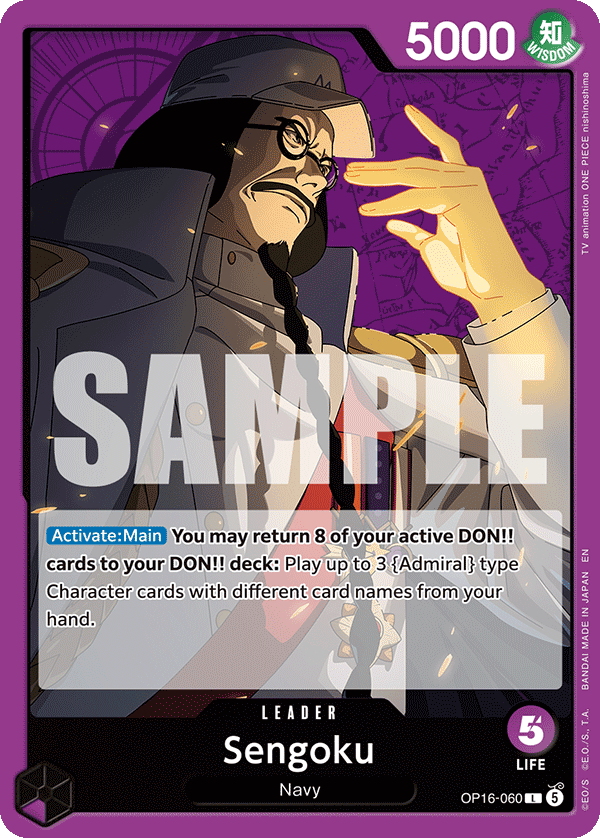 OP16-060OP16-060Shop on TCGplayer has 21 points and a 0.36% share, tied 18th on Limitless's current OP16 standings, with two listed results, 9th at Treasure Cup Bielefeld and 34th at Regional Bielefeld. A separate live September 2026 OP-17 tracker lists Purple Sengoku in C tier with two decklists, while OnePiece.gg's July 7 OP16 snapshot placed it in Tier 2. Those are different format snapshots, but both show the same practical point: this is an underplayed deck whose 8-DON setup rewards deliberate piloting.
Sengoku is not a beginner deck. The 8-DON return play is intuitive at the concept level but brutal to sequence properly across 7 or 8 turns while surviving aggro from faster leaders. When it works, three 8000-power Admirals landing simultaneously is a board state most opponents cannot answer. When it does not work, you spent 8 turns accumulating resources for nothing.
TL;DR: OP-16 Sengoku deck tech centers on returning 8 active DON!! to deploy Kuzan, Sakazuki, and Borsalino for free. Limitless's current OP16 page shows 21 points, a 0.36% share, and two listed results for Purple Sengoku. Bandai's official Feature Deck #105 shell contains 50 main-deck cards plus one Leader. The matchup notes are launch-window strategy guidance, not measured win rates.
OP-16 Sengoku deck tech: quick answer
OP16-060OP16-060Shop on TCGplayer Sengoku is a Purple leader with 5000 power and 5 life. His leader ability: return 8 active DON!! to your DON!! deck, then play up to 3 Admiral-type characters with different names from hand for free.
The deck's entire plan is reaching 8 active DON!! and deploying all three Admirals in a single activation. The Three Admirals!! Event, Navy search and ramp cards, and careful board presence in the early turns support that goal. The legal construction is one Leader plus a 50-card main deck, with Bandai's Feature Deck #105 as the reference shell.
GODEEPER: If you want the full leader-by-leader picture before committing to Sengoku, this breaks down EN performance across all OP-16 leaders. OP-16 Meta Tier List Week 1 →
How Sengoku's Leader Ability Works
The ability activates at any point during your Main Phase. You return 8 active DON!! to your DON!! deck, then immediately play up to 3 Admiral-type characters with different names from your hand without paying their costs.
Three mechanics shape how the deck plays in practice.
First, DON!! return is not a cost you pay once per game. It sends the eight cards back to your DON!! deck, after which your DON!! total can build again on later turns. The exact timing depends on whether you go first or second and which Navy effects you spend resources to use, so treat turn 7 or 8 as a planning window rather than a guarantee.
Second, "up to 3 with different names" means you need three distinct Admiral-type characters in hand when you activate. The deck runs multiple copies of each Admiral to ensure at least one of each is accessible. Drawing two copies of the same Admiral before activation is a dead copy for that turn.
Third, each Character's On Play effect resolves immediately. Kuzan, Sakazuki, and Borsalino all have 8000 power, so they create a substantial board, but the official rules reserve same-turn attacks for Characters with Rush. None of these three has Rush, so their normal attacks begin on a later turn.
The result is an immediate board and resource swing: the opponent must answer three 8000-power Characters with distinct effects, but your new Admirals normally wait until a later turn to attack.
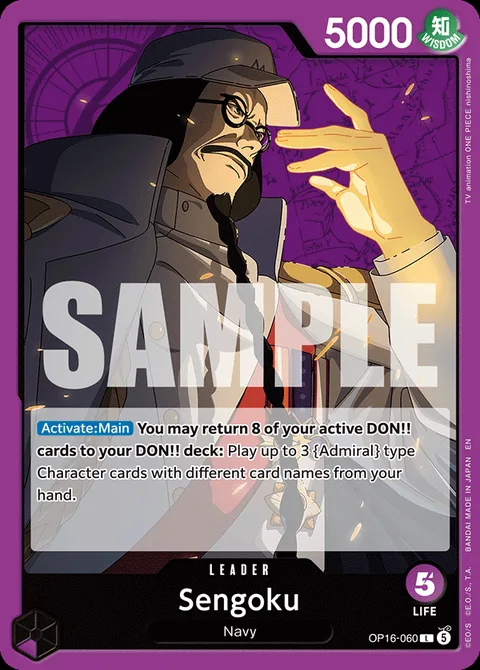 Sengoku (OP16-060) ramps DON!! to drop all three Admirals in one turn, the payoff the whole deck is built around.
The Admiral Package
Three characters drive the activation payload. Each fills a different role after they land.
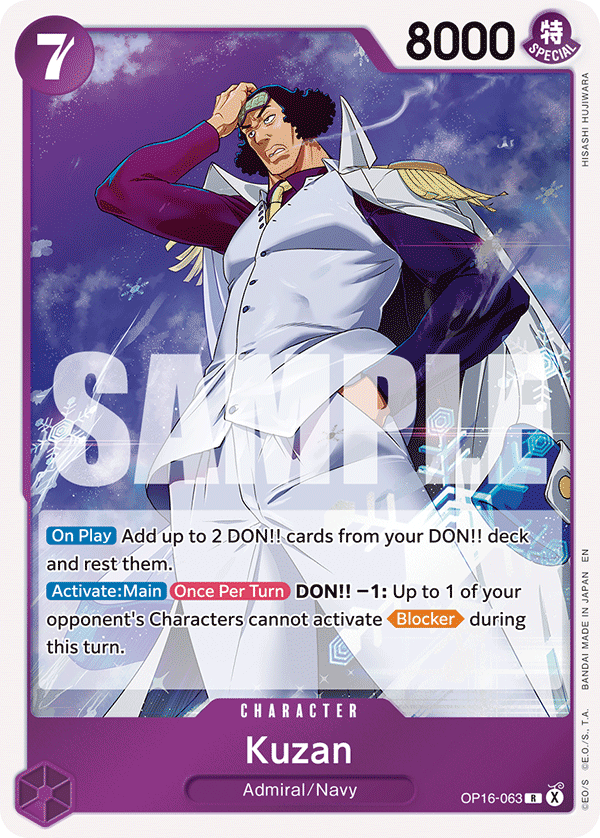 OP16-063OP16-063Shop on TCGplayer Kuzan costs 7 and has 8000 power. His On Play effect adds up to 2 DON!! cards and rests them, while his once-per-turn Main effect costs 1 DON!! to stop one opposing Character from activating Blocker for the turn. He does not remove that Character; he removes one defensive option. That matters when Sengoku is preparing attacks for the turn after the activation.
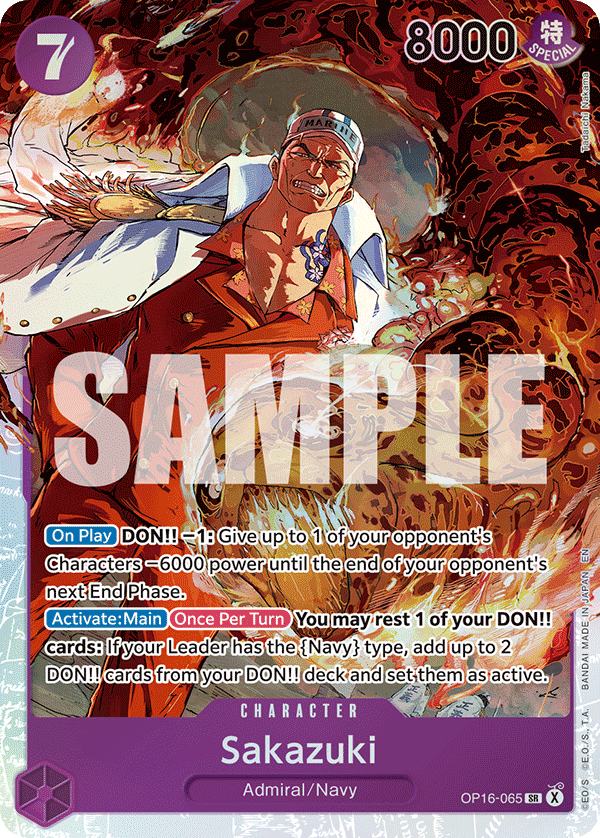 OP16-065OP16-065Shop on TCGplayer Sakazuki (Akainu) costs 7 and has 8000 power. His On Play effect applies a -6000 power debuff to one opposing Character, and that debuff carries into the opponent's next turn. Against Characters in the 6000 to 9000 power range, this can set up a follow-up removal or combat, but the effect targets Characters rather than leaders. Sakazuki also has a Navy-locked Main effect that can recover up to 2 active DON!! after resting one of your DON!! cards.
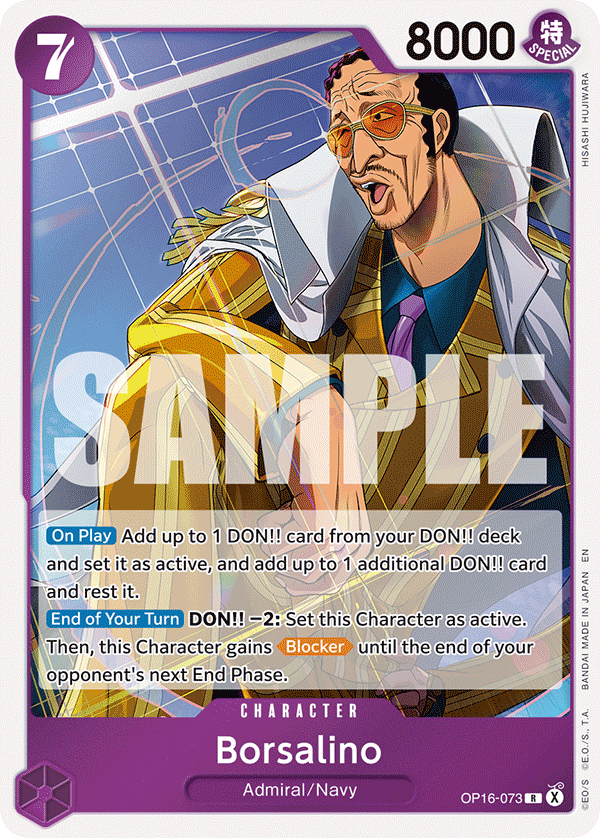 OP16-073OP16-073Shop on TCGplayer Borsalino (Kizaru) costs 7 and has 8000 power. His On Play effect adds up to 1 active and 1 additional rested DON!!. At the end of your turn, you can pay 2 DON!! to set him as active and give him Blocker through the opponent's next End Phase. That makes him a resource refund first and a defensive anchor after the Admiral board survives to your next turn.
Correction (2026-07-27): an earlier version of this section flagged OP16-076 and OP16-077 as "not in card DB" and got their effects backwards. Both are real, verified cards, and both are Events, not characters. The Three Admirals!! (OP16-076, 1-cost) reads: rest 3 DON!! cards to give up to 3 of your Admiral-type characters +2000 power for the turn, plus a Counter effect (if you control an Admiral-type character, +4000 power to 1 Leader or Character in that battle), a combat trick, not a hand-assembly tool. "Buddha" Sengoku (OP16-077, 1-cost) is the card that actually assembles your hand: look at the top 5 cards of your deck, take up to 2 {Navy}-type cards, put the rest on the bottom in any order, then trash 1 card from hand. It is not "an additional Admiral-type body" since it never enters the field as a character.
Supporting characters include 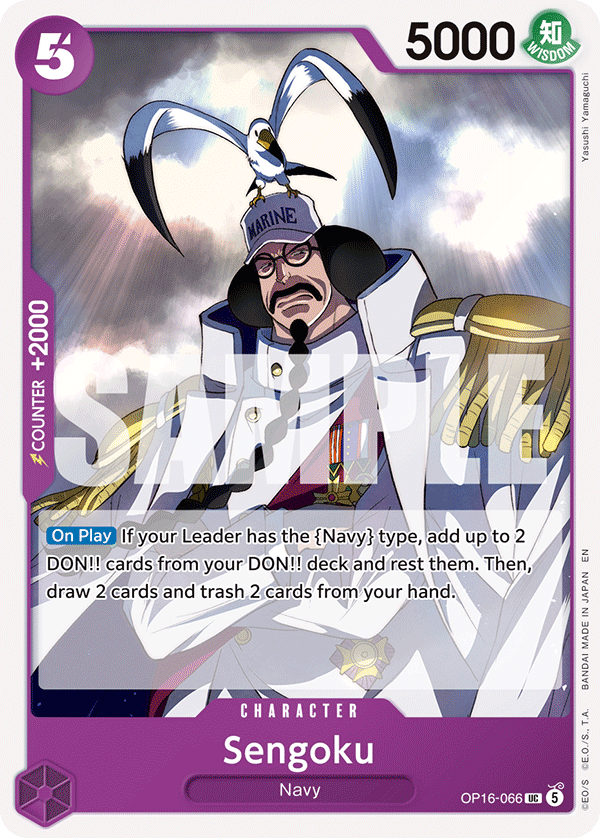 OP16-066OP16-066Shop on TCGplayer Sengoku character (4x),
 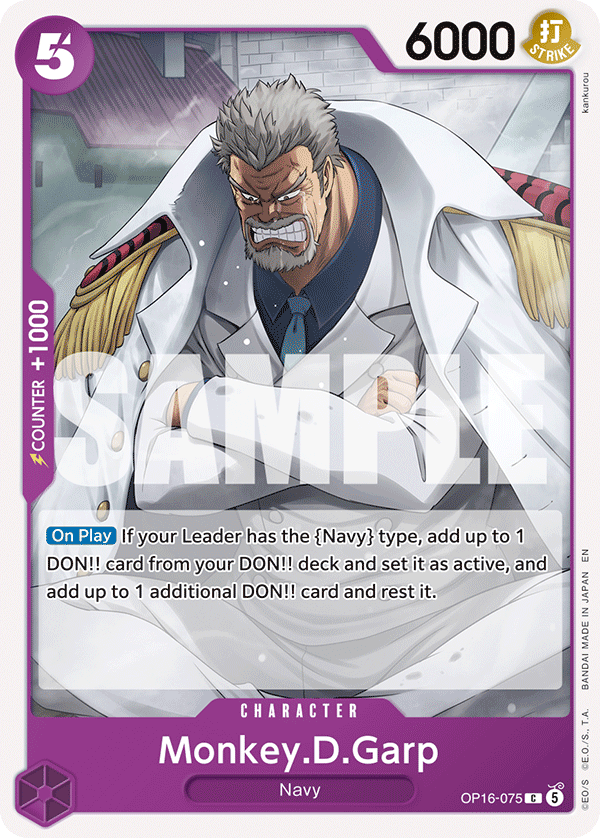 OP16-075OP16-075Shop on TCGplayer Monkey D. Garp (4x),
 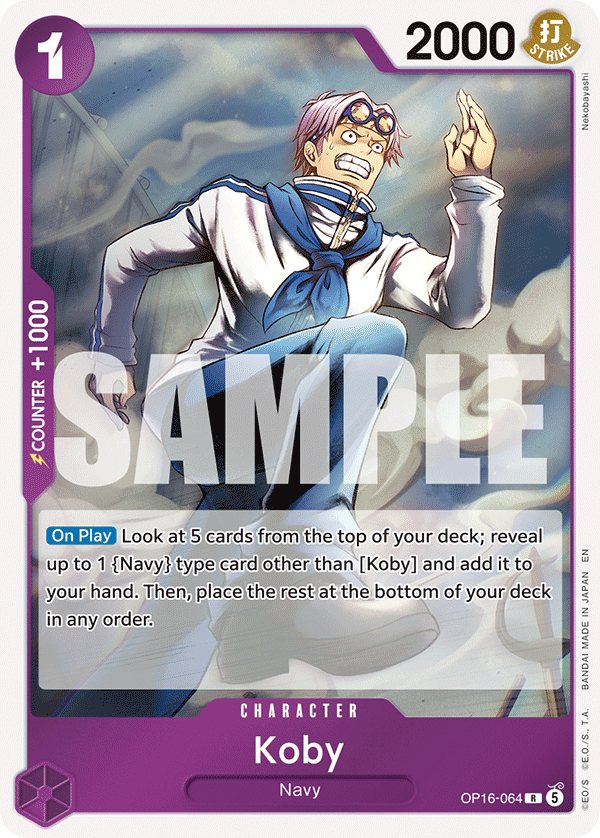 OP16-064OP16-064Shop on TCGplayer Koby (4x),
 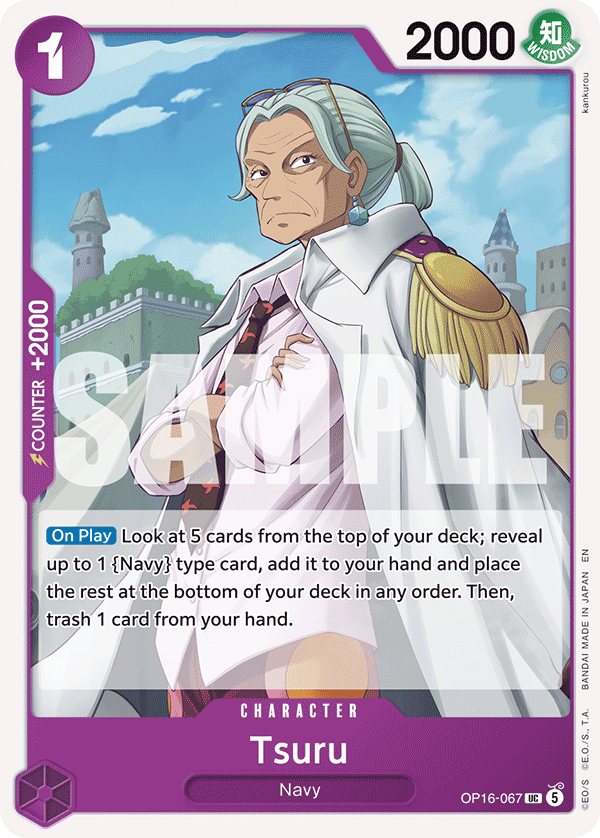 OP16-067OP16-067Shop on TCGplayer Tsuru (4x),
 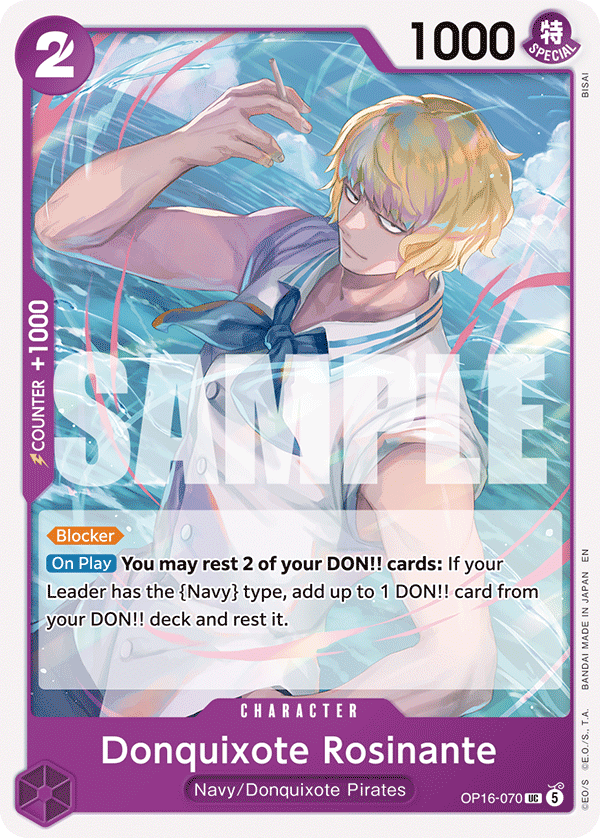 OP16-070OP16-070Shop on TCGplayer Donquixote Rosinante (4x), and
 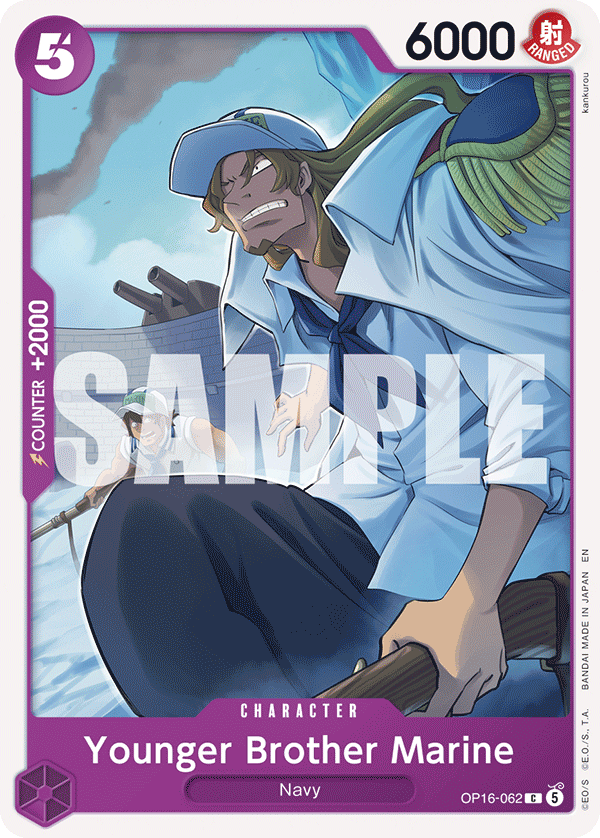 OP16-062OP16-062Shop on TCGplayer Younger Brother Marine (4x).
 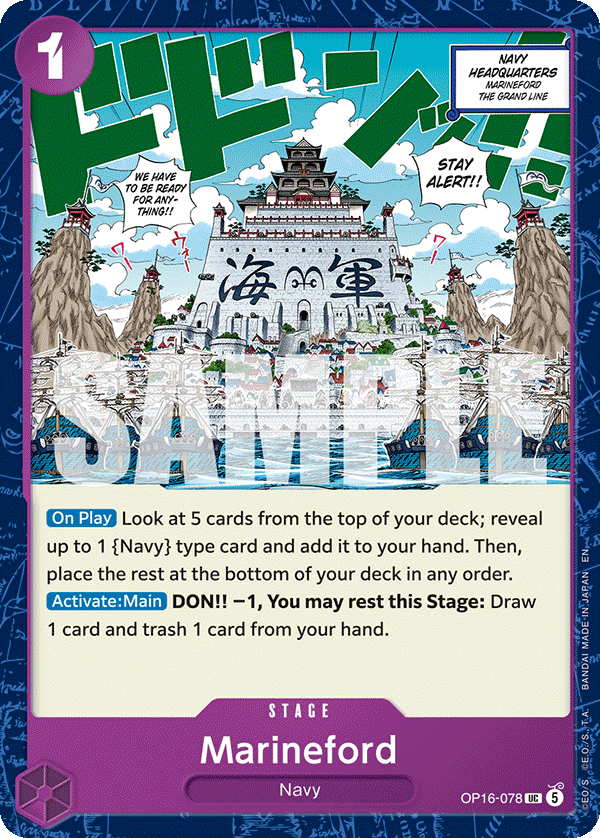 OP16-078OP16-078Shop on TCGplayer Marineford stage (2x) provides a field card to support the Navy package. Together, these Navy cards cover search, hand filtering, Blocker utility, and DON!! acceleration while you assemble the Admirals.
Sample Three Admirals Decklist
This is the official Bandai Feature Deck #105 shell, published June 12, 2026. It is a reference list for the archetype, not a claim about the best current OP-17 tournament build.
Leader (1)
- x1 Sengoku OP16-060
Characters (36)
- x4 Koby OP16-064
- x4 Tsuru OP16-067
- x4 Donquixote Rosinante OP16-070
- x4 Younger Brother Marine OP16-062
- x4 Sengoku character OP16-066
- x4 Monkey D. Garp OP16-075
- x4 Kuzan OP16-063
- x4 Sakazuki OP16-065
- x4 Borsalino OP16-073
Events (12)
- x4 Mamaragan OP15-078
- x4 The Three Admirals!! OP16-076
- x4 "Buddha" Sengoku OP16-077 (Event, not a character, see correction above)
Stage (2)
- x2 Marineford OP16-078
This list contains 50 main-deck cards plus the Leader. You can test substitutions, but name each replacement and recount the main deck before using the list in an event.
GODEEPER: For comparison, see how the Akainu solo build handles the Purple archetype from a different angle. OP-16 Akainu Deck Guide →
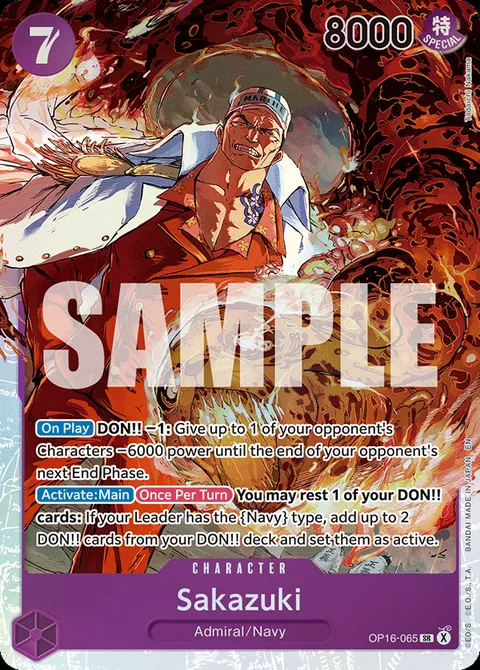 Sakazuki (OP16-065) is the package's precision-removal Admiral, weakening one opposing Character before the rest of the plan develops.
SHOP: Building this Sengoku Three Admirals shell? Check current OP-16 singles prices on TCGPlayer. Shop TCGplayer →
Going First: Why Sengoku Is the Exception
No OP16 tracker publishes a leader-by-leader first-versus-second-player win split, so there is no confirmed number to cite here. Going second gives a player an extra card and DON!! on the opening turn, a common reason to choose it. Sengoku is a plausible exception because his win condition depends on reaching a specific active-DON threshold before the opponent's board becomes too difficult to manage.
When Sengoku goes first, he can try to reach 8 active DON!! and resolve his ability before the opponent has flooded the board to the point where three Admirals cannot close the game. When he goes second, the opponent has one additional turn to establish a board state that answers or delays the Admiral deployment.
The specific scenario: on the second-player's side, a fast aggro leader can reach a wide enough board by turn 7 that even three 8000-power characters cannot attack through it profitably in one turn. First-player Sengoku hits turn 8 one step ahead of that critical board-flood threshold, at least in theory.
In practice: this is a reasonable default to lean on until better data exists, not a proven edge. If you win the coin flip with Sengoku, going first is the more defensible pick given how the deck's payoff turn works.
Step-by-Step: the eight-turn activation plan
The Sengoku gameplan across the first eight turns breaks into a clear sequence. Miss a step here and the whole payoff turn slips or fizzles.
1. Establish early survival with low-cost Navy characters in turns 1 to 3. Play Koby, Tsuru, and Rosinante, all 3-cost or less, for board presence. The goal is not aggressive damage; it is having characters on field that force the opponent to spend DON!! attacking them instead of you. Keep DON!! available each turn to counter attacks on your leader when they threaten a life swing.
2. Stop spending DON!! on characters and accumulate toward 8 in turns 4 to 6. Any DON!! spent on characters in this window can delay the payoff, so hold back unless the board genuinely demands it. The Three Admirals!! Event costs 1 and then rests 3 of your DON!! cards for its Main effect, so cast it only when the +2000 power on up to three Admirals is worth the resource trade.
3. Hold the Admirals when you are assembling the full payload. Do not play a Kuzan, Sakazuki, or Borsalino early without a reason, but this is not an absolute rule. Bandai's own deck guide notes that playing a 7-cost Admiral before the Leader effect can be correct when your hand already has enough Admirals to activate Sengoku later.
4. Activate when you can return 8 active DON!! and still protect the board. Turn 7 or 8 is a useful planning window, not a guaranteed schedule. A going-second line, DON!! generation, and the decision to play one Admiral early can all change the timing, so count active cards rather than following the turn number blindly.
5. Resolve the On Play effects around the board state. Sakazuki's -6000 power effect is usually the first question, Kuzan's Blocker restriction matters when a specific defensive Character blocks your route, and Borsalino's DON!! refund helps preserve resources. The effects do not require a fixed order, and none of the three has Rush, so plan their normal attacks for a later turn.
Matchup Direction
These are launch-window directional notes based on card mechanics, not verified win-rate claims. Current trackers do not publish a Sengoku-by-opponent matchup table, and the OP-17 field is a different metagame.
vs. Red Ace: Fast burn pressure can force Sengoku to spend DON!! on defense before the eight-card threshold. Protect the Leader and preserve the Navy searchers that keep the hand assembled; do not treat a fixed turn-six or turn-seven close as a guaranteed pattern.
vs. Black/Yellow Blackbeard: Teach's redirect control can make the setup awkward by pulling attacks toward smaller Characters. The Admiral board is strongest when you can activate without sacrificing the search and counter cards needed for the following turn. See the OP-16 Blackbeard deck guide for the other side of the matchup.
vs. Black Yamato: If Sengoku reaches the activation with all three Admirals, the high-power board is a strong stabilizing position. The risk is allowing Yamato's recursion to widen the opposing board before that point, so early Navy Characters should buy time rather than chase damage.
vs. Blue/Green Luffy: A wide, high-tempo board can punish any delayed activation. Sengoku wants to preserve enough hand quality to deploy the Admirals while using its early Characters to stop the opponent from turning that pressure into a game-ending swing.
vs. Purple Enel: Life manipulation and resource generation make a long setup uncomfortable. Sengoku should not label this an automatic loss or the definitive hardest matchup without a current matchup sample; use the opening turns to identify whether the opponent is holding interaction before committing to the full payload.
Is Sengoku Worth Building?
The question has a direct answer: yes, if you enjoy high-variance skill-testing gameplay and have experience with One Piece TCG's DON!! system. No, if you are new to the game or want reliable consistent results.
Sengoku's ceiling is clear in the mechanic itself: the Leader can place three high-cost Admirals from hand without their normal play costs, the same payoff Bandai highlights in Feature Deck #105. Limitless currently lists only two Sengoku results, so this page does not have evidence for calling the deck tournament-proven. Standard Admiral prints are separate from collectible parallels, and the exact singles total should be checked against a live market.
The floor is also real. DON!! mismanagement in the middle turns can delay activation, which gives faster leaders more time to build a winning board. The deck also loses much of its ceiling when the Admiral hand is incomplete, so the search and hand-filtering cards matter as much as the finishers.
For experienced players looking for a skill-expressive Purple build in OP-16, Sengoku delivers. For players who want a more accessible entry point, the OP-16 Sengoku Deck Guide: Purple Marine Admirals Build covers the base version with flatter execution requirements.
Update, September 16, 2026: Limitless's current OP16 standings list Purple Sengoku tied 18th with 21 points and a 0.36% share, with two listed results, 9th at Treasure Cup Bielefeld and 34th at Regional Bielefeld. OnePiece.gg's July 7 OP16 snapshot places Sengoku in Tier 2, while the live September OP17 view at OnePieceTCG Meta lists Purple Sengoku in C tier with two decklists. These trackers cover different format snapshots, so this remains a Week 1 tech guide rather than a current OP17 tier recommendation. OP-17's staggered release is now complete; use the OP-17/OP-16 format guide for the post-launch format context.
Key Takeaways
- Sengoku's ability: return 8 active DON!! and play up to 3 Admiral-type characters with different names from hand for free.
- No tracker publishes a first-versus-second-player split by leader, but going first plausibly helps Sengoku beat the opponent's board-flood turn.
- Current Limitless OP16 snapshot: Purple Sengoku is tied 18th with 21 points and a 0.36% share, with two listed results.
- Three-Admiral payload: Kuzan stops one opposing Character from activating Blocker for the turn, Sakazuki gives one opposing Character -6000 power, and Borsalino adds one active plus one rested DON!! before its defensive End of Your Turn effect.
- Matchup notes in this article are launch-window testing hypotheses, not verified win-rate rankings.
- Activation sequencing is about choosing the right On Play effects and preserving the next turn, not forcing a fixed order or same-turn attacks.
- The OP-17 release window has passed. The current OP17 snapshot lists Purple Sengoku in C tier with two decklists, so use the related OP-17/OP-16 format guide for the broader format context.
Related Reading
- OP-16 Three Admirals Guide: Deep breakdown of Kuzan, Sakazuki, and Borsalino as individual cards and how each interacts with the Navy package.
- OP-16 Yamato Deck Guide: Black Yamato Wano Recursion: How Sengoku's best current matchup plays its recursion game from the other side of the table.
- OP-16 Best Cards to Pull: Value analysis of which OP-16 cards are worth chasing at the set release.
- One Piece TCG OP-16 Meta Report July 2026: EN Settled: A more current read on the OP-16 leader landscape than the week-1 snapshot.
- One Piece TCG OP-16 Complete Guide: Full set overview covering the Admiral-focused set mechanics, new leaders, and EN launch.
Frequently Asked Questions
Is Sengoku good in OP-16 One Piece TCG? Limitless currently lists Purple Sengoku tied 18th in OP16 with 21 points and a 0.36% share, plus two listed results, 9th and 34th. A September OP17 tracker lists it in C tier with two decklists. That is limited evidence, so Sengoku is best approached as a high-ceiling, skill-testing choice rather than a data-backed top-tier pick.
How does Sengoku's leader ability work in One Piece TCG OP-16? Return 8 active DON!! cards to your DON!! deck, then play up to 3 Admiral-type Characters with different names from hand for free. This fires during your Main Phase, often in a turn 7 or 8 planning window, but timing depends on your ramp and hand. The Admirals' On Play effects resolve immediately; their normal attacks wait unless a separate effect grants Rush.
Why does Sengoku prefer going first in OP-16? No tracker publishes a confirmed first-versus-second-player split by leader for OP16. Structurally, going first may help Sengoku reach the eight-active-DON threshold before the opponent's board grows, while going second supplies an extra opening card and DON!!. The choice is therefore a timing heuristic, not a proven leader-specific edge.
What are the three Admirals in the OP-16 Sengoku deck? Kuzan (OP16-063), Sakazuki/Akainu (OP16-065), and Borsalino/Kizaru (OP16-073). Each is a 7-cost 8000-power Character with a distinct effect. Together they cover a -6000 power Character debuff, a temporary Blocker restriction, and DON!! recovery plus a later Blocker option.
How much does the OP-16 Sengoku deck cost? There is no fixed current total. Bandai's Feature Deck #105 is a 50-card reference shell, while singles prices move and collectible parallel versions are separate purchases. Start with standard prints and price the exact list in a live marketplace cart before buying.
What is the hardest matchup for OP-16 Sengoku? No verified tracker establishes one hardest Sengoku matchup. Fast pressure before eight active DON!! is the structural concern, but the result depends on each list and board state. Treat the matchup notes above as launch-window testing guidance rather than a measured ranking.
Should beginners play OP-16 Sengoku? No. DON!! economy management across 7 to 8 turns before the payoff requires precise sequencing that punishes small errors severely. Players new to One Piece TCG should start with a more forgiving EN-tier leader and return to Sengoku once the DON!! system is second nature.
References
- Bandai Feature Deck #105: Purple Sengoku: official reference list and Three Admirals game plan
- Official OP-16 card list: verified card types, stats, and effects
- Limitless TCG OP16 deck standings: current 21-point, 0.36% Purple Sengoku snapshot and tournament placements, checked September 16, 2026
- Limitless Sengoku card page: Leader text and tracked deck results
- Limitless Mamaragan card page: OP15-078 Event text and legality
- OnePiece.gg OP16 meta tier list: July 7, 2026 OP16 tier snapshot with Sengoku in Tier 2
- OnePieceTCG Meta OP17 tier list: live September 2026 OP17 context, including Purple Sengoku's C-tier listing
- Official Comprehensive Rules: Rush timing and Character attack rules
- TCGPlayer One Piece TCG: card pricing reference
Was this guide helpful?
Cards in this article
About the author
KT
Competitive TCG Analyst
Competitive One Piece TCG player and deck builder with 3 years of tournament experience. Covers meta analysis, tier lists, and leader builds.
- 3 years competitive OPTCG tournament experience
- Regional top 8 finisher
- Deck builder and meta analyst
- Covers every set since OP-01
Disclaimer
This article is published for informational and entertainment purposes. It does not constitute professional financial, legal, or technical advice. Game performance, online services, patch schedules, and store listings change. Verify critical details (pricing, system requirements, regional availability) with publishers and storefronts before you buy. Affiliate links, where present, help support our editorial work and are labelled in our affiliate disclosure.