Loading…


Shonen TCG · Guides
OP-16 Impel Down Luffy Deck Guide: Full 50-Card List
Reviewing
One Piece Card Game
The Impel Down Luffy deck is the highest-ceiling tempo build in the OP-16 format. The leader restriction sounds punishing on paper, but once the engine runs, no other Green/Blue build generates this kind of mid-game momentum.
TL;DR: OP16-022 Luffy is a Green/Blue Leader with a hard tribal restriction: all characters must carry the Impel Down trait or the DON!! refund does not trigger. The reward for respecting that restriction is up to 2 DON!! each turn. Deploy cheap Prisoners early, then use the extra resources to widen the board or strengthen attacks. The Bandai feature deck runs a 50-card list centered on Impel Down characters.
Key Takeaways
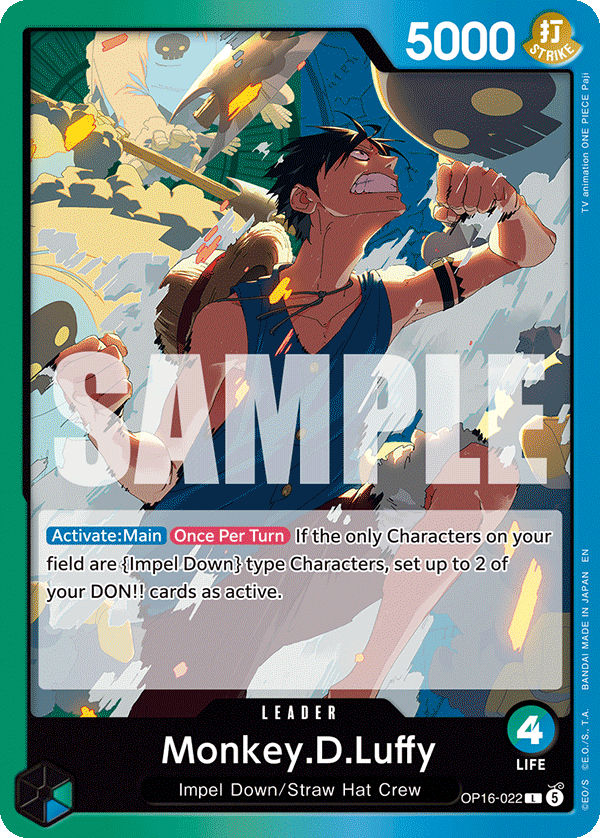 OP16-022OP16-022Shop on TCGplayer Monkey.D.Luffy is Green/Blue with 5000 Power and 4 Life
- His effect fires once per turn during your main phase if ALL your characters in play have the Impel Down trait, setting up to 2 DON!! as active
- This is a tribal build: you cannot mix in generic Green/Blue cards without shutting off the leader
- The official Bandai feature deck runs 14 two-cost characters (Mr.1, Mr.2, and Jinbe at four copies each, Inazuma at two) to ensure early board presence before the engine activates
- Current meta snapshot: TCG Contender lists Green/Blue Luffy in Tier 2 as of September 13, 2026. Earlier Tier 1 evaluations are historical, not the current placement.
- Budget to build: current tracked lists vary with their card mix and printings. Limitless examples are roughly $64-$79, while some versions cost more, so check live singles before buying.
Impel Down Luffy deck guide (quick answer)
The Impel Down Luffy deck plays a tribe-locked tempo game. You spend turns 1 and 2 establishing an Impel Down board with efficient 2-cost characters, then trigger the leader effect from turn 3 onward to refund 2 DON!! per turn. Those extra resources either go into additional character plays or power attacks. The deck curves to 4-5 cost threats by mid-game while most opponents are still working their standard resource curve.
What Makes This Build Different
Most Green/Blue decks in the One Piece card game function as generic tempo builds: they take the best Green cards for board presence and the best Blue cards for disruption and mix them freely. OP16-022 Luffy breaks that pattern with a hard restriction. To activate the leader ability, every character you control must carry the Impel Down trait. A single non-Impel Down character on your board and the effect does not trigger that turn.
That restriction eliminates access to a wide pool of strong Green/Blue generalist cards. No Nami, no standard Law pieces, no cross-archetype staples unless they happen to carry the Impel Down trait. What you gain in exchange is a DON!! engine that compounds: 2 free DON!! per turn starting around turn 3 means you are effectively playing with 2 extra resources every main phase, which translates to an extra character play or a significantly stronger attack each turn.
Correction: an earlier version of this section described a viable "unrestricted" build that mixes in general Green/Blue cards for more early-game consistency. That framing doesn't match the real card text. The leader ability only fires when every Character on the field is {Impel Down} type, so a single off-trait card doesn't trade consistency for ceiling, it just turns the engine off. There is no competitive alternate build; the tribal restriction is mandatory for anyone playing this leader seriously.
The tribal restriction also means your opponent knows exactly what is in your deck once they identify your leader. They will play around your character pool. Part of piloting this archetype is understanding that your hand is readable, so sequencing and bluffing become more important than in an open-card-pool build.
This page covers Bandai's official pre-launch feature deck, a fully Impel Down-pure list straight from the publisher. Current tournament lists keep the same core but vary the card mix as the format changes, so see the main Luffy guide for a more recent competitive list.
GODEEPER: See the tournament-verified 50-card list that's replaced this feature deck as the competitive standard since EN launch. OP-16 Green Blue Luffy Deck Guide: Tier 1 Tournament List →
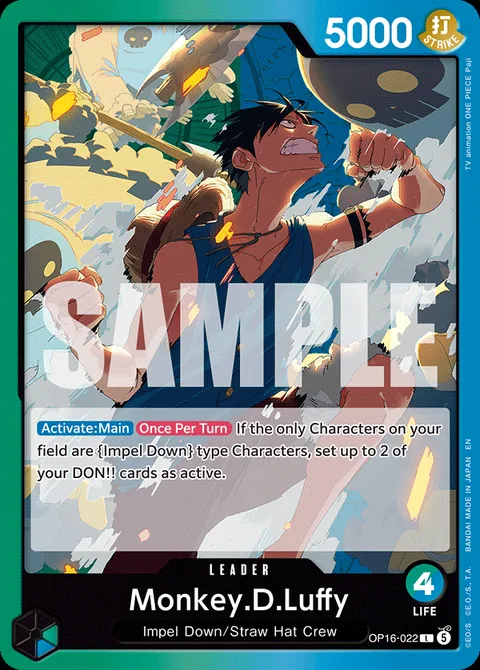 Luffy (OP16-022) refunds 2 DON!! per turn as long as every Character carries the Impel Down trait, the restriction that defines the build.
The 50-Card Decklist
This is the official Bandai feature deck for OP16-022 Luffy, published at en.onepiece-cardgame.com ahead of EN launch. It's still a fully legal, Impel Down-pure list and a fine starting point, though tournament results since June 12 have refined the build, swapping in Crocodile and Miss Olive 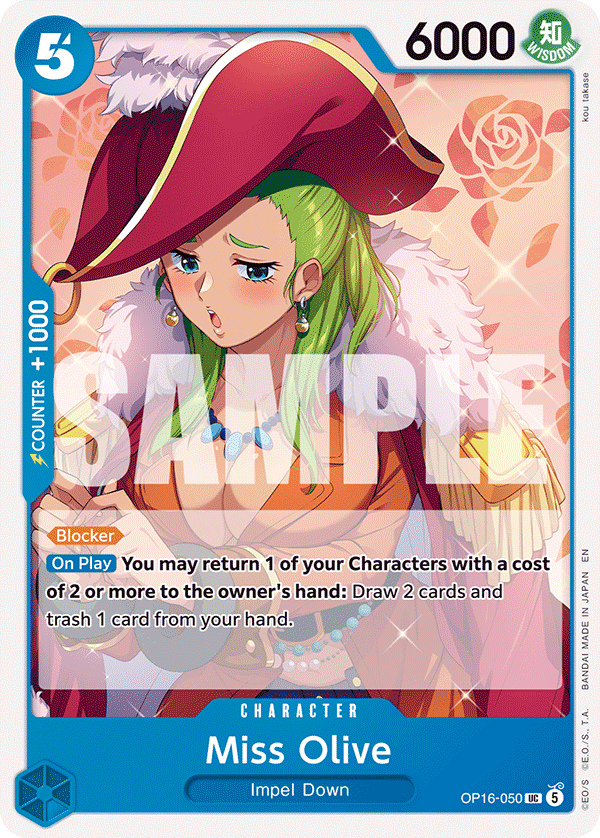 OP16-050OP16-050Shop on TCGplayer for Jinbe, Boa Hancock, and Inazuma (see the GODEEPER link above for the current competitive 50-card list):
Leader (1)
- 1x OP16-022 Monkey.D.Luffy
Characters (48)
- 4x OP16-034 Monkey.D.Luffy
- 4x OP16-027 Jinbe
- 4x Mr.1 (Daz.Bonez) (OP16-054)
- 4x Mr.2.Bon.Kurei (Bentham) (OP16-055)
- 4x OP16-026 Emporio.Ivankov
- 4x Mr.3 (Galdino) (OP16-056)
- 4x ST30-012 Monkey.D.Luffy
- 4x OP16-048 Buggy
- 10x OP16-042 Prisoner of Impel Down
- 4x OP16-032 Boa Hancock
- 2x OP16-024 Inazuma
Events (2)
- 2x Let's Go!! To the Navy Headquarters!! (OP16-038)
Total: 50 cards
The list is tight on card diversity by design. Fourteen 2-cost character slots (Mr.1, Mr.2, and Jinbe at four copies each, Inazuma at two) ensure you almost always have an early drop to start the board. OP16-042 Prisoner of Impel Down plays a different role than its ten copies might suggest: its rules text allows any number of copies in a deck instead of the usual four-copy cap, and the feature list uses that to run ten as a 6-cost, 6000-power, +2000-counter body that tops the curve once the DON!! engine is generating extra resources. The event card (Let's Go!!) appears as a lean 2-of: it gives counter support and a situational board-refresh option for the turns before the engine takes over, rather than functioning as the deck's primary defensive tool.
SHOP: Building this Impel Down Luffy build? Check current OP-16 singles prices on TCGPlayer. Shop TCGplayer →
Key Cards Explained
Monkey.D.Luffy (Leader, OP16-022) is the engine of the entire deck. 5000 Power and 4 Life is an acceptable stat line for a Green/Blue leader. The effect is what you are playing for: once per turn during your main phase, if all your characters have the Impel Down trait, set up to 2 DON!! as active. 4 Life is on the lower end, which means aggressive decks can threaten you if the engine is not running. Prioritize board setup over life protection in the early turns.
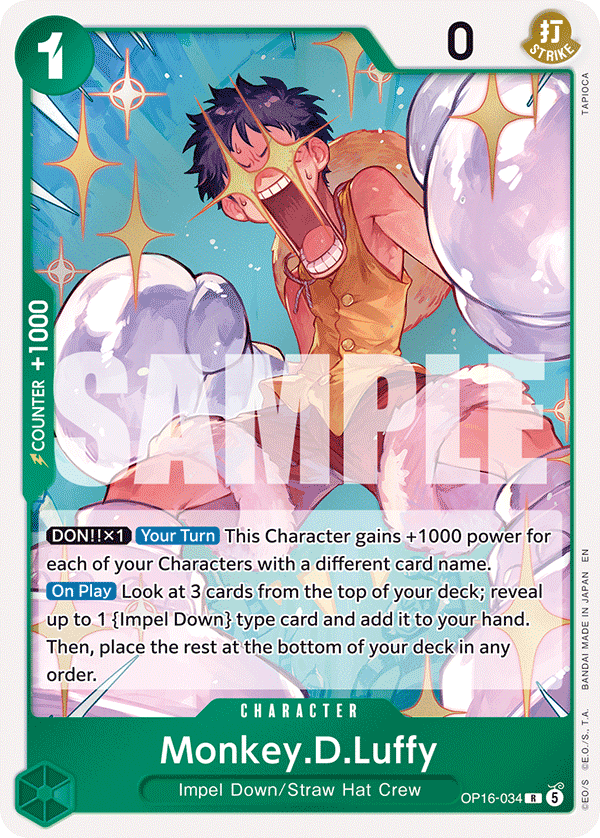 OP16-034OP16-034Shop on TCGplayer Monkey.D.Luffy (Character, 4x) is a 1-cost card, cheaper than its role in the deck might suggest: 0 base power that climbs by +1000 for every differently named character you control once a DON!! is attached, plus an On Play dig through the top 3 cards of your deck for an Impel Down piece. It is an early curve-filler and card-selection tool, not a late-game threat.
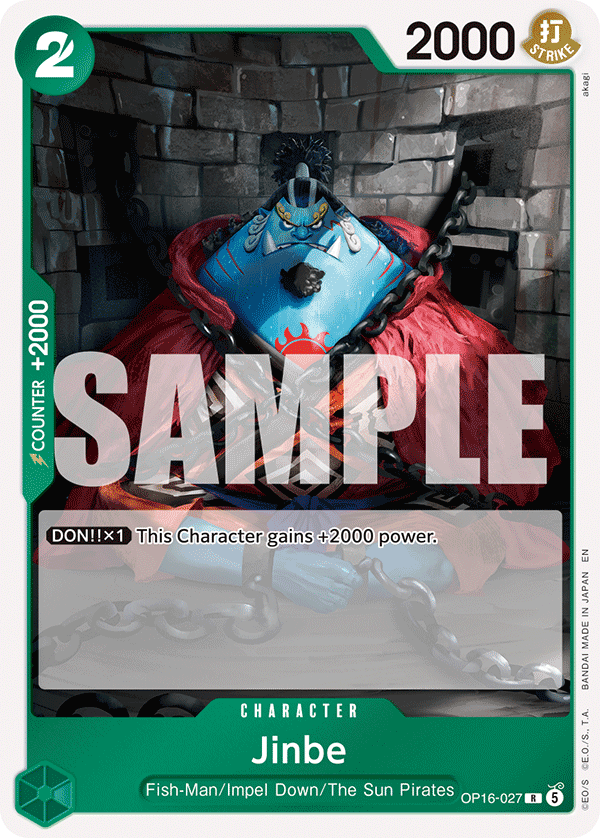 OP16-027OP16-027Shop on TCGplayer Jinbe (Character, 4x) provides the defensive body your early Impel Down board needs. His role is holding the board long enough for the engine to generate meaningful advantage, and he carries the Impel Down trait so the restriction stays intact.
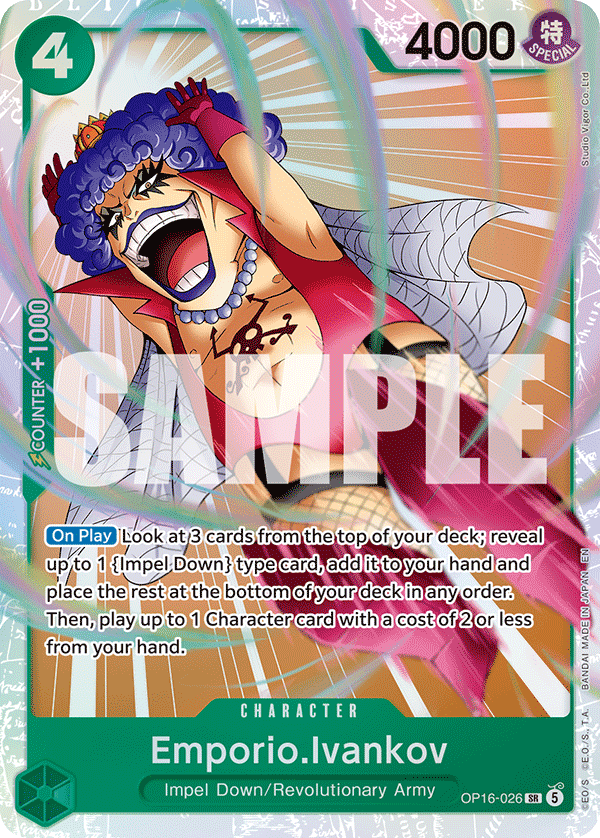 OP16-026OP16-026Shop on TCGplayer Emporio.Ivankov (Character, 4x) is one of the deck's acceleration pieces. Ivankov's effect pairs with the DON!! refresh to create sequences where you deploy more characters per turn than your cost curve would suggest. He is a staple in Impel Down lists for that reason.
Mr.1 (Daz.Bonez) (OP16-054) and Mr.2.Bon.Kurei (Bentham) (OP16-055) are your turn-1 and turn-2 drops, both sitting at 2 cost. Getting either on the board on turn 1 establishes the Impel Down count so the leader effect can fire as soon as turn 3. Draw a hand without these two and your engine runs a full turn slower. Mulligan aggressively for at least one of them.
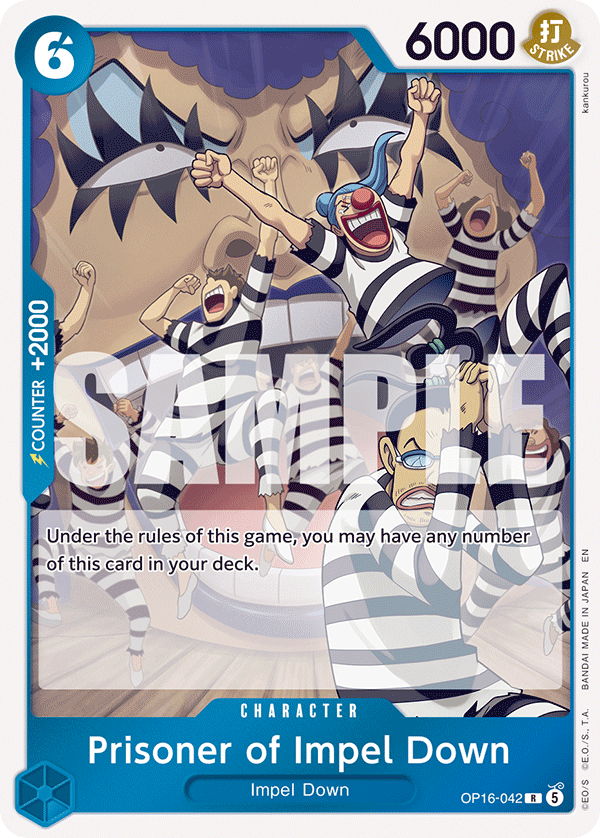 OP16-042OP16-042Shop on TCGplayer Prisoner of Impel Down (Character, 10x) is a 6-cost, 6000-power body with a +2000 Counter, and its rules text permits unlimited copies in a deck instead of the standard four-of cap. That is why the feature list runs ten. It is not an early piece: it is the repeatable curve-topper that gives the deck an always-available Impel Down threat for turns 5 and beyond, once the DON!! engine has generated the resources to play it ahead of schedule.
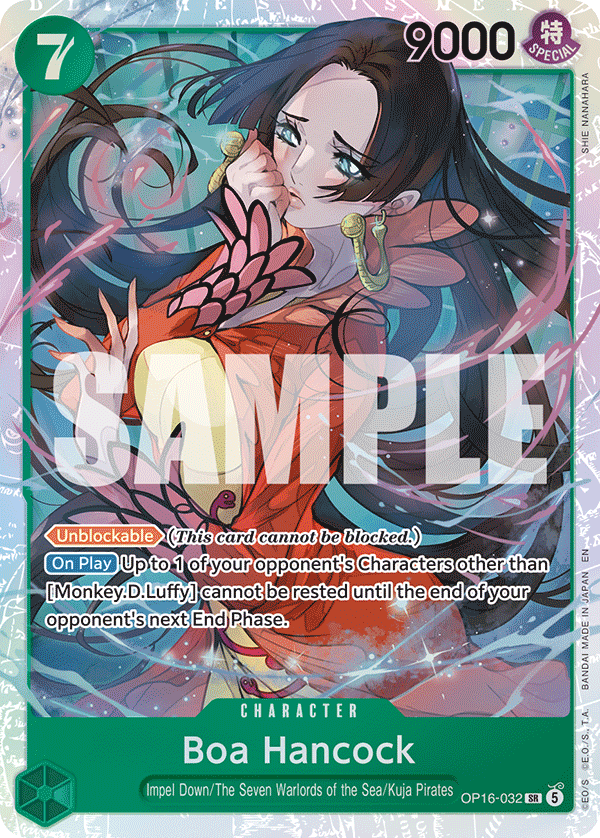 OP16-032OP16-032Shop on TCGplayer Boa Hancock (Character, 4x) is the deck's late-game finisher pressure. Once the DON!! engine is established, Hancock becomes a resource-efficient threat because you are playing her off partially refunded DON!!.
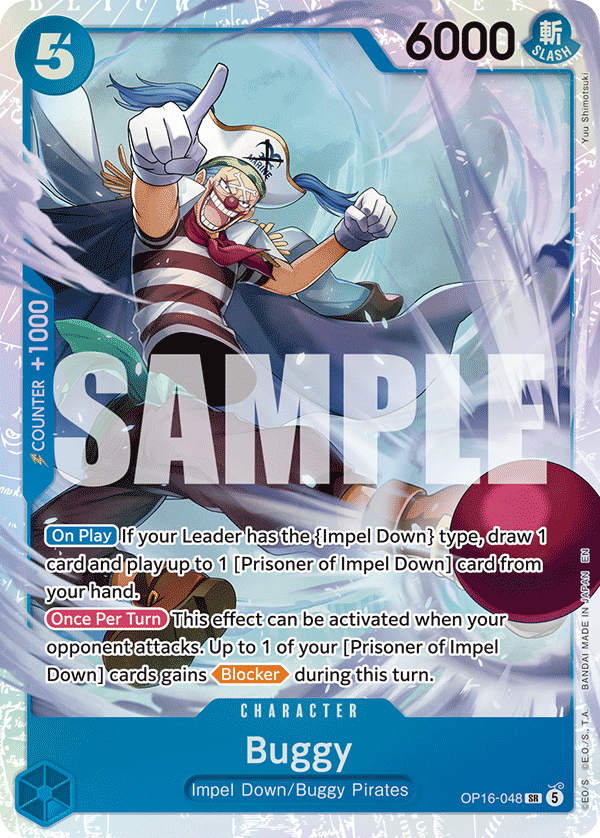 OP16-048OP16-048Shop on TCGplayer Buggy (Character, 4x) and
 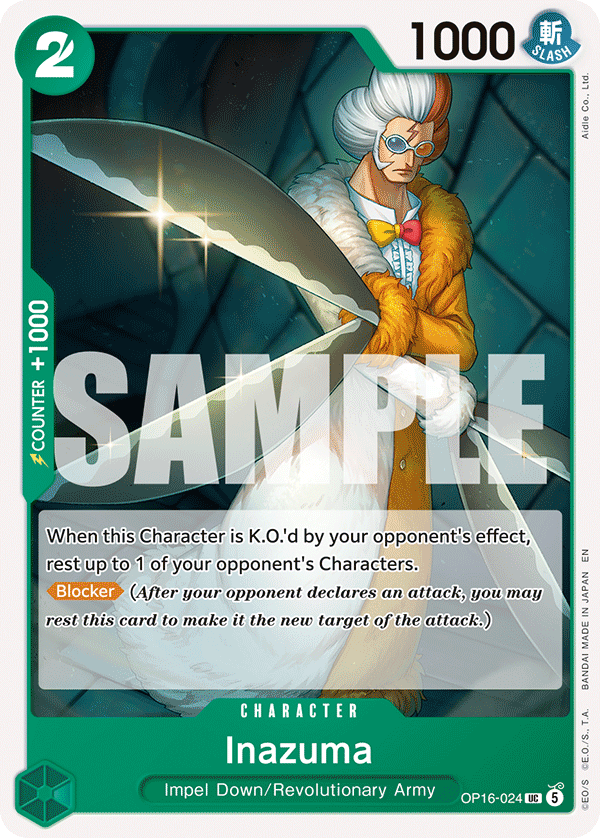 OP16-024OP16-024Shop on TCGplayer Inazuma (Character, 2x) round out the supporting Impel Down cast. Buggy provides swarm presence at mid-cost. Inazuma at 2 copies is a flex slot: he provides utility in specific board states but at lower consistency than the 4-of slots.
Let's Go!! To the Navy Headquarters!! (OP16-038, 2x) is a light counter piece: as a Counter it grants your Leader +3000 power during a battle, and as a Main-phase play it can rest 6 DON!! to set your Leader and all Characters active if you control 5 differently named Impel Down characters, a swingy late-game reset rather than a defensive staple. At only 2 copies it is a situational tool; the deck's actual survival plan leans on its character count and counter-stat pieces like Jinbe.
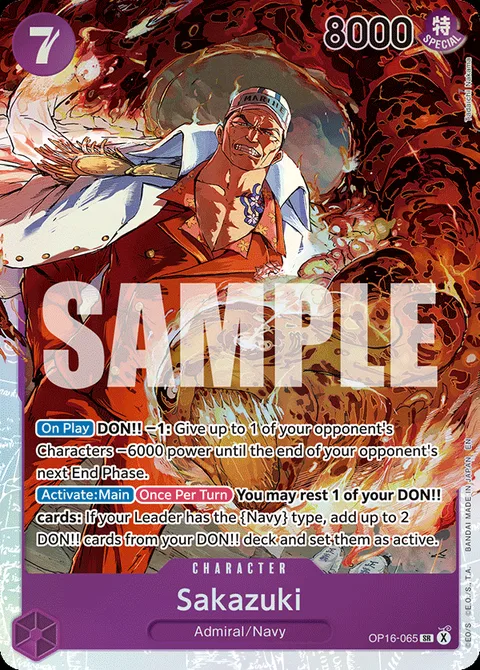 Slower Sengoku decks lean on Sakazuki (OP16-065) to reset the board, which is exactly why Impel Down Luffy wants to close before the Admirals come online.
Step-by-Step: piloting the Impel Down DON!! engine
Knowing the individual cards is one thing. Sequencing them correctly, turn after turn, is what separates a player who understands the deck from one who actually wins with it.
1. Mulligan for a 2-cost Impel Down opener. Mr.1 (OP16-054), Mr.2.Bon.Kurei (OP16-055), or a hand that can play one of them on turn 1 is worth keeping over almost anything else. A hand with only 4-cost-and-up cards costs you a full turn of Impel Down count and delays the leader effect until turn 4 instead of turn 3.
2. Deploy Impel Down characters on turns 1 and 2, and check every card before it hits the board. Every single character you play has to carry the Impel Down trait, no exceptions. Before committing a card, confirm its trait line, one off-trait character shuts off the leader effect for that entire turn, not just for that card.
3. Activate the leader on turn 3 once your whole board is Impel Down-pure. During your main phase, set up to 2 DON!! as active. This is the turn the deck actually starts, everything before it was setup. If your board isn't fully Impel Down by turn 3, wait a turn rather than force the trigger with a mismatched card in play.
4. Spend the refunded DON!! on an extra character or a bigger swing, not both half-heartedly. With 2 free DON!! most turns from here on, decide each turn whether the better line is deploying an additional character (Emporio.Ivankov, Boa Hancock) or powering up an existing attacker. Against removal-heavy opponents, favor extra bodies. Against slower decks, favor pushing damage.
5. Reassess the tribal restriction the moment your opponent's leader is known. Against Sengoku, prioritize deploying faster than Sakazuki can remove your board. Against Blackbeard, spread attacks across multiple characters instead of one big hit, since the redirect only stops one attack per turn. Against Purple Enel, keep individual threats strong rather than spreading wide into an AoE-clear-friendly board.
Matchups
vs. Sengoku Navy: This is one of the tougher matchups. Sengoku lists include 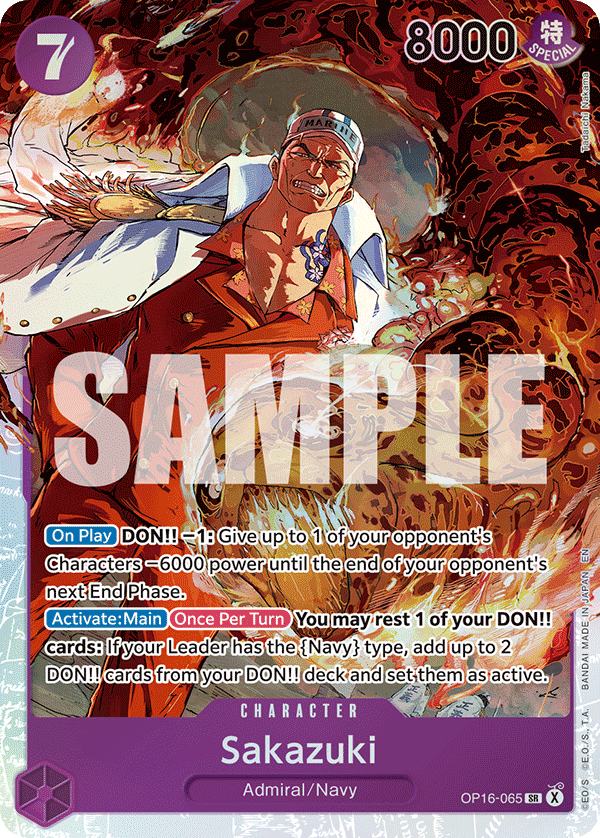 OP16-065OP16-065Shop on TCGplayer Sakazuki (Akainu) as a removal piece, and consistent removal clears your Impel Down board, cutting off the leader effect. The key is deploying characters at a pace faster than removal can answer them. Keep Mr.1 and Mr.2 pressure constant in the early turns so they are spending resources on removal rather than setting up their own engine. Check the full OP-16 Blackbeard Deck Guide for context on how redirect-control matchups play differently from removal-based ones.
vs. Blackbeard (Black/Yellow): Blackbeard's attack redirection disrupts your combat math. You commit power to an attack and the redirect shifts the damage target. Play around this by spreading attacks across multiple characters rather than committing all your DON!! to a single large attacker. The engine advantage gives you the resources to spread pressure in a way that taxes the redirect mechanic.
vs. Buggy (Blue): A mirror-adjacent matchup: both decks share the Impel Down character pool. The difference is your DON!! engine gives you higher individual turn ceilings. Their advantage is a lower average cost curve and more characters on board earlier. Play to your engine, not to racing their character count early.
vs. Rush Aggro (Red Ace): Red Ace is the most dangerous matchup. Four Life is manageable until the burn effects start adding up. The Let's Go!! Event becomes critical here: hold counter coverage for the key attack windows. Do not overextend into board if it leaves you unable to defend life. See the OP-16 Ace Deck Guide for how the Whitebeard Pirates burn build applies this same aggro pressure from the other side of the table.
vs. Purple Enel: Enel lists use board clears and draw engines that punish wide boards. The Impel Down build is vulnerable here because your tribal restriction means you cannot pivot easily. Focus on presenting individual high-power threats rather than spreading a wide board that is more exposed to AoE removal. The DON!! refund lets you redeploy after clears faster than most decks can.
GODEEPER: Trafalgar Law isn't a leader in OP-16 at all. See what his two real Character cards actually do and where Law shows up in the current meta. OP-16 Law Deck Guide →
Related Reading
-
One Piece TCG OP-16 Guide: Set Review & Leaders (2026): Full OP-16 set overview, all six leaders, and key mechanics.
-
OP-16 Buggy Deck Guide: Buggy runs many of the same Impel Down characters but at lower average cost with a different leader effect, making it the budget-friendly Impel Down option.
-
Purple Enel Deck Guide for One Piece TCG OP-16 2026: a difficult matchup with its own build and disruption-plan sequencing.
-
OP-16 Sengoku Deck Guide: Purple Marine Admirals Build: the Admiral removal package that punishes a slow Impel Down board, covered from the Sengoku side.
-
One Piece TCG OP-16 Meta Report July 2026: historical OP-16 win-rate context from July 2026.
-
OP-16 All 6 Leaders Explained: side-by-side comparison of all leaders including both Luffy variants and their differences.
-
OP-17 Spoilers Complete Tracker: Every confirmed OP-17 leader, card, and release detail as spoilers drop.
Frequently Asked Questions
What color is the Impel Down Luffy leader in OP-16? OP16-022 Monkey.D.Luffy is Green/Blue. He requires all characters in play to have the Impel Down trait to activate his DON!! refresh effect, which makes him a tribal build rather than a generic Green/Blue tempo deck.
Can I mix in non-Impel Down Green/Blue characters? No. Adding a single character without the Impel Down trait shuts off your leader ability for that turn. The restriction is strict: ALL characters currently in play must carry the Impel Down trait or you cannot activate the effect.
How many DON!! does Luffy OP16-022 refund per turn? Up to 2 DON!! become active once per turn during your main phase, provided the Impel Down restriction is met. Over a 5-turn mid-game stretch, that is 10 extra DON!! worth of tempo advantage.
Is the Impel Down Luffy deck expensive to build? The official Bandai feature list uses mostly OP-16 cards. Limitless lists the standard OP16-022 Leader at about $0.18 in its current snapshot, while tracked competitive lists vary by card mix and current singles prices. Check live listings before budgeting for the full build.
How does this deck compare to the unrestricted Green/Blue Luffy build? There is no equivalent unrestricted version if you want the Leader effect to fire. Adding even one non-Impel Down character shuts off the DON!! refund for that turn entirely. Current competitive lists generally preserve the Impel Down core, while the exact card mix varies.
What is the best counter to Impel Down Luffy? Wide-board clear effects hurt this deck badly since it needs multiple characters in play to gain value. Decks with persistent removal or Rush attackers that threaten life before your engine comes online are the strongest counters.
Does Buggy work in both the Impel Down Luffy and Buggy decks? Yes. Several OP-16 Buggy and Impel Down characters overlap between the two archetypes. The difference is the leader: OP16-022 Luffy uses the DON!! refund for tempo, while the Buggy leader uses Impel Down characters for a swarm strategy at lower average card cost.
References
- Official Bandai OP16-022 Feature Deck: the 50-card official Impel Down Luffy decklist published by Bandai
- gumgum.gg OP16-022 Decklists: community submitted and tournament-verified decklists for Monkey.D.Luffy OP16-022
- TCGPlayer One Piece TCG: card pricing reference
- TCG Contender One Piece meta: September 13, 2026 current placement for Green/Blue Luffy
- Limitless OP16-022 card page: current card text, Leader stats, price, and tournament deck references
- Limitless Green/Blue Luffy card breakdown: current average deck composition and tracked deck value
Was this guide helpful?
Cards in this article
About the author
KT
Competitive TCG Analyst
Competitive One Piece TCG player and deck builder with 3 years of tournament experience. Covers meta analysis, tier lists, and leader builds.
- 3 years competitive OPTCG tournament experience
- Regional top 8 finisher
- Deck builder and meta analyst
- Covers every set since OP-01
Disclaimer
This article is published for informational and entertainment purposes. It does not constitute professional financial, legal, or technical advice. Game performance, online services, patch schedules, and store listings change. Verify critical details (pricing, system requirements, regional availability) with publishers and storefronts before you buy. Affiliate links, where present, help support our editorial work and are labelled in our affiliate disclosure.