

Shonen TCG · Guides
One Piece TCG DON Cards: 10 Per Deck, Rest or Attach
One resource, two jobs. Every turn you're choosing between a bigger board and a bigger swing.
Our callYou get 2 DON!! a turn from a separate 10-card deck (1 on the very first turn); rest them to pay costs or give them for +1000 power each, and all of it comes back next turn.
One Piece TCG DON cards are your only resource, and every turn they ask the same question: build the board or hit harder. You get 2 DON!! a turn from a separate 10-card DON!! deck (only 1 on the first player's first turn). Rest them to pay a card's cost, or give them to your Leader or a Character for +1000 power each. Either way, they all come back at the start of your next turn.
Updated October 16, 2026: every rule re-checked against the Comprehensive Rules, Version 1.2.1 (last updated August 28, 2026). We added the turn-by-turn DON!! count for both seats, what happens to given DON!! when a Character is K.O.'d, and the fact that given DON!! does nothing on your opponent's turn. Two image captions now say which cards they show.
The 10-card DON!! deck
Each player brings exactly 1 Leader, a 50-card deck and a 10-card DON!! deck. The DON!! deck sits in its own area, face-down, and you never draw from it. Cards only leave it during your DON!! Phase or through a card effect.
Ten is the ceiling. Once your cost area holds all 10, the game stops being about getting more resources and starts being about spending a full pool well.
How many One Piece TCG DON cards you have each turn
Your turn runs Refresh, Draw, DON!!, Main, End. In the DON!! Phase you place 2 DON!! from the DON!! deck into your cost area. The player going first places only 1 on their first turn, and also skips the first draw. If the DON!! deck has 1 card left you place 1, and at 0 you place none.
We counted it out from those rules, with no card effects:
| Your turn | Going first: DON!! in cost area | Going second: DON!! in cost area |
|---|---|---|
| 1 | 1 | 2 |
| 2 | 3 | 4 |
| 3 | 5 | 6 |
| 4 | 7 | 8 |
| 5 | 9 | 10 |
| 6 | 10 | 10 |
So the second player is always one DON!! ahead until they cap, and they get there a full turn earlier. That's the price of going first, along with the missing draw; what you get for it is the first chance to build a board. Neither player can attack on their own first turn, so the first player's lone DON!! is only for playing a card.
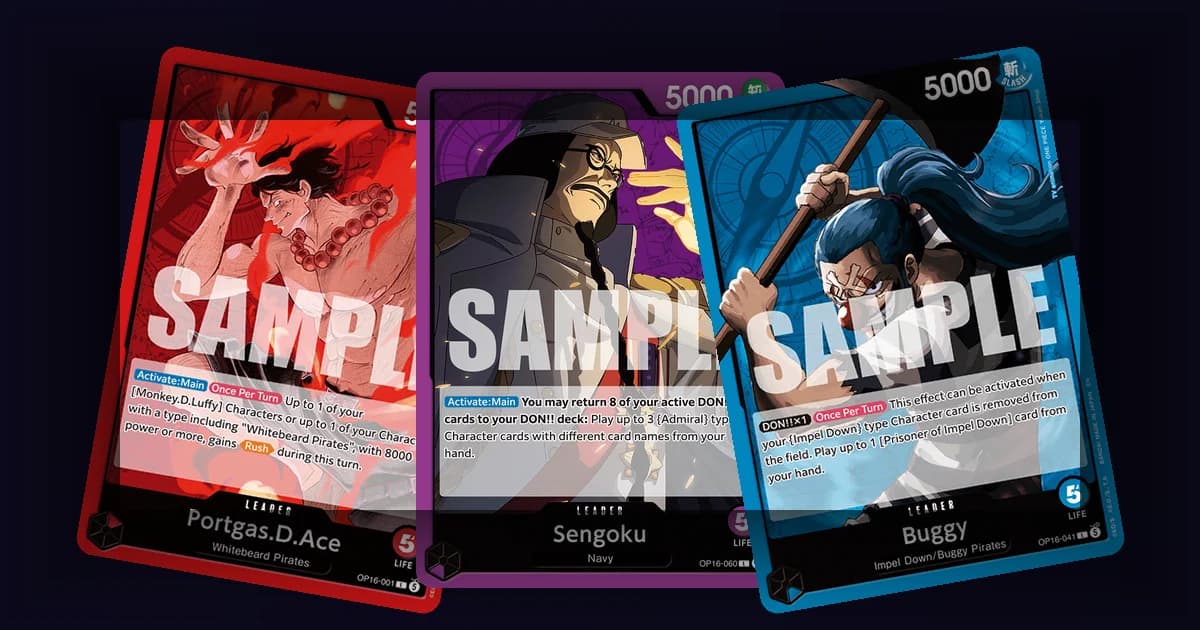
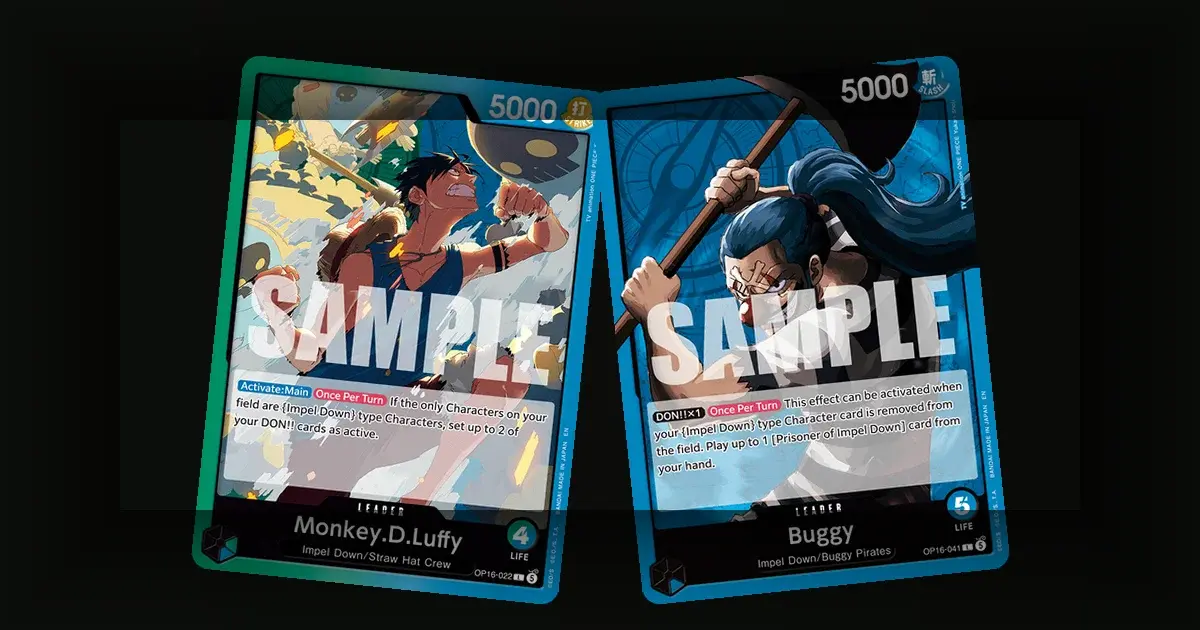
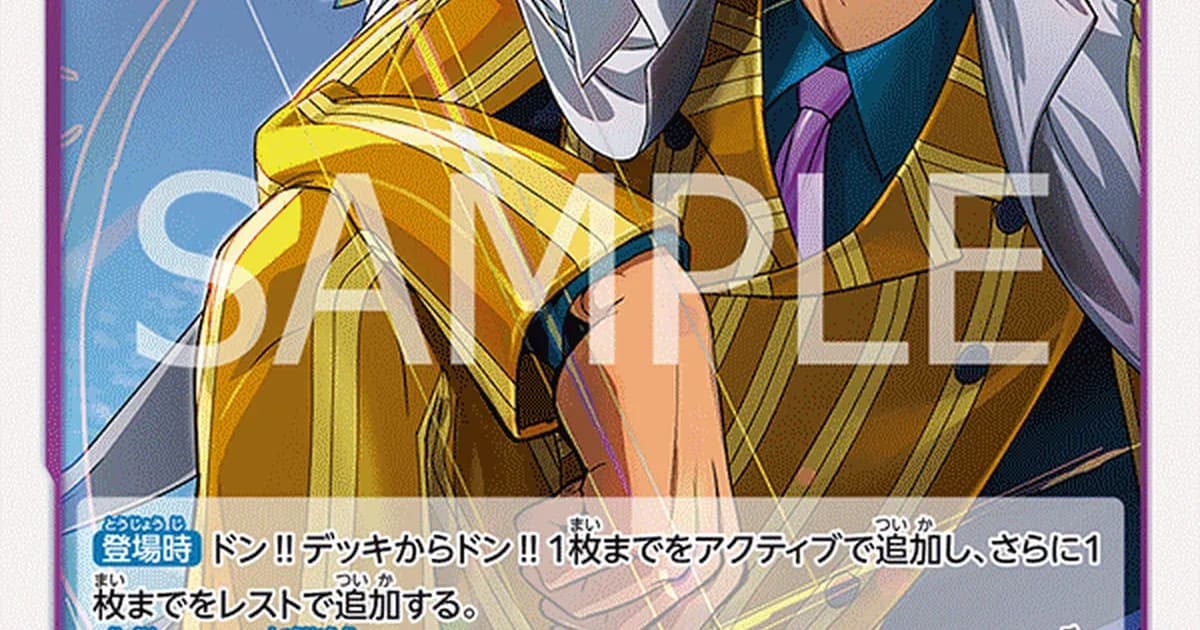
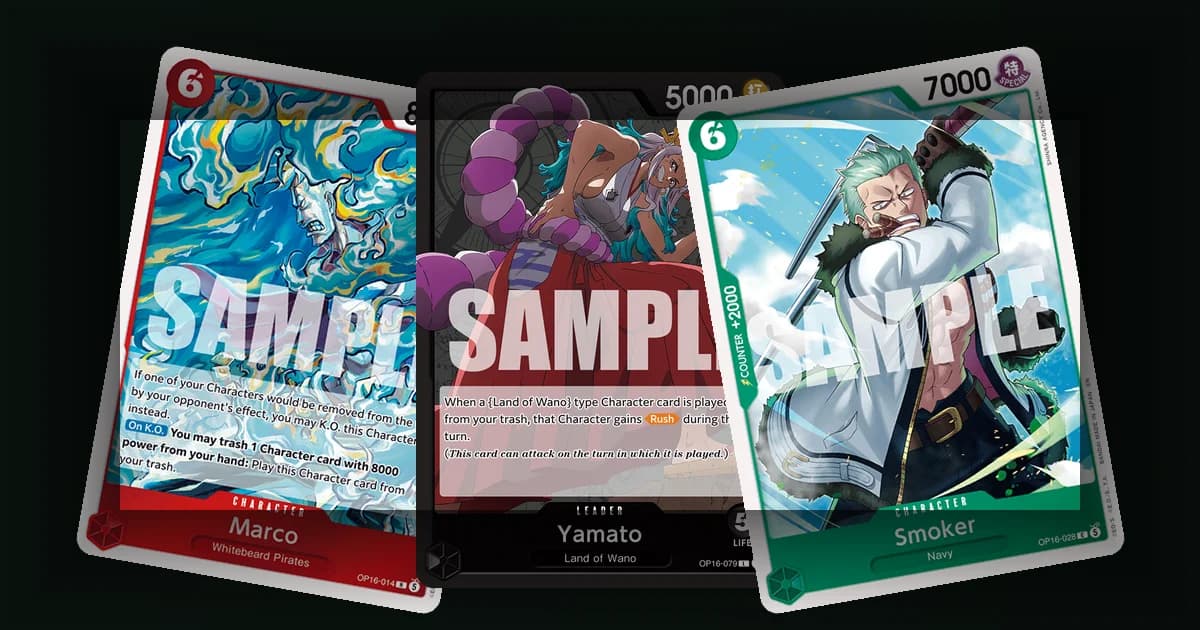
 Image: official Bandai sample cards (OP16), via the One Piece Card Game site. Green/Blue Luffy's Leader effect sets up to 2 of your DON!! as active again if your only Characters are Impel Down types.
Rest or give: the two ways to spend DON!!
Rest DON!! to pay costs
To play a Character, Event or Stage, you rest DON!! from your cost area equal to its cost. A 4-cost Character takes 4 DON!!. Some effects cost "DON!! −1" instead, which means returning a DON!! to your DON!! deck, not resting it.
Give DON!! for +1000 power
In your Main Phase you can take an active DON!! from your cost area and place it under your Leader or a Character. The rules call this "giving" (players say "attaching"). Each DON!! given adds 1000 power during your turn, and you can give as many as you have active.
Two DON!! on a 5000-power Leader makes a 7000 attack. The catch is that you give DON!! before you declare the attack, so the defender sees the final number before deciding to block or counter. And the power only counts on your turn: given DON!! does nothing while your opponent is attacking.
A DON!! you rest to play a card is a DON!! you can't give this turn. That's the decision the whole game hangs on. Frankaboutonepiece's beginner video walks through the choice on a real board:
Given DON!! comes back
Giving DON!! doesn't waste it. In your next Refresh Phase, every DON!! given to your Leader and Characters goes back to your cost area, and then everything rested stands up again. Your whole pool is ready before your next Main Phase.
If a Character with DON!! on it is K.O.'d or leaves the field some other way, the DON!! isn't lost either. It drops to your cost area rested and refreshes with the rest next turn. So giving 2 DON!! to a Character your opponent then removes only costs you that turn's power, not the resources.
GODEEPER: The defender's answer to your boosted attacks is the Counter Step. One Piece TCG Counter Mechanic Explained
How the colors bend the DON!! rules
The base rules above are the same for everyone. Leader and Character effects are where colors break them:
- Green/Blue Luffy (
 OP16-022
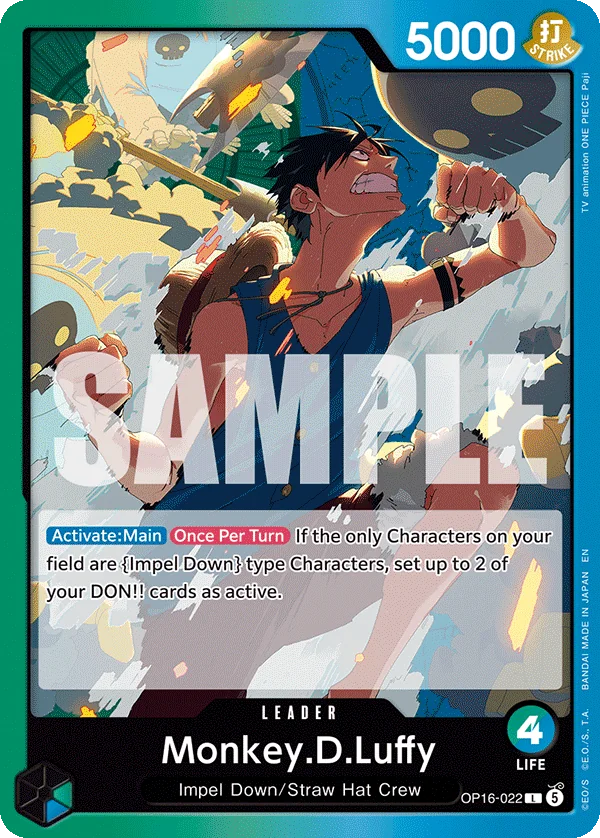 OP16-022Shop on TCGplayer) sets up to 2 of your DON!! active again once per turn, as long as your only Characters are Impel Down types. That's two extra DON!! to spend.
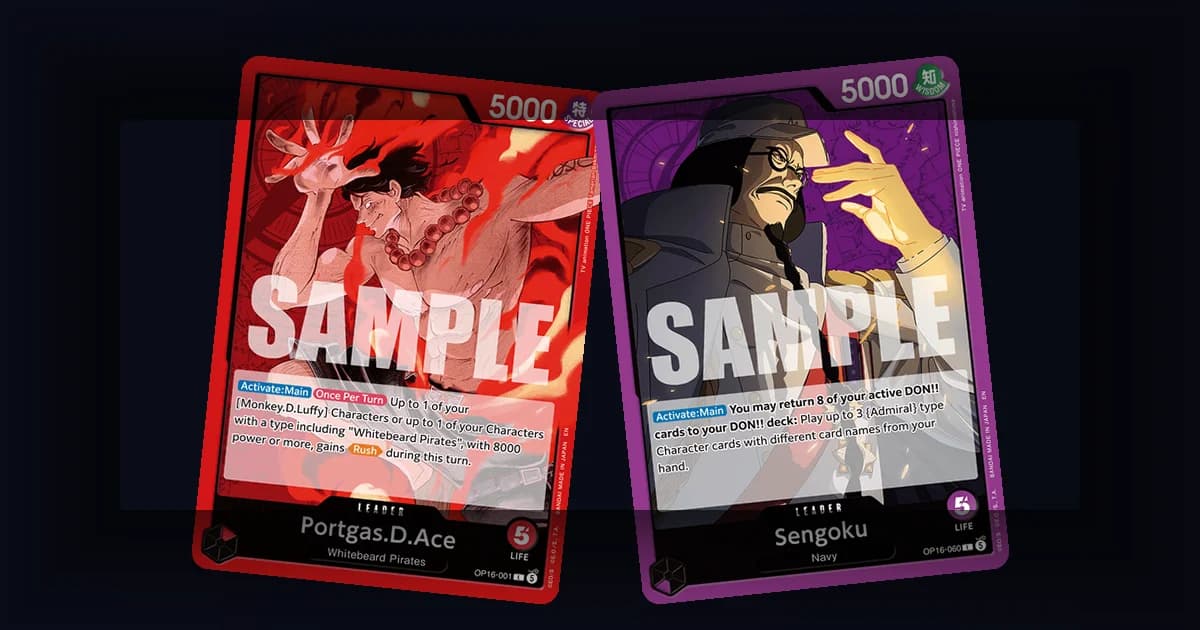
- Purple Sengoku (
 OP16-060
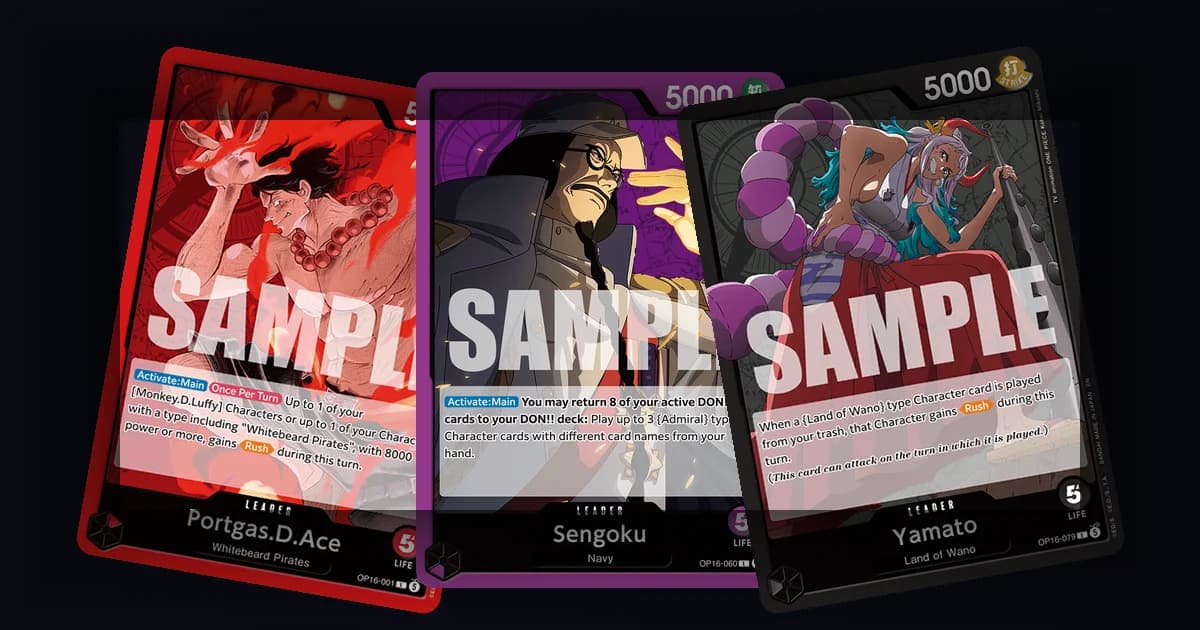
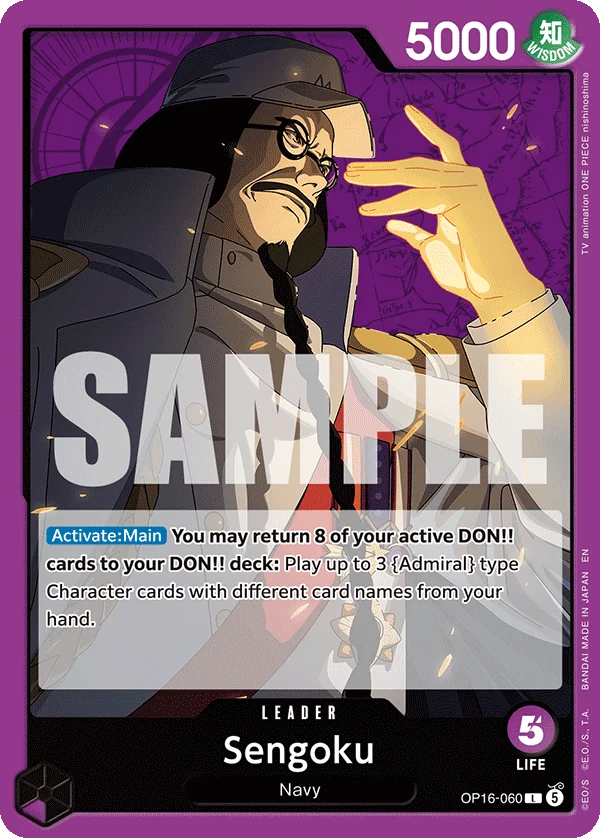 OP16-060Shop on TCGplayer) goes the other way: return 8 active DON!! to the DON!! deck to play up to 3 Admiral Characters with different names from your hand. You empty your pool for a huge board in one turn.
- Purple Sakazuki (
 OP16-065
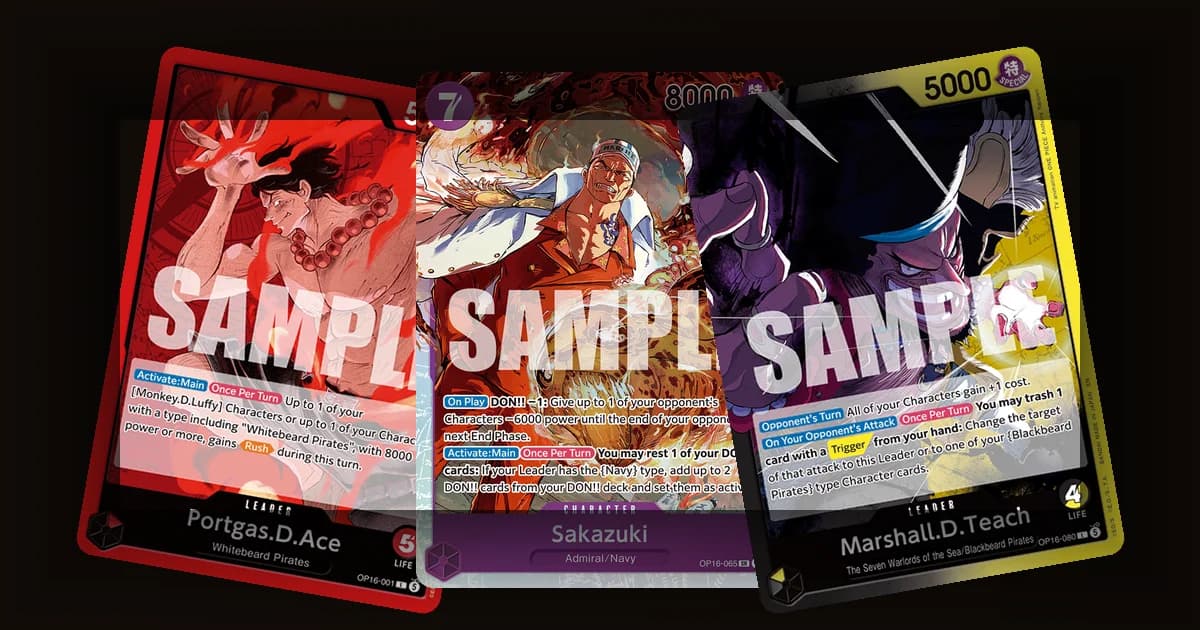
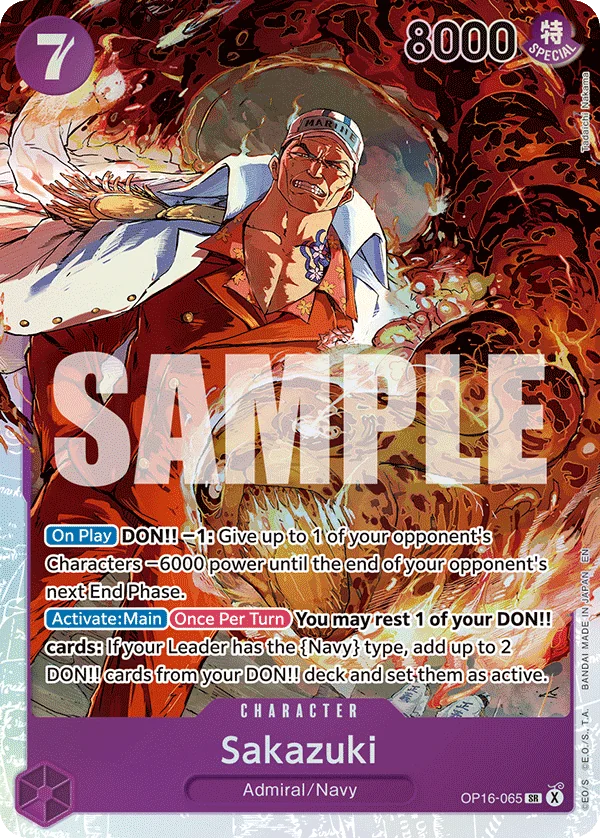 OP16-065Shop on TCGplayer), an Admiral, costs DON!! −1 on play to give an opponent's Character −6000 power, and once per turn can rest 1 DON!! to add up to 2 from your DON!! deck as active if your Leader is a Navy type.
Purple is the color that plays with the DON!! deck itself, returning and adding cards. If you're new, read every "DON!! −X" and "add DON!!" effect twice; they're the ones that change the table above.
 Image: official Bandai sample cards (OP16), via the One Piece Card Game site. Sengoku is a Leader; Sakazuki is a 7-cost Character with two DON!! effects.
Mistakes that cost games
- Never giving DON!!: spending every DON!! on Characters keeps your attacks at base power, and they bounce off a single Counter.
- Saving DON!! "for later": unused DON!! doesn't carry over as extra. It all refreshes anyway.
- Forgetting it's turn-only: given DON!! won't save a Character on your opponent's turn.
- Not counting theirs: the opponent's active DON!! tells you how much they can put on each attacker next turn, and how many Counter Events they can pay for right now.
How you give matters as much as how much. In an r/OnePieceTCG thread about a missed lethal, u/lhwang001 described the standard approach when you can't survive another turn: "spread the dons on all your attackers so you can attack into their life with gradual increase in power." Each Life card the defender takes is another card they can counter with, so the later swings need to be bigger.
Our take: plan each turn around one job. Either develop (play the Characters, give what's left to the Leader) or push (give everything to the attacks, spread so each swing needs a counter). Doing half of each usually means a board that's too small and a swing that gets countered. And if you're new, go second when you get the choice: being a DON!! ahead for five turns is easier to learn with than the first-turn tempo.
Related reading
- How to play One Piece TCG: the full turn the DON!! Phase sits in.
- One Piece TCG attacking rules: how DON!! power plays out in a battle.
- One Piece TCG life cards: what happens when a boosted attack connects.
- One Piece TCG deck building guide: building a cost curve that matches the table above.
- One Piece TCG mulligan guide: keeping hands that use early DON!! well.
How we checked this: 19 facts checked on October 16, 2026, against the One Piece Card Game Comprehensive Rules, Version 1.2.1 (sections 3-3, 5-1-2, 6-1 to 6-5 and 8-3), with card text from Limitless TCG's card pages. The DON!! table is counted from rule 6-4 with no card effects. Last reviewed: October 16, 2026.
Was this guide helpful?
Cards in this article
About the author
Pen name for the Shonen TCG desk's tournament coverage, format analysis and cross-game comparisons.
- Results taken from event pages and standings
- Other games checked against their own official rules
- Opinions marked as ours, with the reason
Keep reading
One Piece TCG Mulligan Guide: Rules and Which Hands to Keep
Guides · 6 min
OP-16 Japanese vs English Price Guide: Which to Buy
Guides · 10 min
One Piece TCG Keywords Explained: Rush, Blocker & More
Guides · 9 min
OP-16 Where to Buy: Post-Launch Buying Guide for 2026
Guides · 10 min
One Piece TCG Life Cards: Face-Down, Damage and Triggers
Guides · 6 min
One Piece TCG Counter Rules: Counter Step and Values
Guides · 11 min
OP-16 Full Card List & Spoilers: What's in the Set
Guides · 10 min
OP-16 Most Expensive Cards: Top 6 Ranked by Price (2026)
Guides · 5 min
Disclaimer
This article is published for informational and entertainment purposes. It does not constitute professional financial, legal, or technical advice. Game performance, online services, patch schedules, and store listings change. Verify critical details (pricing, system requirements, regional availability) with publishers and storefronts before you buy. Affiliate links, where present, help support our editorial work and are labelled in our affiliate disclosure.