

Shonen TCG · Guides
OP-16 All 6 Leaders Explained: Colors & Which to Build
This OP-16 all 6 leaders explained guide uses the official OP-16 product page and card list as its factual baseline. It separates printed color, type, Life, and effect text from the play-style recommendations, so you can choose a Leader without relying on pre-release guesses or unverified price rankings.
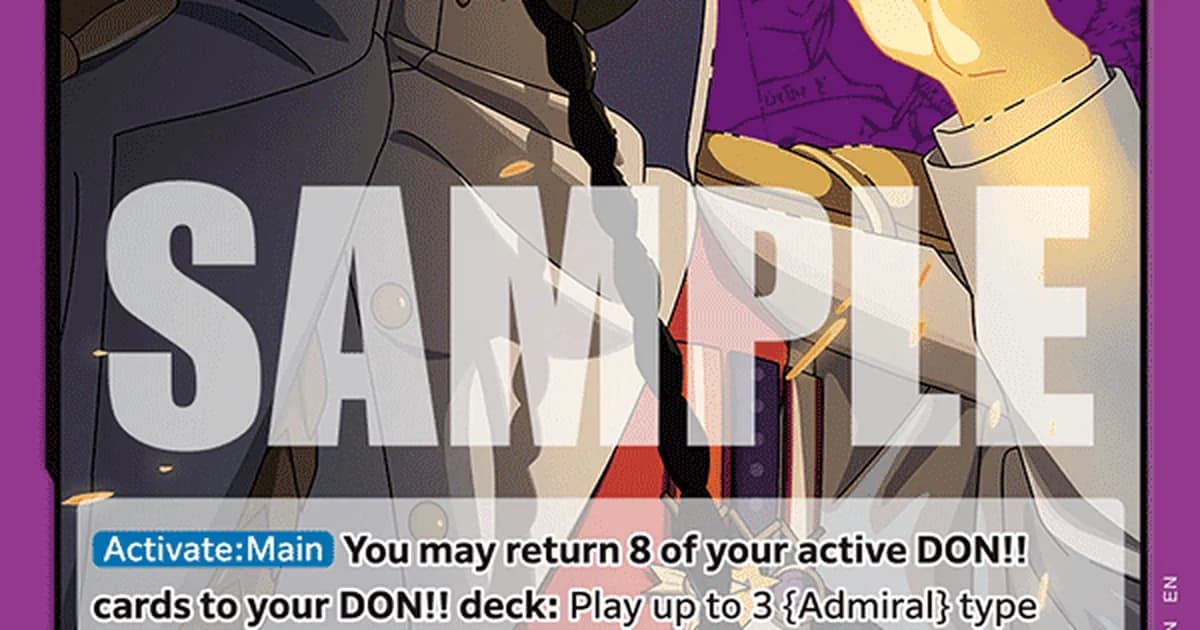
OP-16 has six Leaders: Portgas.D.Ace, Monkey.D.Luffy, Buggy, Sengoku, Yamato, and Marshall.D.Teach. They cover Red, Green/Blue, Blue, Purple, Black, and Black/Yellow. The most important correction for new players is that prominent OP-16 characters such as Sakazuki, Marco, and Garp are not Leaders.
TL;DR: Ace is a Red Whitebeard Pirates Leader whose effect gives Rush to a qualifying Luffy or Whitebeard Pirates Character. Luffy is Green/Blue and restores up to two DON!! when only Impel Down Characters are on your field. Buggy is Blue and replaces a removed Impel Down Character with a Prisoner of Impel Down from hand. Sengoku is Purple Navy support for Admiral Characters. Yamato is Black Land of Wano recursion. Teach is Black/Yellow control with attack redirection. Ace, Buggy, Sengoku, and Yamato have 5 Life; Luffy and Teach have 4.
OP-16 all 6 leaders explained: quick answer
| Leader | Card | Official color | Life | Official type | Printed hook |
|---|---|---|---|---|---|
| Portgas.D.Ace | OP16-001 | Red | 5 | Whitebeard Pirates | Gives Rush to a qualifying Luffy or Whitebeard Pirates Character |
| Monkey.D.Luffy | OP16-022 | Green/Blue | 4 | Impel Down/Straw Hat Crew | Sets up to 2 DON!! active if only Impel Down Characters are on your field |
| Buggy | OP16-041 | Blue | 5 | Impel Down/Buggy Pirates | Can play a Prisoner of Impel Down when an Impel Down Character leaves |
| Sengoku | OP16-060 | Purple | 5 | Navy | Trades 8 active DON!! for up to 3 different Admiral Characters from hand |
| Yamato | OP16-079 | Black | 5 | Land of Wano | Gives Rush to a Land of Wano Character played from trash |
| Marshall.D.Teach | OP16-080 | Black/Yellow | 4 | The Seven Warlords of the Sea/Blackbeard Pirates | Raises your Characters' costs and can redirect an attack |
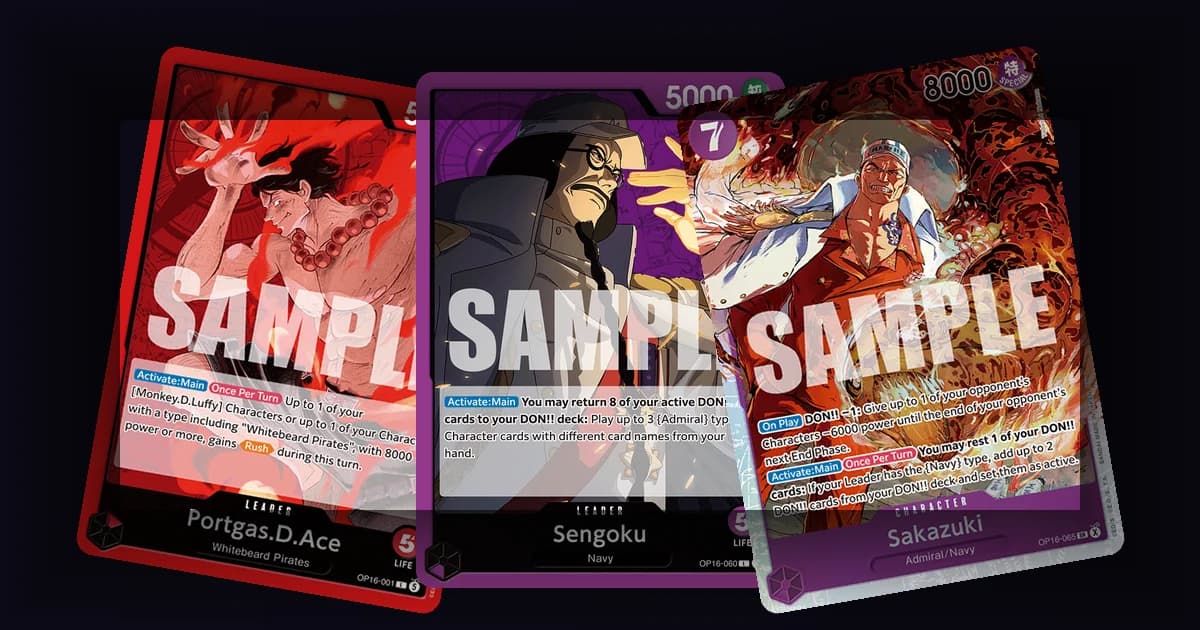
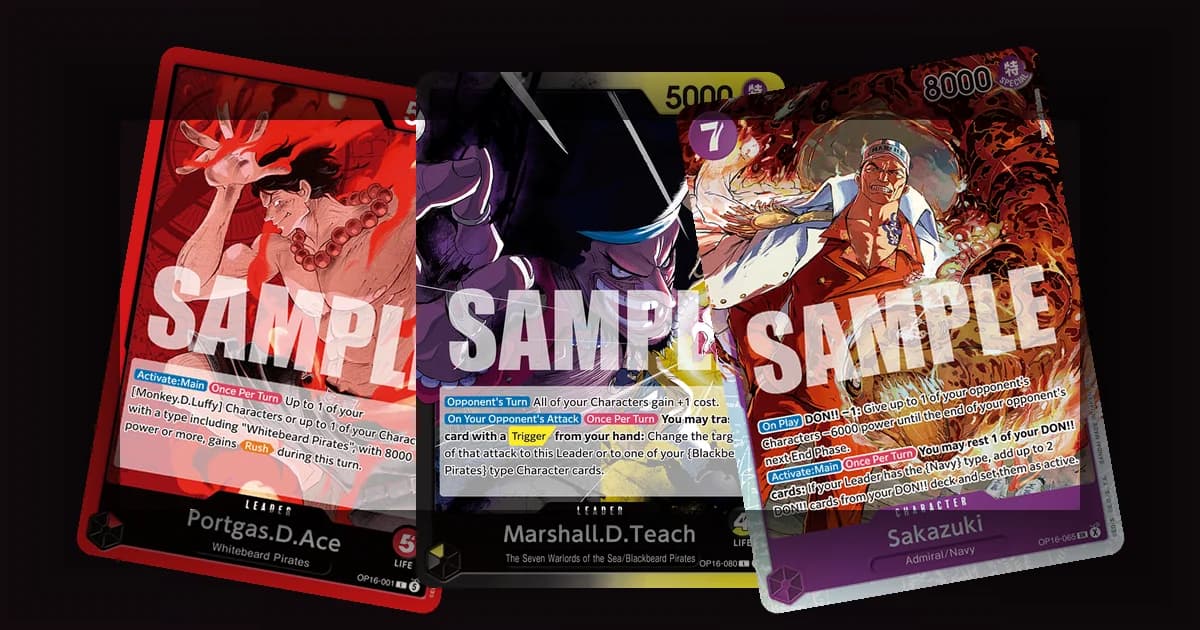
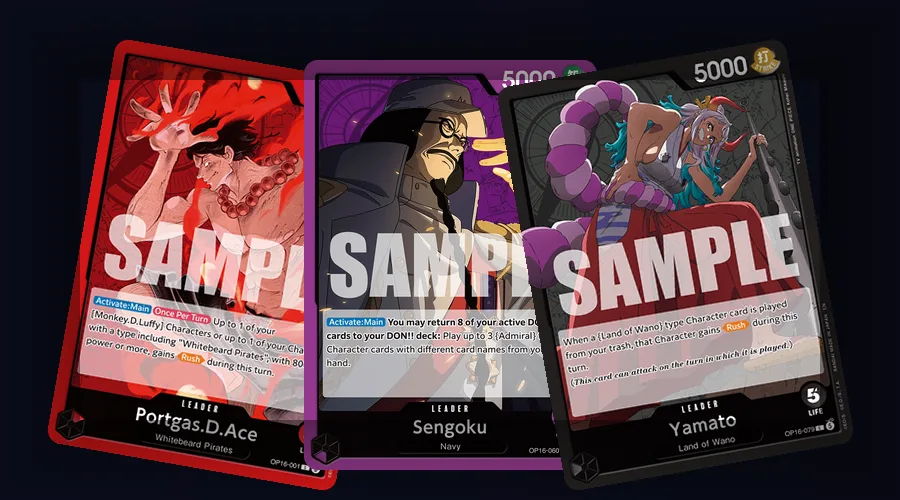 Real OP-16 card assets showing Ace, Sengoku, and Yamato. The image illustrates printed Leader effects and is not a complete six-Leader lineup.
The Green/Blue order for Luffy and the full trait names above follow the current official card list. That detail matters when you search for support cards or check whether a card belongs in a legal deck.
OP-16 all 6 leaders explained: card-by-card
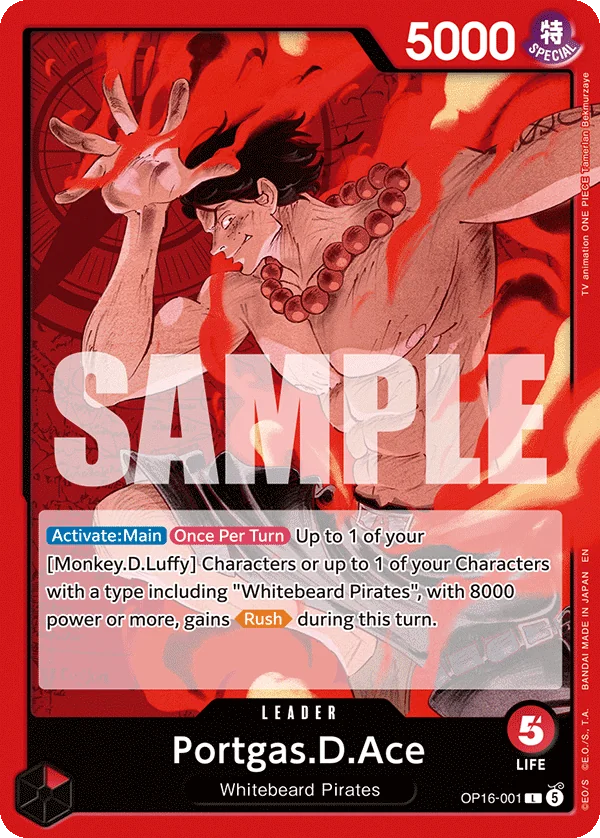
Portgas.D.Ace: Red Whitebeard Pirates
 OP16-001OP16-001Shop on TCGplayer
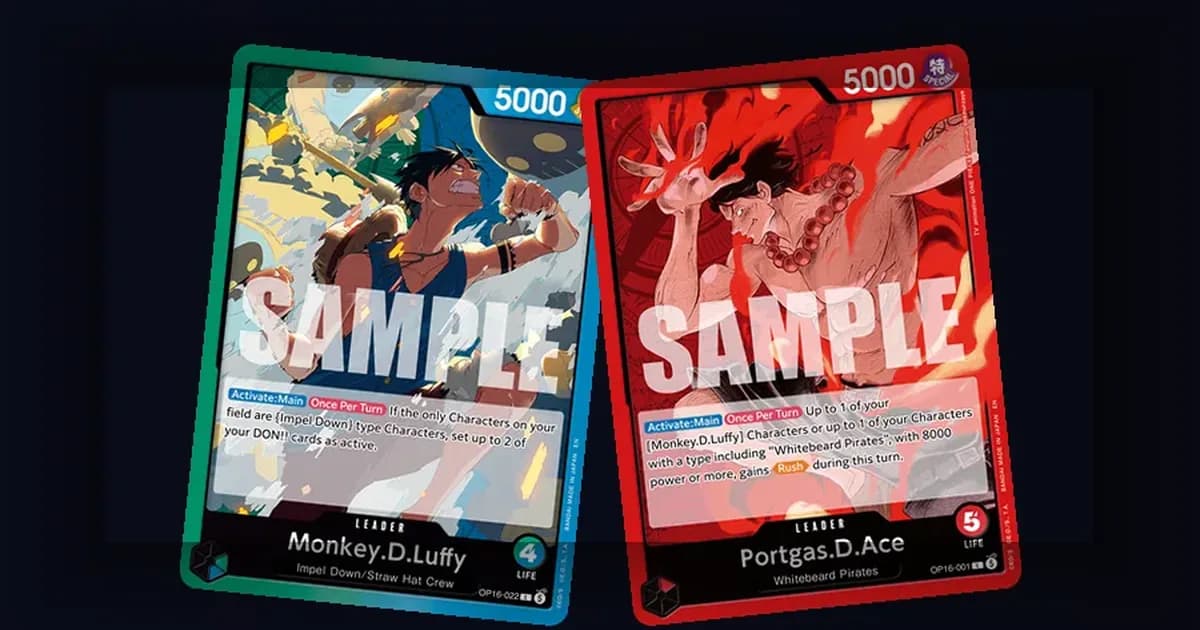
Ace is a Red Leader with 5 Life and the Whitebeard Pirates type. Once per turn during the Main Phase, the printed effect can give Rush to either one Monkey.D.Luffy Character or one Whitebeard Pirates Character with at least 8000 power.
That effect creates a direct pressure plan. You want large Characters that become immediate attackers, then use the rest of the deck to protect the board and keep attacking Life. This is a good choice if you prefer a clear offensive turn and do not want your Leader text to depend on a long chain of conditions.
The OP-16 Ace deck guide covers the card choices and sequencing in more detail. The One Piece TCG OP-16 complete guide is the broader set reference if you want to compare Ace with all five alternatives.
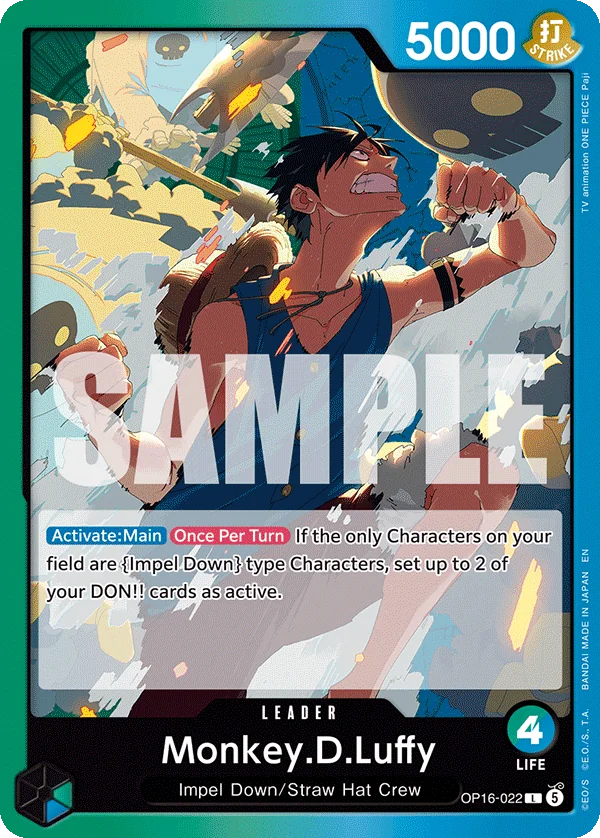
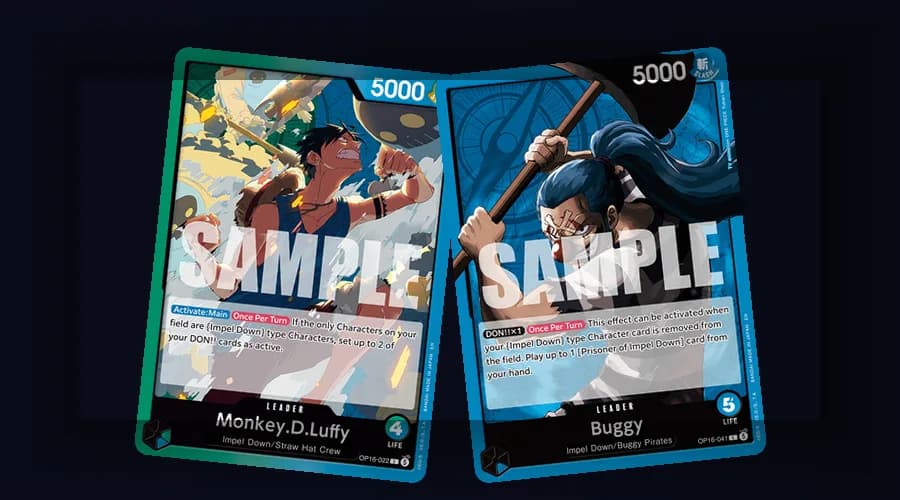
Monkey.D.Luffy: Green/Blue Impel Down and Straw Hat Crew
 OP16-022OP16-022Shop on TCGplayer
Luffy has 4 Life, the Green/Blue color identity, and the Impel Down/Straw Hat Crew type. His once-per-turn Main effect can set up to two of your DON!! cards active if the only Characters on your field are Impel Down Characters.
The condition is the key to the deck. The Leader does not reward a board containing any mixture of Straw Hat Crew and Impel Down Characters. If you want to use the DON!! effect, every Character on your field must satisfy the Impel Down condition at that moment. That gives the archetype a strong sequencing puzzle: develop the right board, use the effect, then spend the refreshed DON!! without breaking the intended line.
Treat Luffy as a tempo Leader with a strict board check, not as a generic two-color good-stuff option. The OP-16 Luffy deck guide and its Impel Down variant show how those two approaches differ.
Buggy: Blue Impel Down and Buggy Pirates
 OP16-041OP16-041Shop on TCGplayer
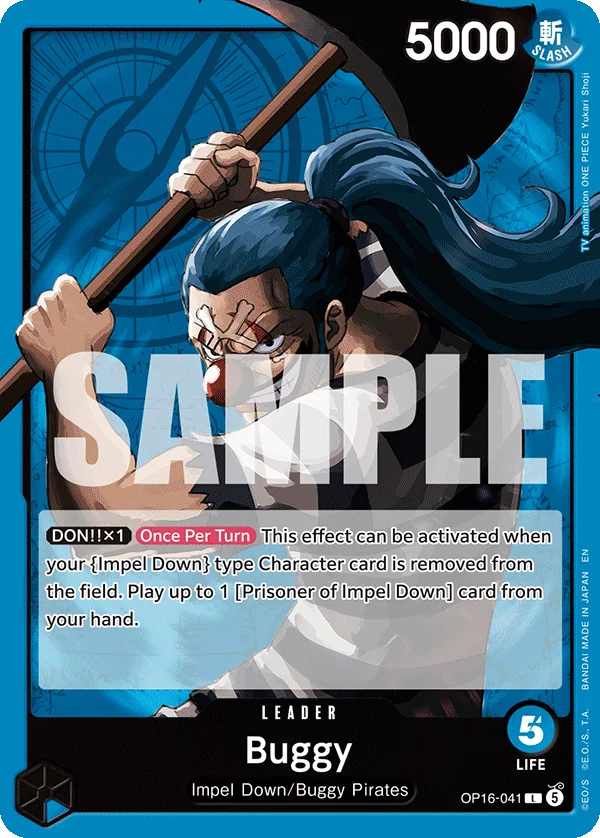
Buggy is a Blue Leader with 5 Life and the Impel Down/Buggy Pirates type. With at least one DON!! given to the Leader, its once-per-turn effect can activate when one of your Impel Down Character cards leaves the field and play up to one Prisoner of Impel Down from your hand.
That text points toward a wide board and makes the timing of removal important. A Character leaving the field is not automatically a disadvantage if the Leader turns that event into another body. You still need the correct Prisoner card in hand and enough DON!! to meet the Leader's condition, so the deck rewards planning rather than mindless swarming.
Use the OP-16 Buggy deck guide for a full list. The official card list is the authority for the exact color, trait, and Leader wording.
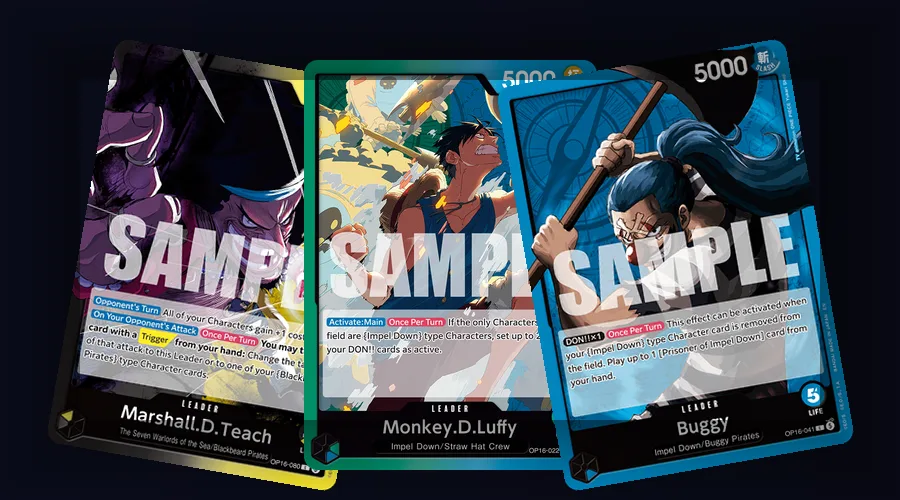 Real OP-16 card assets showing Teach, Luffy, and Buggy. These are representative English Leader cards, not a synthetic product image.
Sengoku: Purple Navy and Admiral Characters
 OP16-060OP16-060Shop on TCGplayer
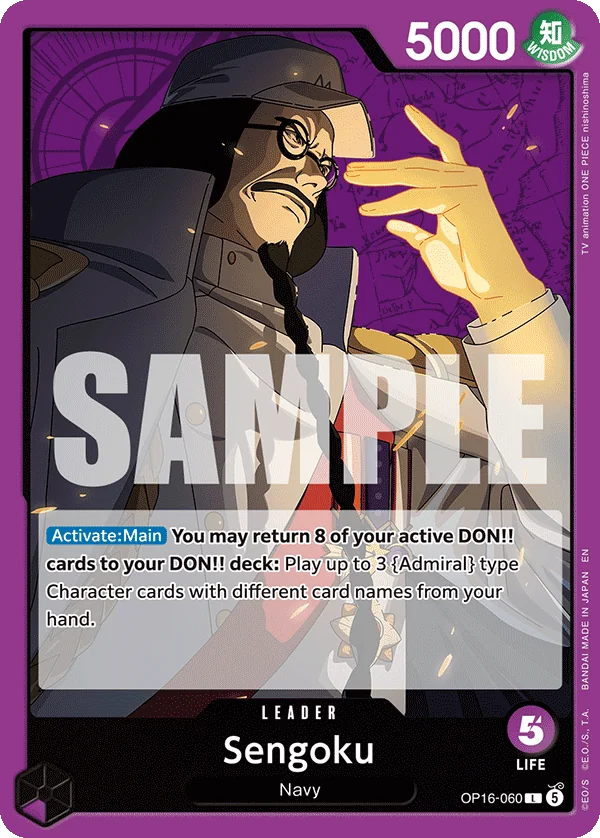
Sengoku is a Purple Leader with 5 Life and the Navy type. Its Main effect may return 8 active DON!! cards to the DON!! deck, then play up to three Admiral Characters with different card names from your hand.
This is a payoff Leader, not a generic DON!! acceleration effect. The activation asks you to build a hand containing different Admirals and to preserve eight active DON!! at the right time. In return, one Main effect can put several expensive Characters onto the field without paying their normal costs individually.
The official product page also highlights the Three Admirals in OP-16's Super Alt-Art feature. That is a product treatment, not a claim that every Admiral is a Leader. For the deck's timing and hand requirements, see the OP-16 Sengoku deck guide and the Three Admirals guide.
Yamato: Black Land of Wano recursion
 OP16-079OP16-079Shop on TCGplayer
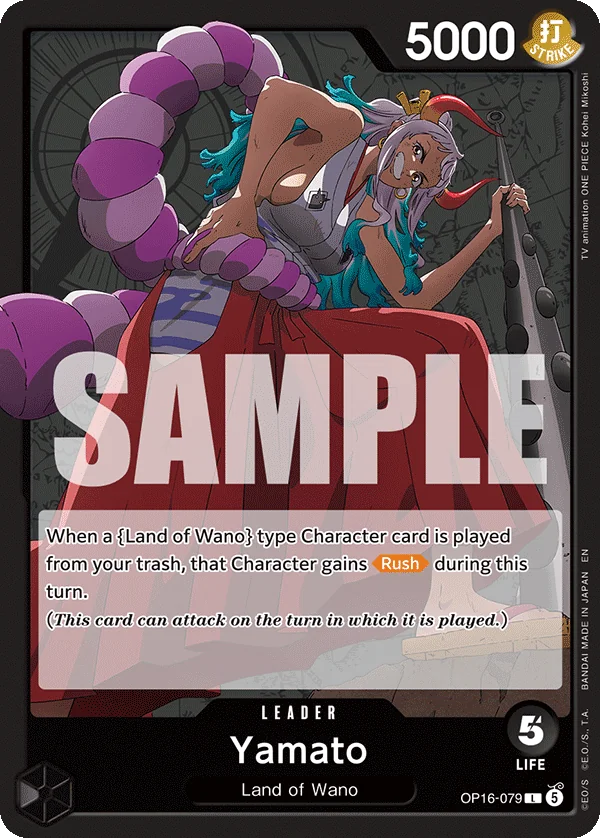
Yamato is a Black Leader with 5 Life and the Land of Wano type. Whenever a Land of Wano Character is played from your trash, that Character gains Rush during the turn.
The effect turns a legal trash-to-field play into immediate pressure. It does not give every Black Character Rush and it does not work simply because a card has been discarded. The Character must be a Land of Wano card and must be played from your trash.
Choose Yamato if you like tracking the trash as a second resource and planning turns around a Character returning with an attack available. That recursion line can be powerful, but it asks you to manage removal, hand size, and the timing of the play-from-trash effect together. Start with the OP-16 Yamato deck guide for the full shell.
Marshall.D.Teach: Black/Yellow Blackbeard Pirates control
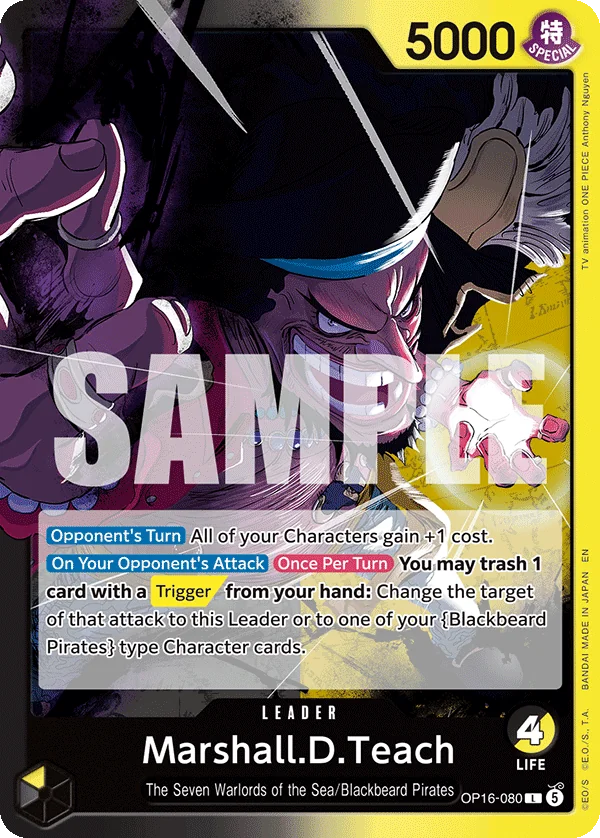 OP16-080OP16-080Shop on TCGplayer
Marshall.D.Teach has 4 Life, the Black/Yellow color identity, and the type The Seven Warlords of the Sea/Blackbeard Pirates. During the opponent's turn, all of your Characters gain +1 cost.
Its second effect activates once per turn when the opponent attacks. You may trash one card with a Trigger from your hand to change that attack's target to Teach or one of your Blackbeard Pirates Characters. This is a reactive choice, not a blanket attack cancel. You are deciding which legal target should absorb the attack and paying with a card that could otherwise become Life value, a Counter, or a future play.
That makes Teach the most decision-heavy recommendation in this guide. You need to read the opponent's attack, identify the safest target, and keep Trigger cards in hand without wasting them. The OP-16 Blackbeard deck guide is the better place to study those defensive turns.
Who is not an OP-16 Leader?
Sakazuki, also known as Akainu, is a Character rather than a Leader:
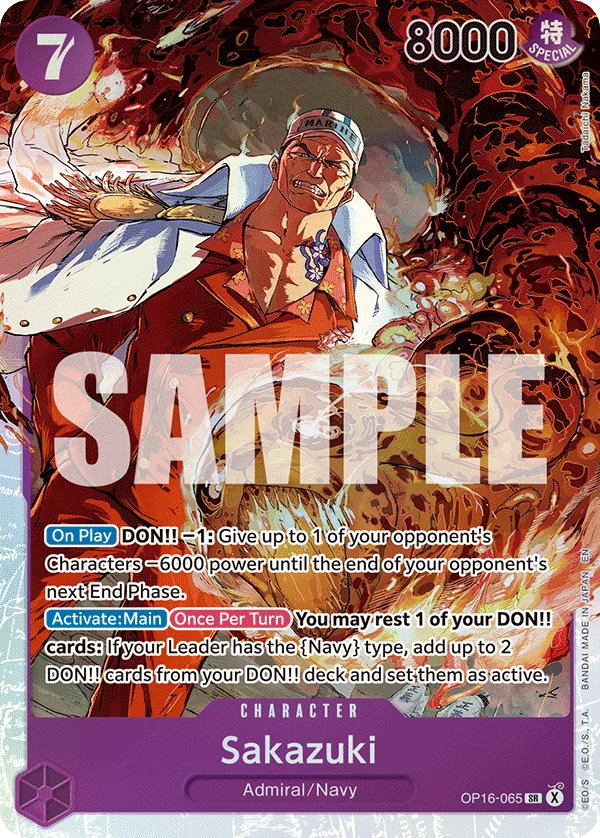 OP16-065OP16-065Shop on TCGplayer
The official card list identifies OP16-065 as a Purple 7-cost, 8000-power Admiral/Navy Character. Its effects reduce an opponent's Character's power on play and can generate DON!! under a Navy Leader. That makes it a natural Sengoku support card, but it does not replace Sengoku as the Leader.
Marco is another example of an important Character that is not a Leader:
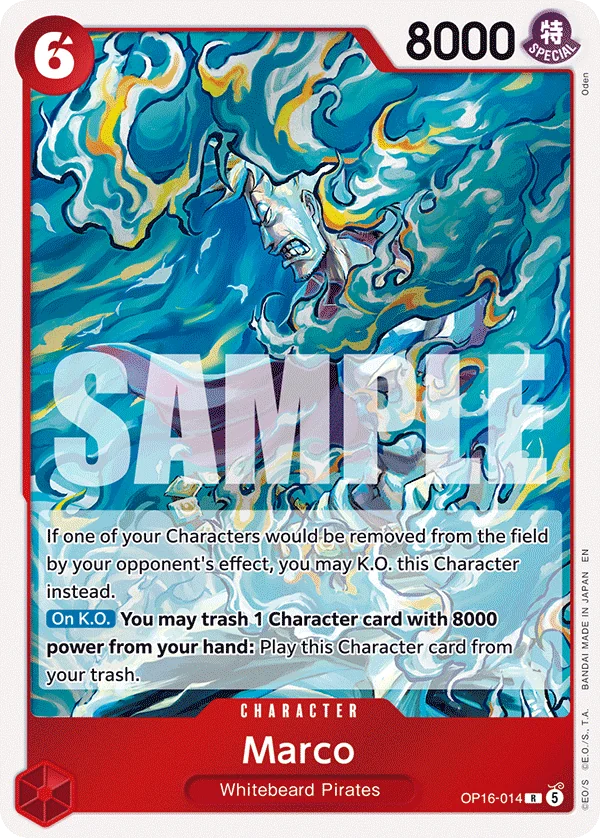 OP16-014OP16-014Shop on TCGplayer
OP16-014 is a Red Whitebeard Pirates Character. Its replacement effect can save another Character from an opponent's removal by K.O.'ing Marco instead, and its On K.O. effect can replay Marco from trash after you trash an 8000-power Character from hand. This is a card role, not a seventh OP-16 Leader.
For a wider roster reference that keeps Leaders and Characters separate, use the OP-16 Paramount War Leaders and Factions guide.
The two OP-16 Secret Rare Characters
The official product page and card list identify two OP-16 Secret Rare Characters:
- Portgas.D.Ace, OP16-118
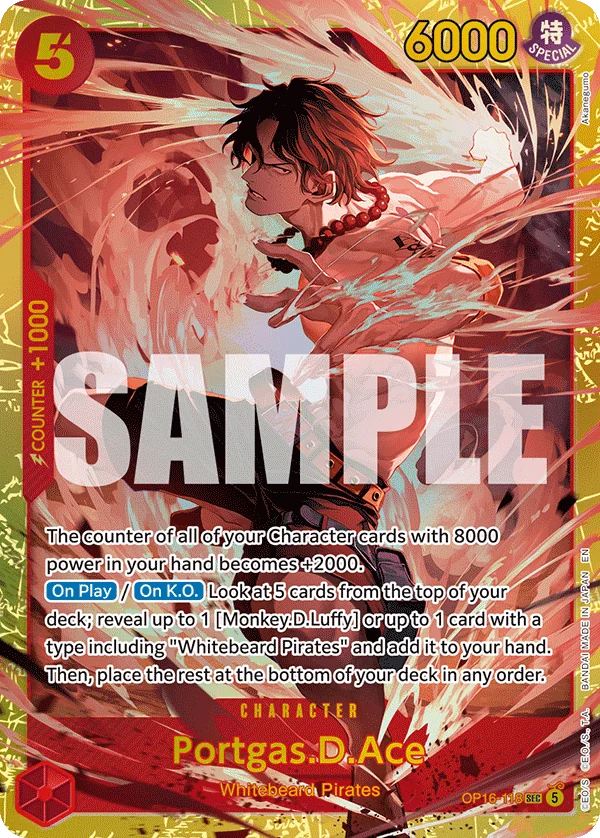 OP16-118OP16-118Shop on TCGplayer, is a Red Whitebeard Pirates Character.
 - Marshall.D.Teach, OP16-119
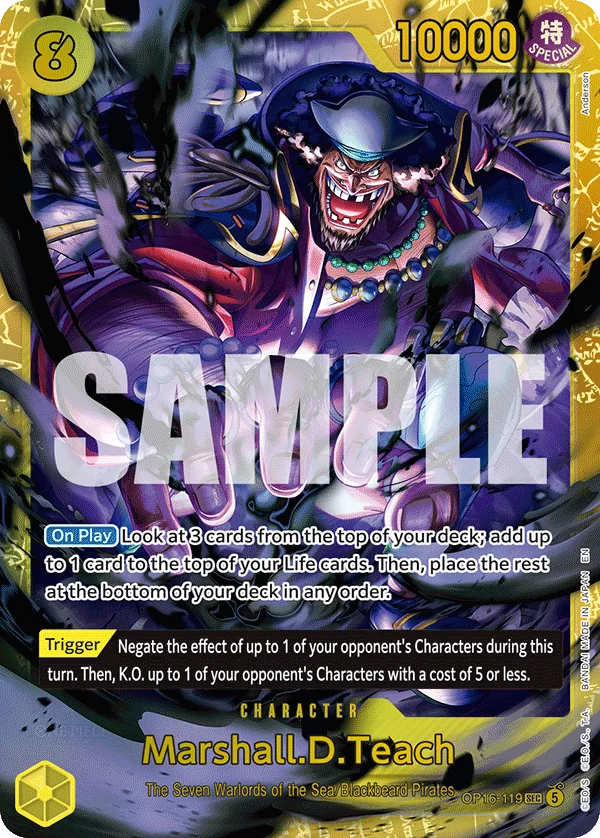 OP16-119OP16-119Shop on TCGplayer, is a Yellow Character with the Seven Warlords of the Sea/Blackbeard Pirates type.
These are separate cards from OP16-001 Ace and OP16-080 Teach. A Secret Rare Character can support a Leader, but it does not change the number of Leaders in the set or become a second Leader in the deck.
The official product page also lists a Three Admirals Super Alt-Art feature. Keep that product note separate from competitive rankings or price claims. Pull values change with language, condition, variants, and market timing, so this guide does not assign a current price or call one card a guaranteed best purchase. The OP-16 Best Cards to Pull guide is the place for a dated chase-card discussion.
How to choose a first Leader
The best first choice depends on the decisions you want to make every turn:
- Ace: Choose this if your favorite turn is converting a large Whitebeard Pirates Character into immediate pressure.
- Luffy: Choose this if you enjoy maintaining a precise Impel Down board while turning a once-per-turn condition into extra active DON!!.
- Buggy: Choose this if you want a board-wide Impel Down plan where a Character leaving can create another play.
- Sengoku: Choose this if you enjoy building a hand and resource count toward a high-impact Admiral turn.
- Yamato: Choose this if you like using the trash as part of your attack plan and setting up Rush from a play-from-trash effect.
- Teach: Choose this if you prefer reactive defense, attack redirection, and difficult target decisions.
Those labels are play-style recommendations, not a current tier list. If you need a competitive snapshot, read a dated event or meta report separately and check whether its format and card pool match your event.
Color legality and deck construction
A Leader choice also determines what you are allowed to register. The official rules require one Leader, a 50-card main deck of Characters, Events, and Stages, and a 10-card DON!! deck. Main-deck cards must match a color on the Leader, and a deck normally contains no more than four cards with the same card number.
That means:
- Ace opens Red cards.
- Luffy opens Green and Blue cards.
- Buggy opens Blue cards.
- Sengoku opens Purple cards.
- Yamato opens Black cards.
- Teach opens Black and Yellow cards.
A card's type is just as important as its color for these OP-16 effects. Luffy checks Impel Down Characters, Buggy checks an Impel Down Character leaving, Sengoku checks Admiral Characters, and Yamato checks Land of Wano Characters played from trash. The One Piece TCG how to play rules guide explains the underlying deck and turn rules before you start tuning a list.
Step-by-Step: choosing and testing an OP-16 Leader
- Pick the decision you want to practice. Choose pressure, board development, hand and resource setup, trash recursion, or reactive defense before you compare deck lists.
- Read the Leader's exact condition. Note the required type, color, DON!! condition, timing, and whether the effect is once per turn.
- Build a legal core. Filter support by the Leader's colors and relevant type. Check card numbers before counting playsets.
- Practice one signature turn. Ace should practice converting an 8000-power Character into Rush. Luffy should practice satisfying the Impel Down-only condition. Sengoku should practice holding different Admirals. Yamato should practice the trash line. Teach should practice choosing a redirected target.
- Review the games, not just the result. Ask whether the Leader condition was active when needed, whether the key type was present, and whether you spent DON!! before the important effect.
- Only then compare alternatives. Once you understand one Leader's decision pattern, the other five become easier to evaluate on their own terms.
Key Takeaways
- OP-16's six Leaders are Ace Red, Luffy Green/Blue, Buggy Blue, Sengoku Purple, Yamato Black, and Teach Black/Yellow.
- Ace, Buggy, Sengoku, and Yamato have 5 Life. Luffy and Teach have 4.
- Sakazuki and Marco are Characters, not additional Leaders.
- Sengoku plays different Admiral Characters from hand after returning 8 active DON!! to the DON!! deck.
- The two Secret Rare cards are Ace OP16-118 and Teach OP16-119, both Characters.
- Choose by the decisions you want to practice, then verify the current card list before registering a deck.
Related Reading
- OP-16 Meta Tier List: Week 1: A dated metagame view, separate from the printed Leader facts.
- OP-16 Collectors Guide: A separate look at set collecting and variants.
- OP-16 Most Expensive Cards: Check dated market information separately from the rules and Leader text.
Frequently Asked Questions
What are the six OP-16 Leaders and colors? Ace is Red, Luffy is Green/Blue, Buggy is Blue, Sengoku is Purple, Yamato is Black, and Marshall.D.Teach is Black/Yellow. Their official types are Whitebeard Pirates, Impel Down/Straw Hat Crew, Impel Down/Buggy Pirates, Navy, Land of Wano, and The Seven Warlords of the Sea/Blackbeard Pirates.
Is Akainu a Leader in OP-16? No. Sakazuki, also known as Akainu, is OP16-065, a Purple Admiral/Navy Character. He is a support card for a Navy strategy, not one of the six Leaders.
Which OP-16 Leader has the most Life? Ace, Buggy, Sengoku, and Yamato each have 5 Life. Luffy and Teach each have 4 Life. Always check a Leader's printed Life value when setting up a game.
Does Sengoku play three Admirals for free? Its Main effect can play up to three Admiral Characters with different card names from hand after you return eight active DON!! to the DON!! deck. It is powerful setup, but it requires the correct hand and eight active DON!!.
Are OP16-118 and OP16-119 Leaders? No. They are the two Secret Rare Character cards listed for OP-16: Ace OP16-118 is Red, and Teach OP16-119 is Yellow. Their Leader versions are OP16-001 and OP16-080.
Which Leader is easiest to learn? That depends on how you learn. Ace has the most direct pressure line, Buggy emphasizes a clear board trigger, and Yamato makes the trash-to-Rush plan visible. Luffy, Sengoku, and Teach ask you to track more conditions or timing choices.
References
Was this guide helpful?
Cards in this article
About the author
Deck guides and meta
Pen name for the Shonen TCG desk's One Piece TCG deck guides, tier lists and meta reports.
- Lists averaged from public tournament results, sample size stated
- Card text quoted from Bandai's official card list
- Opinions marked as ours, with the reason
Keep reading

One Piece TCG How to Play: Rules & Mechanics (2026)
Guides · 16 min
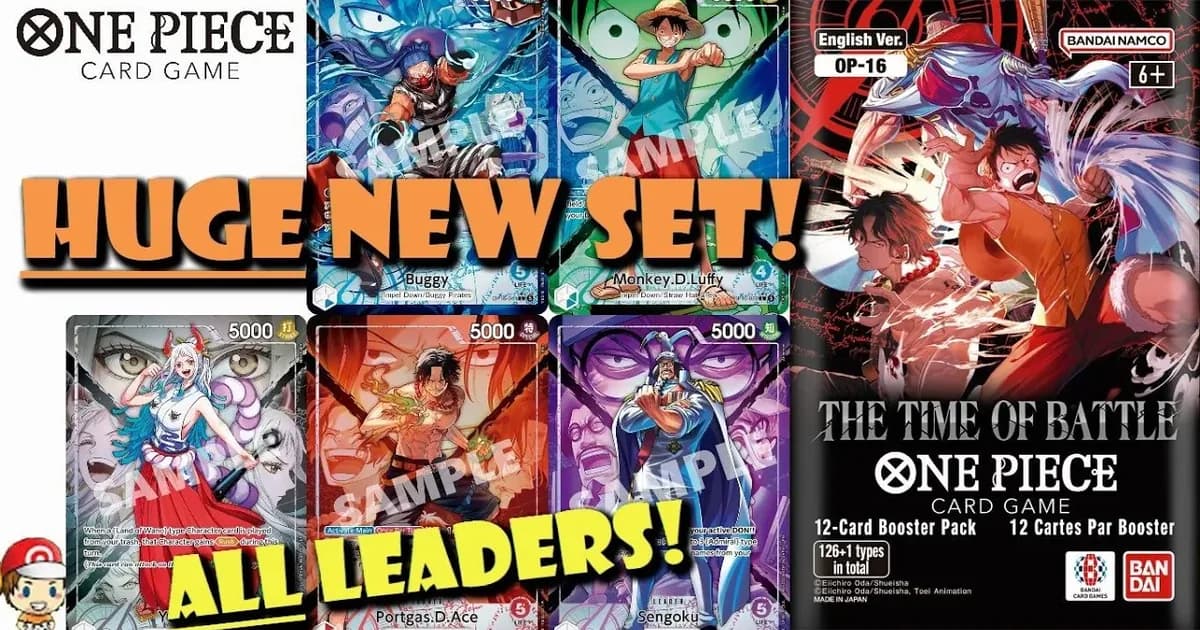
One Piece TCG OP-16 Guide: Set Review & Leaders (2026)
Guides · 20 min
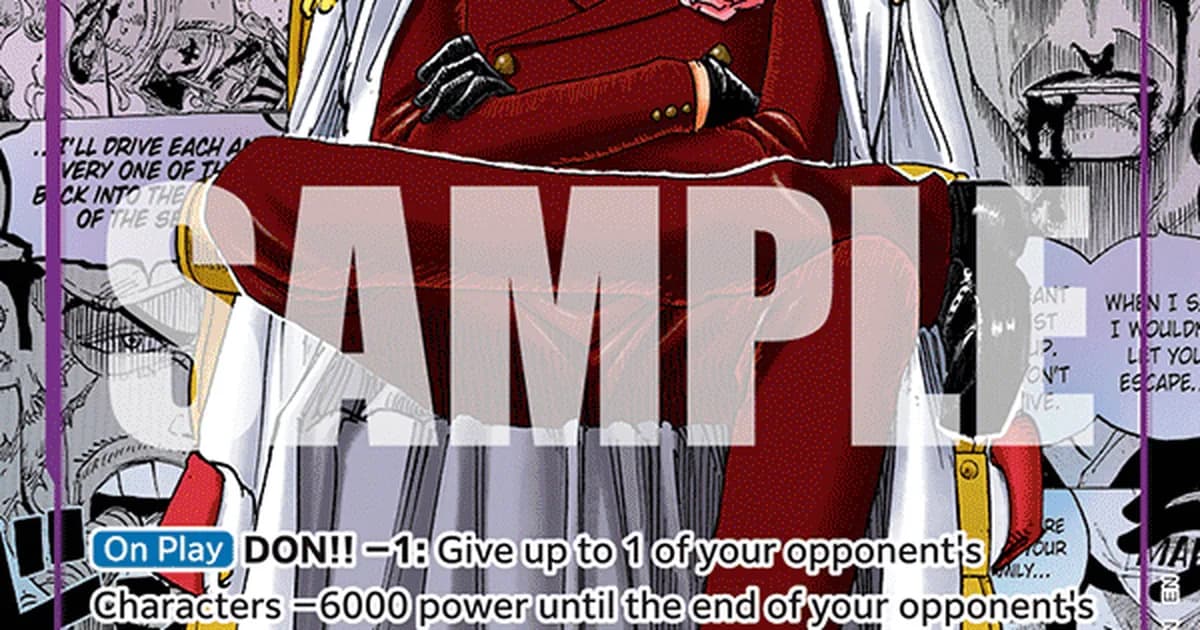
One Piece TCG Manga Rare Cards: Guide & Values (2026)
Guides · 12 min
OP-16 Paramount War Leaders & Factions Guide (2026)
Guides · 12 min

One Piece TCG Colors: All 6 Colors and Deck Rules (2026)
Guides · 11 min
OP-16 Chase Cards: Best to Pull & Value Guide (2026)
Guides · 12 min
Best Starter Decks One Piece TCG 2026: Which to Buy
Guides · 11 min
One Piece TCG Beginner Guide 2026: How to Play and Rules
Guides · 13 min
Disclaimer
This article is published for informational and entertainment purposes. It does not constitute professional financial, legal, or technical advice. Game performance, online services, patch schedules, and store listings change. Verify critical details (pricing, system requirements, regional availability) with publishers and storefronts before you buy. Affiliate links, where present, help support our editorial work and are labelled in our affiliate disclosure.