

Shonen TCG · Guides
One Piece TCG Attacking Rules: Targets, Blocks and Ties
Five steps, one tie rule, and the DON!! timing most new players get backwards.
Our callAn attack wins when its power is equal to or higher than the defender's, so ties go to the attacker; everything else is about what the defender can add first.
One Piece TCG attacking rules: you attack by resting your active Leader or an active Character, then target the opponent's Leader or one of their rested Characters. After the Block and Counter steps, your attack wins if its power is greater than or equal to the target's.
Updated October 16, 2026: every rule re-checked against the Comprehensive Rules, Version 1.2.1 (last updated August 28, 2026). We fixed when DON!! can be given, added what happens at zero Life, and replaced the generic examples with real OP16 cards.
The five steps of an attack
The comprehensive rules split every battle into the same sequence:
| Step | Who acts | What happens |
|---|---|---|
| 1. Attack | You | Rest your active Leader or one active Character and pick a target: their Leader or one rested Character. When Attacking effects fire. |
| 2. Block | Defender | They may rest one Blocker to make it the new target. One Blocker per battle. |
| 3. Counter | Defender | They trash Counter Characters from hand, or pay for Counter Events, in any order, as many as they like. |
| 4. Damage | Nobody | Compare power. Equal or higher wins for the attacker. |
| 5. End of battle | Both | "End of battle" effects fire, then you go back to your Main Phase. |
Two limits sit on top of that. A Character can't attack on the turn it's played unless it says so, and nobody can battle on their own first turn. So the earliest attacks of the game happen on each player's second turn.
Step 1: declaring the attack
Resting is the cost. The card you turn sideways can't block on the opponent's turn, and if it's a Character, it's now a legal target for them. It stands back up in your next Refresh Phase.
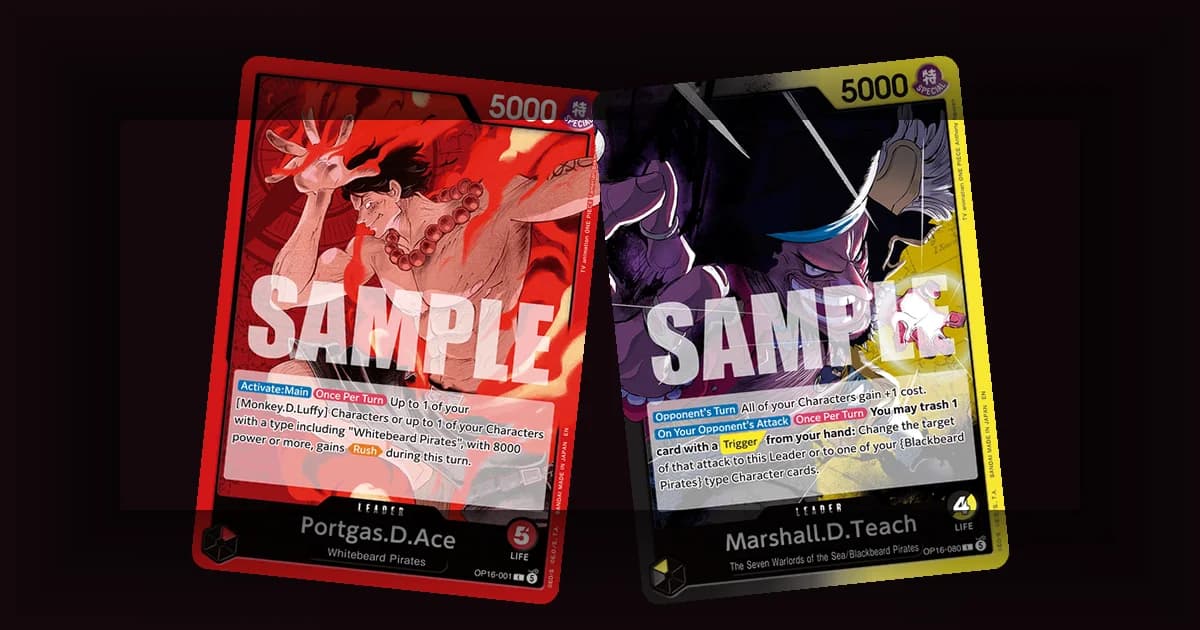
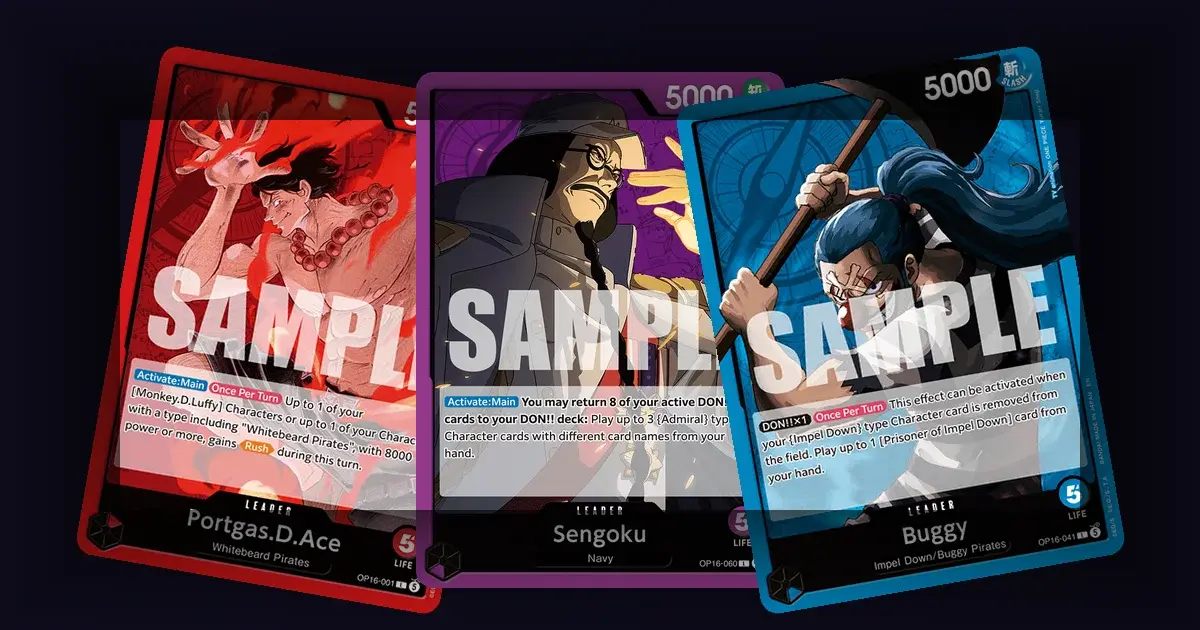
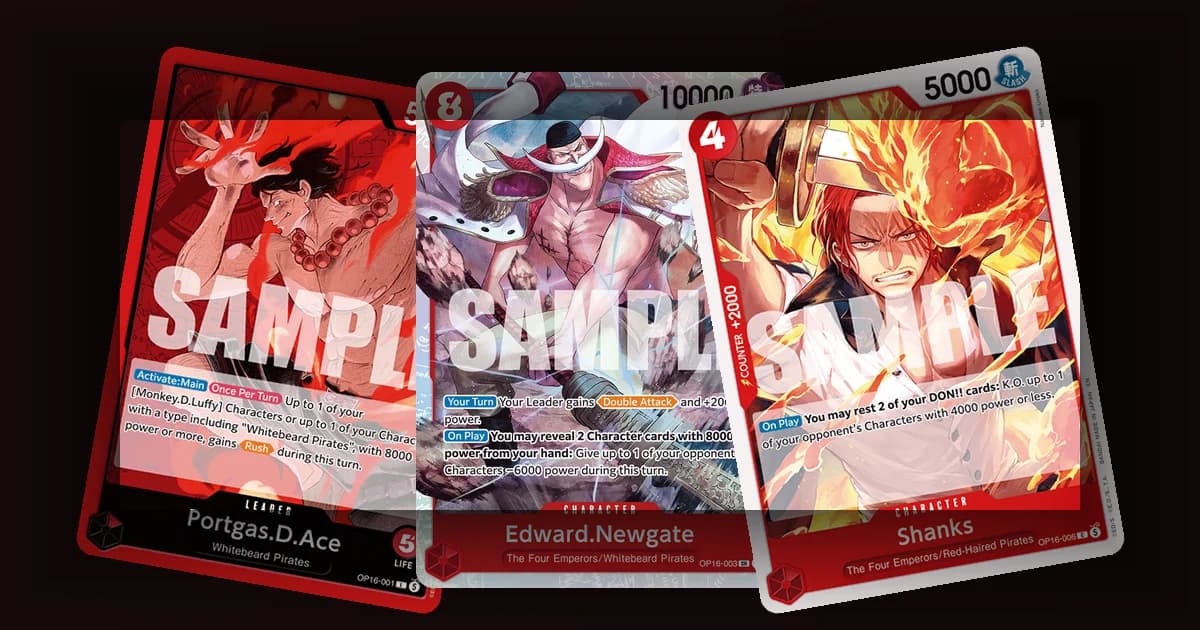
Freshly played Characters wait, with two exceptions. Rush lets a Character attack the turn it comes down, and Rush: Character lets it attack only opposing Characters that turn. Some Leaders hand out Rush:  OP16-001
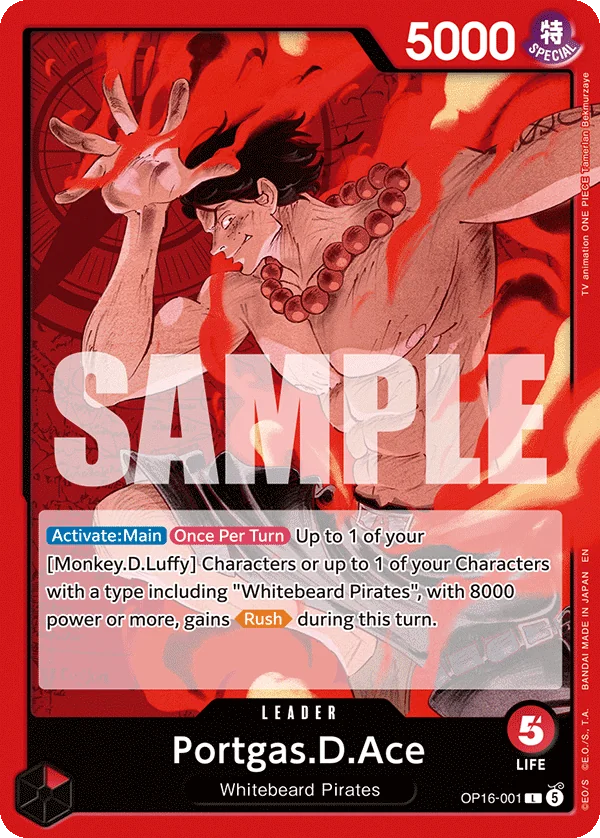 OP16-001Shop on TCGplayer Portgas.D.Ace gives it to a Luffy or Whitebeard Pirates Character with 8000 power or more.
The target has to be the opponent's Leader or a rested Character. You can't swing at an active Character unless a card says you can. That's why attacking with a Character is a real decision: it opens that body up for the opponent's next turn.
Step 2: the Block Step
The defender can rest one Blocker, and that Blocker becomes the new target. Only one per battle, and since it has to rest to block, a Blocker that already blocked this turn is done until it stands up again. Attackers with Unblockable skip this step entirely.
r/OnePieceTCG has the cleanest way to think about it, from a thread about going for lethal into a Blocker:
Step 3: the Counter Step
Now the defender adds power. They can trash a Character from hand to add its printed Counter value to their Leader or one Character for the battle, or pay the cost of an Event with [Counter] and use its effect. There's no cap: they can stack as many as they can afford.
The attacker can't respond here. That's the part of the old version of this guide we had wrong: you don't add DON!! once the battle starts, unless a card effect does it for you. You give DON!! during your Main Phase, before you declare, so the defender always sees your final number before choosing how much to counter. More on the timing in the DON!! system guide, and the defender's side in the counter mechanic guide.
Step 4: comparing power
If the attacker's power is greater than or equal to the defender's, the attacker wins. Ties go to you. If the attacker is lower, nothing happens: no damage back, nothing K.O.'d. Attacking never costs you the card, only the tempo of resting it.
What a win does depends on the target:
- Character: it's K.O.'d.
- Leader with Life left: they take one damage. The top Life card goes to their hand, or they can reveal it and use its [Trigger] instead.
- Leader at zero Life: you win the game.
- Double Attack deals two damage to Life instead of one. Banish trashes the Life card instead, and its Trigger doesn't go off.
The Life cards guide covers Triggers in detail.
A worked example with OP16 cards
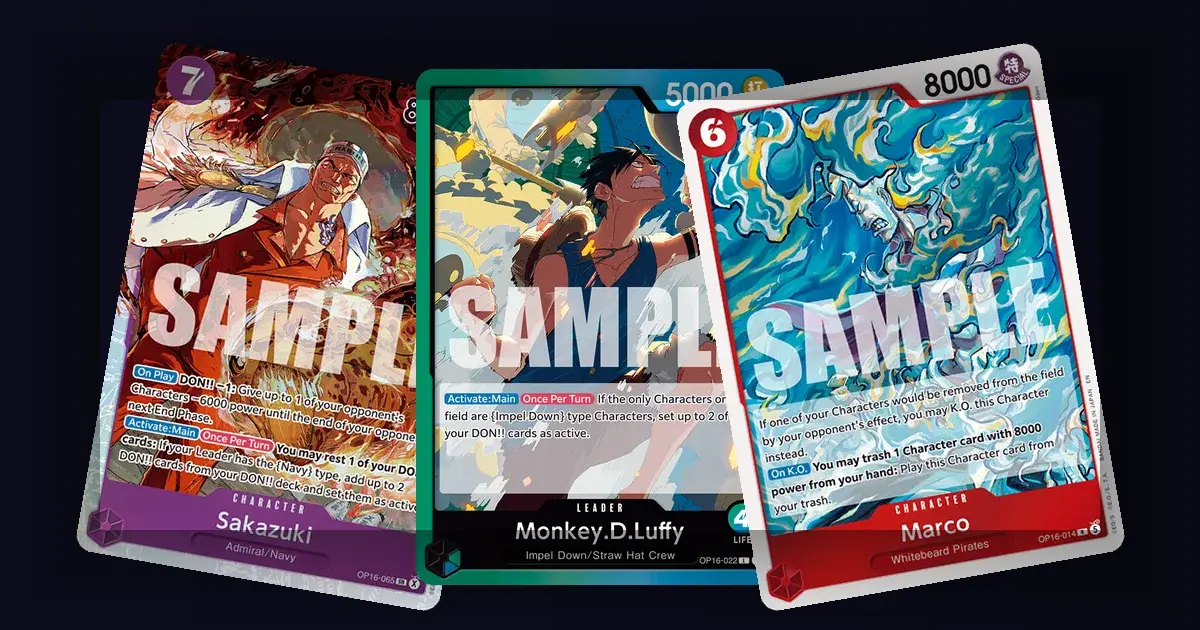
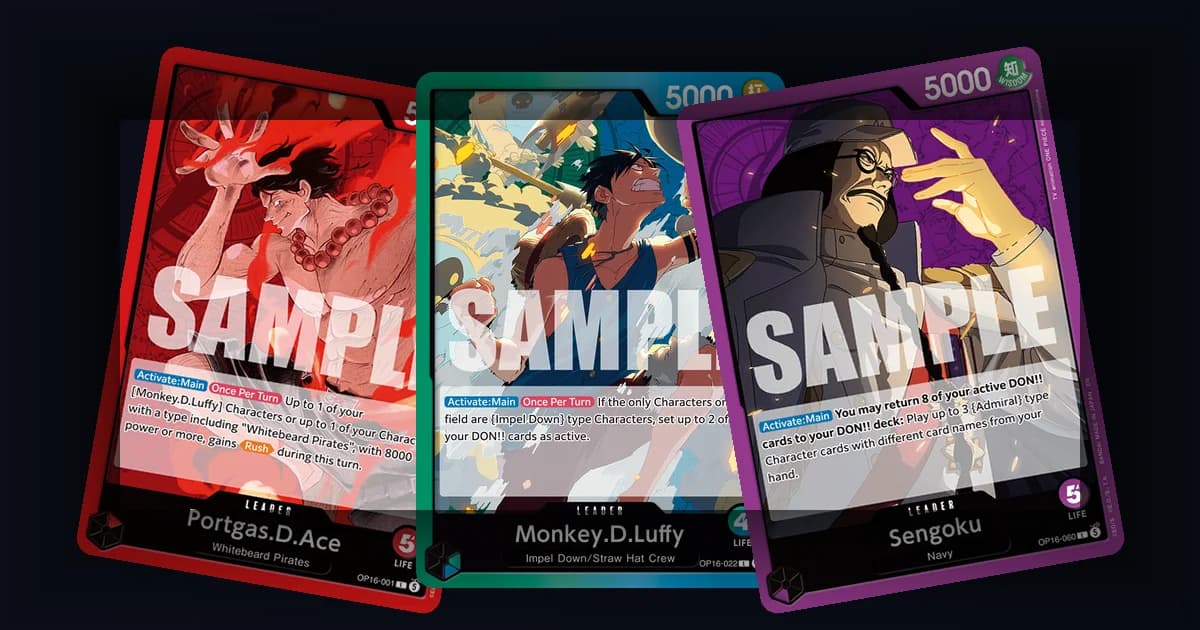
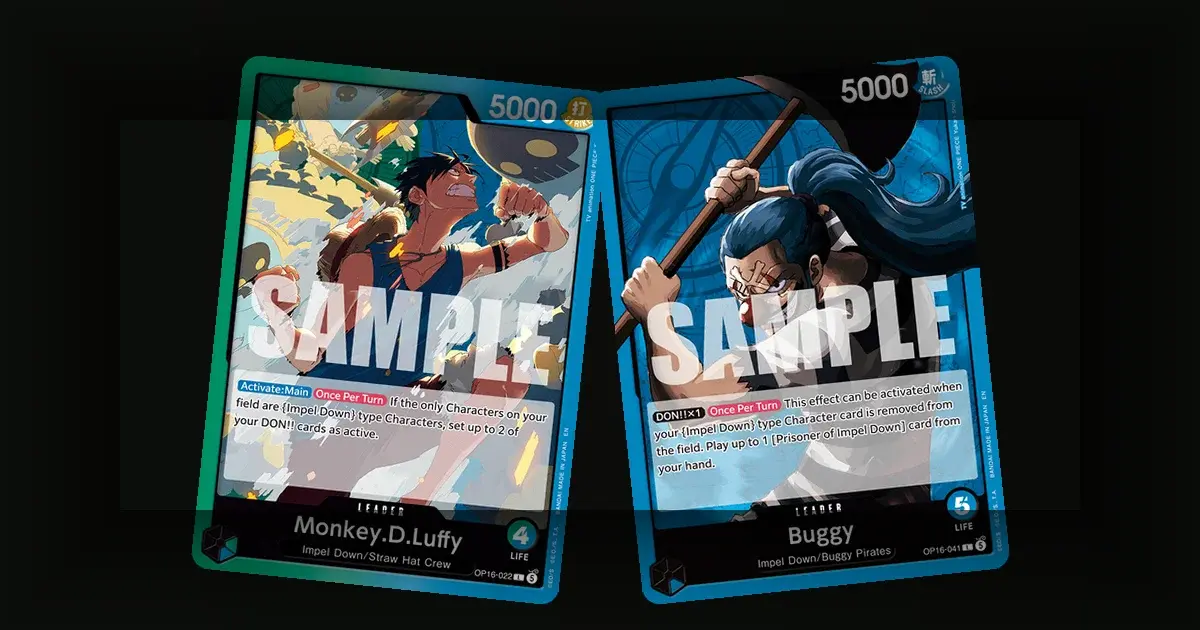
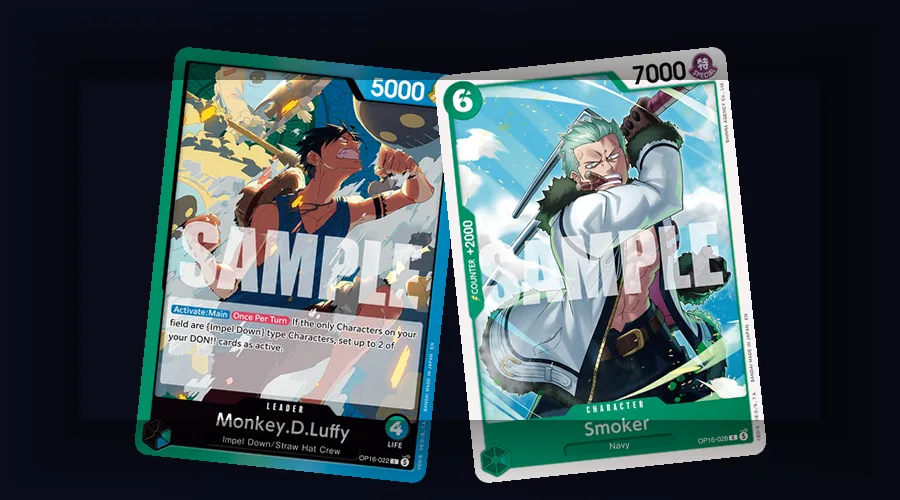 Image: official Bandai sample cards (OP16), via the One Piece Card Game site
Your Ace Leader has 5000 power. The opponent's  OP16-022
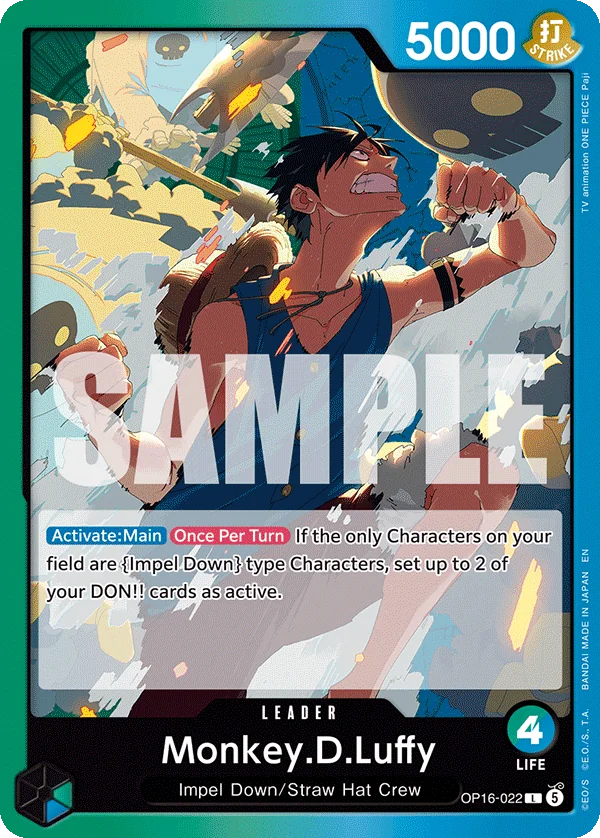 OP16-022Shop on TCGplayer Monkey.D.Luffy Leader also has 5000.
- Attack with no DON!!: 5000 against 5000 is a tie, so the hit lands.
- Give Ace two DON!! first and he swings for 7000. They trash a
 OP16-028
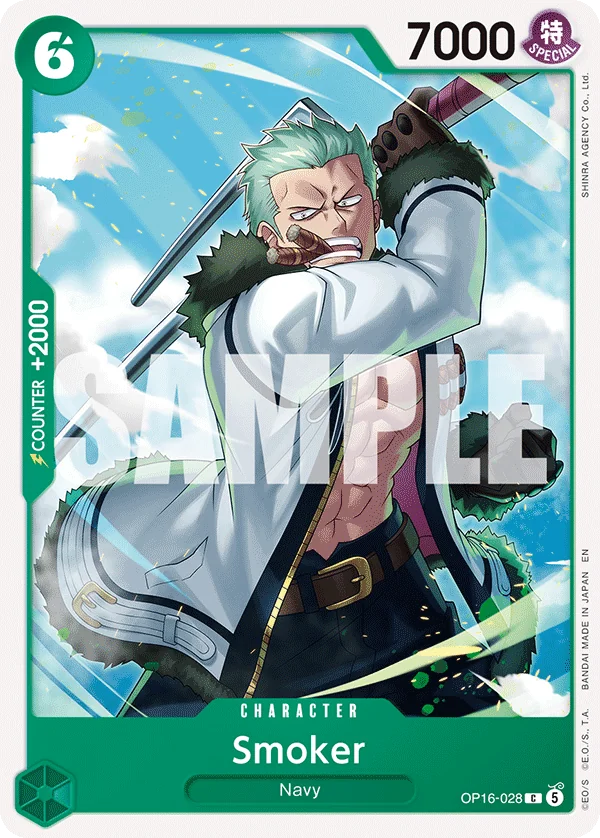 OP16-028Shop on TCGplayer Smoker from hand for its +2000 Counter: Luffy goes to 7000. Still a tie, still a hit.
 - To stop it, they'd need four thousand in counters, two Smokers' worth, for 9000 against your 7000.
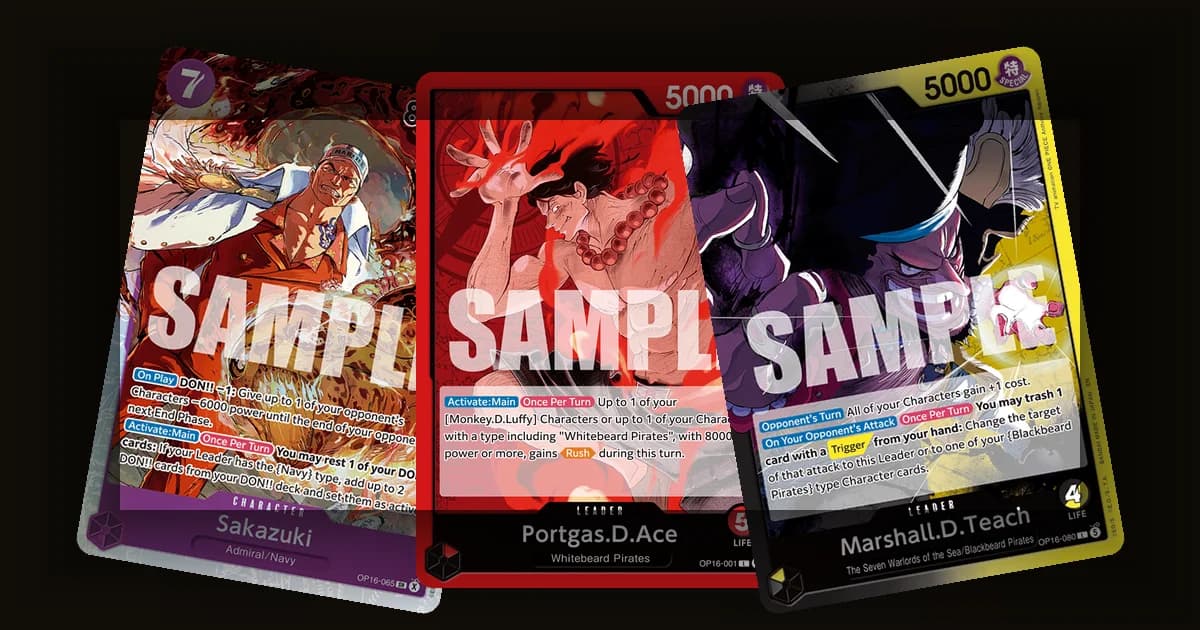
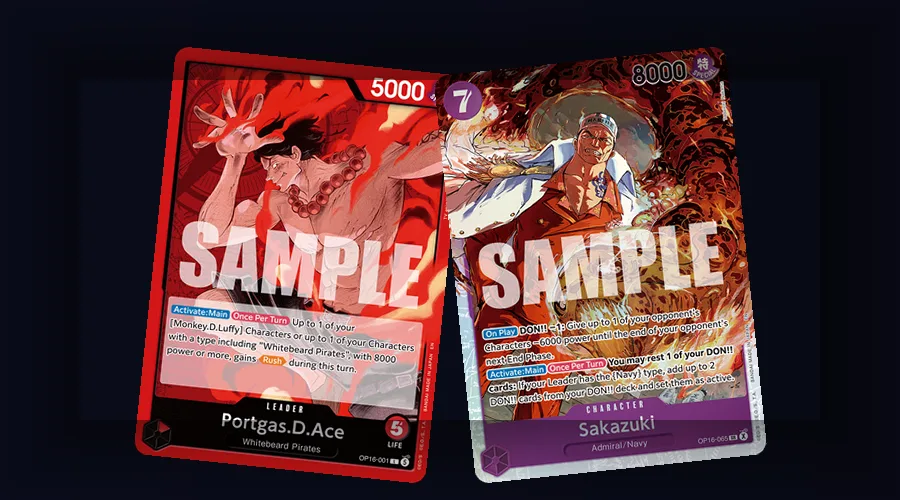 Image: official Bandai sample cards (OP16), via the One Piece Card Game site
Now flip it. Their  OP16-065
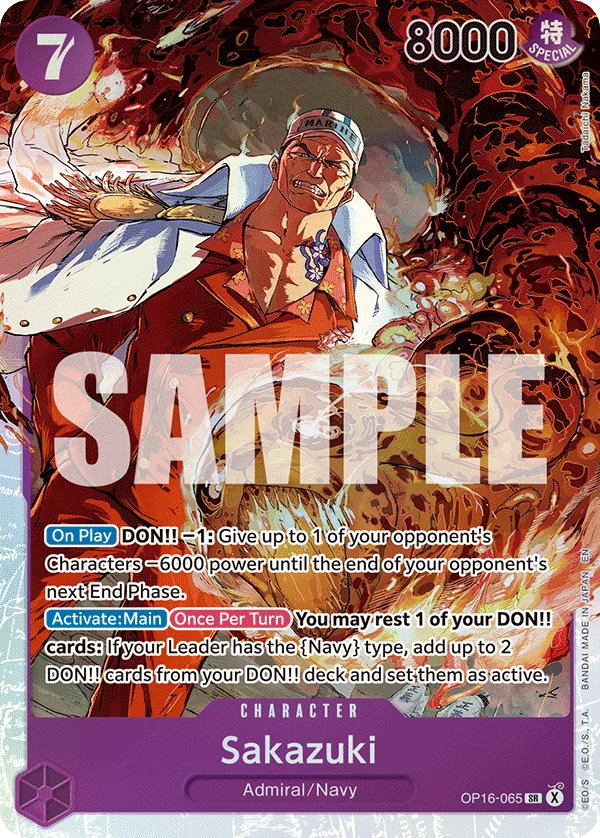 OP16-065Shop on TCGplayer Sakazuki attacked last turn, so it's rested and has 8000 power. Ace needs three DON!! to reach 8000 and K.O. it on the tie. Note what that DON!! does on their turn: nothing. DON!! adds 1000 per card during your turn only, so a Leader loaded with DON!! defends at its base power.
Sequencing several attacks
The One Piece TCG attacking rules above cover one battle at a time, but a turn is usually several. Count what the defender can add before you swing, not after. A defender facing lethal does the same math from the other side; as u/Biggestturtleever put it, "I'm calculating how many of your swings I can counter out of before using blockers."
- Lead with attacks they have to answer but would rather not, so they spend counters early.
- Expect the Blocker on your biggest hit and spread power across attackers instead of stacking one.
- Keep a Character back if their swing-back next turn is scarier than one more point of damage now.
Our take: the rule that wins games here is the DON!! timing. Once you know the defender always sees your number first, you stop putting every DON!! on one attacker and start spreading it so each swing needs a counter. That's the real skill, and it's why we'd learn this before learning any deck. The how to play guide shows how battles fit into the full turn.
How we checked this: 29 facts checked on October 16, 2026, against the One Piece Card Game Comprehensive Rules, Version 1.2.1 (sections 3-7, 6-5, 7 and 10), with card stats from Limitless TCG's card pages. Last reviewed: October 16, 2026.
Frequently Asked Questions
Can you attack an active Character in One Piece TCG? Not normally. The comprehensive rules let you target only the opponent's Leader or one of their rested Characters. A card effect has to say otherwise for an active Character to be a legal target.
What happens on a power tie? The attacker wins. The rules check whether the attacker's power is greater than or equal to the defender's, so a tie K.O.s a Character or deals damage to a Leader.
Can you give DON!! after the opponent counters? No. You give DON!! during your Main Phase, before you declare the attack. Once the battle starts, only the defender gets to add power in the Counter Step, unless a card effect says otherwise.
Can you attack on your first turn? No. Rule 6-5-6-1 says neither player can battle on their first turn, so the first attacks come on each player's second turn.
Was this guide helpful?
Cards in this article
About the author
Deck guides and meta
Pen name for the Shonen TCG desk's One Piece TCG deck guides, tier lists and meta reports.
- Lists averaged from public tournament results, sample size stated
- Card text quoted from Bandai's official card list
- Opinions marked as ours, with the reason
Keep reading
One Piece TCG How to Read a Card: 6 Things to Check
Guides · 6 min
One Piece TCG Common Beginner Mistakes: 9 to Avoid
Guides · 7 min
One Piece TCG Life Cards: Face-Down, Damage and Triggers
Guides · 6 min
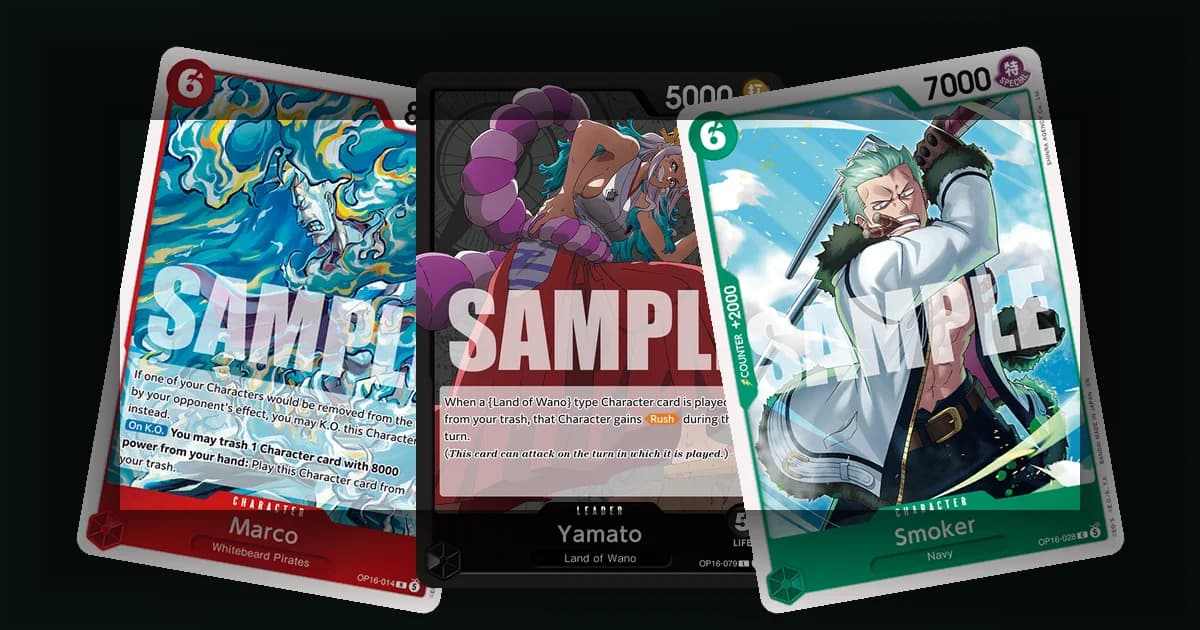
One Piece TCG Keywords Explained: Rush, Blocker & More
Guides · 9 min
One Piece TCG Locals Etiquette Guide: Play Right at Events
Guides · 7 min
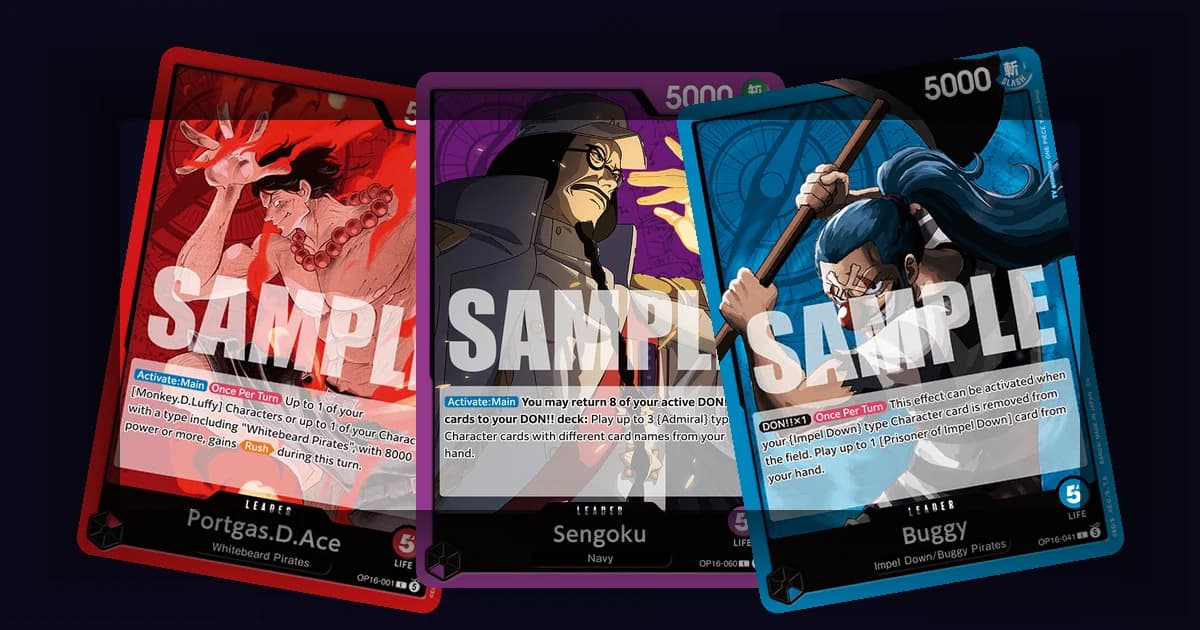
One Piece TCG DON Cards: 10 Per Deck, Rest or Attach
Guides · 6 min
One Piece TCG Sleeves and Accessories: What to Buy First
Guides · 6 min
One Piece TCG Mulligan Guide: Rules and Which Hands to Keep
Guides · 6 min
Disclaimer
This article is published for informational and entertainment purposes. It does not constitute professional financial, legal, or technical advice. Game performance, online services, patch schedules, and store listings change. Verify critical details (pricing, system requirements, regional availability) with publishers and storefronts before you buy. Affiliate links, where present, help support our editorial work and are labelled in our affiliate disclosure.