

Shonen TCG · Guides
OP-16 Green Blue Luffy Deck Guide: Top-Tier Tournament List
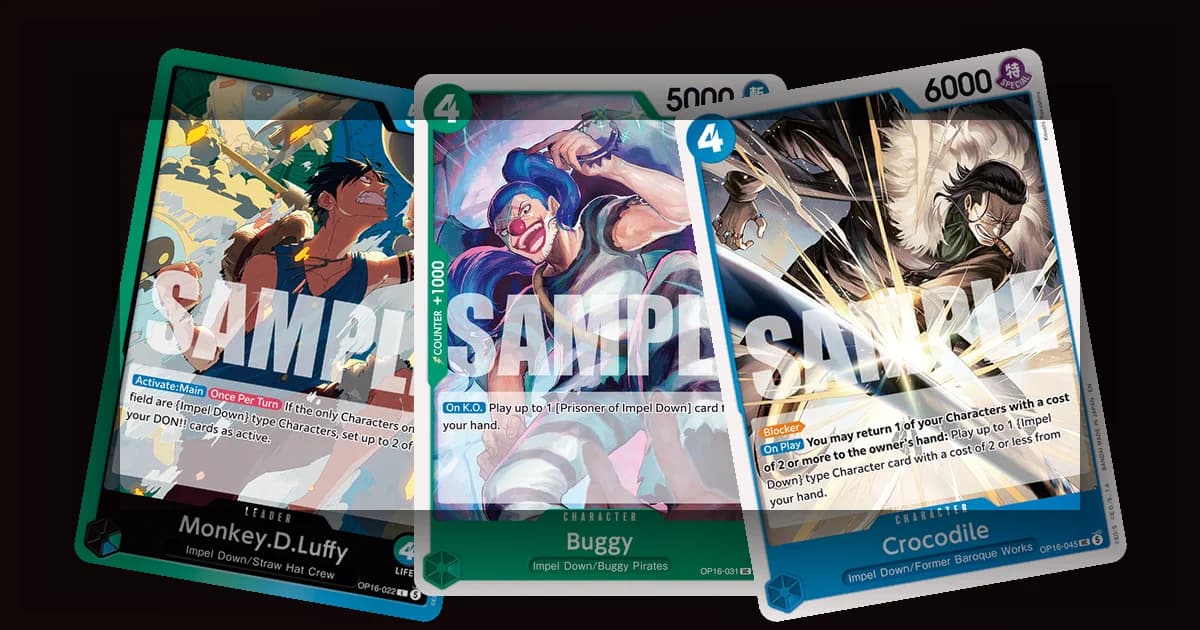
TL;DR: OP-16 green blue Luffy (GU) is an Impel Down-centered engine, not a deck where every list is trait-pure. Luffy (OP16-022) sets up to 2 DON!! active only "if the only Characters on your field are {Impel Down} type Characters." A pure board enables the refresh; Brook or another off-trait Character on the field turns it off for that turn. Boa Hancock remains an Impel Down option. The cited ranked-sim snapshot reports 72%, while Limitless tracks 102 placings and 6 wins. Moderate cost, standard leader printing.
Correction (2026-09-16): an earlier version of this guide treated the leader condition as a ban on every off-trait Character and called the featured list mono-Impel Down. The printed rule is narrower: only Characters currently on your field matter. A pure board enables the refresh, while Brook or another off-trait Character on the field turns it off for that turn. Boa Hancock is Impel Down and does not create that conflict. The verified list below is a 1st-place Flagship EX list that uses the Impel Down core plus a Brook package, so this guide now separates the rules interaction from the deckbuilding choice.
OP-16 Luffy deck guide: quick answer
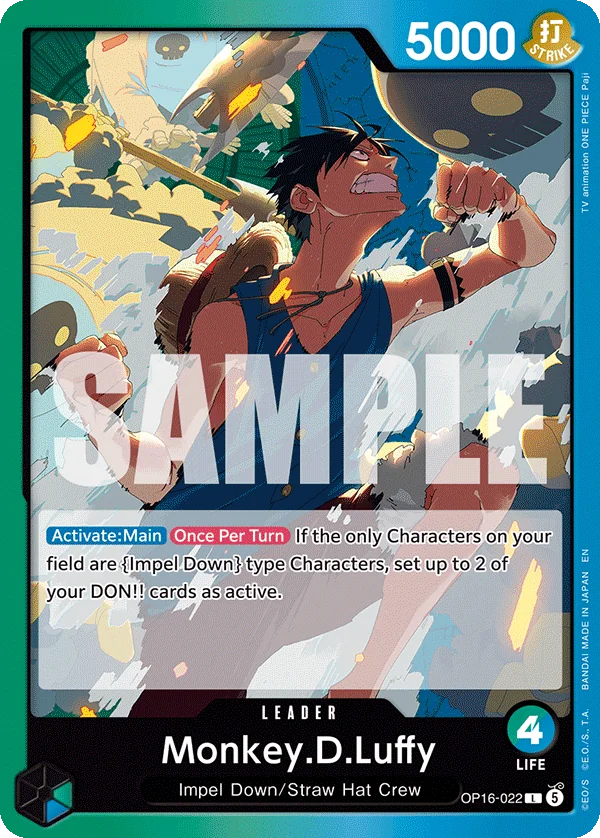 OP16-022OP16-022Shop on TCGplayer Monkey D. Luffy (5000 power, 4 life) carries the Impel Down and Straw Hat Crew traits, but his leader ability checks the Characters currently on your field. The printed text is: [Activate:Main][Once Per Turn] If the only Characters on your field are {Impel Down} type Characters, set up to 2 of your DON!! cards as active. A pure board keeps the refresh available, while a Straw Hat Crew-only card or other off-trait Character turns it off for that turn. Cards in your hand or deck do not fail the condition until they are played.
What makes Luffy strong isn't just pool diversity, it's DON!! efficiency. An Impel Down board lets you untap 2 DON!! for free when the condition is live, which functions like extra ramp and lets you play out more threats than the opponent's DON!! count should allow. Off-trait cards can still be useful, but they make that refresh conditional.
GODEEPER: Wondering which of the six OP-16 leaders fits your play style? The full breakdown covers all six with colour, cost, and difficulty. OP-16 All 6 Leaders Explained
The Impel Down Core and the Off-Trait Tradeoff
The Impel Down breakout cast is the core package: Buggy (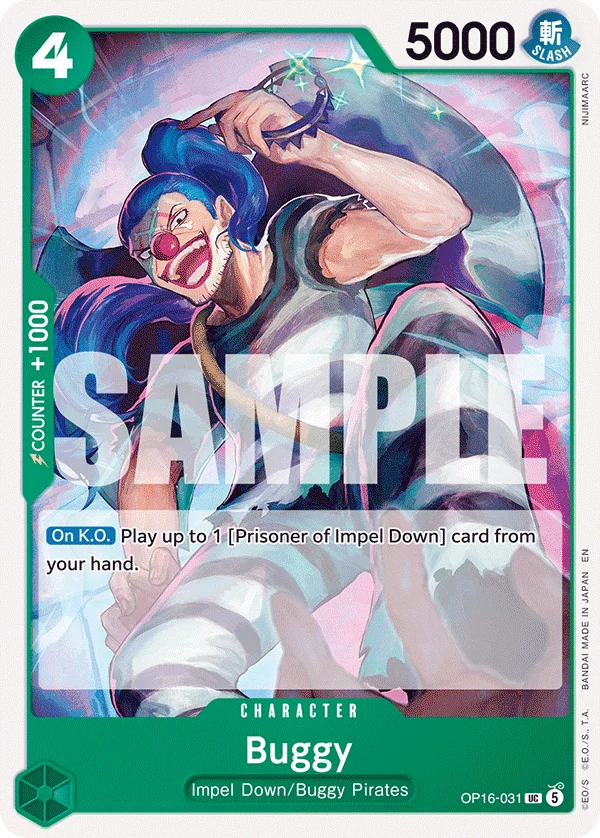 OP16-031OP16-031Shop on TCGplayer and a second printing, OP16-048
 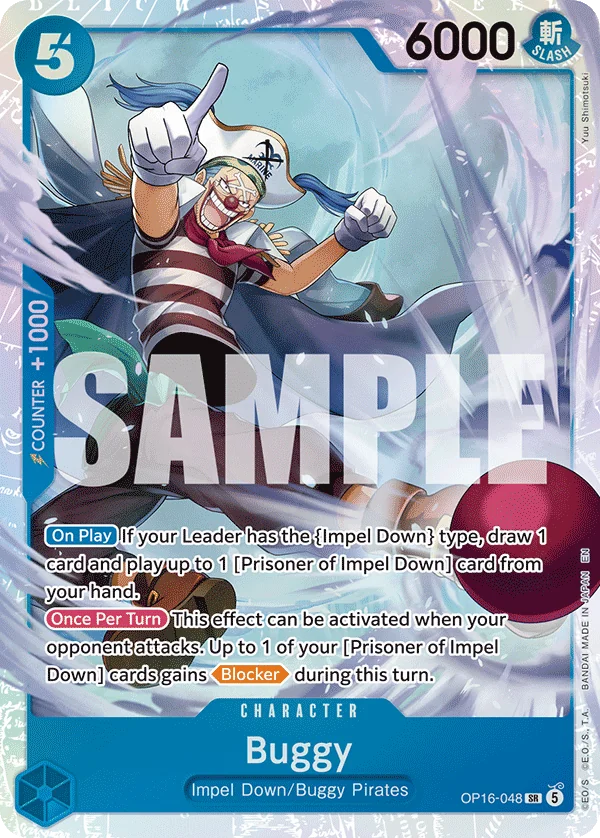 OP16-048OP16-048Shop on TCGplayer), Crocodile (
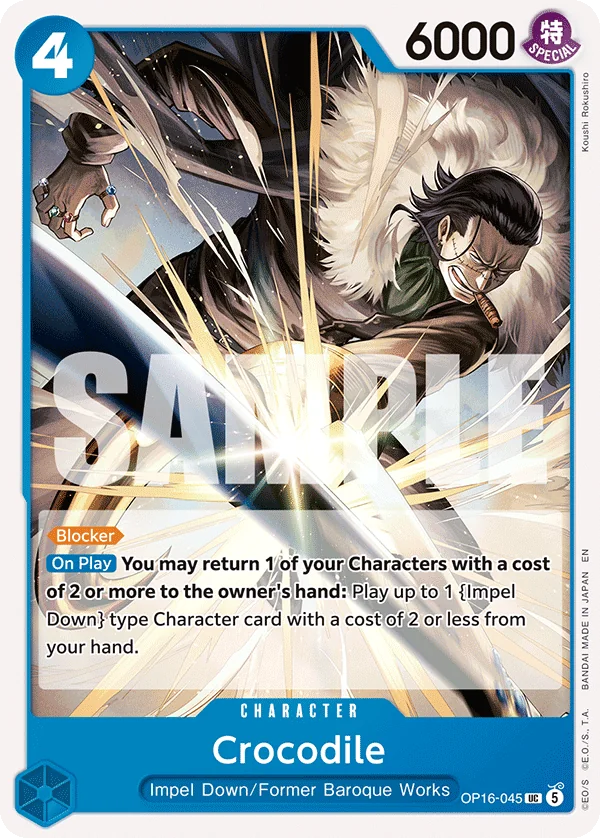 OP16-045OP16-045Shop on TCGplayer), Mr.1/Daz Bonez (OP16-054), Mr.2 Bon Kurei/Bentham (OP16-055), Mr.3/Galdino (OP16-056 and the ST30-014 reprint), Emporio Ivankov (
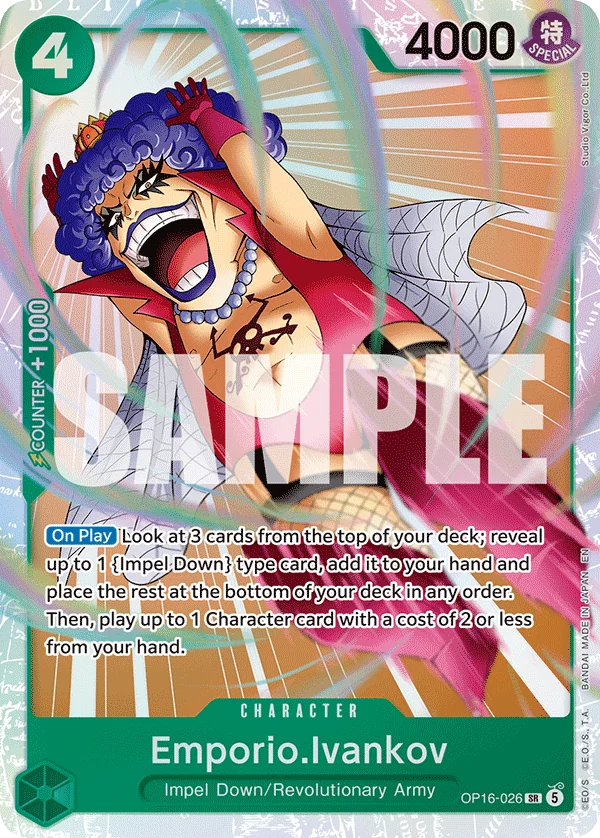 OP16-026OP16-026Shop on TCGplayer), Miss Olive (
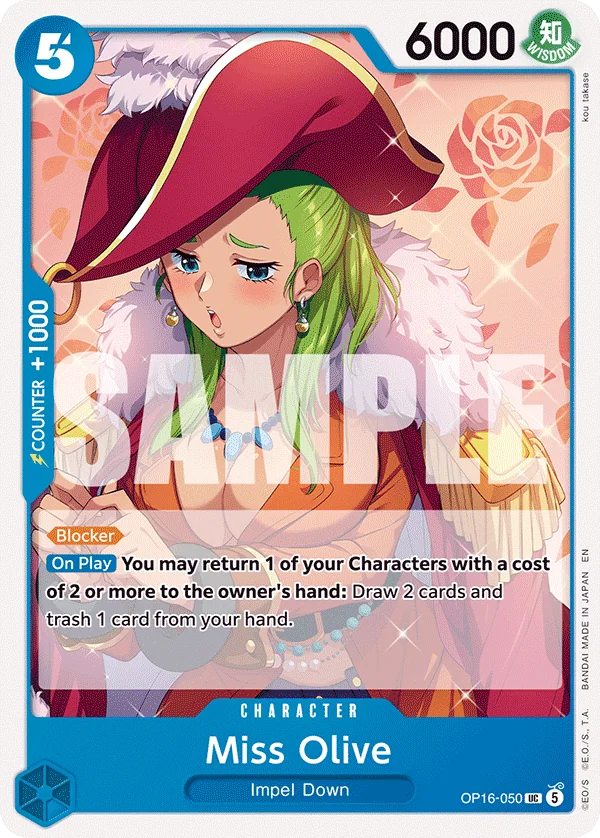 OP16-050OP16-050Shop on TCGplayer), and Prisoner of Impel Down (
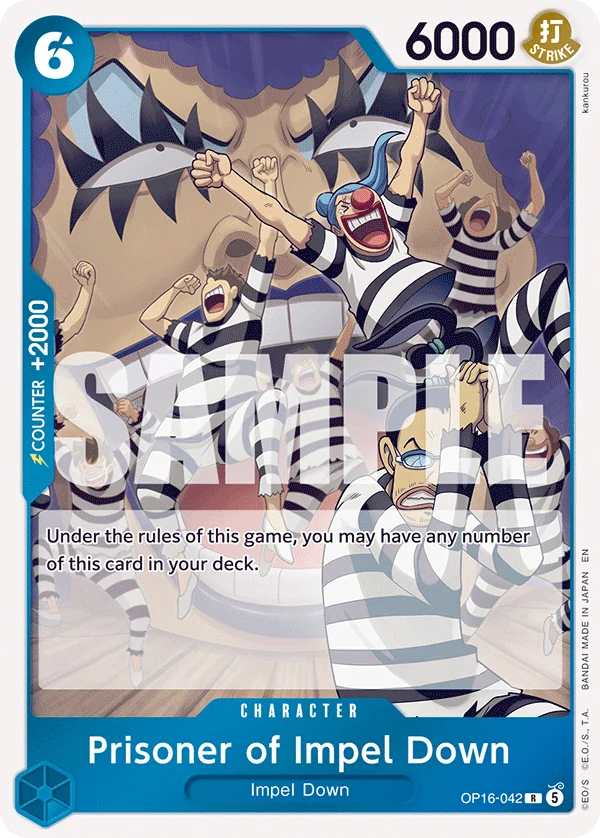 OP16-042OP16-042Shop on TCGplayer). Luffy's own Character reprint (OP16-034
 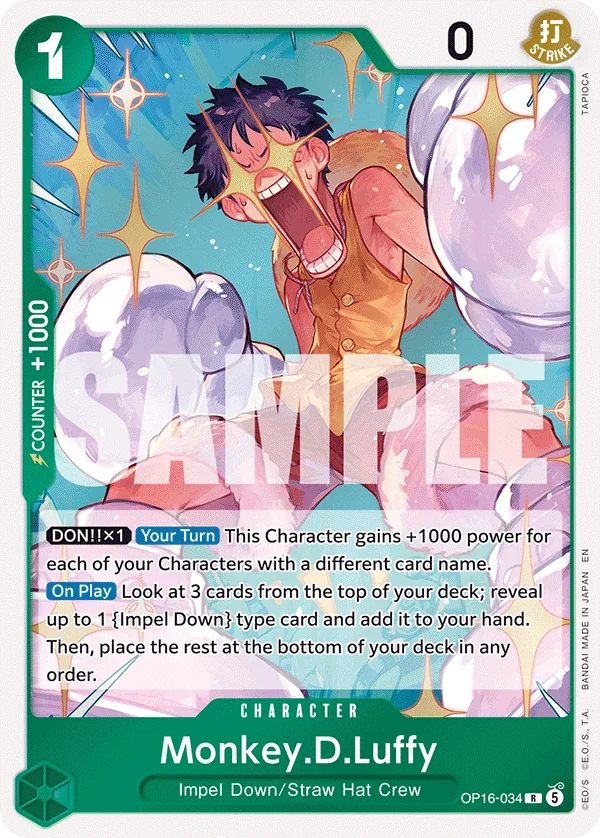 OP16-034OP16-034Shop on TCGplayer) is dual-typed Impel Down/Straw Hat Crew, so it still satisfies the field condition.
Limitless's current OP16 profile is a useful reality check. Across 102 tracked Green/Blue Luffy lists, the average includes 8.52 Prisoner of Impel Down, 4 Buggy, 3.69 Crocodile, 2.65 Boa Hancock, and 1.18 Brook. Boa is an Impel Down card, while Brook is Straw Hat Crew only, so the data shows a strong trait core with pilots sometimes choosing an off-trait exception for its effect.
The tradeoff: the leader's ability only fires "if the only Characters on your field are {Impel Down} type Characters." A card like Brook (OP15-032) breaks that condition once it is on the board, but it is not forbidden in the deck. A pure build protects the refresh every turn; a tournament list can accept a lost refresh when Brook or another off-trait Character gives it a better line. Boa Hancock does not require that trade because it has the Impel Down type.
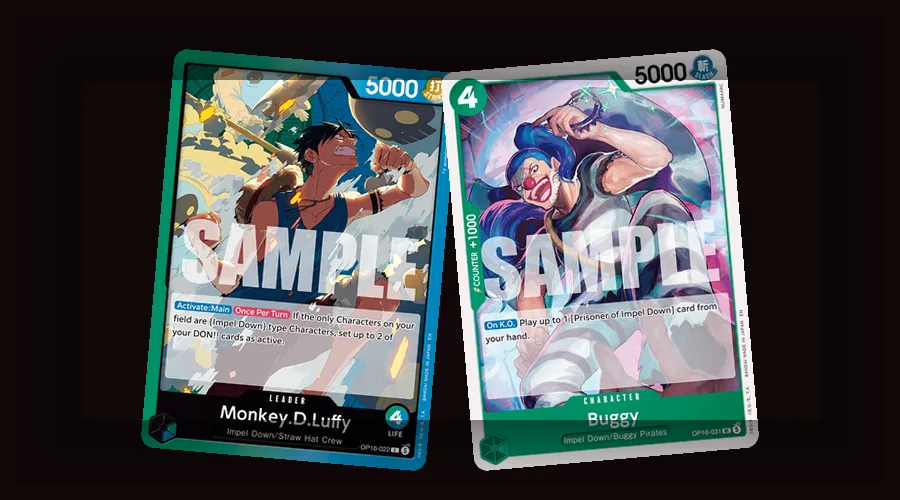 The leader and Buggy illustrate the Impel Down core. The field condition applies to Characters in play, not every card in the deck.
How the Blue/Green DON!! Engine Works
Blue contributes board control and card flow; Green contributes efficient bodies and cost-effective development. Both colors support the same plan: keep the board Impel Down-pure when you want the leader's refresh, then use the extra DON!! to develop faster and apply pressure the opponent must constantly answer.
Luffy does not have one dramatic finisher like an Admiral board or a big burn turn. His win condition is incremental: the free DON!! untap, when the field condition is live, lets you deploy more threats than the opponent's own DON!! count should support. That rate advantage compounds into a board lead that converts to Life damage over a few turns.
Deckbuilding direction: start with efficient {Impel Down} curve-fillers, add Blue/Green control and draw tools, and include a counter package. Then decide whether an off-trait option such as Brook is worth making the refresh conditional. A pure board maximizes consistency; an off-trait package can buy effects that the core does not provide.
Step-by-Step: playing the Impel Down plan
1. Mulligan for a cheap opener. A hand built around Mr.1, Mr.2, or Mr.3 at 2-3 cost sets up the leader's condition earlier than a hand full of expensive pieces. If you plan to use the refresh, prioritize cards with the {Impel Down} type or dual-typed cards such as OP16-034. An off-trait card is not automatically unplayable, but it changes the turn's resource plan.
2. Develop low-cost Impel Down Characters in turns 1 and 2. Establish early board presence while keeping the option of a refresh open. Check every new card's trait line before it touches the board, since one off-trait Character shuts the leader off for that turn.
3. Keep developing efficiently in turn 3 and trade on board where favorable. You're not looking for a big turn yet. Trading evenly or better while staying on curve sets up the DON!! advantage to actually matter once it kicks in.
4. Check the board before activating from turn 4 onward. If every Character is {Impel Down}, use the 2 extra active DON!! to outpace the opponent's development. If you chose an off-trait Character, plan the turn without that refresh instead of assuming the ability will fire.
5. Convert the board and DON!! lead into Life damage from turn 5 or so. Protect the field condition when the refresh is central to your line, but do not treat an off-trait card as an automatic mistake. If you play one, account for the lost refresh and use the card's effect to justify the trade.
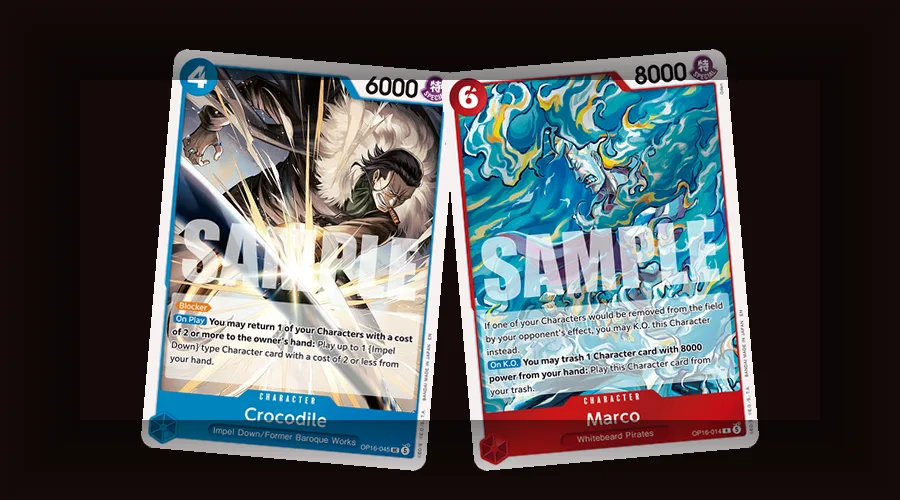 Crocodile represents the Impel Down core; the Marco card in this image illustrates the off-trait tradeoff that turns off the refresh while it is on the field.
Matchup Direction
Green/Blue Luffy remains near the top of the OP16 field in Limitless TCG's current snapshot. Blue/Yellow Nami leads at 23.52%, Luffy is second at 22.91%, and Purple Enel is third at 22.71%, leaving less than two percentage points between all three. The tournament history also lists Luffy wins at the July 26 Sofia Treasure Cup and the July 25 Peoria Regional, plus several other top finishes. The directional notes below are strategic guidance rather than verified matchup percentages; use them as a starting point and adjust for the list you actually register.
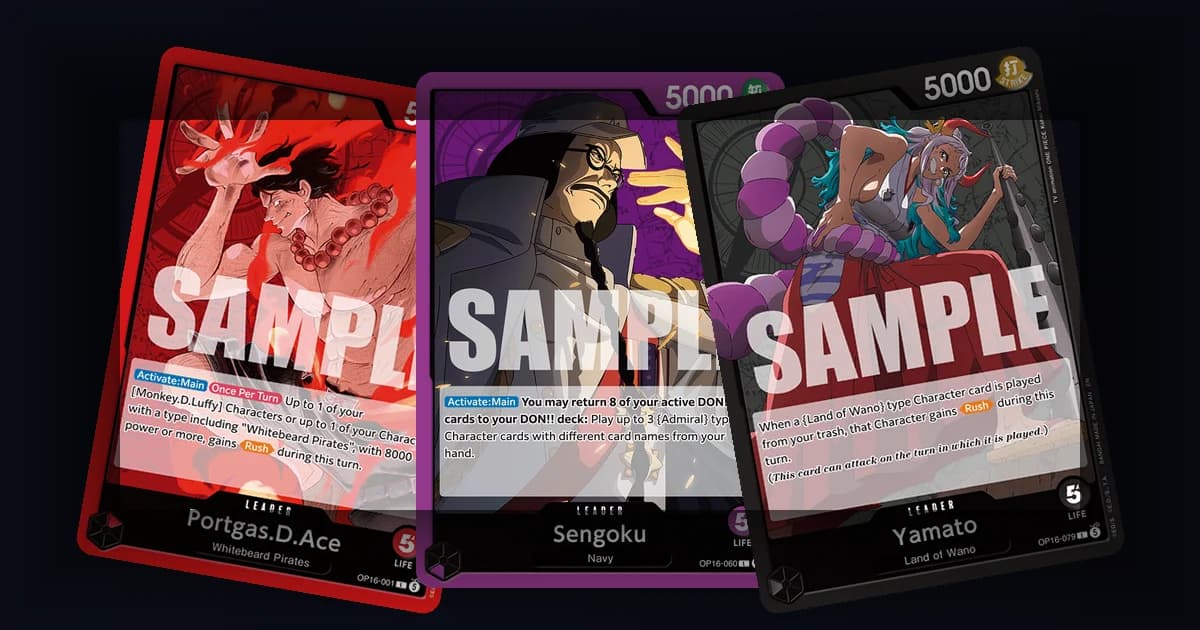
vs Ace (Red aggro)
Close race. Ace's burn closes fast, but Luffy's DON!! efficiency lets him present more attackers per turn than Ace can profitably block through. Keep the board wide and Impel Down-pure.
vs Buggy (Blue swarm)
Both decks pull from overlapping Impel Down cards. Whoever curves out more efficiently and keeps the DON!! untap active longer tends to win the race.
vs Sengoku (Purple Marine ramp)
Favorable if Luffy pressures early, since Sengoku wants to ramp toward a single powerful Admiral board state and Luffy's extra DON!! lets him get ahead before that lands.
vs Yamato (Black recursion)
Close. Yamato rebuilds from the trash with Rush, so Luffy needs to keep enough board presence to avoid being ground out before recursion snowballs.
Budget vs Optimized
Budget: Lean on lower-rarity Impel Down Characters plus a solid counter package. If an off-trait card is too expensive, replace it with a core card rather than assuming the leader requires a particular secondary package.
Optimized: Add the higher-rarity efficient Impel Down threats and test whether an off-trait card such as Brook improves the matchups you expect. Luffy's standard leader printing is inexpensive, while the alternate art carries the premium.
Common Luffy Mistakes
The most common error is forgetting that the leader condition checks the field, then activating after an off-trait Character has entered play. A second is treating every off-trait card as illegal rather than weighing its effect against the lost refresh. A third is playing Luffy like a pure aggro deck and over-committing, when the strength is staying ahead on DON!! and board over several turns.
Is Luffy Worth Picking?
Luffy is the pick for players who want a resource-efficiency engine rather than raw speed or a single bomb finisher. The Impel Down core rewards disciplined sequencing, while a small off-trait package gives experienced pilots room to trade the refresh for a specific effect. He rewards checking traits before activation and adapting the plan to the board.
One thing worth clearing up now that OP-17 has released: the new set also has a Monkey D. Luffy 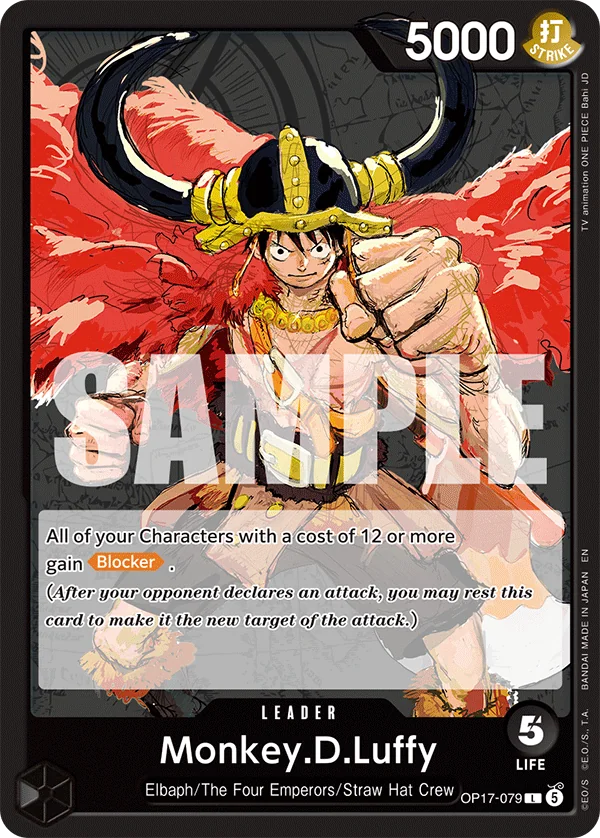 OP17-079OP17-079Shop on TCGplayer leader, but it's a completely different card. The OP-17 Luffy deck guide covers OP17-079, a Black leader built around giving every Character with a cost of 12 or more the Blocker ability, part of the set's Elbaph giants theme, with no connection to this Blue/Green Impel Down engine. This Blue/Green Luffy keeps his full card pool when OP-17 joins OP-16 in the combined standard format, so the deck doesn't go anywhere; it just shares a name with the new set's cover leader.
Seeing the Impel Down engine actually play out helps more than any decklist can on its own.
Green Blue Luffy Decklist: The Full 50-Card List
OP-16 has been live for EN players since June 12, and current data gives Green/Blue Luffy a strong place in the OP16 field. The 50-card list below is a real Flagship EX result from Gumgum: 1st place at 5-0. It is not a universal template or a fully trait-pure list. It uses the Impel Down core alongside a Brook package and cards with additional traits, so the leader refresh is conditional when Brook is on the field. Limitless's separate 102-list profile is better read as a metagame average than as proof that every slot is mandatory; the Impel Down Luffy deck guide covers the official starting list card by card.
Leader: 1x OP16-022OP16-022Shop on TCGplayer Monkey D. Luffy (Blue/Green)
Characters (45):
- 4x Monkey.D.Luffy
- 4x Mr.2 Bon Kurei (Bentham) (OP16-055)
- 4x Mr.1 (Daz Bonez) (OP16-054)
- 2x Mr.3 (Galdino) (OP16-037)
- 4x Mr.3 (Galdino) (ST30-014)
- 2x OP16-026OP16-026Shop on TCGplayer Emporio Ivankov
- 4x Mr.3 (Galdino) (OP16-056)
- 4x OP16-045OP16-045Shop on TCGplayer Crocodile
- 4x Buggy
- 2x Brook (OP15-032)
- 8x OP16-042OP16-042Shop on TCGplayer Prisoner of Impel Down
- 3x Boa Hancock (OP16-032)
Events (5):
- 1x Demon Aura Nine Sword Style Asura Blades Drawn Dead Man's Game (OP12-037)
- 1x I Know You're Strong... So I'll Go All Out from the Very Start!!! (OP13-040)
- 3x Let's Go!! To the Navy Headquarters!! (OP16-038)
That is 45 Characters plus 5 Events for a full 50-card main deck. The source's type breakdown includes 46 Impel Down, 22 Former Baroque Works, and 11 Straw Hat Crew counts because cards can carry multiple traits. Brook is the deliberate off-trait tradeoff in this recorded list: while it is on the field, the leader refresh is unavailable, so the pilot must get value from the card instead. A purer variant can replace those slots with another Impel Down card, but it becomes a different build.
SHOP: Building this Blue/Green Luffy list? Check current OP-16 singles prices on TCGPlayer before you buy. Shop TCGplayer →
Key Takeaways
- Luffy (OP16-022) is Blue/Green, 5000 power, 4 life, Impel Down/Straw Hat Crew traits
- Real leader ability: untap up to 2 DON!! once per turn, but only if every Character on your field is {Impel Down} type
- Off-trait Characters such as Brook disable the refresh while they are on the field, but they remain legal deckbuilding choices
- Win condition is incremental: extra untapped DON!! most turns lets you outpace the opponent's development
- Cited onepiece.gg ranked-sim snapshot: 72%; current Limitless profile: 102 placings and 6 wins
- Standard leader printing is inexpensive compared with the alternate art, but prices move
GODEEPER: Comparing the OP-16 aggro and tempo options? Ace's Red burn deck races differently. OP-16 Ace Deck Guide
Related Reading
- OP-16 Sengoku Deck Guide: Purple Marine Admirals Build: OP-16 Sengoku deck guide.
- One Piece TCG Meta Rotation Guide: When to Sell Cards: One Piece TCG meta rotation guide.
- OP-16 Best Cards to Pull: Chase & Value Guide (2026): Which OP-16 chase cards hold value if you're opening boxes to build this deck.
- OP-16 Akainu deck guide: Sakazuki in Sengoku Navy 2026: Another OP-16 leader matchup worth knowing before you sit down against the Navy.
- OP-16 Buggy Deck Guide: Shares part of the Impel Down Character pool with Luffy.
- OP-16 Law Deck Guide: No Leader, Rosinante's Key Piece: Trafalgar Law isn't a leader in OP-16; see the real cards and where he actually shows up.
- OP-16 Paramount War: All Characters Explained: Full character overview including Impel Down and Straw Hat cards.
- One Piece TCG Card Rarities Explained: How to identify every rarity tier and which OP-16 cards are worth money.
- One Piece TCG Green Deck Guide: Mill and Disruption 2026: deeper look at Green's mill and bounce identity, with Blue/Green Luffy OP-16 context.
- One Piece TCG Colors Explained: Blue and Green playstyle breakdown, the two colors that define Luffy's OP-16 deck.
- One Piece TCG Beginner Guide 2026: Rules and DON!! system for new players.
- All One Piece TCG Sets OP-01 to OP-16: all 16 sets with release dates, Standard legality, and the chase cards that defined each format.
- OP-17 Release Date Confirmed: Aug 22 JP, Aug 28 EN: OP-17 World's Strongest Warriors hits Japan August 22 and gets its EN wide release August 28, 2026, with all 6 leaders now confirmed.
- OP-16 Meta Tier List Week 1: Where Blue/Green Luffy ranks against every other OP-16 leader and returning deck.
- OP-16 Complete Guide: Full set overview, mechanics, and every leader for context on where Luffy fits.
- OP-16 GY Law Deck Guide: Full Supernova Combo: The Graveyard Law combo deck, a technical control alternative to Luffy's tempo plan.
- OP-17 Spoilers Complete Tracker: Every confirmed OP-17 leader, card, and release detail as spoilers drop.
Frequently Asked Questions
Q: What color is Luffy in OP-16? A: Blue/Green. Two-color leader with Impel Down and Straw Hat Crew traits. Confirmed at JP release; earlier copy said unconfirmed.
Q: What is Luffy's archetype? A: An Impel Down-centered DON!! engine. His leader ability untaps up to 2 DON!! once per turn only if every Character on your field is {Impel Down} type. Off-trait Characters can be included, but they disable the refresh while they remain in play. Boa Hancock is Impel Down and keeps the condition live.
Q: What characters support Luffy? A: The core is Buggy (OP16-031 and OP16-048), Crocodile (OP16-045), Mr.1/Mr.2/Mr.3, Emporio Ivankov, Miss Olive, Prisoner of Impel Down, Boa Hancock, and Luffy's dual-typed Character reprint (OP16-034). Current tracked lists also use Brook as an off-trait refresh tradeoff.
Q: How does Luffy compare to Ace? A: Ace is Red aggro that races on burn damage; Luffy can gain a DON!! efficiency advantage from an Impel Down board. Ace closes faster; Luffy's edge compounds over a few turns.
Q: Good for beginners? A: Reasonably, once you understand the field condition. You need to check traits before activating the leader, but you can choose a pure core or a more flexible package. It is less mechanically demanding than Blackbeard's redirect control.
Q: Is the deck expensive? A: Moderate. Luffy's leader has an inexpensive standard printing, and many core pieces are lower rarity. Prices change with supply, so check current listings before buying.
References
- OP-16 The Time of Battle Official Product Page: Luffy's traits and card number
- One Piece Card Game Card List: official card text and colours
- Limitless OP16 metagame: current OP16 deck shares
- Limitless Green/Blue Luffy profile: current 102-list card averages
- Limitless Green/Blue Luffy results: tracked tournament placings and wins
- Limitless OP16-022 card profile: leader text, legality, and price snapshot
- onepiece.gg ranked-sim analysis: current 72% ranked-sim snapshot
- Gumgum.gg Flagship EX decklist: source for the 1st-place 5-0 list above
- TCGPlayer One Piece TCG: card pricing reference
Was this guide helpful?
Cards in this article
About the author
Deck guides and meta
Pen name for the Shonen TCG desk's One Piece TCG deck guides, tier lists and meta reports.
- Lists averaged from public tournament results, sample size stated
- Card text quoted from Bandai's official card list
- Opinions marked as ours, with the reason
Keep reading
OP-16 3 Admirals Guide: Characters, Not Leaders (2026)
Guides · 10 min
One Piece TCG Card Grading: Is It Worth It in 2026?
Guides · 16 min
OP-16 Black Yellow Teach Decklist: Blackbeard Deck Guide
Guides · 10 min
OP-16 Black Yamato Deck Guide: Mono-Black Wano Recursion
Guides · 13 min
OP-16 Most Expensive Cards: Best & Top 6 Chase Picks
Guides · 7 min
OP-16 Manga Rare Guide: Admiral Prices and Pull Odds
Guides · 13 min
OP-16 Full Card List & Spoilers: What's in the Set
Guides · 10 min
One Piece TCG Counter Rules: Counter Step and Values
Guides · 11 min
Disclaimer
This article is published for informational and entertainment purposes. It does not constitute professional financial, legal, or technical advice. Game performance, online services, patch schedules, and store listings change. Verify critical details (pricing, system requirements, regional availability) with publishers and storefronts before you buy. Affiliate links, where present, help support our editorial work and are labelled in our affiliate disclosure.