Loading…
Loading…
Shonen TCG · General
Reviewing
One Piece TCG
OP-16 EN launched June 12 and the price picture is now clear enough to build on a real budget. This OP-16 budget deck guide covers the three viable routes under $140, with one that comes in under $80. The Admiral Manga Rares and SEC leaders are genuinely exciting pulls, but you don't need them to compete at local events or FNM-style game nights. If you're newer to the game and want to understand the DON!! system first, the One Piece TCG beginner guide lays out the fundamentals.
TL;DR:
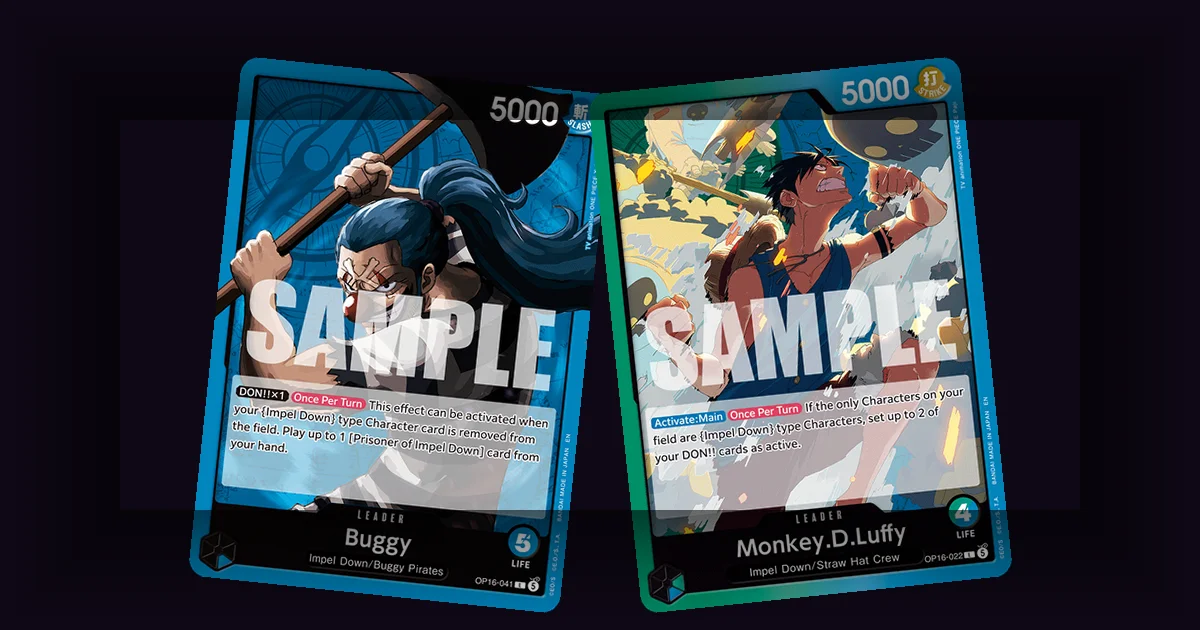
OP16-041
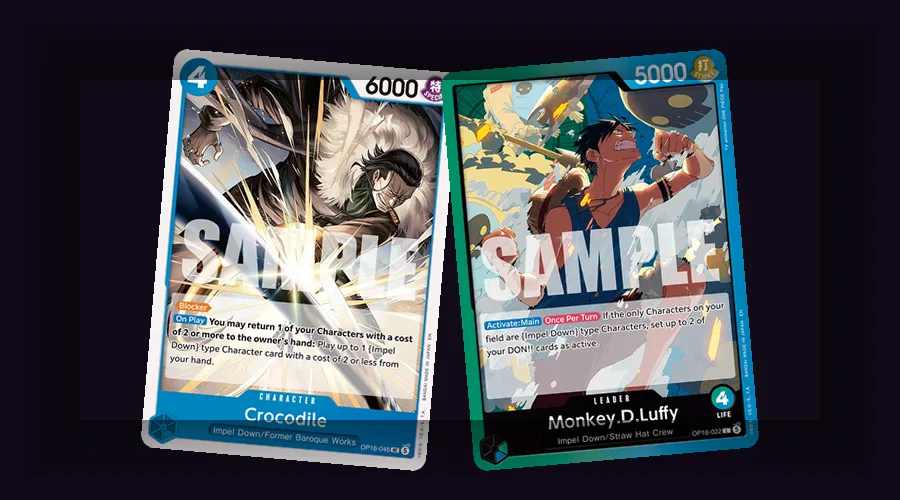
OP16-022
Three leaders clear the under-$140 threshold in post-EN-launch pricing: Buggy Blue ($50-80), Luffy Blue/Green ($80-140), and Yamato Black ($85-120). All three are non-SEC leaders. None require Admiral Manga Rares. Buggy is S-tier-adjacent in current JP data, Luffy is confirmed S-tier, and Yamato is confirmed S-tier. You don't have to buy the expensive cards to access the competitive tier.
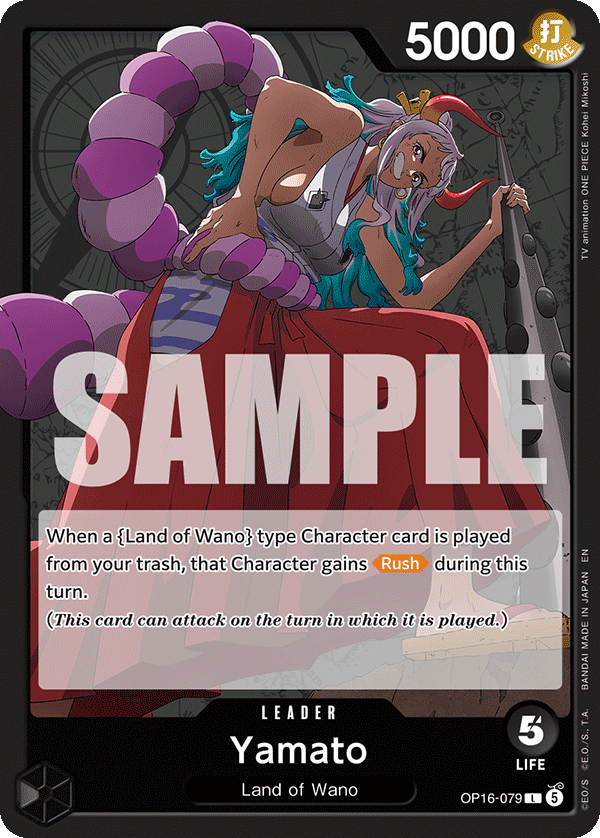 OP16-079OP16-079Shop on TCGplayer Yamato Black is mid-budget at $85-120, depends on SR availability
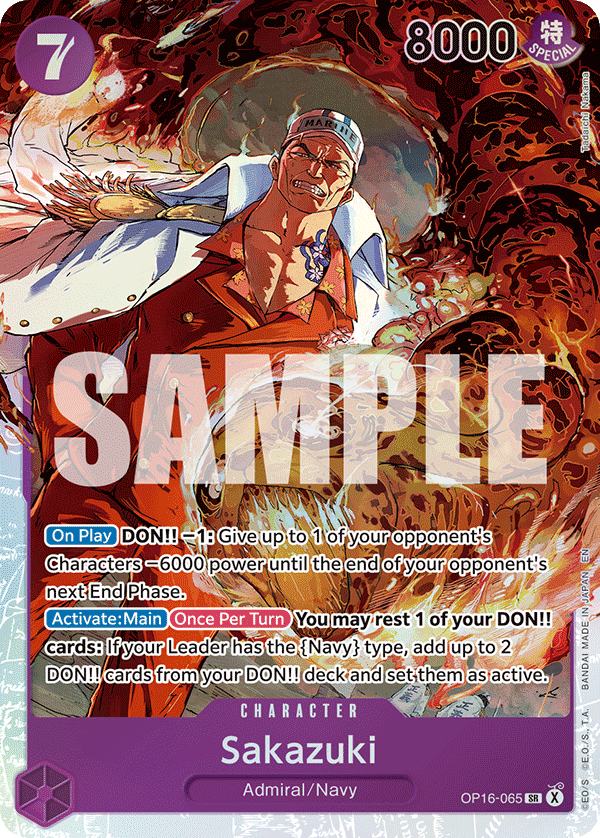 OP16-065OP16-065Shop on TCGplayer Akainu (Manga Rare) trades $130-180 EN launch; Kizaru and Aokiji MR versions similar
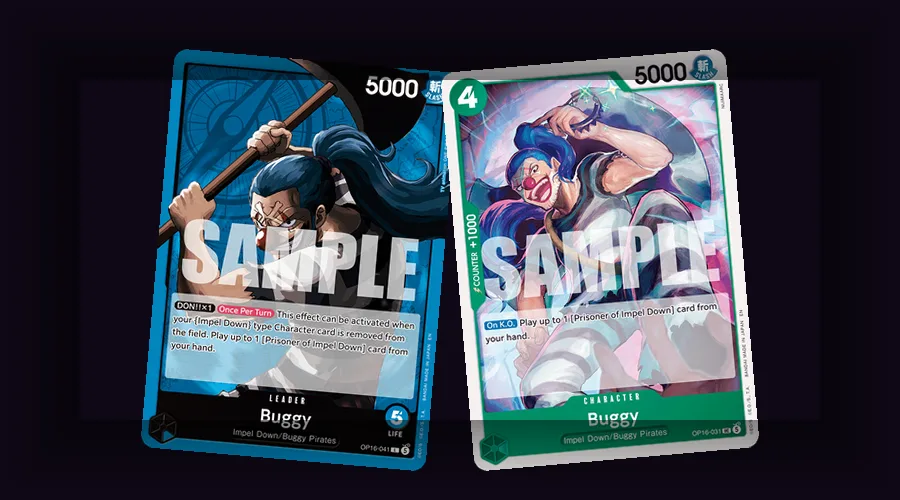 The OP-16 budget shell relies on standard-print Admirals and common support pieces, keeping total cost under $50.
Was this guide helpful?
About the author

TCG Deck Analyst
Former card game tournament organiser turned analyst. Covers One Piece TCG meta, deck efficiency, and card valuation. Builds spreadsheets for decks most people just play.
Disclaimer
This article is published for informational and entertainment purposes. It does not constitute professional financial, legal, or technical advice. Game performance, online services, patch schedules, and store listings change. Verify critical details (pricing, system requirements, regional availability) with publishers and storefronts before you buy. Affiliate links, where present, help support our editorial work and are labelled in our affiliate disclosure.
Buggy is the cleanest budget leader in the set. His Impel Down game plan runs almost entirely on common and uncommon rarity characters, which keeps individual card costs under $2 each for most of the list. The ST-25 Blue Buggy starter deck covers roughly 30-35% of the 50-card core, so the upgrade path from starter to full build is one of the cheaper ones in One Piece TCG.
The Buggy deck's game plan is to flood the board with low-cost Impel Down prisoners and attack with wide trades. You're not looking for a single high-power finisher. You're building a board state where the opponent can't profitably block everything and eventually takes lethal from multiple small attacks in the same turn.
Core pieces the deck runs:
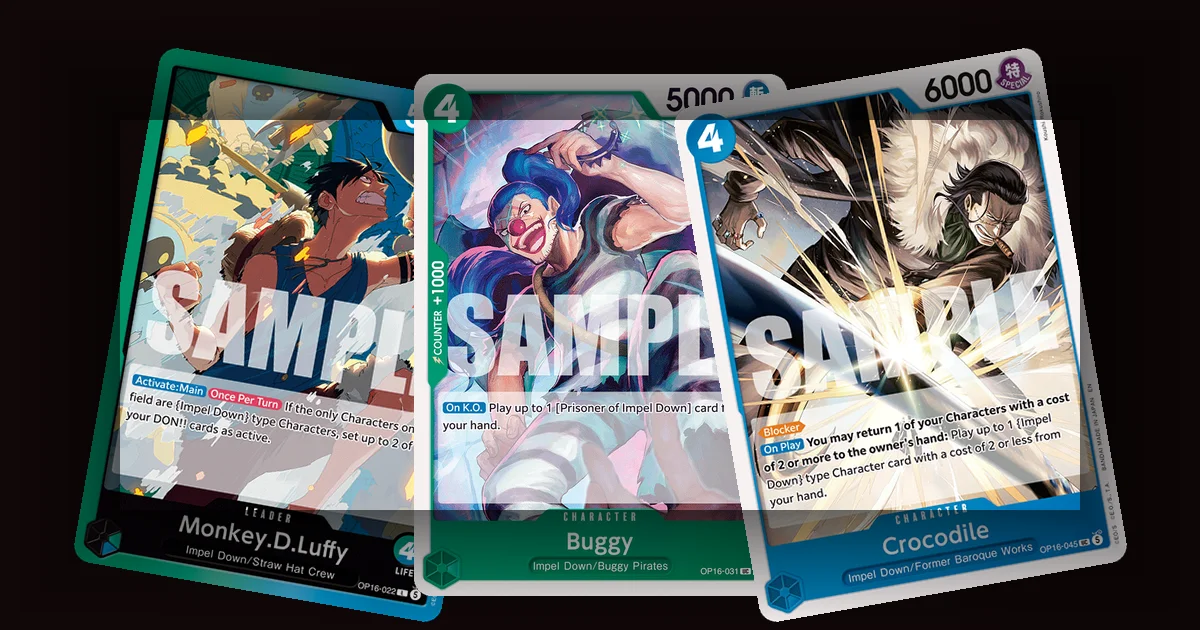
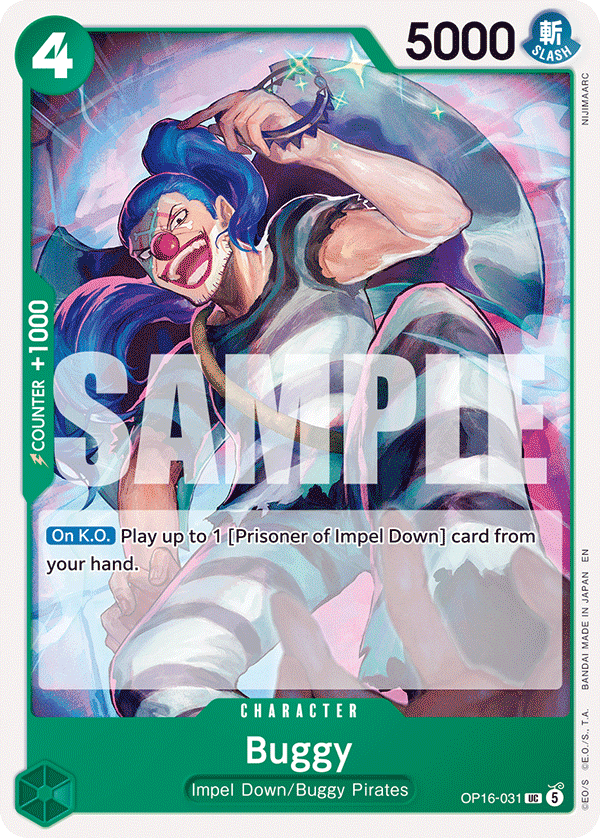 OP16-031OP16-031Shop on TCGplayer Buggy as Character, not leader: 4 copies. Low cost, contributes to board width, triggers on the OP16-041 leader ability.
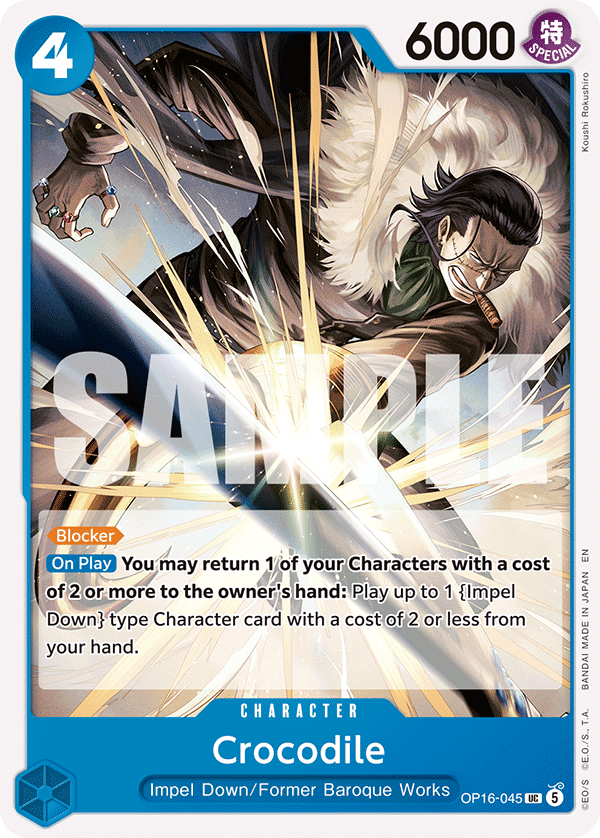 OP16-045OP16-045Shop on TCGplayer Crocodile: 4 copies. Uncommon, accessible, provides counter and board presence.
The deck avoids SEC leaders entirely (both are different characters), Admiral Manga Rares (Akainu, Kizaru, Aokiji all belong in Sengoku Purple, not here), and expensive SRs beyond what the archetype actually needs.
Post-launch single prices for Buggy-archetype pieces: most commons under $0.50, uncommons $1-2, the occasional relevant SR at $5-10. The total card cost for the 50-card build (not counting the starter) lands in the $35-60 range depending on whether you already own the ST-25 starter.
GODEEPER: All six OP-16 leaders and what they cost to build is covered in the full leader breakdown. OP-16 All 6 Leaders Explained →
Luffy is the second-cheapest build and the stronger competitive pick. JP week 1 data puts him at S-tier, the same tier as Blackbeard and Yamato, which means the budget path here is also the meta path. That's rare in TCGs.
The deck's piece overlap with Buggy matters for budget builders. Luffy runs the Impel Down Character pool (same as Buggy) plus the Straw Hat Crew pool. If you already own Buggy pieces, the incremental upgrade to Luffy is buying the Straw Hat half of the deck. You're not starting over.
What drives the Luffy build cost up from Buggy:
The accessible version of this deck avoids the most expensive Green singles and leans on the Impel Down half during the early game while transitioning to Straw Hat pressure mid-to-late. Full S-tier Luffy lists from JP often include some pricier Green cards, but the accessible version still competes at local level.
Yamato is mono-Black, which means no second-color complexity and no SEC requirement. The deck runs Wano Country characters from OP-16 and older sets, replaying them from the trash with Rush via the leader ability.
Budget considerations for Yamato:
The budget Yamato build loses ceiling compared to a full SR build but keeps the core game plan. Wano characters from trash gain Rush regardless of which version of Yamato you're replaying. A build that substitutes some SRs for cheaper Wano bodies still generates the Rush factory pressure that makes the deck work.
For players who already own Black cards from OP-11 to OP-14, the incremental buy-in is lower than the $85-120 estimate. Check your existing collection before pricing a full list.
GODEEPER: How Yamato's Rush recursion actually works turn-by-turn is in the full deck guide. OP-16 Yamato Deck Guide: Black Yamato Wano Recursion →
 Standard-print Sakazuki (OP16-065) and Kuzan (OP16-063) play identically to Manga Rare counterparts at a fraction of the cost.
Akainu (OP16-065), Kizaru (Borsalino), and Aokiji (Kuzan) in Manga Rare form are the set's chase pulls. EN launch pricing puts Akainu at $130-180 on TCGPlayer, with Kizaru and Aokiji MR versions in similar ranges. These cards live in Sengoku's Purple deck, not Buggy, Luffy, or Yamato. If you're building any of the three budget decks, skip them.
Ace (OP16-118) and Blackbeard (OP16-119) carry collector premiums that reflect rarity and art treatment, not play advantage over non-SEC versions. A non-SEC Buggy (OP16-041) plays identically to the regular art version as a leader. The SEC label doesn't improve your win rate.
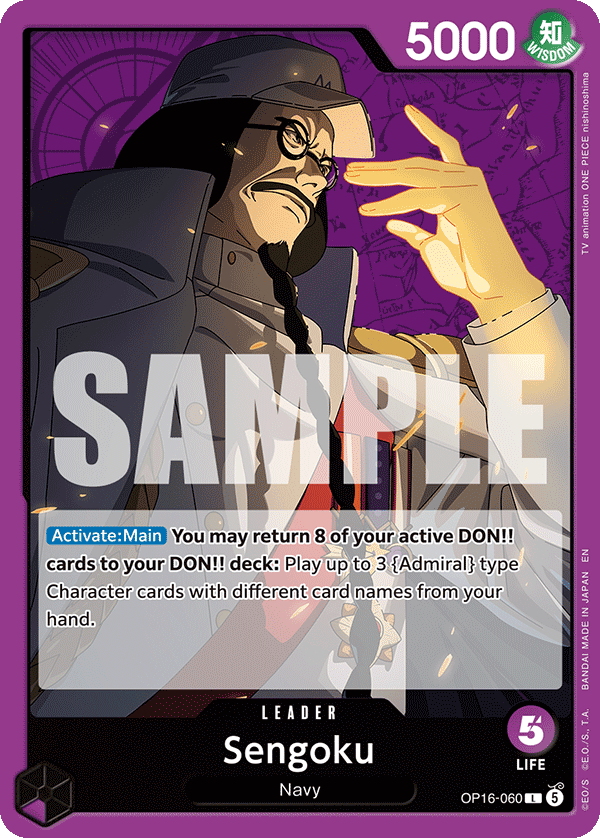 OP16-060OP16-060Shop on TCGplayer Sengoku is the one OP-16 leader that can't be built on budget without gutting its game plan. The deck exists to ramp into Akainu, Kizaru, and Aokiji. Without those Admirals on the board, the ramp does nothing. Sengoku is a post-collection-growth purchase.
Step 1: Buy the ST-25 starter deck first. At $15-20 retail it gives you Buggy (OP16-041) as your leader and the initial Impel Down creature base. Don't buy booster packs to fill the rest of the list.
Step 2: Identify your target leader. If you're sticking with Buggy, you're done after Step 1 and singles. If you're targeting Luffy, the starter gives you the Impel Down half and you need to buy the Straw Hat single pool.
Step 3: Build a singles list before buying anything. Cross-reference a Buggy or Luffy decklist from gumgum.gg against cards you already own. Sort by rarity. Buy commons and uncommons first, then evaluate whether the SRs are necessary for your play context.
Step 4: Skip the Manga Rares and SEC cards. Mark them as targets for after you've played the core deck. If you hit one in a pack, great. Don't chase them to complete a budget build.
Step 5: Play 10-15 games before changing anything. The Buggy deck punishes you for changing the curve too aggressively. Understand the existing list before optimizing.
SHOP: Ready to build on a budget? Check current OP-16 singles prices on TCGPlayer. Shop TCGplayer →
Playing Buggy, never slow-play your board. The deck's advantage is board width. Holding characters in hand waiting for a better moment costs you damage. Play them, attack, and replace them on the next draw.
Playing Luffy, track both pools mentally. Know which Impel Down and which Straw Hat characters are in your hand at any time. Reviewing the OP-16 all 6 leaders explained article is useful for understanding how Luffy compares to the other options in the set. The two pools serve different roles, and mixing them up causes misplays when one pool runs dry.
Playing Yamato, fill the trash in turns 1-3. Use Yamato (OP16-098) early. The trash needs targets before you can generate Rush attacks. A Yamato build that doesn't fill the trash by turn 3 is slower than a standard mono-Black aggro deck, which defeats the point.
One budget-specific thing worth knowing: cheap builds often run less counter coverage than full-price versions. The One Piece TCG counter mechanic guide is worth reading before you finalize your event count. If you're losing to Life pressure repeatedly, check your counter event count before swapping characters. Adding two cheap counter events usually improves performance more than any character upgrade at this price point.
None of these three lists have to stay budget forever. When you're ready to spend more, the order matters more than the total: spend on the wrong upgrade first and you'll pay twice.
First: the counter package. Budget lists typically run fewer counter events than an optimized list, since good counters skew toward Rare rarity and up. A complete counter suite is the highest-impact upgrade available because it improves every matchup, not just one.
Second: consistency pieces. Search and draw cards that reliably find your key pieces beat a single flashy one-of. A deck that draws well beats a pricier deck that draws poorly.
Third: rarity anchors. Once the floor of the deck is solid, adding 2-3 high-rarity Characters raises your ceiling against the other top decks in the room.
Skip the SEC and alt-art cards until last. They look great in a binder but don't move your win rate over the standard-print version. Cosmetic upgrades are the final purchase, not the first.
The most common mistake budget builders make is inverting this order: spending on one expensive highlight card instead of a complete counter suite, or taking an optimized tournament list and simply deleting the cards they can't afford. That second approach leaves holes the list was built around to cover. Build a coherent budget shell from the ground up instead, and set expectations accordingly: a well-built budget list is strong at weekly locals, but a regional-size field (250+ players) usually needs the fuller counter suite and Rare-plus playset that this upgrade path gets you to.
What is the cheapest OP-16 deck to build? Buggy Blue (OP16-041) at $50-80. Runs entirely on common and uncommon Impel Down prisoners. The ST-25 starter deck cuts the buy-in further. No SEC or Manga Rare required.
Can you play OP-16 competitively without SEC leaders? Yes. Both Buggy (non-SEC) and Luffy (non-SEC) are competitive. The SEC leaders carry collector premiums, not play premiums. Buggy wins locals without any premium investment.
What does a budget Buggy deck cost post-launch? $50-80 all-in. Most pieces are commons and uncommons at under $2 each. The ST-25 starter deck reduces that further by covering about a third of the list.
Is Yamato Black a budget deck? Mid-budget at $85-120. Non-SEC leader, Wano character core is accessible, but the Yamato SR cards (OP16-098, OP16-096) add to the cost if you run the full version. Budget substitutions are possible while keeping the core Rush plan.
What cards should I skip for a budget build? Admiral Manga Rares (Akainu MR at $130-180, Kizaru/Aokiji MR similar range) and SEC leaders (Ace OP16-118, Blackbeard OP16-119). None are required for Buggy, Luffy, or Yamato builds.
Can I build a budget Luffy deck? Luffy at $80-140 is the strongest budget pick by tier placement. Most Buggy pieces carry over, so the incremental upgrade from Buggy to Luffy is cheaper than a fresh Luffy build.
Does the ST-25 starter deck help? Yes. It covers 30-35% of the Buggy core list and is the cheapest entry point. Buy this first before any singles or packs.
Can a budget OP-16 deck compete at regionals? Not reliably. Budget lists are strong at weekly locals, but a regional-size field (250+ players) usually needs a fuller counter suite and Rare-plus playset. Treat a budget build as a locals-ready starting point, then upgrade counters first, consistency second, and rarity anchors last before stepping up to bigger events.
Related
Dragon Ball Fusion World FB11: Brightness of Hope (Oct 2026)
8 min read
Lorcana Attack of the Vine Enchanted Cards Guide 2026
12 min read
Disney Lorcana Attack of the Vine: Complete Set 13 Guide
15 min read
Dragon Ball Fusion World Vegito Guide FB10 Meta 2026
13 min read
Union Arena InuYasha Archetypes: Competitive Guide
10 min read