

Shonen TCG · Guides
One Piece TCG How to Read a Card: 6 Things to Check
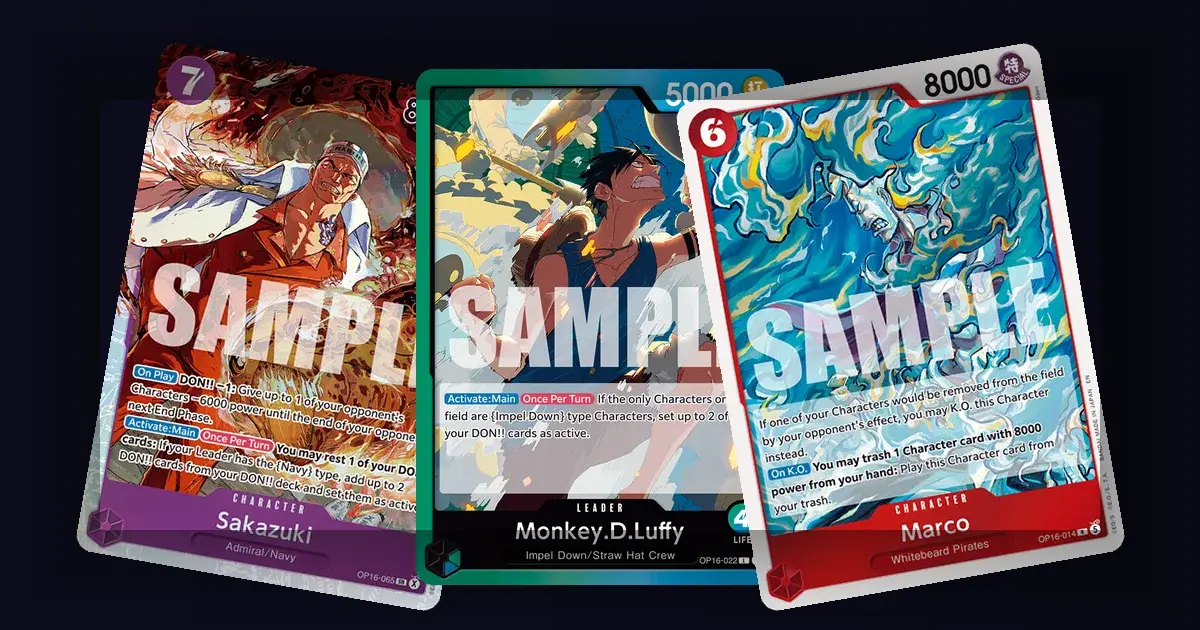
Six spots on the card tell you what it costs, how it fights and which deck it belongs in. Here's where each one sits, on a real card.
Our callRead cost, power and counter first, then color, attribute and type, then the text. The counter on the left edge is the number new players skip, and it decides more games than most effects.
One Piece TCG how to read a card, in one line: cost top left, power top right, counter down the left edge, color in the hexagon at the bottom, attribute next to the power, and type under the name. Those six spots tell you what a card costs, how it fights and which deck it belongs in. The text box tells you the rest.
We'll use one real card the whole way through: Who's.Who  OP17-071
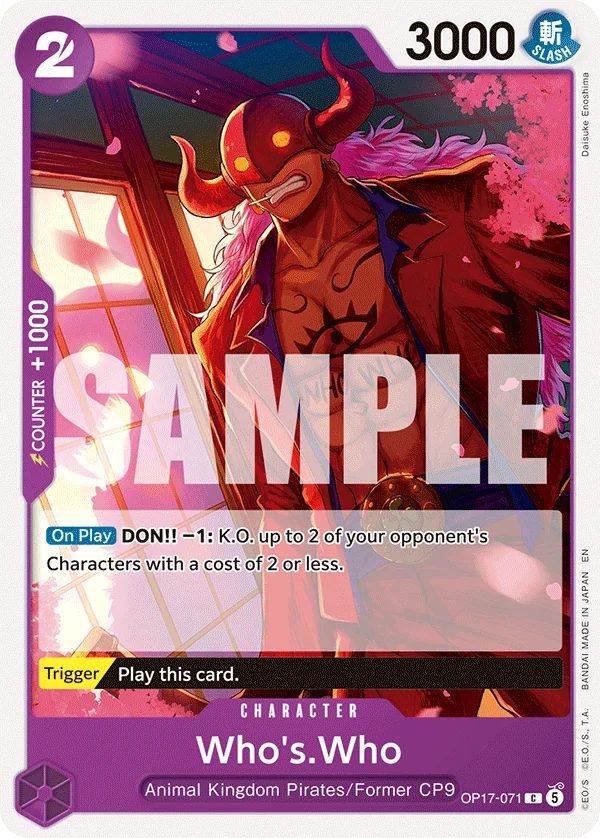 OP17-071Shop on TCGplayer, a purple Common from OP-17.
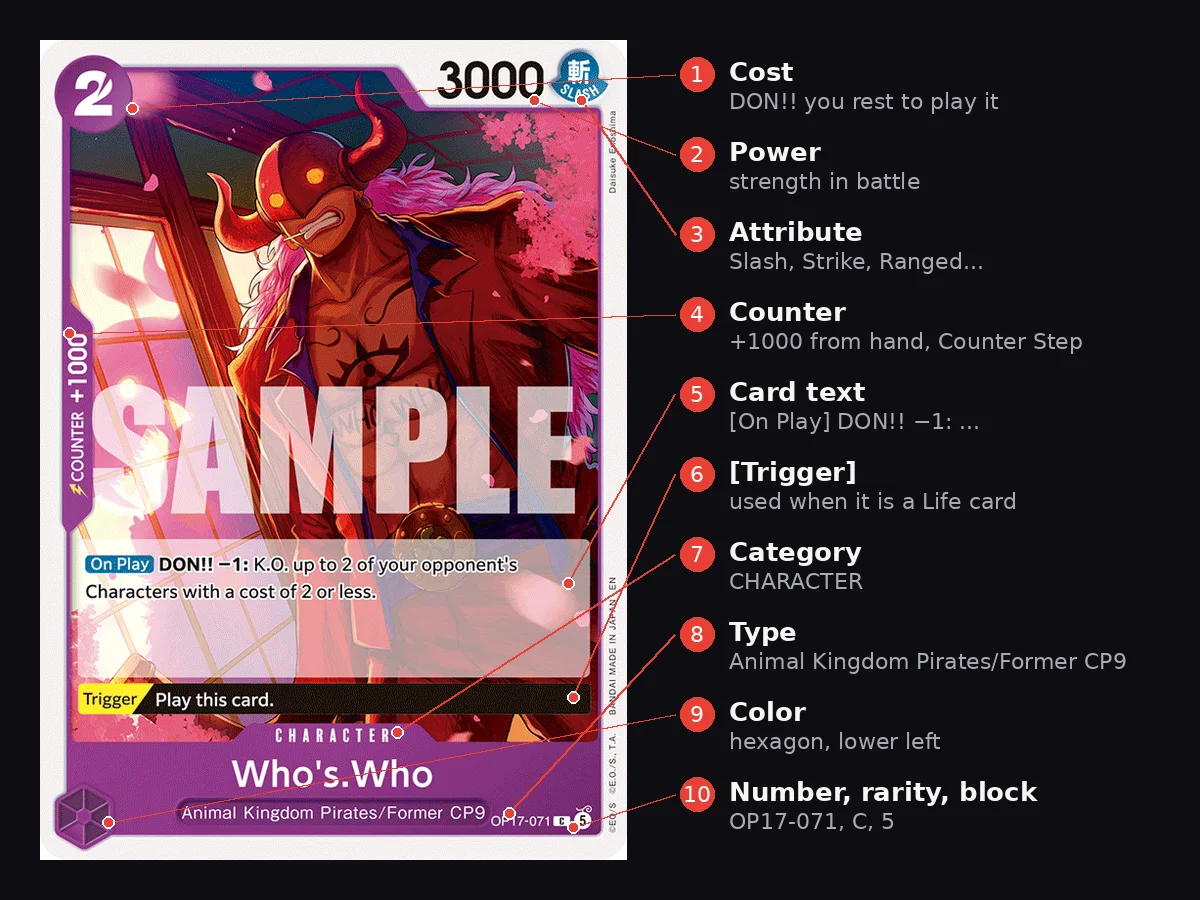 Image: Bandai official card list (OP17-071), callouts added by ShonenTCG. Every field on a Character card, numbered in reading order.
The six things to check first
1. Cost (top left). The 2 in the purple circle. It's how many DON!! you rest to play the card from your hand. Only Characters, Events and Stages have a cost; Leaders don't.
2. Power (top right). Who's.Who has 3000. Power is the card's strength in battle, and only Leaders and Characters have it. An attack lands when the attacker's power is equal to or higher than the defender's.
3. Counter (left edge). The vertical "+1000 COUNTER" strip. When you're attacked, you can trash this card from your hand to add 1000 power to your Leader or one of your Characters for that battle. Only Characters carry a counter, and plenty of cheap Characters earn their deck slot for this number alone. Our counter mechanic guide covers how to count it.
4. Color (hexagon, bottom left). The game has six colors: red, green, blue, purple, black and yellow, and each one owns a fixed slice of the hexagon. A two-color card fills two slices. Your deck can only hold cards that share a color with your Leader, so this is the legality check.
5. Attribute (icon next to the power). Who's.Who is Slash. There are six attributes: Slash, Strike, Ranged, Special, Wisdom and "?". On their own they do nothing; they matter when another card's text names one, written in angle brackets like .
6. Type (the bar under the name). "Animal Kingdom Pirates/Former CP9". Players often call these traits; the rules call them types, and a slash means the card has both. Effects name a type in curly brackets, like {Big Mom Pirates}, so the type decides which decks a card fits. The colors guide shows how color and type combine into a deck.
The rest of the card
Card text. Read it top to bottom; the rules resolve text in that order. Who's.Who says: "[On Play] DON!! −1: K.O. up to 2 of your opponent's Characters with a cost of 2 or less." [On Play] means it fires once, when the card comes into play. DON!! −1 is the price: you return one DON!! card from your field to your DON!! deck. The bracketed timing words are covered in One Piece TCG keywords explained.
[Trigger]. The black bar under the text. When this card is flipped from your Life area as you take damage, you can use the Trigger instead of adding it to your hand. Here it's "Play this card", so Who's.Who can land for free on the opponent's turn.
Category. "CHARACTER" above the name. There are five categories: Leader, Character, Event, Stage and DON!!. Events are used from your hand and go to the trash; Characters and Stages stay in play.
Card number, rarity, block. Bottom right: OP17-071, C for Common, and a block symbol of 5. The number is what you search on the official card list, and the deck limit counts by it: no more than 4 cards with the same card number. Rarity and the block symbol don't affect gameplay; the card rarities guide explains the codes.
Leaders read differently
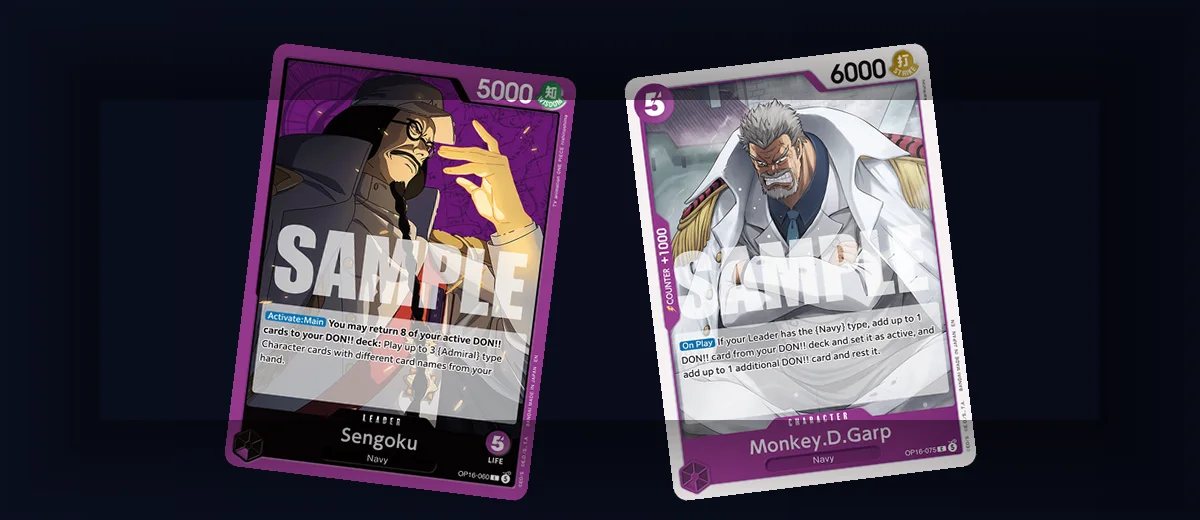 Image: Bandai official card list (Sengoku OP16-060, Monkey.D.Garp). The Leader on the left has Life and no cost or counter; the Character on the right has both.
A Leader has power, color, attribute, type and text, but no cost and no counter. In their place is Life, bottom right: Sengoku  OP16-060
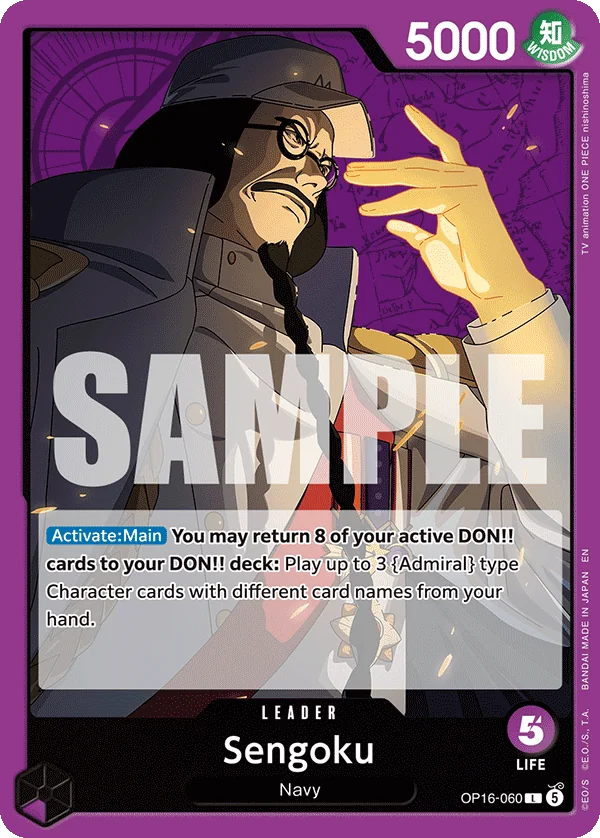 OP16-060Shop on TCGplayer shows 5. At the start of the game you put that many cards from the top of your deck face down in your Life area, so a 5-Life Leader can take more hits than a 4-Life one. The Leader's colors also set which cards your deck can use, which is why the deck building guide starts there.
A practice read: Who's.Who in ten seconds
Put it together. Who's.Who costs 2, so it's an early play. It hits for 3000, which is small, so it isn't there to attack. Its counter is +1000, so in a pinch it's a defensive card from hand. It's purple, so it only fits purple Leaders, and its two types mean it counts for Animal Kingdom Pirates or Former CP9 effects. The text is the reason to play it: for one DON!!, it K.O.s up to two cheap enemy Characters, and the Trigger can drop it in for free when it comes off your Life.
That's the whole skill. You're not memorizing cards, you're reading the same layout every time. For how the power and counter numbers settle a fight, see attack and battle rules.
Our take
Learn the counter strip before anything else. New players read the art, then the power, then the text, and only notice the left edge when they're losing a game they could have defended. A cheap Character with +2000 on the side is often a better card in hand than a flashy one on the board. Once that clicks, the rest of the layout takes a week of play to become automatic; our rules and mechanics guide is the next step.
How we checked this: Every field was checked against section 2 (Card Information) of Bandai's Comprehensive Rules, version 1.2.1, and the example cards against Bandai's official card list. The callout image was drawn on Bandai's own card image.
References
- One Piece Card Game Comprehensive Rules (PDF): section 2, Card Information; 7-1-3, Counter Step; 10-2-10, DON!! −X.
- One Piece Card Game official card list: Who's.Who OP17-071.
- Limitless TCG: OP17-071 Who's.Who: card stats in a searchable database.
Was this guide helpful?
Cards in this article
About the author
Pen name for the Shonen TCG desk's tournament coverage, format analysis and cross-game comparisons.
- Results taken from event pages and standings
- Other games checked against their own official rules
- Opinions marked as ours, with the reason
Keep reading
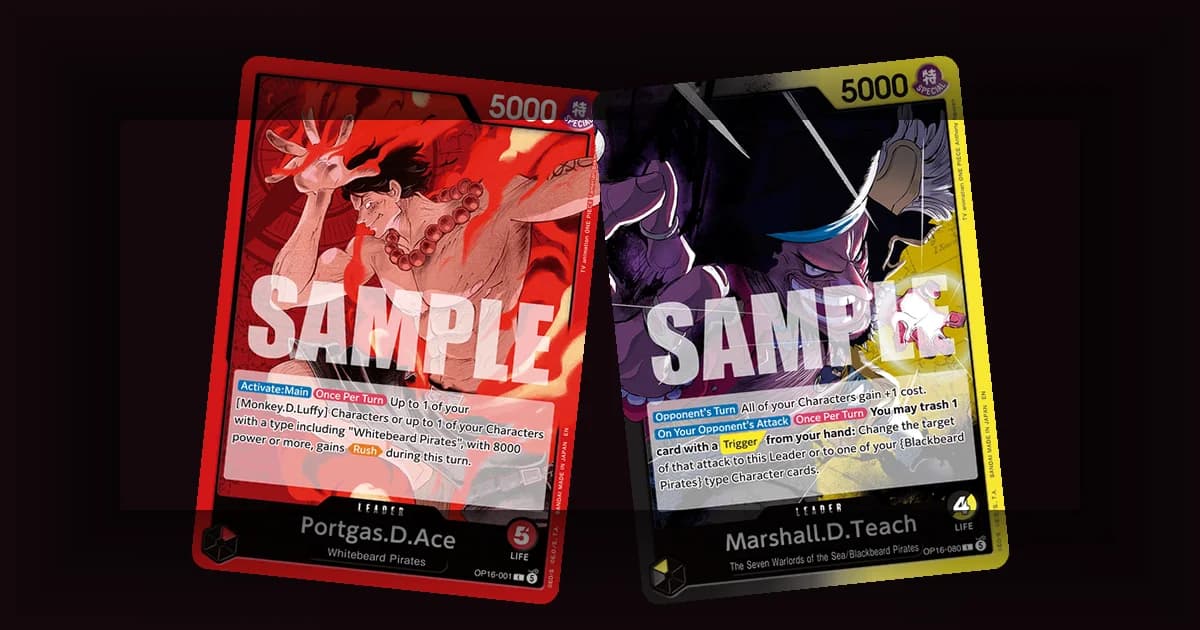
One Piece TCG Attacking Rules: Targets, Blocks and Ties
Guides · 6 min
One Piece TCG Life Cards: Face-Down, Damage and Triggers
Guides · 6 min
One Piece TCG Common Beginner Mistakes: 9 to Avoid
Guides · 7 min
One Piece TCG Keywords Explained: Rush, Blocker & More
Guides · 9 min
One Piece TCG DON Cards: 10 Per Deck, Rest or Attach
Guides · 6 min
One Piece TCG Locals Etiquette Guide: Play Right at Events
Guides · 7 min
One Piece TCG Sleeves and Accessories: What to Buy First
Guides · 6 min
One Piece TCG Mulligan Guide: Rules and Which Hands to Keep
Guides · 6 min
Disclaimer
This article is published for informational and entertainment purposes. It does not constitute professional financial, legal, or technical advice. Game performance, online services, patch schedules, and store listings change. Verify critical details (pricing, system requirements, regional availability) with publishers and storefronts before you buy. Affiliate links, where present, help support our editorial work and are labelled in our affiliate disclosure.