Loading…


Shonen TCG · Guides
OP-16 Black Yellow Yamato Deck Guide: Build and Matchups
Reviewing
One Piece TCG
The Black Yellow Yamato deck is OP-16's second Yamato configuration, and most early guides missed it. 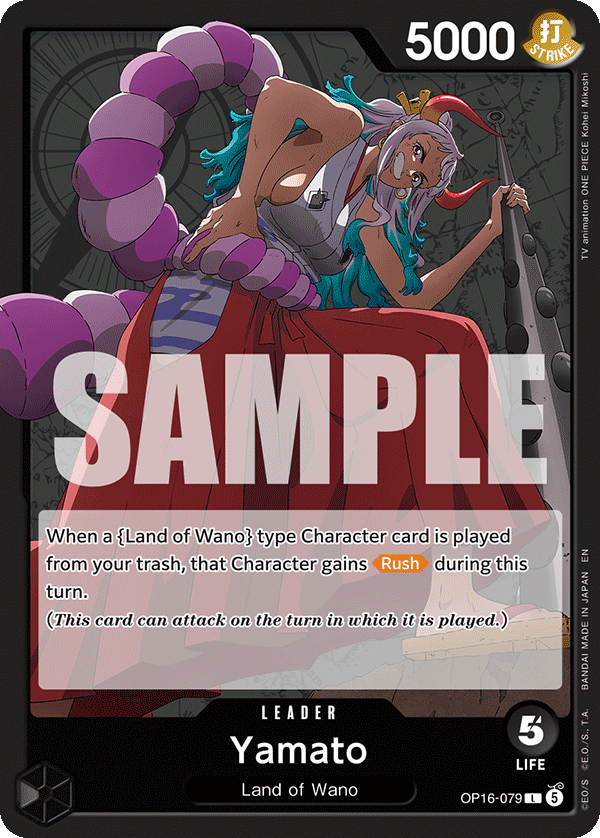 OP16-079OP16-079Shop on TCGplayer Yamato landed as a mono-Black Wano recursion leader, and that's still the most common build. But a second configuration has been showing up in competitive circles: the Black/Yellow variant, which keeps the Black recursion engine and bolts Yellow's Life Trigger tools onto it. You get more reactive flexibility, better counter options when games go long, and a surprise factor mono-Black builds don't have.
This guide covers the Black/Yellow configuration specifically. If you want the mono-Black core, the OP-16 Yamato deck guide covers that build in full.
TL;DR: Black/Yellow Yamato keeps the mono-Black Wano trash recursion engine (Wano characters gain Rush when played from trash) and adds Yellow counter events plus Life Trigger characters as a secondary package. You lose a little recursion volume compared to mono-Black, but gain reactive counter tools and Life-based tempo plays. It's a solid rogue option in OP-16, especially when you expect opponents who rely on charging down your Life total fast.
Black Yellow Yamato deck: quick answer
The Black/Yellow Yamato build runs Yamato (OP16-079) as the leader and supplements Black's Wano recursion core with Yellow counter events and characters who generate value when your Life cards are triggered. Yamato's leader ability (Land of Wano Characters played from trash gain Rush) is still the win condition. Yellow doesn't add recursion targets since the ability specifies Land of Wano type; instead, it adds 2000-counter events with Trigger effects and Life-advantage characters that make the deck harder to race.
Key Takeaways
- Yamato (OP16-079) is a Black leader. The deck can include up to 10 Yellow cards as a secondary color.
- Yellow's role in this build: counter events (2000 counter + Trigger effect), Life Trigger characters that draw cards, and bounce/paralyze events for reactive turns.
- Wano trash recursion with Rush is still the primary win condition. Yellow does not replace it.
- The Black/Yellow configuration handles aggressive matchups better than mono-Black but requires more precise decision-making around when to use Yellow Trigger effects versus saving them as counters.
- This is a rogue build, not the established top-tier list. Expect opponents who haven't practiced the matchup to misread your reactive tools.
Why Black/Yellow Over Other Yamato Builds
Mono-Black Yamato is the established competitive version because it maximizes Land of Wano density. More Wano characters means more recursion targets, more Rush attacks per turn, and a faster close. It's a streamlined list that's easy to understand.
Black/Yellow trades some of that density for a different defensive profile. Here's the specific exchange you're making.
Pure Black decks rely on removal to keep the board clean. When you hit the mid-game at 2 or 3 Life remaining and the opponent presses, you can run short on counter value if your removal targets have already been played. Yellow events at 2000 counter fill that gap. A hand with two Yellow counter events can handle four attacks across two turns for no DON!! cost: you discard one, absorb one hit to Life, trigger the Trigger effect on the Life card, and repeat.
That sequence is what Black/Yellow offers that mono-Black doesn't. It's not about adding Yellow power cards. It's about changing counter density and making Trigger effects pull double duty as both blockers and resource generation.
The format-specific case for Yellow: if the field is heavy with aggressive leaders like Ace (Red) or early-curve Luffy builds that try to race down your Life total before you establish the recursion engine, Yellow's Life-based counters buy you more turns to reach the board state where Yamato's recursion fires.
GODEEPER: Yellow's Life Trigger system is a full archetype by itself. For the complete breakdown of how Yellow builds use Life cards as a resource, see One Piece TCG Yellow Deck Guide: Trigger Power 2026
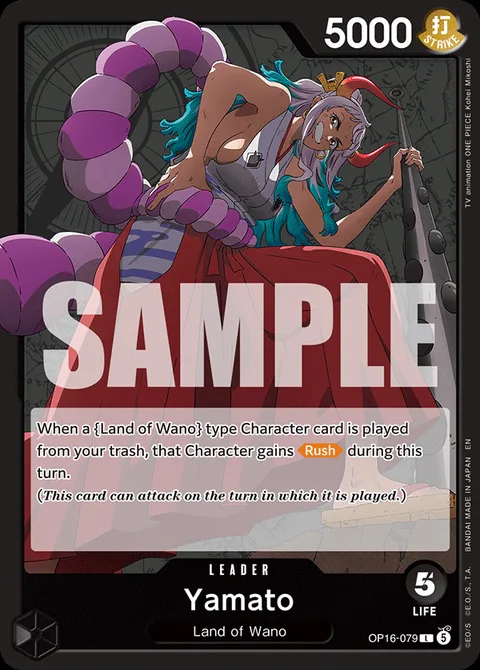 Yamato (OP16-079) gives Rush to Wano Characters played from trash, the recursion engine the Yellow Life tools are built to protect.
How the Black/Yellow Engine Works
The deck runs in two phases that occasionally overlap.
Phase 1: Board Setup (turns 1-4)
Black removal clears the early board. You play Black characters, fill the trash with Land of Wano characters through draw-and-discard effects, and hold Yellow counter events in hand. During this phase, Yellow cards in hand work as reactive blockers. If the opponent attacks your leader, you discard a Yellow counter event, apply the 2000 counter, and if the Trigger effect is relevant you may also draw or gain a resource from it.
Yellow characters who enter from Life during this phase (from your opponent hitting your Life pile) can draw cards or apply small debuffs. Those effects happen for free: the opponent attacked, you lost a Life card, but that Life card had a Trigger that replaced itself with a draw or another action. Getting punished for attacking is a genuinely annoying experience for opponents who haven't prepped the matchup.
Phase 2: Recursion Pressure (turns 5+)
Once you have Wano characters in the trash and enough DON!! to play them out, Yamato's engine takes over. You play Wano characters from trash, they gain Rush from the leader ability, they attack immediately. Black removal keeps opposing blockers off the board so those Rush attacks land.
Yellow stays relevant here but differently. Counter events protect Yamato if the opponent swings at the leader. Yellow Trigger characters who land in the Life pile provide resources without costing a card from hand. The two-phase overlap happens when the opponent tries to race your Life total during turns 5-7 while you're still setting up recursion. Yellow's Life Trigger value keeps you at a safe count while you generate Rush attacks.
The core interaction: trash a Wano character by discarding to a draw effect (Black), recur that character with Rush (Yamato leader ability), attack, hold Yellow counters to protect remaining Life, let Yellow Triggers refill hand. One turn can produce a Rush attack, a Life Trigger draw, and still leave counter events in hand.
Core Card Package
The build has three layers.
Black core (40-45 cards):
Land of Wano characters form the main deck body. You want multiple copies of characters who can be discarded to trash-filling draw effects early and recurred with Rush mid-game. The deck also runs Black removal events and Black characters with on-play effects. The cards that appear across most Yamato lists are Kouzuki Oden 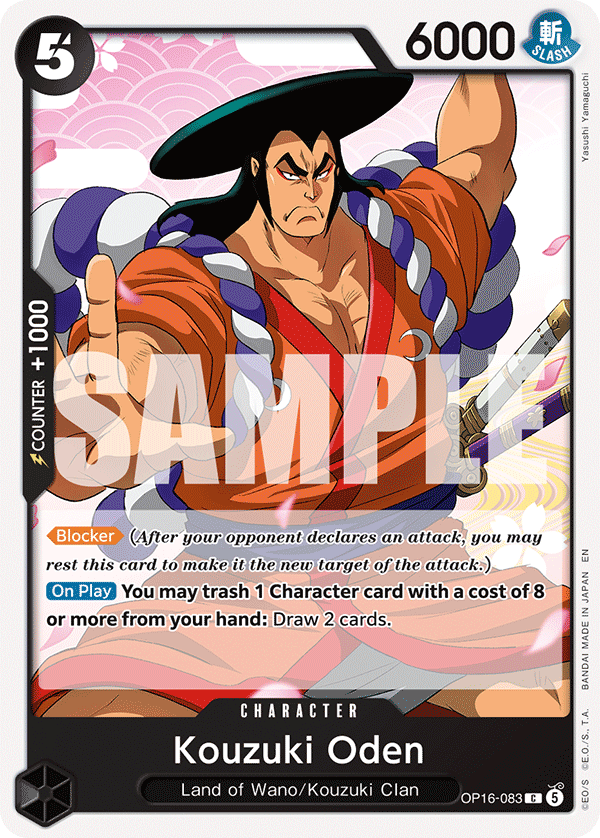 OP16-083OP16-083Shop on TCGplayer (OP16-083), whose On Play lets you trash a cost-8-or-higher character from hand to draw 2, and the three Yamato character variants (OP16-096
 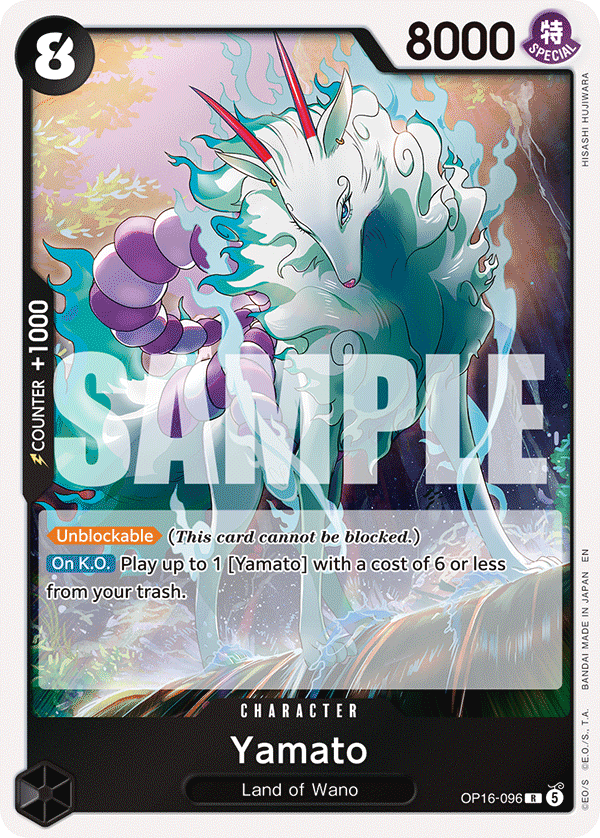 OP16-096OP16-096Shop on TCGplayer, OP16-097
 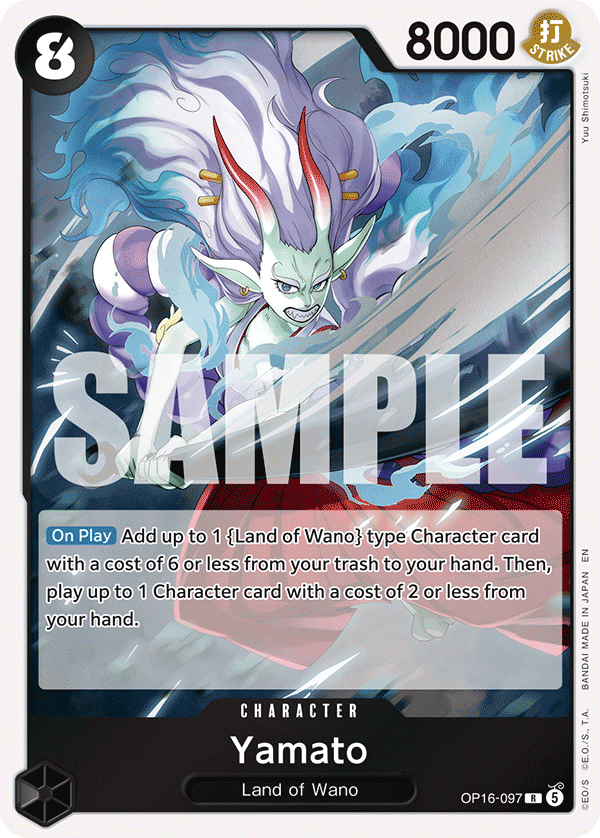 OP16-097OP16-097Shop on TCGplayer, OP16-098
 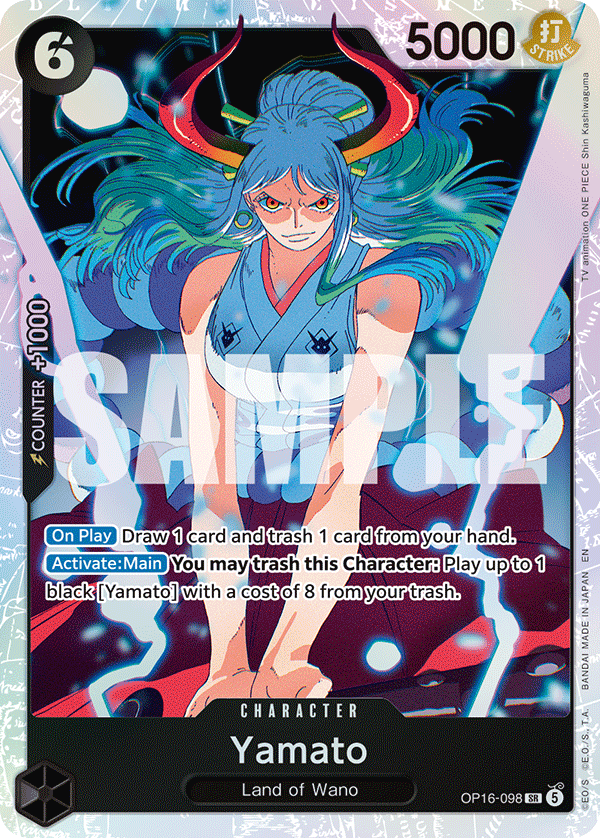 OP16-098OP16-098Shop on TCGplayer), each reinforcing the recursion plan differently. OP16-096 has Unblockable and an On K.O. effect that plays a cheaper Yamato from trash; OP16-097's On Play adds a Land of Wano character with a cost of 6 or less from trash to hand, then lets you deploy a cost-2-or-less character for free. Yamato (OP16-098) is the most important of the three: she draws 1 card and discards 1 from hand on play, filling the trash, and can then be trashed herself through her Activate: Main ability to play a Black Yamato costing exactly 8 from your trash, which gains Rush from the leader's passive. That's two separate effects on one card and the reason she's a 4-of in most builds.
Yellow splash (8-10 cards):
Target counter events first. Look for Yellow events with 2000 counter value and Trigger effects. Trigger quality matters: draw a card or return a character to hand are both better than effects requiring a condition. Yellow characters are secondary; include only those with Life Trigger draws or Trigger debuffs. Don't include Yellow characters who need an all-Yellow deck to function. Hallowed Glacier Slash (OP16-100 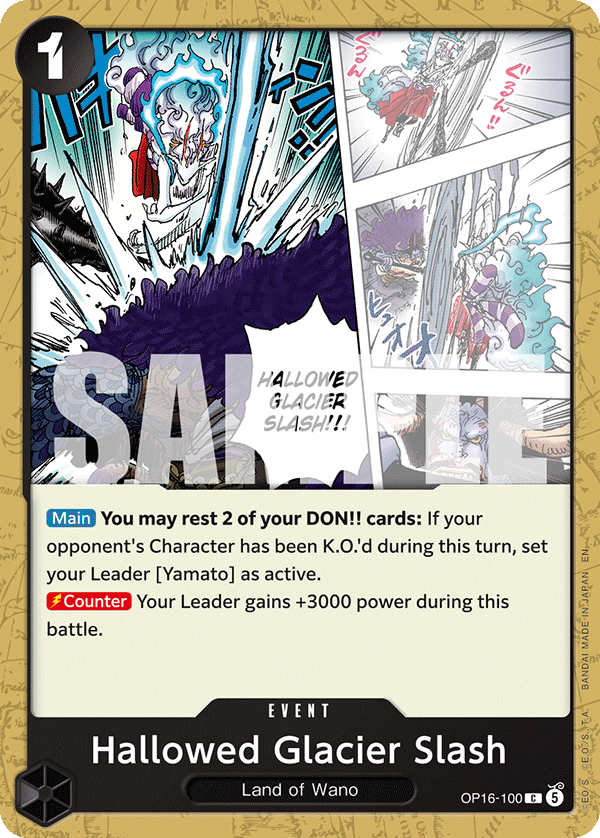 OP16-100OP16-100Shop on TCGplayer) and Mahoroba (OP16-101
 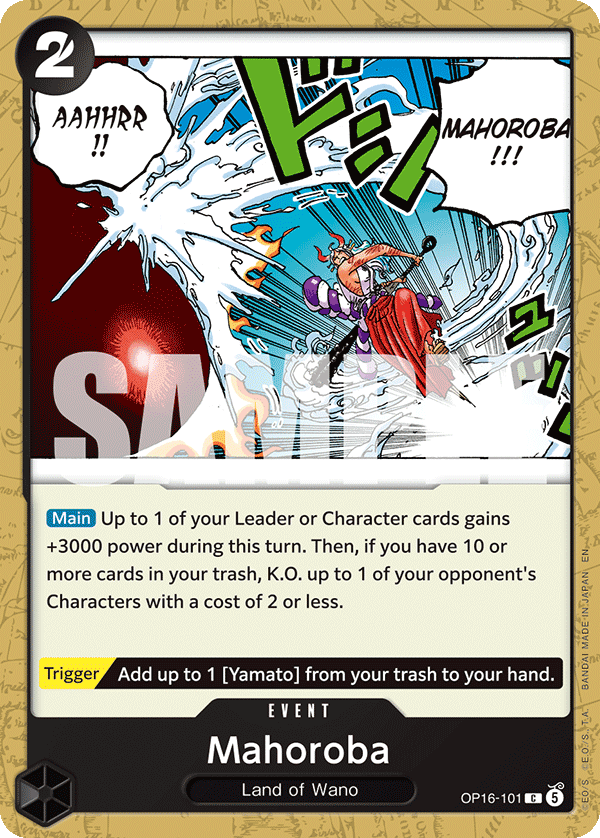 OP16-101OP16-101Shop on TCGplayer) already appear in the Black package: Hallowed Glacier Slash rests 2 DON!! to set Yamato active again after a K.O. this turn, and Mahoroba boosts power and can return a Yamato from trash to hand on Trigger. The Yellow splash adds counter events with Trigger value alongside those, it isn't a DON!! tool itself.
DON!! curve structure:
The deck wants 8-10 DON!! on key turns. Black removal events typically cost 4-6 DON!!. Recurring a Wano character from trash often costs 5-8 DON!!. Yellow counter events cost 1-2 DON!! to play as counters. Build the DON!! count to peak at turn 5-6, plan to spend 6-8 DON!! per turn on main-phase actions, and hold 2 DON!! in reserve for counter events if needed.
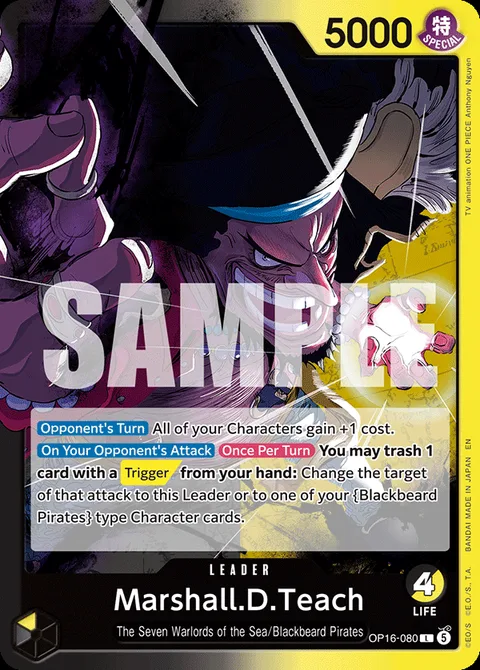 Marshall.D.Teach (OP16-080
 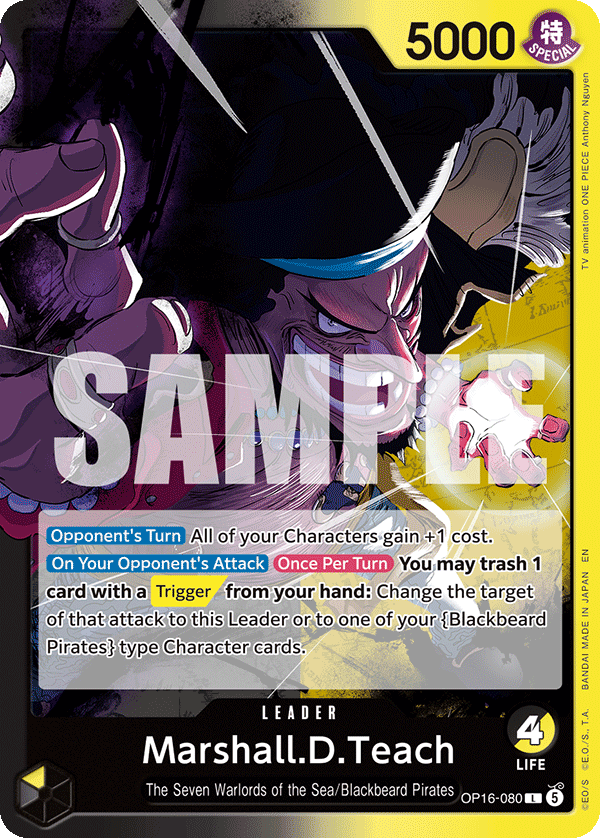 OP16-080OP16-080Shop on TCGplayer) is a real Black/Yellow Leader shown for color comparison. Yamato (OP16-079) is mono-Black, so the legality of combining the two color pools requires manual review.
SHOP: Building this Black/Yellow Yamato shell? Check current OP-16 singles prices on TCGPlayer. Shop TCGplayer →
DON!! Curve and Tempo
Turns 1-3 establish the trash. You're not playing for board presence here. Fill the trash, use removal only if the opponent plays something you can't let stick (8+ power characters or blockers that stop Rush attacks later).
Turn 4 is the real pivot. You want at least 2 Wano characters in the trash by now. If you have them, start the recursion plan on turn 5. If not, use turns 4-5 to fill more and run a larger batch of Rush attacks on turn 6.
The ideal turn 5-6 sequence: pay 5-6 DON!! to play a Wano character from trash with Rush, attack, then spend remaining DON!! on a removal event. Opponent at 3 or fewer Life? Shift everything to Rush attacks and close it. At 4-5 Life? Keep removal pressure on their board to clear blockers first.
Yellow counter events shift the DON!! math slightly. You might choose to pass turn 3 without playing a character, keeping 6 DON!! open to play a Yellow counter event (2 DON!!) while still being able to recur from trash (5 DON!!) if the opponent gives you an opening. This is the kind of decision that makes Black/Yellow harder to pilot than mono-Black, and also the kind that wins or loses games on 1 DON!! margins.
Step-by-Step: Piloting Black/Yellow Yamato
1. Decide the Yellow role before game 1. In your opening hand, commit to using Yellow events as counters you hold all game, or as plays you look to land. Against aggro leaders, keep them as counters; against control, look for attack windows instead.
2. Fill the trash on turns 1-3. Discard Land of Wano characters through your draw-and-discard effects rather than playing for board presence. Use Black removal only on characters you genuinely can't let stick, like 8+ power bodies or blockers that would stop Rush attacks later.
3. Check your trash count at the turn 4 pivot. You want at least 2 Wano characters banked by now. If you have them, start the recursion plan on turn 5. If not, spend turns 4-5 filling further and plan a larger batch of Rush attacks on turn 6 instead.
4. Run the core sequence on turns 5-6. Pay 5-6 DON!! to play a Wano character from trash with Rush, attack, then spend remaining DON!! on a removal event or hold it for a Yellow counter, depending on how much pressure you're under.
5. Read the opponent's Life total before committing. At 3 or fewer Life, shift everything into Rush attacks and close the game. At 4-5 Life, keep removal pressure on their board to clear blockers first rather than racing prematurely.
Matchup Guide
vs Blue/Green Luffy (Impel Down):
Luffy's Blue/Green build from OP-16 Luffy Deck Guide applies tempo pressure with multiple characters attacking per turn. Your Black removal should prioritize the characters that refill their hand before those effects snowball. Yellow counter events matter a lot here: Luffy's wide board can put multiple attackers in per turn, and you need counter events in hand for the attacks you can't block with characters. Target their key advantage generators (Miss Olive 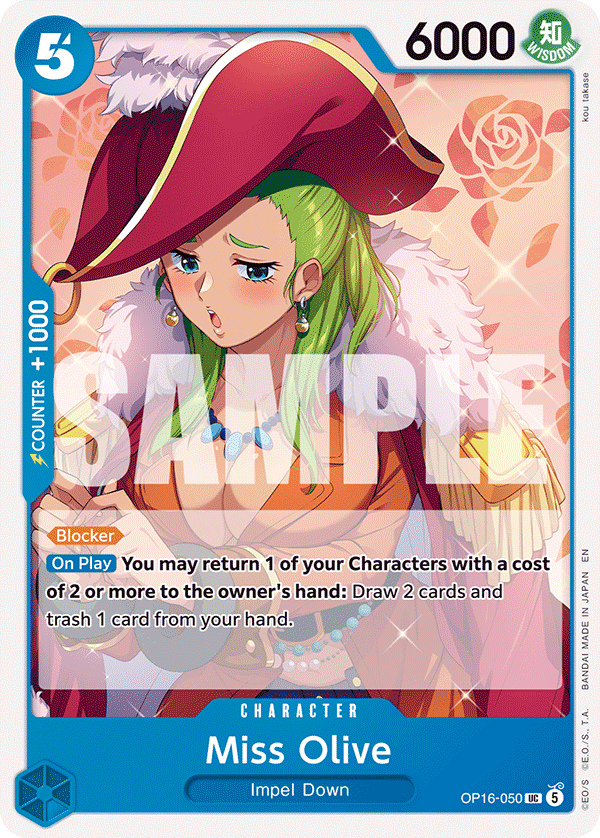 OP16-050OP16-050Shop on TCGplayer, Ivankov), both have On Play effects that draw or tutor cards, for removal first, then outrace the remaining board with Rush attacks once they run low on cards. If you let those two characters resolve unanswered, you'll run out of counters before they run out of resources.
vs Yellow/Black Blackbeard:
Blackbeard (OP16-080) can redirect one attack per turn onto his own leader or a Blackbeard Pirates character, paying by trashing a card with Trigger from his hand, effectively extending his Life total by one hit each turn. He also runs Yellow, so both sides have Life Trigger interactions. The key: the redirect is capped at once per turn no matter how many attacks he's facing. Your Rush recursion produces multiple separate attack declarations once the engine is online, and only one of them can be redirected; the rest hit his actual Life total. Spread Rush attacks across two or more characters in a single turn so the once-per-turn limit works against him instead of for him. Blackbeard's player wants to stabilize at 4-5 Life and grind your resources; push Rush damage as soon as you have more than one attacker active in a turn, not before.
GODEEPER: For a dedicated breakdown of Blackbeard's redirect mechanic and how other decks counter it, see the OP-16 Blackbeard Deck Guide →
vs Purple Enel:
The Purple Enel deck in OP-16 format runs a compressed 6-card DON!! deck: from turn 2 on, Enel's leader ability adds DON!! from that pile and attaches up to 4 rested DON!! to a single 6-cost character, which can read as a 14000-power threat. That single powered-up attacker, not a board wipe, is the real danger to your game plan; Purple Enel doesn't run mass removal in OP-16. Its removal tool, Gamma Knife, is single-target (a temporary -5000 power), so it can pick off one recurred Land of Wano attacker at a time rather than sweeping your board or trash. Keep enough characters queued in the trash that losing one recursion target to Gamma Knife doesn't stall the plan. Yellow counter events matter here because you're absorbing one very large hit instead of several small ones: save your best 2000-counter events for the turn Enel's finisher goes live.
Tips and Common Mistakes
Decide the Yellow role before game 1. In your opening hand, figure out whether you're using Yellow events as counters (holding them all game) or as plays in hand. The answer depends on your opponent's leader. Against aggro, keep them as counters. Against control, they're less critical as reactive tools and you can look for attack windows instead.
Trash quality beats trash quantity early. Not every Wano character is worth recurring. Fill the trash with the characters you want to recur with Rush, and use hand discards strategically. Sending a 4-cost Rush target into the trash on turn 2 is correct. Sending a character you actually want in play is a mistake you'll feel two turns later.
Don't over-commit to Yellow Trigger fishing. Taking hits to Life to fish for Yellow Life Triggers is tempting, but Life is your primary health resource. If a Yellow Trigger draw would leave you at 1 Life against an aggressive deck, the draw isn't worth it. Manage Life deliberately.
Track counter event counts in both decks. Black/Yellow Yamato has more counters than mono-Black. Your opponent needs to account for 8-10 counter events in your deck rather than the 4-6 they might expect. Use this: counter at a higher rate early, and opponents will start over-committing DON!! to attacks to punch through, which drains their tempo faster than they intended.
The two most common mistakes: running too many Yellow characters and forgetting the color rule. On Yellow characters: the Yellow package works when it's counter events with Trigger value. Yellow characters dilute Land of Wano density. Keep them at 0-2 maximum unless the specific character has a Life Trigger draw that replaces itself on activation. On color rule: Yamato's leader is Black, the deck runs one secondary color, and that's it. No Blue removal, no Red burn, regardless of how useful those cards would be. Plan the 50-card deck around Black + Yellow only.
Nothing about this build changes when OP-17 "The World's Strongest Warriors" lands, Japan on August 22, EN wide release August 28. Yamato's leader ability and the Wano recursion suite stay legal, and the Yellow counter package is just as portable into a slower or faster format as it is now. The real variable is whether any of the six incoming OP-17 leaders hit harder than the current field, which would make the extra Life-based defense this splash buys even more valuable. The OP-17 OP-16 crossover format guide covers what's confirmed so far.
Related Reading
- OP-16 All 6 Leaders Explained: Colors & Which to Build: Verified colors and quick profiles for all six OP-16 Leaders, useful context for how Yamato compares to the rest of the field.
- One Piece TCG Black Deck Guide: Removal and Trash Mastery: Black's removal toolkit and trash recursion mechanics explained as a color archetype.
- OP-16 Complete Guide: All Leaders and Set Overview: The full OP-16 set guide, including all six Leaders, chase cards, and format impact.
- OP-16 Meta Tier List Week 1: OP-16's pre-launch tier projection, which should be treated as historical context rather than current tournament evidence.
- One Piece TCG OP-16 Meta Report July 2026: EN Settled: The OP-16 tier picture before OP-17's August 28 launch; see the OP-17 meta tier list for the current picture.
- OP-17 Spoilers Complete Tracker: Confirmed OP-17 Leader, card, and release details.
Frequently Asked Questions
Can Yamato run Yellow cards in OP-16?
Yes. In One Piece TCG, a leader whose card has a single color (Black) can include cards of that color plus up to 10 cards from any one secondary color. Yamato (OP16-079) is mono-Black, so a Black/Yellow build adds Yellow event counters and Yellow Trigger characters as a secondary package. The leader card itself stays Black.
What does Yellow add to the Yamato deck?
Yellow brings Life-based Trigger effects, counter events that cost 1 or 2 DON!!, and characters who gain power or draw cards when your Life pile is hit. These tools extend Yamato's life total management and give the deck reactive plays that pure Black builds do not have.
How is Black/Yellow Yamato different from mono-Black Yamato?
Mono-Black Yamato concentrates on Land of Wano trash recursion with Rush. Black/Yellow keeps that core but trades some Wano density for Yellow Life Trigger cards and counter events, shifting the deck slightly toward midrange control. You give up some recursion volume for more reactive blocking tools.
Is Black/Yellow Yamato harder to play than mono-Black Yamato?
Yes, slightly. Managing two color contributions means tracking which Yellow cards fire as Life Triggers and when to use them as counters versus saving them for Trigger value. The decision points are more complex than mono-Black, but the payoff is a more defensively flexible build.
What Yellow cards work in the Yamato deck?
Yellow counter events (2000 counter) with Trigger effects, Yellow characters who draw on Trigger such as Nami variants, and Yellow events that bounce or paralyze opposing characters. Prioritize 2000-counter events with relevant Trigger effects over pure value characters.
Is Black/Yellow Yamato competitive in OP-16?
It's a legitimate rogue option rather than a top-tier staple. Mono-Black Yamato and Blackbeard Black/Yellow are the stronger established builds. Black/Yellow Yamato sits in the middle: it handles aggressive matchups better than mono-Black but loses some recursive volume in control matchups.
Does Yamato's leader ability work with Yellow characters?
Yamato's leader ability specifically says Land of Wano type Characters played from the trash gain Rush. Yellow characters without the Land of Wano trait don't trigger the Rush ability. The Yellow splash is for counter events and Life Trigger value, not additional recursion targets.
References
- One Piece TCG official card database, OP-16 set list (Bandai)
- Limitless TCG: OP-16 tournament results and deck data (Limitless)
- r/OnePieceTCG: Black/Yellow Yamato discussion threads (Reddit community)
- onepiece.gg deck builder and OP-16 meta tracker
- TCGPlayer One Piece TCG: card pricing reference
Was this guide helpful?
Cards in this article
About the author
KT
Competitive TCG Analyst
Competitive One Piece TCG player and deck builder with 3 years of tournament experience. Covers meta analysis, tier lists, and leader builds.
- 3 years competitive OPTCG tournament experience
- Regional top 8 finisher
- Deck builder and meta analyst
- Covers every set since OP-01
Disclaimer
This article is published for informational and entertainment purposes. It does not constitute professional financial, legal, or technical advice. Game performance, online services, patch schedules, and store listings change. Verify critical details (pricing, system requirements, regional availability) with publishers and storefronts before you buy. Affiliate links, where present, help support our editorial work and are labelled in our affiliate disclosure.