

Shonen TCG · Guides
OP-16 Black Yellow Teach Decklist: Blackbeard Deck Guide
The redirect still works. Almost nobody brings it anymore: 14 lists since OP-17 launched, and Mihawk won five of six games against it.
Our callBuild List A only if you already own 4 Borsalino and 4 SEC Teach. The other 43 cards cost $22.13.
Decklist · 50 cards
LeaderMarshall.D.TeachOP16-080
- 4Laffitte
- 4Fullalead
- 4Vasco Shot
- 3Van Augur
- 2Charlotte Pudding
- 4Jesus Burgess
- 4Baby 5
- 4Catarina Devon
- 4Borsalino
- 4Shiryu
- 4Marshall.D.TeachOP16-119
- 4Marshall.D.TeachOP09-093
- 2Liberation
- 3Zehahahahaha!
This Black Yellow Teach decklist went 3-0 on October 8, and we'd still only build it if the expensive half is already in your binder. Since OP-17 joined English Standard on August 28, Limitless Play has logged 14 Marshall.D.Teach lists out of 2,126 player entries, from just seven players, with a combined 26-24 record. The leader didn't get worse. The room did: OPMetagame's October tier list has Green Mihawk in S tier and Black/Yellow Blackbeard in C, on four decklists.
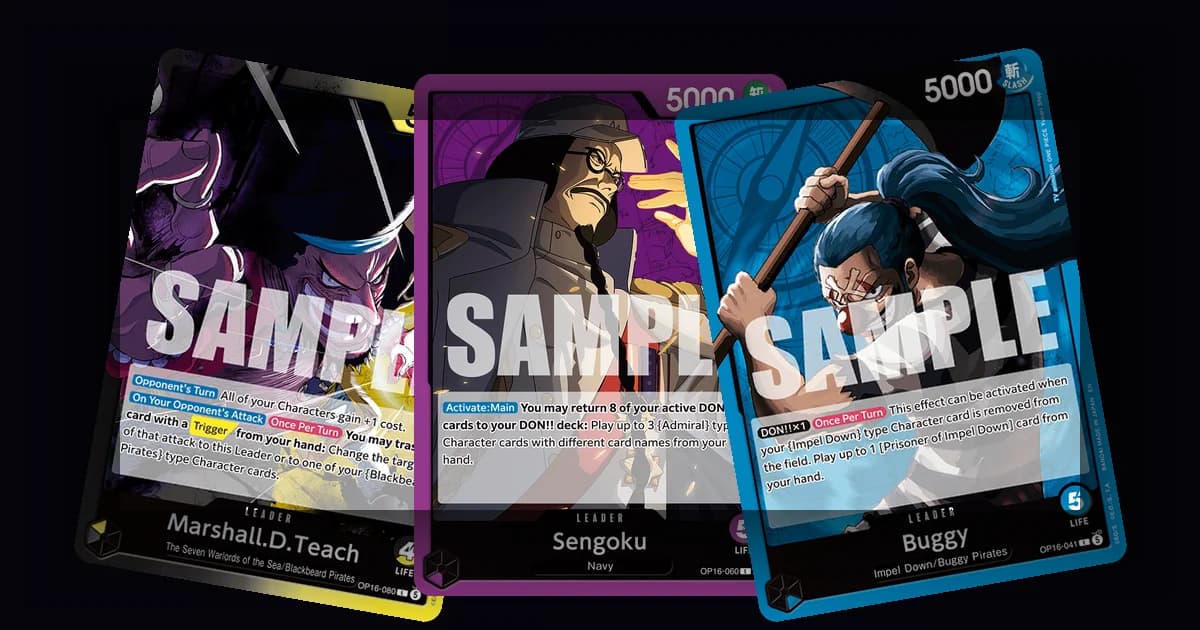
How we checked this: every Standard OP16-080 list and pairing from Limitless Play's public API, the winning list priced on TCGplayer, and 100,000 simulated openings per list, all on October 13, 2026.
Updated October 13, 2026: Rebuilt for OP-17 Standard around two real lists, 48 recorded games and an opening-hand simulation. Fixed: Zehahahahaha! needs 10 DON!! and plays a [Marshall.D.Teach] from your hand, not any Blackbeard Pirates Character. The old 8.86% share was the OP-16 format, and the old matchup grades had no games behind them; both are gone.
The Black Yellow Teach decklist that went 3-0
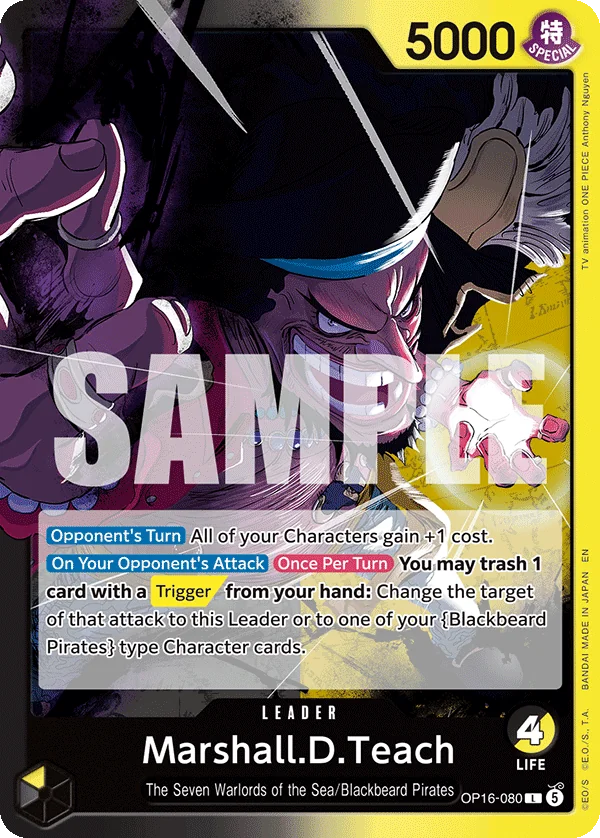 OP16-080OP16-080Shop on TCGplayer This is kondoriano98's list, 1st of 8 at the [GER] Dressrosa Tournament-OP17 on October 8, 2026: three rounds of best-of-one, wins over Edward.Newgate, Kaido and Rocks.D.Xebec. The same player took 1st at the September 10 and September 28 editions with Teach. It runs 30 cards with [Trigger].
| Count | Card | Trigger | Why it's here |
|---|---|---|---|
| 1 | Marshall.D.Teach OP16-080 (Leader) | - | Redirects one attack a turn for a [Trigger] card from hand. |
| 4 | Laffitte OP09-095 | no | 1 cost. Rest a DON!! and Laffitte: look at 5, take a Blackbeard Pirates card. Your turn-one play. |
| 4 | Fullalead OP09-099 | no | 1-cost Stage. Trash a card, rest it: look at 3 for a Blackbeard Pirates card. Searcher number two. |
| 4 | Vasco Shot OP16-110 | yes | 1 cost. On K.O.: draw 1 and rest an opposing Character with cost 6 or less. The best redirect target. |
| 3 | Van Augur OP16-103 | yes | 1 cost. On K.O. on the opponent's turn: draw 1, give −3000 power. The 14-list average is 2.71 copies. |
| 2 | Charlotte Pudding OP17-109 | yes | Trash a [Trigger] card from hand to draw 3. Two, because every one she eats is redirect fuel. |
| 4 | Jesus Burgess OP09-086 | no | Can't be K.O.'d by your opponent's effects; +1000 power for every 4 cards in your trash. |
| 4 | Baby 5 OP12-112 | yes | +2000 counter; her [Trigger] draws 2 because your leader is two colors. |
| 4 | Catarina Devon OP16-104 | yes | +2000 counter; her [Trigger] draws 1 and replays a 1-cost Blackbeard Pirates Character from trash. |
| 4 | Borsalino EB04-058 | no | 5-cost Blocker that adds a Life card when you're at 2 or fewer. In all 14 lists. |
| 4 | Shiryu OP16-108 | yes | 6 cost, 8000 power; puts a Blackbeard Pirates card from trash on top of your Life face-up. [Trigger]: draw 2. |
| 4 | Marshall.D.Teach OP16-119 | yes | 8-cost SEC: adds a Life card; its [Trigger] negates and K.O.s a cost-5-or-less Character. |
| 4 | Marshall.D.Teach OP09-093 | no | 10-cost Blocker that shuts off the opposing Leader's effect the turn it lands. |
| 2 | Liberation OP10-098 | yes | Event; its [Trigger] negates the opposing Leader and a Character for the turn. |
| 3 | Zehahahahaha! OP16-116 | yes | 8 cost with 10 DON!! on field: play a Teach from hand and pull their top Life card to hand. |
SHOP: Want to build this exact list? Buy this list on TCGplayer → It loads the cards into TCGplayer Mass Entry at the lowest-priced matching printing, so check set, art and condition before you pay.
At TCGplayer Market Price on October 13, the whole thing costs $246.29. That's misleading, though, because two lines are the deck: four Borsalino at $126.52 and four SEC Teach at $97.64, 91% of the total. Everything else, 43 cards including the leader, comes to $22.13. If you already own the Borsalinos from another Yellow deck, this list becomes a cheap side project.
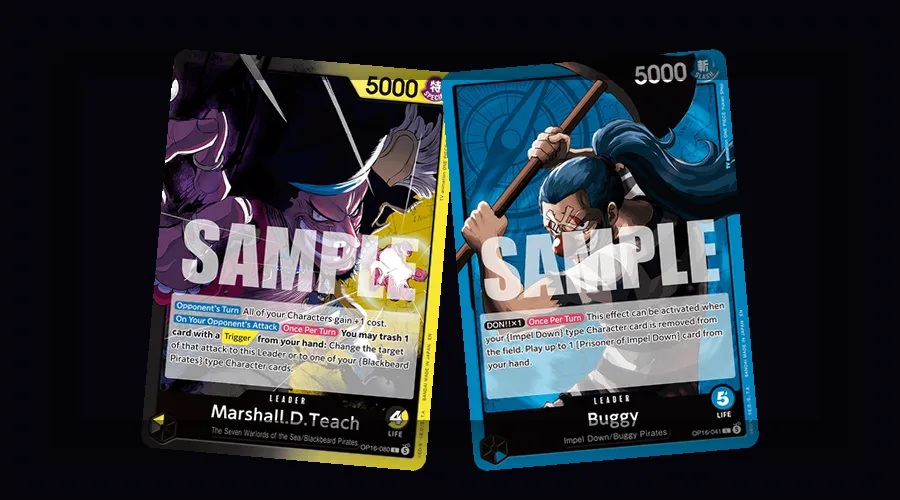 Image: Bandai, official One Piece Card Game card list
List B: the 40-Trigger version
williass finished 25th of 64 at [OP17.5] ChinoizeCup #118 on October 5 with a different idea: cut Fullalead, Liberation and the OP09 Burgess, and cram in every [Trigger] body that fits. That list runs 3 Lilith, 2 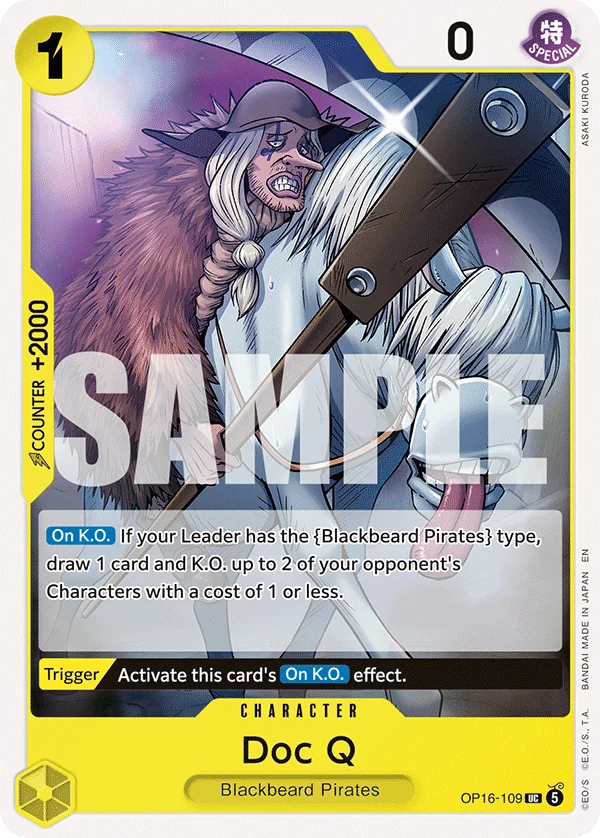 OP16-109OP16-109Shop on TCGplayer Doc Q, 4 Pudding, 2 of the OP-16 Jesus Burgess, 1 Silvers Rayleigh, 2 Boa Hancock and 1 You'll Frighten Me... for 40 Trigger cards. It went 3-3.
More Triggers sounds like more redirects. It isn't, as the simulation below shows: you never lack fuel in either list. What List B buys is Life.
What the leader actually does
The card reads: "[Opponent's Turn] All of your Characters gain +1 cost. [On Your Opponent's Attack] [Once Per Turn] You may trash 1 card with a [Trigger] from your hand: Change the target of that attack to this Leader or to one of your {Blackbeard Pirates} type Character cards."
The first line isn't a tax. You almost never play Characters on your opponent's turn, so what it changes is how your board looks to their removal. A "K.O. cost 5 or less" effect can't reach your 5-cost Borsalino, because on their turn it counts as 6. The Comprehensive Rules let effects move a cost off its printed value, and "base" means the printed number, so anything that checks base cost ignores the bonus.
The second line is the engine. 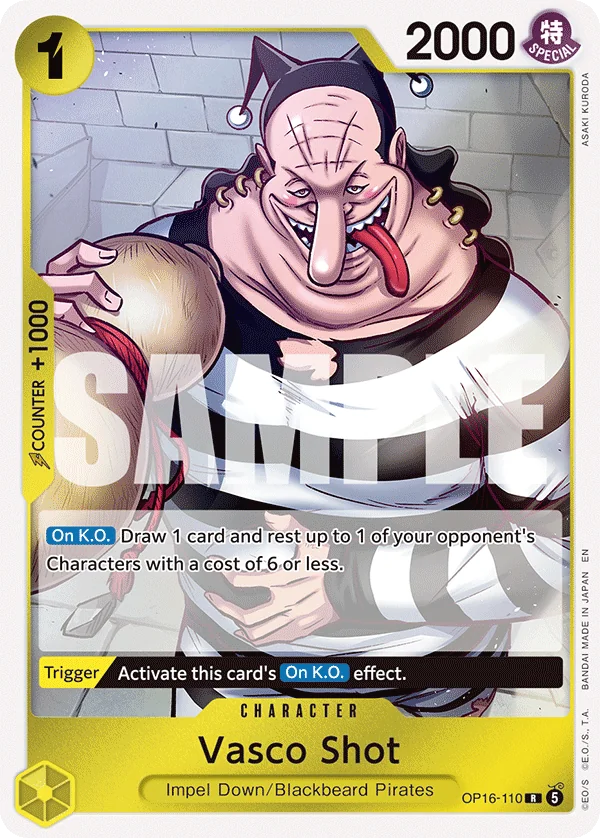 OP16-110OP16-110Shop on TCGplayer Vasco Shot and
 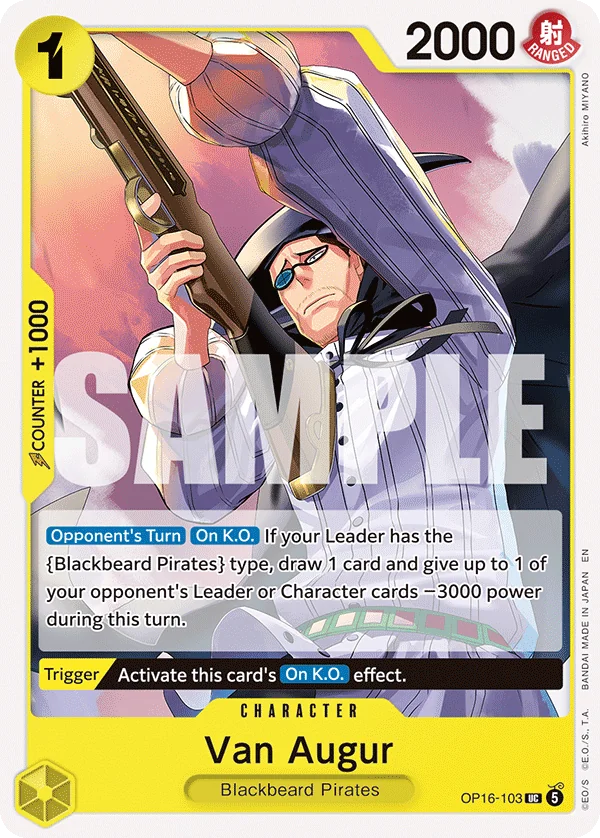 OP16-103OP16-103Shop on TCGplayer Van Augur are 1-cost Blackbeard Pirates with On K.O. effects, so dragging an attack onto one of them turns their swing into your card draw. One redirect a turn, one Trigger card each time.
Trigger fuel: what 100,000 openings say
We simulated both lists, 100,000 games per row (seed 20261013): draw 5, one optional redraw, then 4 Life off the top, per the Comprehensive Rules. Searchers and card draw are ignored, so every number here is a floor.
| Per game | List A (30 Triggers) | List B (40 Triggers) |
|---|---|---|
| Opening hand with 2+ Trigger cards, no redraw | 92.3% | 99.6% |
| Opening hand with a 1-cost Blackbeard Pirates Character or Fullalead | 84.5% | 72.6% |
| Same, redrawing any hand without one | 97.7% | 92.6% |
| Trigger cards among your 4 Life, average | 2.40 | 3.20 |
| Zehahahahaha! and a Teach both seen by your 10-DON!! turn | 41.7% | 39.2% |
Three things jump out. Fuel is never the problem: List A opens with two or more Trigger cards 92.3% of the time. The real gap is in your Life, where List B flips almost one more Trigger per game. And List A's searchers show up where it counts, with a turn-one play in 84.5% of hands before any redraw.
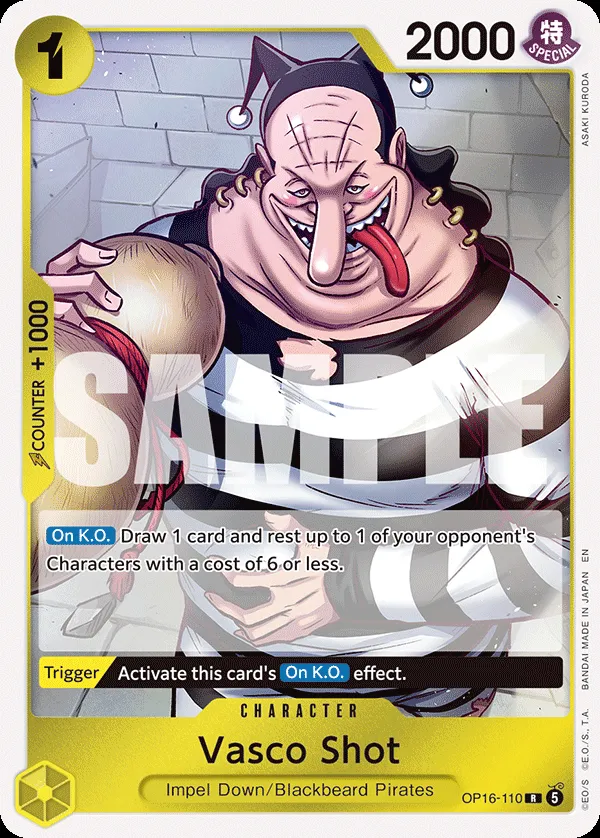 Image: Bandai, official One Piece Card Game card list
DON!! curve, going first and second
The Comprehensive Rules give the player going first 1 DON!! on turn one and 2 a turn after that, with a 10-card DON!! deck. So you hit 10 DON!! for Zehahahahaha! on turn 5 going second and turn 6 going first.
Going second, which is what one Teach player on r/OnePieceTCG swears by ("ALWAYS go second"):
- Turn 1 (2 DON!!): Laffitte plus Fullalead, or a 1-drop plus Fullalead. Dig for the curve.
- Turn 2 (4): Jesus Burgess, Catarina Devon or Baby 5.
- Turn 3 (6): Shiryu, or Borsalino plus a 1-drop.
- Turn 4 (8): the SEC Teach.
- Turn 5 (10): Zehahahahaha! into the 10-cost Teach. You pay 8, Teach comes in free, and two DON!! are left over.
Going first, slide everything one turn later and use the odd DON!! on 1-drops: Laffitte on 1, Fullalead and a 1-drop on 2, Borsalino or Burgess on 3, Shiryu with a 1-drop on 4, the SEC Teach with a 1-drop on 5, Zehahahahaha! on 6. The same player summed up the deck: "Teach is relatively simple in theory, as you just play on curve and redirect."
Matchups: 48 games from 14 lists
We pulled the pairings for all 13 events with a Teach list. Every one was Swiss best-of-one, so treat each row as a handful of coin flips with opinions attached. Opponents faced three or more times:
| Opponent leader | Teach W-L |
|---|---|
| Dracule Mihawk OP14-020 | 1-5 |
| Nico Robin OP09-062 | 3-1 |
| Donquixote Rosinante OP12-061 | 3-1 |
| Kaido OP17-058 | 2-2 |
| Sabo OP13-004 | 2-1 |
| Rocks.D.Xebec OP17-039 | 2-1 |
| Shanks OP17-020 | 1-2 |
| Portgas.D.Ace OP16-001 | 1-2 |
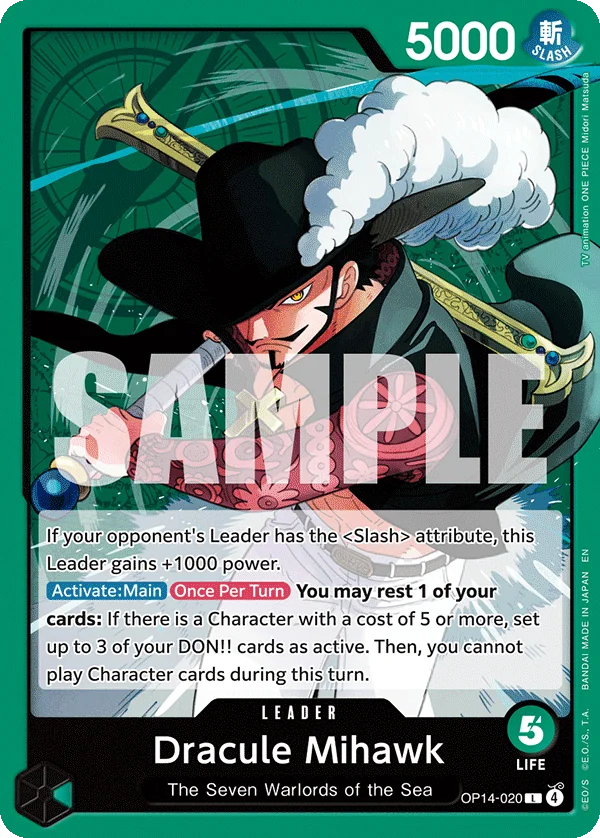 OP14-020OP14-020Shop on TCGplayer Mihawk: the one that matters. 1-5, and Mihawk is S tier. Four of those five losses belong to one player at one in-person league, so the sample is thin, but it's the only matchup with enough games to point anywhere, and it points the wrong way.
- Robin and Rosinante: 3-1 each, on four games apiece. Encouraging, not proof.
- Kaido, Xebec, Sabo: close to even on three or four games. No call.
- Shanks: 1-2. One player's prediction before OP-17 landed: "the new 10C shanks will just laugh at all of the 10C blackbeard blockers on board."
For scale, the same leader went 644-698 (47.99%) across the whole OP-16 format on Limitless Play. It was a real deck. Six weeks into OP-17, it's a deck seven people play.
OP16-119 and the money
 Image: Bandai, official One Piece Card Game card list
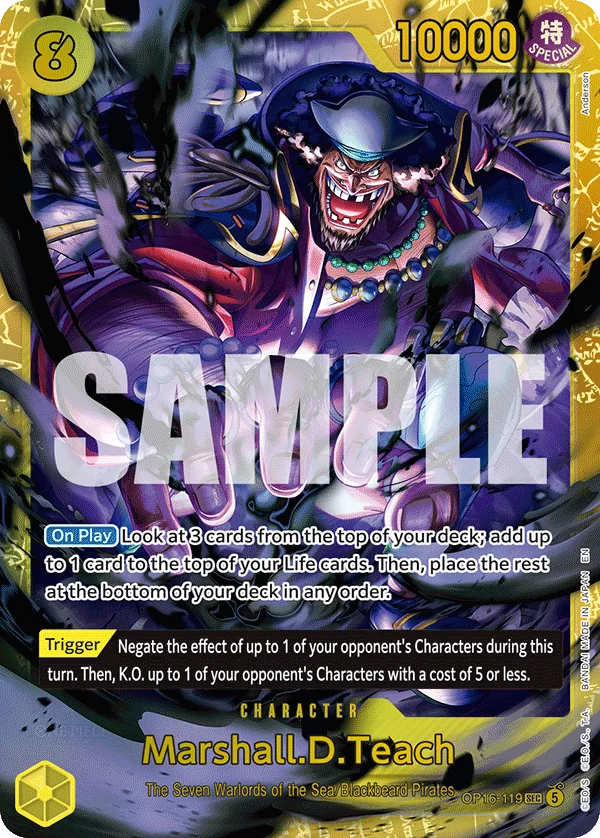 OP16-119OP16-119Shop on TCGplayer OP16-119 is not a second leader. It's an 8-cost Yellow Secret Rare Character with 10000 power: On Play it looks at 3 and adds one to the top of your Life; its [Trigger] negates an opposing Character and K.O.s one with cost 5 or less. On October 13 its TCGplayer Market Price was $24.41, and $39.20 for the Alternate Art. The Leader itself costs $0.11, or $13.51 for the Alternate Art.
Watch it played
Car D. Kaizoku's deck guide and gameplay video is from the OP-16 format, so the list is older, but the redirect timing hasn't changed.
Our take
We'd build List A, not List B. Fuel isn't the problem with either list, so give the slots to Laffitte and Fullalead and take the faster start. We'd go second, as the curve above shows. And we wouldn't bring it to a room full of Mihawk.
The honest picture of Teach right now came from a player who loves the deck: "I love him too but he's in a tough spot right now. The way Moria can recycle pudding to draw cards just makes him feel like the best black/yellow option rn." If you want Black/Yellow for OP-17 events, our Black Yellow Moria deck guide is the better place for the money. If you already own the Borsalinos and the SEC Teaches, though, $22.13 gets you a deck that still wins small events.
Frequently Asked Questions
What color is Blackbeard in OP-16? Black/Yellow. OP16-080 has 4 Life and 5000 power and is Standard-legal.
What does the leader do? On your opponent's turn your Characters gain +1 cost, and once per turn you can trash a [Trigger] card from hand to move an attack onto the Leader or a Blackbeard Pirates Character.
Is OP16-119 a Blackbeard leader? No. It's an 8-cost Secret Rare Character, $24.41 on October 13. The only Leader is OP16-080.
Is Black Yellow Teach good in OP-17? It's a fringe pick: 14 Standard lists in six weeks on Limitless Play, a 26-24 record, C tier on OPMetagame.
How much does the decklist cost? $246.29 for the 3-0 list, and $224.16 of that is Borsalino and the SEC Teach.
Related Reading
- Black Teach Deck Guide: OP-17 Decklist and How to Pilot It: the mono-Black Teach leader, OP09-081, which more players are on right now.
- OP-17 Mihawk Deck Guide: the deck that beat Teach five times in six.
- One Piece TCG Counter Mechanic Explained: the timing behind every counter and redirect.
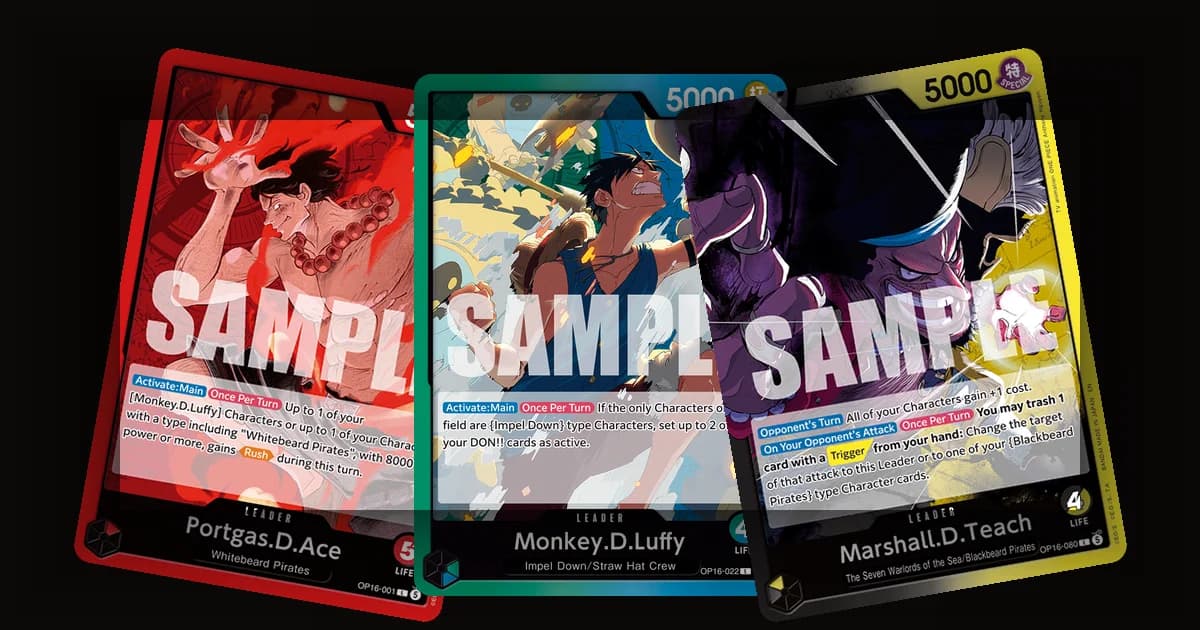
- OP-16 All 6 Leaders Explained: where Blackbeard came from.
Was this guide helpful?
Cards in this article
About the author
Beginner guides and anime crossover
Pen name for the Shonen TCG desk's beginner guides, starter decks and anime-to-card-game explainers.
- Rules checked against the official rulebook and card text
- Every claim traced to a cited source
- Opinions marked as ours, with the reason
Keep reading
OP-16 Black Yamato Deck Guide: Mono-Black Wano Recursion
Guides · 13 min
OP-16 Manga Rare Guide: Admiral Prices and Pull Odds
Guides · 13 min
OP-16 Green Blue Luffy Deck Guide: Top-Tier Tournament List
Guides · 14 min
One Piece TCG Best Leaders All Time: Top 10 Ranked
Guides · 13 min
OP-16 3 Admirals Guide: Characters, Not Leaders (2026)
Guides · 10 min
OP-16 EN Launch Guide: What Happened After Release
Guides · 12 min
One Piece TCG Card Grading: Is It Worth It in 2026?
Guides · 16 min
OP-16 Sengoku Deck Guide: Purple Marine Admirals Build
Guides · 13 min
Disclaimer
This article is published for informational and entertainment purposes. It does not constitute professional financial, legal, or technical advice. Game performance, online services, patch schedules, and store listings change. Verify critical details (pricing, system requirements, regional availability) with publishers and storefronts before you buy. Affiliate links, where present, help support our editorial work and are labelled in our affiliate disclosure.