Loading…
Loading…
Shonen TCG · Guides
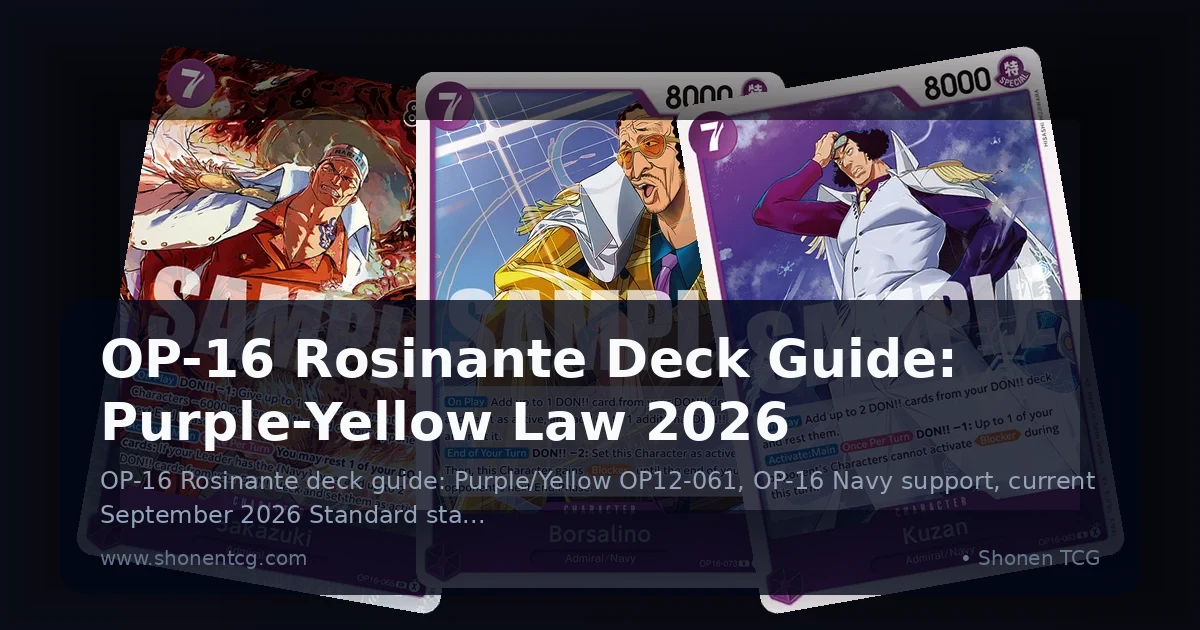
The OP-16 Rosinante deck is the one I've been waiting to write about.
Correction: an earlier version of this guide described Rosinante as a new OP-16 leader built around generic "Marine-type" synergy with the set's three Admiral characters. Rosinante is actually OP12-061 from OP-12 "Legacy of the Master." The current Limitless card page lists it as Block 3 and Standard legal. More importantly, its leader ability protects and discounts Trafalgar Law. This guide uses the real card text and current post-OP17 context.
Donquixote Rosinante 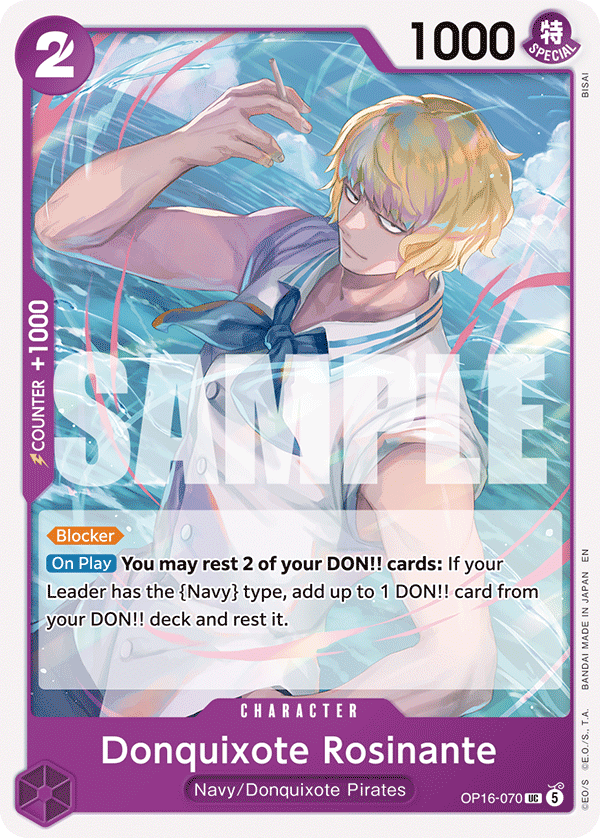 OP16-070OP16-070Shop on TCGplayer (OP12-061) is a Purple/Yellow, 5000-power leader with 4 Life. Once per turn, if your Trafalgar Law would be K.O.'d, you may add the top Life card to your hand instead. Its other once-per-turn effect costs 1 DON!! and reduces the next Trafalgar Law with cost 4 or more played from your hand that turn by 2. The whole deck exists to protect and enable Law, not to run a generic Marine package.
OP-16 gave the deck useful Navy tools. Koby 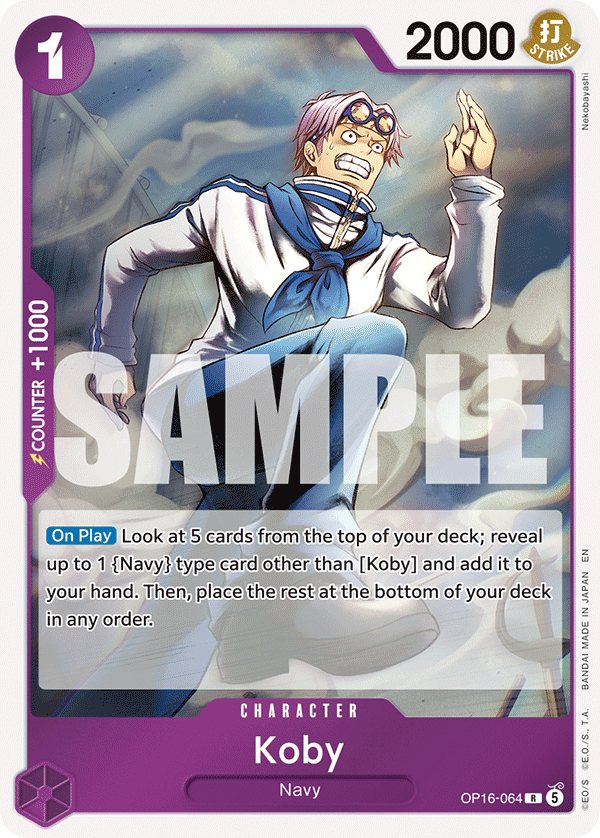 OP16-064OP16-064Shop on TCGplayer (OP16-064) and Tsuru
 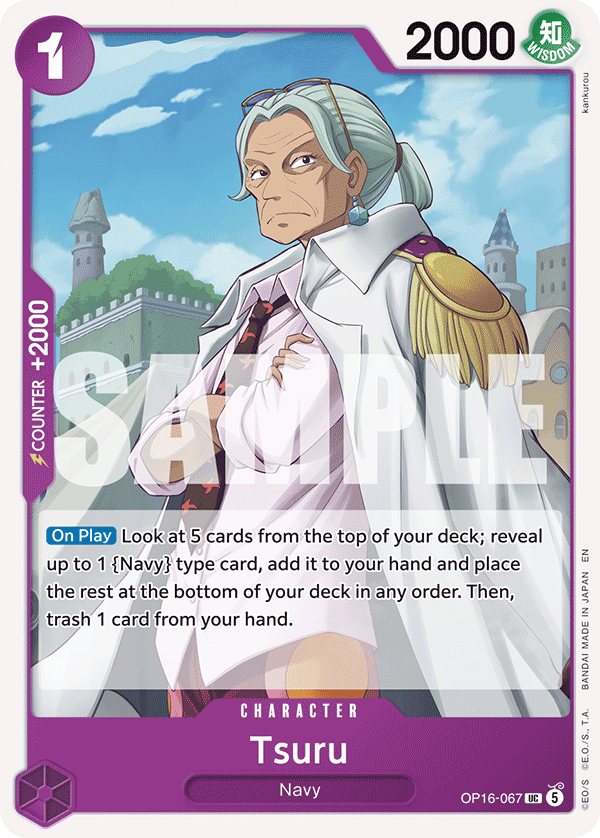 OP16-067OP16-067Shop on TCGplayer (OP16-067) are 1-cost Purple Navy searchers that look at the top five cards for a Navy card. They improve access to the Navy package, but they do not directly search non-Navy Law cards. Sakazuki
 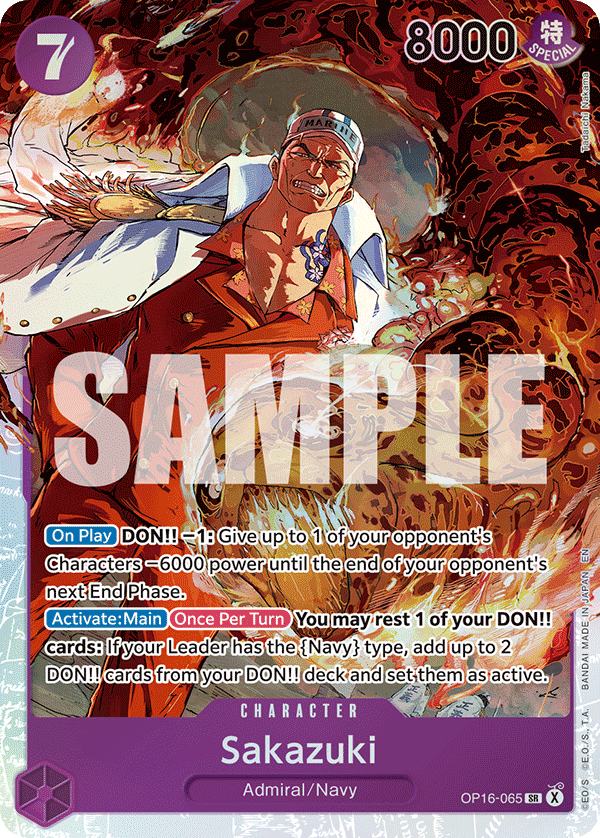 OP16-065OP16-065Shop on TCGplayer (OP16-065) is a 7-cost Purple Navy Character with an On Play -6000 effect after paying 1 DON!! and a once-per-turn DON!! ramp effect when your leader has the Navy type.
TL;DR: The OP-16 Rosinante deck (leader OP12-061, Purple/Yellow) is a Trafalgar Law protection and discount build, not a generic Marine-synergy deck. The leader saves Law from K.O. once per turn and discounts the next 4-cost-or-higher Law played from hand by 2 DON!!. OP16-064 Koby and OP16-067 Tsuru search Navy cards, while OP16-065 Sakazuki supplies Navy removal and ramp. In the current Standard aggregate checked September 16, Rosinante has 265 entries, a 5.79% share, and a 52.72% win rate. Treat it as an established option whose exact standing can change with the sample. Intermediate difficulty due to dual-color energy management.
Yes. The deck's real identity is protecting and enabling Trafalgar Law, not the generic "Marine package" an earlier version of this guide described. The current Standard aggregate places Donquixote Rosinante (OP12) fourth by entries at 265 lists, 5.79% share, and 52.72% win rate in the checked sample. That supports a real competitive presence, while still leaving room for the field and results to change.
Update, September 16, 2026: OP-17 is now in the English Standard environment, and the current Limitless table combines the post-OP17 field rather than showing the old OP-16-only share snapshot. Rosinante (OP12-061) remains listed as Standard legal on its current card page. See the OP-17/OP-16 format guide for additional set-transition context.
Before OP-16, the Rosinante Law shell had the core engine (leader protection, the discount, and Law payoffs) but fewer of the current Navy search and removal options.
OP-16 added a compact Navy search package. Koby (OP16-064) and Tsuru (OP16-067) are both 1-cost Purple Navy Characters that look at the top five cards for a Navy card, put the rest on the bottom, and then discard one card from hand. Koby cannot add another Koby, while Tsuru has no such exclusion. These effects improve access to Navy cards, but they do not directly find every Law card because the search condition is Navy type. Sakazuki (OP16-065) is a 7-cost Purple Navy Character with an On Play DON!!-1 cost for -6000 power until the end of the opponent's next End Phase. Its once-per-turn effect can also rest a DON!! to add up to two active DON!! from the DON!! deck when your leader has the Navy type.
That's the structural shift. OP-16 gives the Navy portion of the list better selection and gives Rosinante another removal and ramp payoff. Law still has to be found through the deck's other draw and search choices, so do not treat Koby or Tsuru as automatic Law tutors.
GODEEPER: Sakazuki also headlines a much pricier chase card in this set, the OP-16 Admiral Manga Rares. Get the full breakdown on value and rarity before you buy. OP-16 Singles Buying Guide: What to Buy Post-Launch →
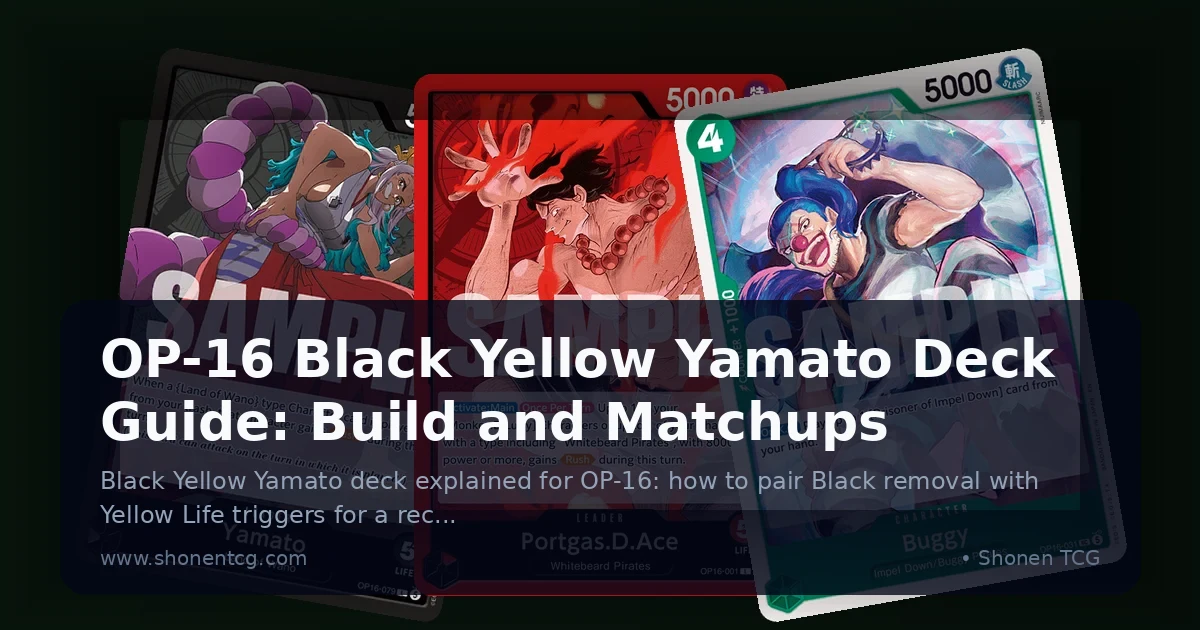
 This sample image shows the OP16-041
 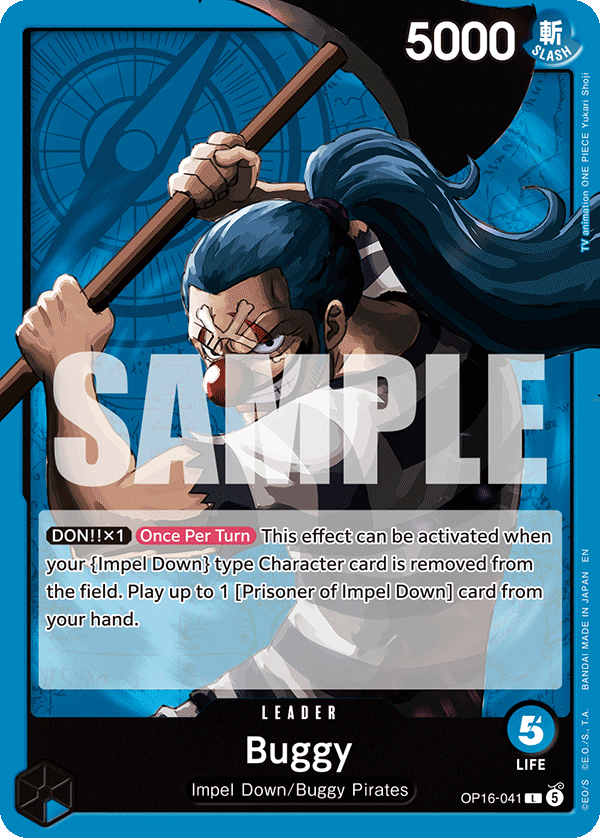 OP16-041OP16-041Shop on TCGplayer Buggy leader beside the OP16-031
 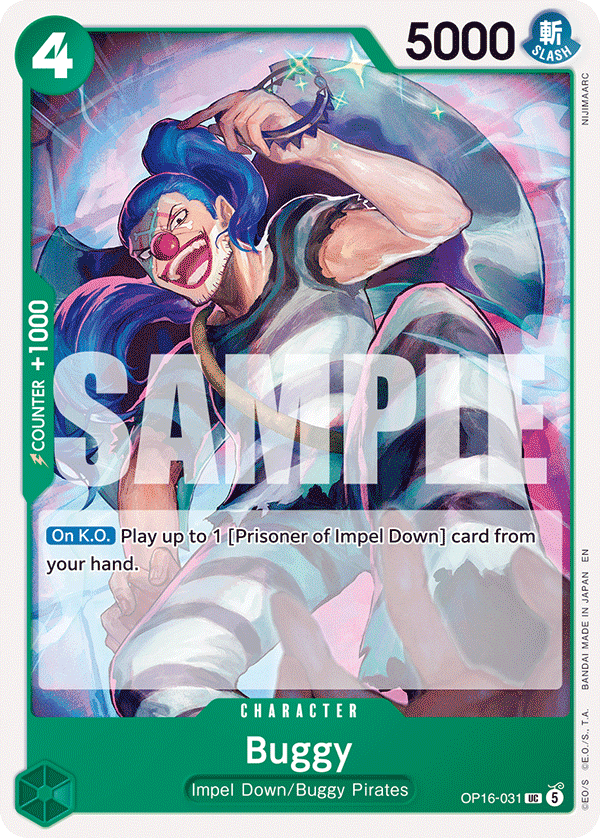 OP16-031OP16-031Shop on TCGplayer Buggy Character, separate from the OP12-061 Rosinante engine covered in this guide.
Rosinante as a leader is a dual-color identity, which means the deck has to balance access to both Purple and Yellow resources from the early game. This isn't always natural, and it's the main reason I'd call this an intermediate deck rather than beginner-friendly.
Purple supplies the leader's protection effect and the current OP-16 Navy package. Koby and Tsuru are Purple 1-cost Navy searchers, while Sakazuki is a Purple Navy removal and ramp payoff. Understanding how the One Piece TCG counter mechanic works is essential here, since Purple counter cards are the primary defensive tool in the early game, protecting the board state you need before Law comes online.
Yellow supplies the second color's Life and event options in lists that use them. Do not attribute Koby's or Tsuru's search to Yellow: both cards are Purple Navy cards, and their search only reaches Navy-type cards. The deck still depends on finding specific Law pieces and Navy payoffs rather than relying on generic threats.
Trafalgar Law is the payoff, not a side character. The leader's protect-and-discount ability exists to get Law onto the field and keep him there, while Navy searchers and removal support that plan without replacing Law-specific access. Building the dual-color energy base is the core skill to develop. You want enough Yellow access for the cards your list actually uses and enough Purple access by turn 3 or 4 to activate the leader and play Navy support. If the energy skews too hard one way, the deck stalls. The One Piece TCG mulligan guide covers how to evaluate your opening hand for dual-color setups specifically.
Was this guide helpful?
About the author
Beginner Guides & Crossover Writer
Anime fan turned TCG content creator. Bridges the gap between anime fandom and card game strategy. Covers beginner guides, anime-to-TCG crossover content, and Union Arena.
Disclaimer
This article is published for informational and entertainment purposes. It does not constitute professional financial, legal, or technical advice. Game performance, online services, patch schedules, and store listings change. Verify critical details (pricing, system requirements, regional availability) with publishers and storefronts before you buy. Affiliate links, where present, help support our editorial work and are labelled in our affiliate disclosure.
Rosinante's leader card (OP12-061) does two things, and they're the whole plan:
Once per turn: if your Trafalgar Law would be K.O.'d, add a card from the top of your Life to your hand instead. This is a direct protection effect, not a Marine synergy bonus. It turns Law from a fragile high-value target into a character your opponent has to remove twice, or find a way around Life-card recovery entirely.
Activate: Main, once per turn, DON!! -1: the next Law with a cost of 4 or more you play this turn costs 2 less. This discount is what lets you land your expensive Law pieces ahead of schedule, closing the gap between "drew Law" and "Law is doing something on board."
Koby (OP16-064) and Tsuru (OP16-067) are the tools that make finding Navy pieces more reliable rather than a coin flip. Each digs five cards deep for a Navy-type card, which is a real, verified search effect. Because Law cards are not automatically Navy, use these searchers for the Navy portion of the list and rely on the rest of the deck for non-Navy Law access.
Sakazuki (OP16-065) gives the deck a 7-cost removal and ramp threat once Law is protected and the board is stable. Its On Play effect can reduce an opposing Character by 6000 power after paying 1 DON!!, and its once-per-turn effect can add up to two active DON!! when your Navy leader meets the condition.
For reference, every leader in OP-16 is covered in the OP-16 leaders guide if you want the full comparison before deciding which deck is right for you. If you specifically want a Law-focused leader rather than Rosinante's protect-and-support build, the OP-16 Law deck guide covers Law played as his own leader instead.
GODEEPER: See the full set overview and all OP-16 card highlights before deciding what to chase. One Piece TCG OP-16 Complete Guide →
For general guidance on building a dual-color list and understanding card ratios, the One Piece TCG deck building guide is a useful reference before you finalize your 50-card list.
SHOP: Building this Purple-Yellow Rosinante shell? Check current OP-16 singles prices on TCGPlayer. Shop TCGplayer →
This is not a "play whatever feels right" deck. Each phase has a job.
1. Establish energy access to both colors in turns 1 and 2. Your priority is setting up access to both colors, not forcing attacks. A slow start that hits both colors is better than a fast start that skips Yellow entirely, since Yellow is what finds your Law pieces.
2. Play Koby and Tsuru when their Navy search has a useful hit, usually around turns 2 through 4. Look for Navy pieces such as Sakazuki and Borsalino rather than assuming either card searches every Law. By this point you also want Purple counter cards available to protect your board while you set up.
3. Land Law with the discount active, usually turns 5 and 6. This is the payoff window. Use Rosinante's Activate Main discount (DON!! -1, next 4-cost-or-more Law from hand costs 2 less) to land a qualifying Law ahead of curve. If Law is already down, the leader's protection effect may replace a K.O. with a Life card added to hand once per turn, so your opponent needs a way to answer the board without assuming one K.O. will end the threat.
4. Use Sakazuki from turn 7 onward when its removal or ramp matters. Once Law is established and protected, Sakazuki can reduce a Character by 6000 power and generate more DON!! over subsequent turns. Treat it as a removal and resource payoff, not an automatic game-ending finisher.
5. Hold Purple removal for real threats instead of spending it early. The most common mistake in this deck is answering minor early plays with removal that should be saved for whatever actually threatens your game plan, since the whole plan depends on protecting Law long enough for him to matter.
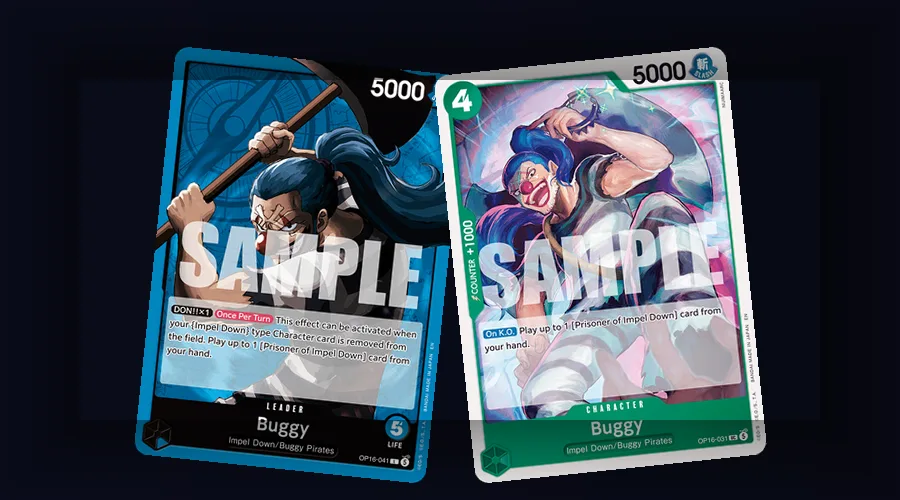 This second sample image also shows the OP16-041 Buggy leader beside the OP16-031 Buggy Character, so it illustrates the wider OP-16 card pool rather than a Rosinante board state.
Honesty matters here, because the deck has real weaknesses.
Against high-speed aggro: If you're facing a deck that presents four or five meaningful threats in the first three turns, you may not have enough early Purple to answer all of them before they stack damage. The energy setup requirement slows the early game, and decks that punish slow starts will find that window.
When Law is removed before it lands: The whole plan depends on getting Law onto the field. A deck with efficient hand disruption or that can answer Law before the leader's protection is relevant puts you in a much weaker spot than the deck's play share alone suggests.
Against Sengoku (Purple) control builds: Sengoku is a different OP-16 leader built around ramping into all three Admiral characters at once (see the OP-16 Sengoku deck guide). That Admiral-ramp plan is unrelated to Rosinante's Law-protection plan despite both being Purple, and the matchup comes down to whether you land Law before Sengoku's late-game Admiral package overwhelms the board.
Against decks that punish dual-color setups: Some decks specifically target the opponent's ability to maintain both-color access. If the energy setup gets disrupted, the deck's flexibility disappears and you may lose access to the Yellow cards and events your chosen list needs.
In mirror or control matchups: Whoever protects and lands their key payoff first usually wins. Mirror play requires knowing when to commit Law versus when to hold him for a safer window.
A few things worth knowing beyond the phase-by-phase breakdown:
Prioritize the color your opening hand actually needs. Koby and Tsuru are Purple Navy searchers, not Yellow cards, and their effects find Navy cards rather than every Law. Keep enough Yellow access for the Yellow cards and events in your list, while using the Navy searchers for their legal hit range.
Don't overextend before Law is protected. The leader's protection effect only triggers once per turn. If you commit too many resources to the board before Law is safely established, a well-timed removal sequence can still take him down before the ability matters.
Track your opponent's removal count. Since Law himself is the win condition, count how many answers your opponent has likely used or is holding before you commit him to the board.
Sequence Koby and Tsuru around your Navy curve. Use their top-five searches for Navy cards, then use the rest of your draw and search package to find non-Navy Law pieces before landing one with the discount active.
Is Rosinante a good leader in OP-16? It has a real competitive presence. In Limitless TCG's current Standard aggregate, Donquixote Rosinante (OP12) has 265 entries, a 5.79% share, and a 52.72% win rate in the checked sample. Those figures can change as new events are added.
What colors does Rosinante use in One Piece TCG? Rosinante uses Purple and Yellow, a dual-color combination. Purple supplies the leader and Navy support, while Yellow adds the cards and events chosen for the second color. Koby and Tsuru are Purple Navy searchers, so they do not directly find every Law card.
What OP-16 cards boosted the Rosinante deck? Koby (OP16-064) and Tsuru (OP16-067) are 1-cost Purple Navy searchers for Navy-type cards, so they do not directly find every Law. Sakazuki (OP16-065) is a 7-cost Purple Navy Character with an On Play -6000 effect after paying 1 DON!! and a once-per-turn DON!! ramp effect.
How does the Rosinante deck win? The leader protects Trafalgar Law from K.O. once per turn and discounts a 4-cost-or-higher Law played from hand. Once Law is established, Purple counters and Navy payoffs such as Sakazuki's removal and ramp help turn that protected board into pressure.
Is Purple-Yellow Rosinante good for beginners? It's an intermediate deck. Dual color requires active energy management, and the strategy revolves around protecting one specific named payoff card rather than generic board development, which punishes mistakes more than a straightforward aggro deck would.
Where can I check the current Rosinante meta standing? Use Limitless TCG's current Standard decks table and filter for Donquixote Rosinante (OP12-061). The September 16, 2026 snapshot lists 265 entries, 5.79% share, and a 52.72% win rate. Recheck the table before an event because the sample changes.
What is the difference between Purple-Yellow and mono-Purple in OP-16? Mono-Purple gives you more consistent energy access and deeper control tools. Purple-Yellow Rosinante trades some of that consistency for access to Yellow cards and events, while its OP-16 Koby and Tsuru searchers remain Purple Navy cards with a Navy-only hit range. The trade-off is a more demanding dual-color energy setup.
Related
Union Arena Fullmetal Alchemist Deck Guide: Blue 2026
8 min read
Union Arena Attack on Titan Vol.2: New Yellow Color
8 min read
Dragon Ball Fusion World FB11 Leaders: All 5 Revealed
8 min read
Union Arena Re:ZERO Prerelease: What to Expect (2026)
8 min read
Union Arena Rurouni Kenshin Deck Guide: Red Build 2026
9 min read