

Shonen TCG · Guides
One Piece TCG Meta Rotation Guide: When to Sell Cards
TL;DR: This One Piece TCG meta rotation guide explains the Block Number system that began April 1, 2026, the Standard and Extra Regulation split, and the other events that can change card demand. Standard uses an approximately three-year pool, but block updates and Super Parallel Rare rules mean you should check the official list for the exact card. Sell decisions are risk management, not guaranteed price calls: review tournament use, rotation timing, ban-list risk, reprints, condition, and collector demand together.
Note: The rules and Block Number facts in this guide were checked against Bandai's English One Piece Card Game pages on September 17, 2026. Card prices are market observations that can change by language, region, condition, supply, and seller fees. This is an information guide, not a promise that any card will rise or fall.
One Piece TCG meta rotation guide: quick answer
One Piece Card Game now has a scheduled Block Number system for Standard Regulation. Bandai's official announcement says the system began April 1, 2026, and that Standard uses an approximately three-year card pool. The same announcement gives the schedule example of Blocks 2 through 5 for tournaments from April 2026 through March 2027, followed by Blocks 3 through 6 from April 2027 through March 2028.
That creates a predictable legality checkpoint, but it does not create a guaranteed price chart. A competitive card can lose demand before rotation if a new deck replaces it or an official restriction changes its role. A collector card can behave differently because the people buying it may not care about Standard play.
The useful checklist is:
- Read the Block number printed on the exact card
- Check the official list for card-number updates and Super Parallel Rare treatment
- Separate Standard legality from Extra Regulation legality
- Review tournament results, decklists, reprints, and current listings
- Decide whether you are selling to manage risk or simply reacting to one dramatic price move
GODEEPER: For the full deckbuilding and legality context, read One Piece TCG Standard Format Guide 2026.
What changed on April 1, 2026
Before this change, players often discussed One Piece TCG as a game without a normal annual rotation. That description is no longer accurate for official Standard events. Bandai introduced two regulations from April 1, 2026: Standard Regulation and Extra Regulation.
Standard Regulation
Standard uses the Block Number system. Bandai's introduction page says the card pool is approximately three years of the latest cards. Its example schedule allows Blocks 2, 3, 4, and 5 from April 2026 through March 2027. The next example allows Blocks 3, 4, 5, and 6 from April 2027 through March 2028.
That means Block 1 is outside the normal Standard pool from the first cycle onward. Do not infer legality solely from a set name, though. The official site also says that certain card numbers can receive Block Number updates and that cards with updated numbers can make past illustrations usable. Check the printed number on the card and the current official update page before listing a card as Standard legal or rotated.
The block schedule is therefore a planning tool, not a substitute for the live legality page. A reprint, a card-number update, a special treatment, or an event-specific rule can change the answer for a particular copy.
Extra Regulation
Extra Regulation is the broader official format. Bandai's announcement describes it as allowing cards from Block 1 through the most recent block, so players can use older parts of the card pool. The same announcement says additional details for this regulation were being prepared, so the event announcement still matters.
A rotated card is not automatically worthless. It may remain relevant in Extra Regulation, casual play, collection, cube-style projects, or a future reprint context. It may also be difficult to sell if the only buyers you can reach play Standard. Treat the format as another demand source, not as proof that the old Standard price will survive.
Super Parallel Rare treatment
The official Block Number pages make an important exception to simple set-based rotation. Past Super Parallel Rare cards and cards with the same card number will generally remain legal in Standard regardless of reprints. From April 2026 onward, newly released Super Parallel Rare cards and matching card numbers use Block X for the same general purpose.
This is why an old rule of “everything from the oldest sets rotates together” is too blunt. It can be useful as a first estimate, but it is not enough for a specific chase card. Confirm the card number, treatment, block mark, and the current official update list.
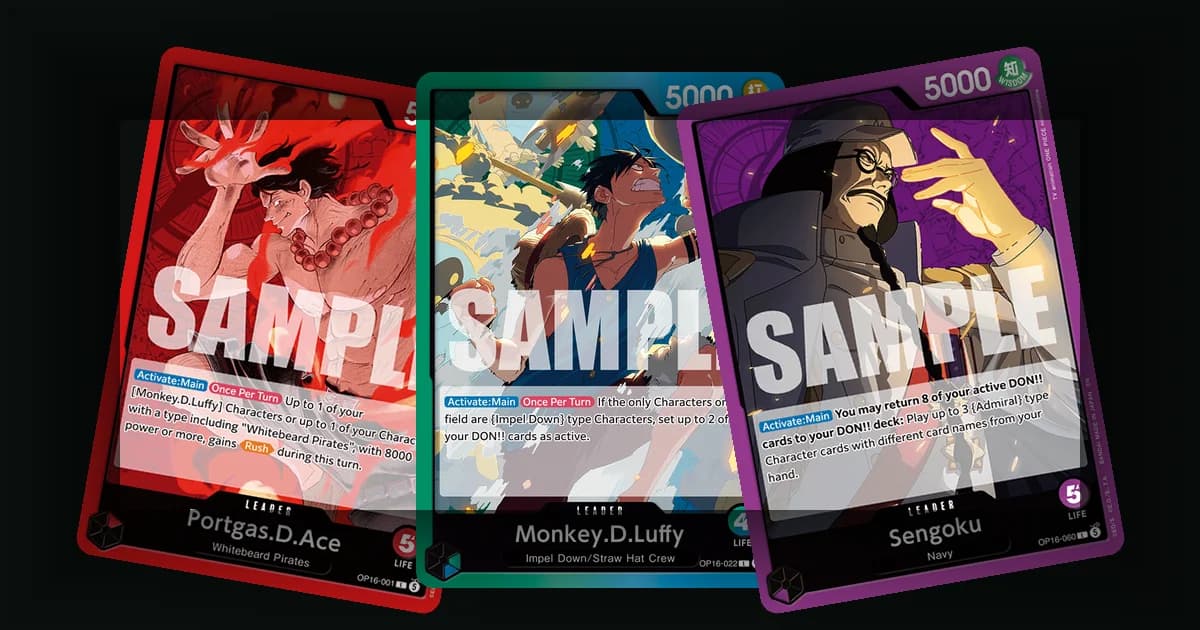
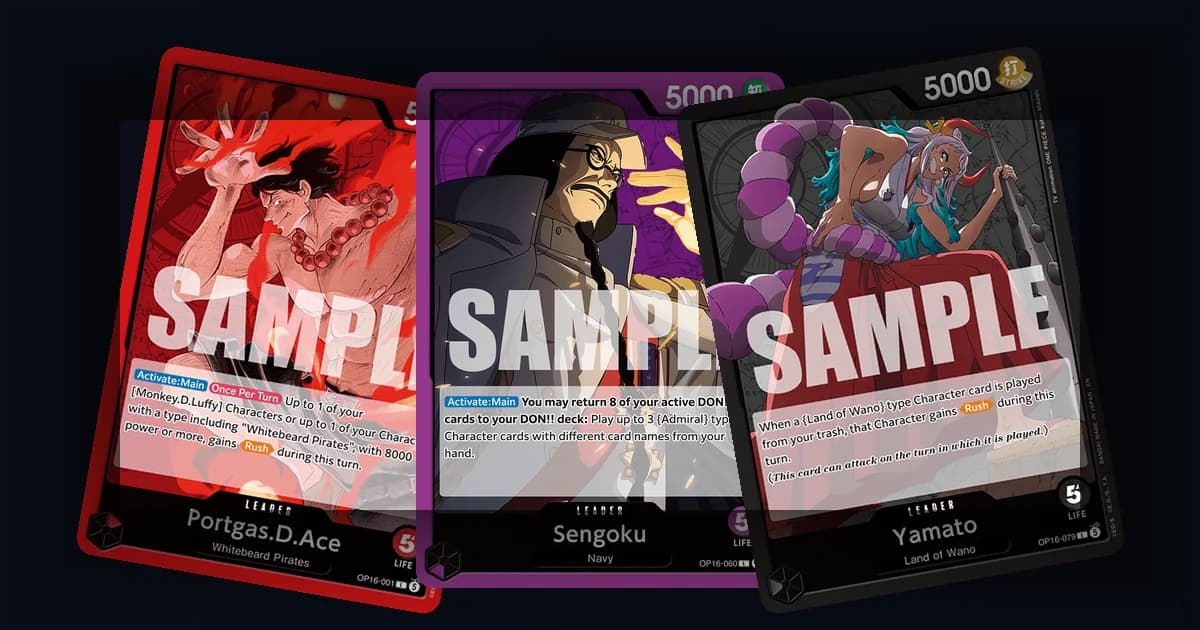
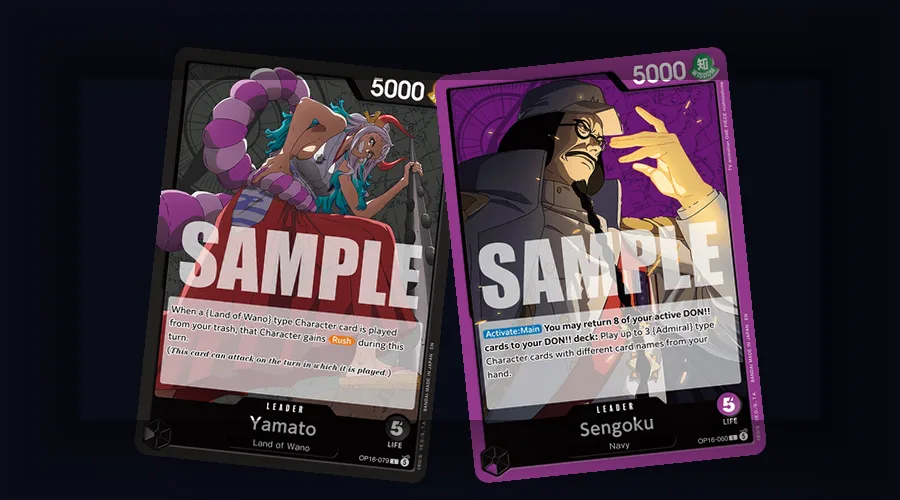 These real sample Leaders show Yamato and Sengoku. They are representative artwork for this guide, not evidence that either card is currently a top deck or a safe hold.
One Piece TCG meta rotation guide: planning a sale
The strongest sell decision comes from several signals agreeing, not from a single calendar date. Use the following four questions for each card or playset.
1. What demand is actually paying for the card?
Separate tournament demand from collector demand. A competitive-only Character may have a narrow buyer pool if one Leader needs it. An iconic Leader, a rare parallel, or a card with strong art appeal may have buyers who do not care about Standard legality. Neither category is automatically safe, but the risks are different.
Also distinguish a card's printed rarity from the reason people buy it. A lower-rarity staple can be more exposed to a deck change than a rare card that has no competitive demand. A high-rarity card can still fall if supply grows or the character loses attention.
2. How close is the legality risk?
Use the current Block schedule as a date to investigate, not an automatic sell trigger. If the card is in a block near the Standard boundary, check whether the deck is still placing results and whether Extra Regulation events are available to the buyers you can reach.
The risk can arrive before the formal date. Players may sell when a rotation is announced, when the next block's card pool becomes visible, or when a new card replaces the same role. On the other hand, a card can gain short-term demand if an upcoming set supports its Leader or trait. Timing is uncertain, so avoid presenting a deadline as a certainty.
3. Is an official restriction or ban plausible?
Bandai says it monitors win rate, major tournament results, usage rate, future environment impact, and whether a card restricts the viability of other Leaders. It typically announces revisions after Championship Season 1 in Japan and after the World Championship, but it also reserves the ability to act earlier when a card harms the play environment.
That policy makes dominance a risk signal, not proof that a card will be banned. Follow the official restriction page and do not treat community speculation as an announcement. A card can lose value after a ban, but it can also recover if a restriction is removed or a later set makes the strategy relevant again.
4. Could supply change the price?
Reprints, alternate versions, regional releases, and a fresh wave of opened product can increase supply. Conversely, a card can become harder to find while still having little demand. Compare several current listings and note condition, language, shipping, marketplace fees, and whether the listing is actually selling.
The right comparison is not “the highest listing today versus yesterday.” Look for the spread between asking prices and recent completed sales where available. A small sample can still mislead, so use a trend as context rather than a promise.
When the meta shifts without rotation
Rotation is only one of the forces affecting a card.
A new set changes roles. A new Leader, removal effect, counter package, or trait engine can make an older card better, worse, or newly relevant. A card does not need to rotate to lose its place in a list.
A tournament result changes attention. One winning deck can create a short spike in search and buying. Verify whether the list is repeated across events before treating one result as a stable meta trend. Limitless One Piece is useful for checking tournament pages, while its deck database helps compare lists rather than relying on a screenshot.
A restriction changes the deck's math. The official list includes banned cards, banned pairs, and restricted cards for official and sanctioned tournaments. A restriction can reduce demand for a card, but it can also move demand to a different card in the same archetype. Read the exact notice because a banned pair is not the same rule as a one-copy restriction.
A reprint changes scarcity. A reprint may lower a premium for a playable card, but a new illustration or treatment can create a separate collector market. Check the card number and treatment before assuming two copies compete for exactly the same buyers.
What to sell, hold, or review
Use categories as a framework, not a mechanical instruction.
Cards to review for a possible sale
- Competitive-only cards whose value depends on one Standard deck
- Cards from a block approaching the next Standard boundary
- Speculative copies bought only because of unconfirmed hype
- Extra playsets after a new set prints a credible replacement
- Cards whose current listing premium is much larger than recent sale evidence
For these cards, compare the value of selling now with the cost of fees, shipping, taxes, and replacing the cards if the deck returns. A theoretical gain is not the same as money in hand.
Cards to review before selling
- Super Parallel Rare cards and matching card numbers covered by the official legality exception
- Iconic characters with collector demand independent of tournament use
- Cards that fit multiple Leaders or have an unusual effect likely to gain support
- Cards that are still legal in the format your local group actually plays
- Low-cost staples where selling fees consume most of the proceeds
These are not guaranteed holds. Collector demand can soften, reprints can arrive, and a card can be difficult to move despite being legal. The point is to identify a second demand source before dumping a card because one deck fell out of favor.
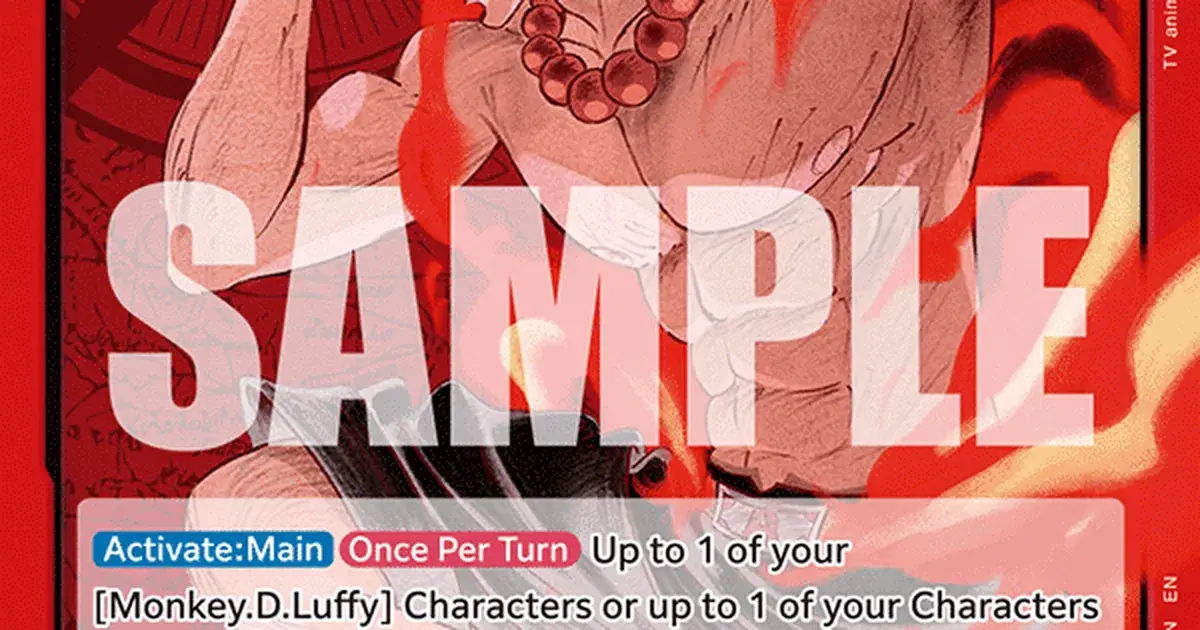
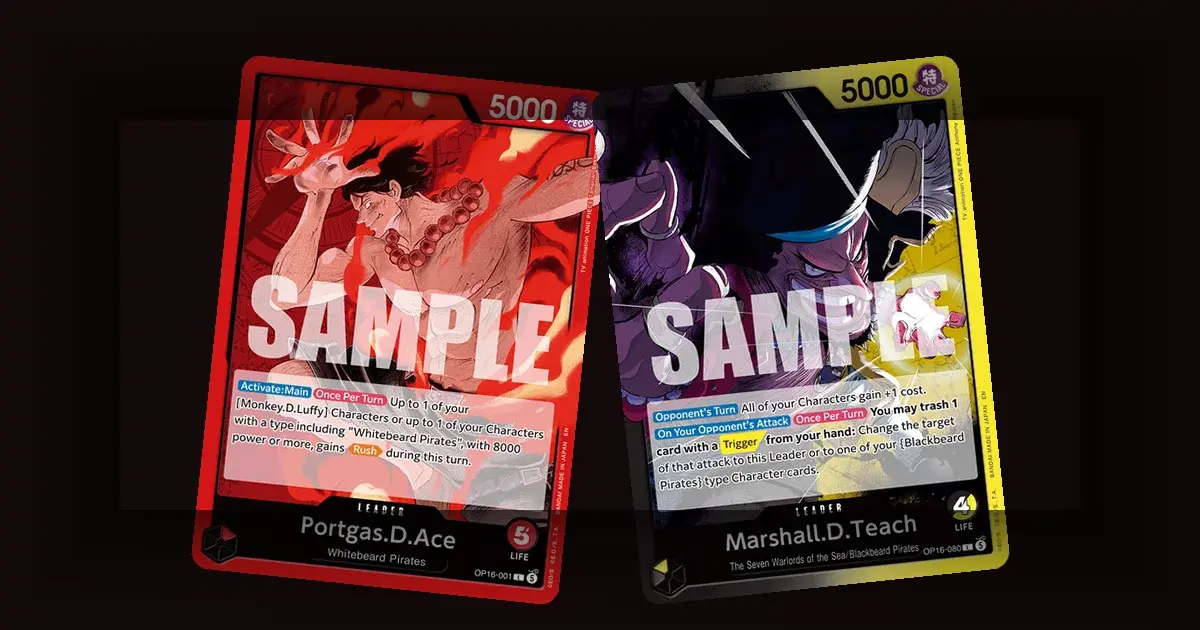
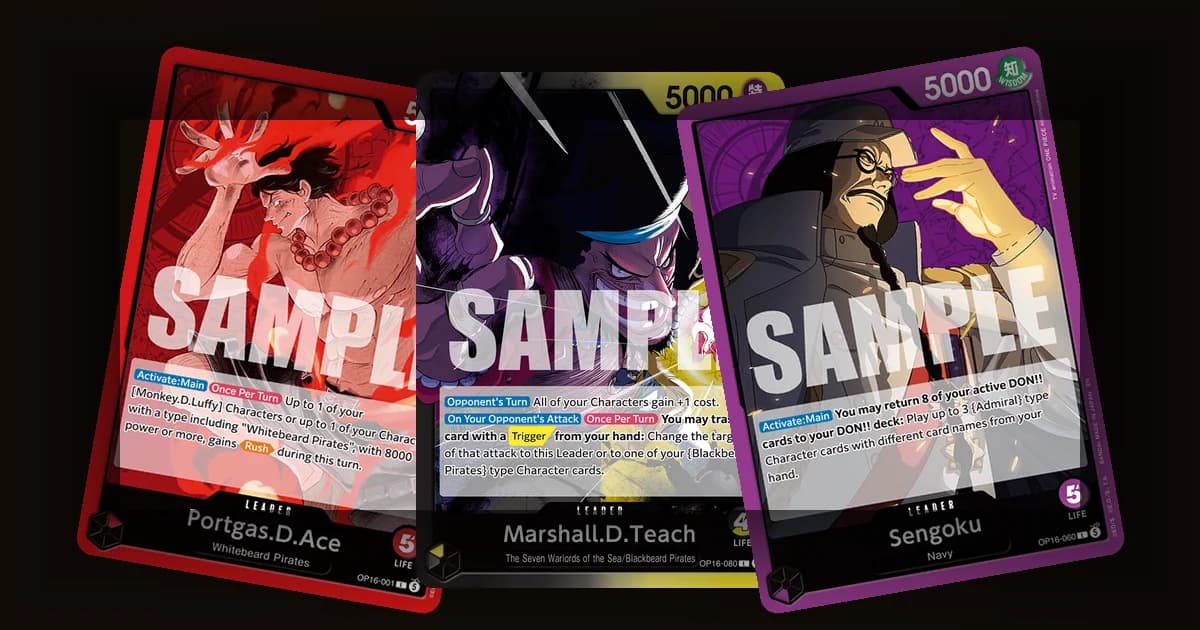
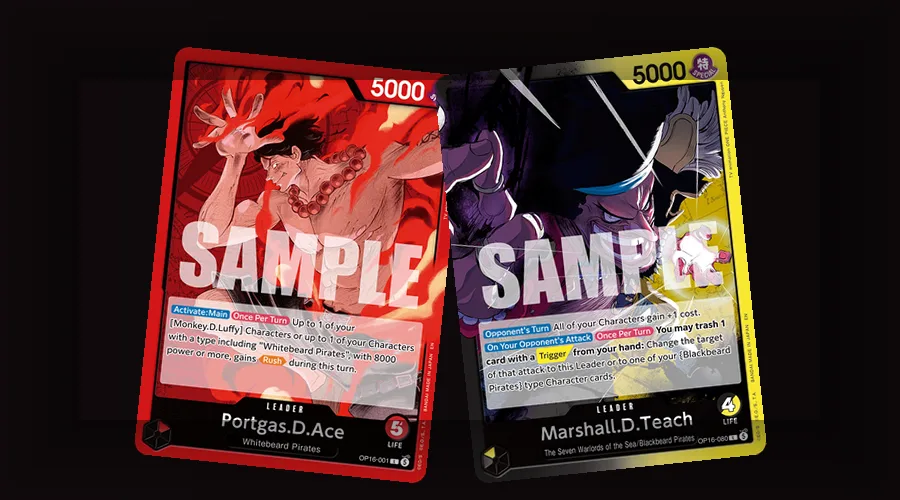 These real sample Leaders show Portgas.D.Ace and Marshall.D.Teach. The artwork is illustrative and does not establish a current price, legality, or tournament ranking.
Tracking the meta and the market
Set a simple review schedule around information that can change.
At every official rules update: Check the rules page, Block Number update page, and restriction notice. Record the effective date and whether the rule applies to Standard, Extra Regulation, or sanctioned tournaments generally.
At every new set: Compare early decklists with the previous format. Do not call a new Leader a meta staple from a reveal or one event. Look for repeated results, a coherent list, and enough events to separate novelty from a durable strategy.
Every few weeks: Check tournament results and the cards that recur in successful lists. Then compare a marketplace's current listings with recent sales. Limitless provides useful competitive context, while TCGplayer can show listing depth and current seller asks. Neither source alone is a complete price oracle.
Before selling: Calculate net proceeds after fees and shipping. Keep a record of the card's condition and language. If you are selling a playset, check whether the buyer wants one copy or four, because a playset can have a different audience from a single collector copy.
Step-by-Step: Deciding what to sell before a meta shift
Run this sequence before a set release, restriction announcement, or rotation checkpoint.
1. Record the exact card number and treatment. Note the set, card number, rarity, parallel or Super Parallel Rare treatment, language, condition, and quantity.
2. Check the official legality pages. Read the printed Block Number, the current Block Number updates, and the restriction notice. If the card is covered by a special rule, save the source and effective date with your collection notes.
3. Measure both demand pools. Find recent tournament lists for competitive demand and current marketplace evidence for collector demand. Do not assume a card is a stable hold merely because it is rare or features a popular character.
4. Identify the next plausible change. Is the main risk rotation, a new replacement, an official restriction, a reprint, or a deck simply falling out of results? Give each risk a confidence level rather than treating it as a prediction.
5. Calculate a net sale. Subtract marketplace fees, shipping, taxes, and the cost of sourcing a replacement. A sale only protects value if the received amount justifies losing the card's future utility.
6. Set a review date. If you hold, decide when you will check the rules, results, and listings again. If you sell, keep a note of the reason so a later price move does not turn a planned decision into hindsight.
Key takeaways
- One Piece Card Game Standard uses the Block Number system from April 1, 2026
- Bandai's official schedule example uses Blocks 2 through 5 from April 2026 to March 2027, then Blocks 3 through 6 from April 2027 to March 2028
- Extra Regulation is the broader official format, but confirm the event's detailed rules
- Super Parallel Rare cards and matching card numbers generally receive special Standard treatment, so check the exact card
- Rotation, new sets, restrictions, reprints, and deck results can all change demand before a card's price moves
- Sell decisions should separate competitive demand from collector demand and account for net fees
- Use official rules pages, Limitless results, and marketplace context together, not one screenshot or listing
GODEEPER: If you want to evaluate a specific collection, the One Piece TCG Trade Guide applies the same dual-demand framework to buying and selling.
Related Reading
- One Piece TCG Beginner Guide 2026: How to Play & Rules: core rules, DON!!, and turn structure.
- One Piece TCG OP-16 Guide: Set Review & Leaders (2026): set context and Leader coverage.
- One Piece TCG How to Read a Card: Every Part Explained: card anatomy and printed information.
- One Piece TCG Card Grading Guide: condition and grading decisions for cards you hold.
- One Piece TCG Ban List and Restrictions Explained: how official restrictions affect deck legality.
Frequently Asked Questions
Q: Does One Piece Card Game Standard rotate? A: Yes. Bandai's Block Number system began April 1, 2026. The official schedule example uses Blocks 2 through 5 for April 2026 to March 2027 and Blocks 3 through 6 for April 2027 to March 2028.
Q: When does Block 2 rotate? A: The official example moves Standard from Blocks 2 through 5 to Blocks 3 through 6 on April 1, 2027. Check the exact card's Block Number and later updates before trading.
Q: What happens after rotation? A: The card leaves the Standard pool but may remain in Extra Regulation, casual play, or collection. Extra Regulation details and restrictions still depend on the event, so check its announcement.
Q: Are Super Parallel Rare cards exempt? A: The official pages say past Super Parallel Rare cards and matching card numbers will generally remain legal in Standard, with newer examples using Block X. Verify the live update list for the exact card.
Q: When do cards lose value? A: Competitive demand can weaken after rotation, a restriction, a replacement, a reprint, or a deck leaving results. Collector demand may soften or persist independently, so no outcome is guaranteed.
Q: What should I sell before a meta shift? A: Review competitive-only cards tied to one deck, cards near a legality boundary, and speculative copies with little collector demand. Account for fees and replacement cost before listing.
Q: How often does the meta change? A: There is no single fixed meta-change interval. New releases, tournament results, rules updates, and restrictions are useful review points. Bandai says restriction revisions are typically considered after Championship Season 1 in Japan and after the World Championship, but earlier action is possible.
Q: How do I track changes? A: Use the official rules and Block Number pages for legality, Limitless for tournament results and lists, and a marketplace such as TCGplayer for current listings and sales context.
References
- One Piece Card Game official rules: current rules downloads and official rule updates.
- Introduction of the Block Number System: Standard and Extra Regulation structure and schedule examples.
- Overview of Cards Subject to Block Number Updates: current Block Number updates and Super Parallel Rare treatment.
- Banned/Restricted Card Addition Notice: restriction categories, current notice, and revision policy.
- Limitless One Piece tournaments: tournament results and event context.
- Limitless One Piece decks: decklists and competitive comparison.
- TCGplayer One Piece Card Game listings: marketplace listing context.
Was this guide helpful?
About the author
Pen name for the Shonen TCG desk's tournament coverage, format analysis and cross-game comparisons.
- Results taken from event pages and standings
- Other games checked against their own official rules
- Opinions marked as ours, with the reason
Keep reading

One Piece TCG Deck Building Guide: Build From Scratch
Guides · 12 min
One Piece TCG Budget Competitive Guide 2026 Under $100
Guides · 13 min
One Piece TCG Trade Guide: How to Trade Cards Fairly
Guides · 13 min
One Piece TCG Standard Format Guide 2026: Legal Sets
Guides · 12 min
OP-16 Ace Deck Guide: Whitebeard Pirates Rush Build
Guides · 12 min
OP-16 Collectors Guide: SEC, Manga Rare, Alt-Art Cards
Guides · 11 min
OP-16 Box Opening Strategy: How Many Boxes to Open
Guides · 10 min

OP-16 vs OP-15 power level comparison: what changed?
Guides · 11 min
Disclaimer
This article is published for informational and entertainment purposes. It does not constitute professional financial, legal, or technical advice. Game performance, online services, patch schedules, and store listings change. Verify critical details (pricing, system requirements, regional availability) with publishers and storefronts before you buy. Affiliate links, where present, help support our editorial work and are labelled in our affiliate disclosure.