Loading…
Loading…
Shonen TCG · Guides
This OP-16 singles buying guide was originally written four days after the EN launch of Paramount War, when week 1 prices were still forming.
Prices are forming, not settled. Box supply is limited, and everyone is opening product and listing singles at the same time, which means the market is noisy right now in both directions.Update (2026-08-17): OP-16 has now been out for over two months and the meta has moved well past its post-launch correction. The week 1 pricing described below is historical context only; check current TCGPlayer and Limitless listings for today's numbers.
This OP-16 singles buying guide is specifically for the post-launch period. It is not a "what to pull" guide (that is covered elsewhere on the site). This guide answers one question: given that OP-16 is live and prices are actively forming, what should you actually do with your money this week?
TL;DR: For competitive players, buy the SRs and Rs you need for your deck now. Do not buy Admiral Manga Rares or the Portgas D. Ace SEC speculatively in week 1. Check TCGPlayer prices daily and target the week 3 window for chase card purchases. If you are playing Nami, Yamato, Blackbeard, or Rosinante, the SR cards powering those decks are worth picking up immediately.
Buy singles you need for active competitive decks right now. Wait on chase cards. That is the one-sentence answer.
The longer version depends on which card you are asking about. A new SR that goes in every Yamato Black list behaves differently from an Admiral Manga Rare that only a handful of players will put in a deck. Understanding the difference is most of this guide.
The EN launch price pattern for OPTCG sets follows a fairly consistent shape. Week 1 is the worst time to buy high-rarity cards. Here is why.
When a set launches, the available supply of opened singles is low. Sellers who have been holding singles from early box openings or pre-orders set prices at maximum hype. Buyers are excited. That combination drives prices up, sometimes significantly above where they will settle.
By week 2, more sealed product is being opened. Local game stores are cracking cases. The volume of singles on TCGPlayer climbs. Sellers start competing on price to move inventory. The correction begins.
Weeks 3 and 4 are where prices reflect actual demand. The speculation premium has burned off. What you are left with is: how many people actually need this card for a deck they are actively building?
There is one important exception. Cards that are meta staples, meaning they go in top decks that people are actively building for Regionals, do not follow this pattern cleanly. If a card is in every version of the best deck in the format, demand is consistent and price holds. Sometimes those cards climb in weeks 2 and 3 as more players build the deck.
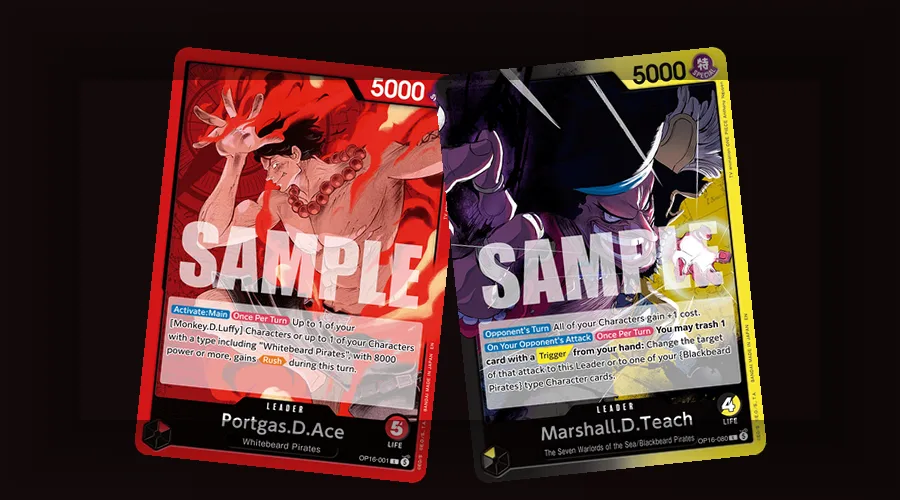
The Peoria IL Regional on June 20 turned out to be that first major EN tournament data point for OP-16, and the meta has kept moving since. By early July, the confirmed S-tier was Green/Blue Luffy, Purple Enel, and Black/Yellow Blackbeard, with Yamato a strong Tier 2 pick. That picture has shifted again: as of mid-August 2026, Nami (Blue/Yellow) has taken over as the format's #1 leader on Limitless TCG's standings, at roughly 23.5% deck share, narrowly ahead of Luffy (about 22.9%) and Enel (about 22.7%), while Blackbeard has settled to around 5th in play share. Check the current settled tier list on Limitless before pricing anything as a meta staple.
GODEEPER: See how OP-16 leaders stack up in the current EN meta with week 1 data. OP-16 All 6 Leaders Explained: Colors & Which to Build →
 EN prices for OP-16 singles stabilize roughly 2 weeks after launch as the initial box-opening wave clears.
This category is for cards where waiting costs you something real. Either they might go out of stock, or demand is going to push prices up rather than down because these are genuine meta pieces.
SRs and Rs for current top decks. If you are building Yamato Black, YB Blackbeard, or Nami's Blue/Yellow engine right now, the SR and R cards that go in those lists should be purchased this week. These are not chase cards with hype premiums. They are functional pieces of top decks. When Regionals approach and more players finalize their builds, demand for these goes up, not down.
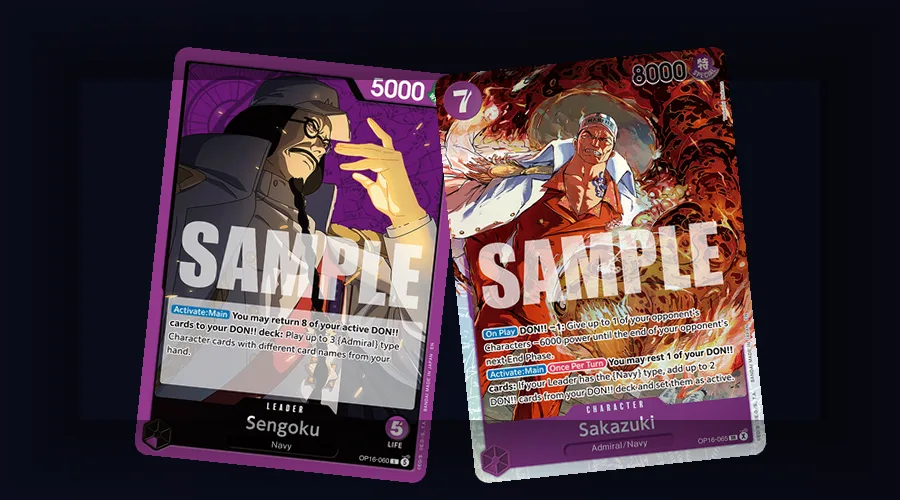
The Rosinante package uses Marine synergies that OP-16 SRs directly power, including support that makes the once-unplayable Borsalino searchable. It was a genuinely strong, sticky-board deck, and by late July it had climbed into tier-1 on some trackers (roughly 66% win rate on onepiece.gg), contesting Blackbeard for the format's third top spot behind Luffy and Enel. Update (2026-08-17): that run did not hold. Rosinante has since fallen out of the format's top tier as Nami's Blue/Yellow engine took over the #1 slot by both win rate and play share. Its SR pieces are still worth owning if you already play the deck, but it is no longer a top-priority buy for chasing the current meta.
Cards for decks you are actively playing this month. If you have a league or a local tournament in the next two weeks and need specific cards to complete your list, buy them now. The savings from waiting do not outweigh playing with an incomplete deck.
Budget singles: R and UC rarities. These cards are not volatile. Prices are set at or near floor value quickly for non-foil commons and rares. There is no reason to wait on these, and local supply can be uneven early in a set's run.
Check TCGPlayer for current EN prices. The market shifts daily in week 1. Filter by "Near Mint" and check sell prices, not list prices.
Was this guide helpful?
About the author
Competitive TCG Analyst
Competitive One Piece TCG player and deck builder with 3 years of tournament experience. Covers meta analysis, tier lists, and leader builds.
Disclaimer
This article is published for informational and entertainment purposes. It does not constitute professional financial, legal, or technical advice. Game performance, online services, patch schedules, and store listings change. Verify critical details (pricing, system requirements, regional availability) with publishers and storefronts before you buy. Affiliate links, where present, help support our editorial work and are labelled in our affiliate disclosure.
This is the largest category by card count in OP-16.
Admiral Manga Rares during week 1. The Admiral MRs are the highest rarity tier in OP-16 and the most expensive cards in the set. The Manga Rare rarity is new to OPTCG as of this set, sitting above Secret Rare. That novelty alone drives speculation. Week 1 prices on these cards reflect maximum hype and very limited supply. History from the JP launch shows that Manga Rares can settle meaningfully from day-1 highs once the market has more product in it.
If you want full analysis of which Admiral Manga Rare holds the most competitive and collector value, read the OP-16 Admiral Manga Rare Guide: Prices and Value 2026. That article has the breakdown by card so you are not guessing.
Cards being hyped on social media without tournament results. In week 1 of any set launch, every interesting card gets a hype cycle. Deck builders post theory lists. Content creators speculate. Prices move on potential, not evidence. Wait until June 20 Peoria results come in before paying hype prices on anything that has not shown up in a tested competitive list.
Alt-art versions of cards you need. If you need a card for your deck, buy the standard version now. If you want the super alt-art version, wait. Alt-art premiums compress over 4 to 8 weeks as supply catches up.
GODEEPER: The full OP-16 card structure, leaders, and rarity breakdown is in the complete set guide. One Piece TCG OP-16 Complete Guide →
Everyone wants to know about the Admiral MRs. Here is the honest take.
If you are a competitive player and you need an Admiral for your deck right now, buy when you find the price that works. Waiting for a 30% correction does you no good if you miss three weeks of tournaments.
If you are a collector, the Admiral Manga Rares will hold long-term value as the flagship ultra-chase cards of this set. The question is not whether to buy but when. Week 1 is not the answer. Week 3 or week 4 is when the initial hype premium has burned off and you can see where the floor actually is.
If you are speculating, meaning you have no plan to play or hold the card and are buying hoping to flip: week 1 speculation on high-rarity cards in EN markets rarely works well. The time window between EN launch and price correction is short and the spread between buy and sell is wide. This is not a strategy the data supports.
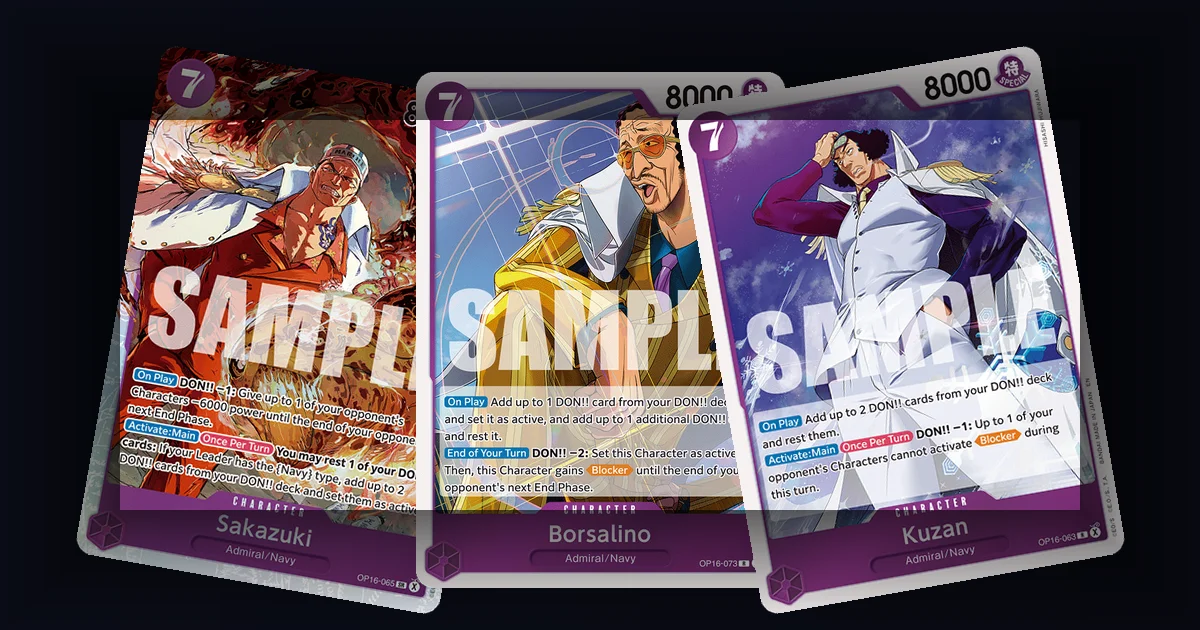
For specific Admiral card details, prices, and value rankings, see the OP-16 Three Admirals Guide: Akainu, Kizaru, Aokiji. That article has the card-by-card breakdown.
 The SEC Akainu and Admiral Super Alt-Arts hold value longest; standard prints for competitive play drop fastest.
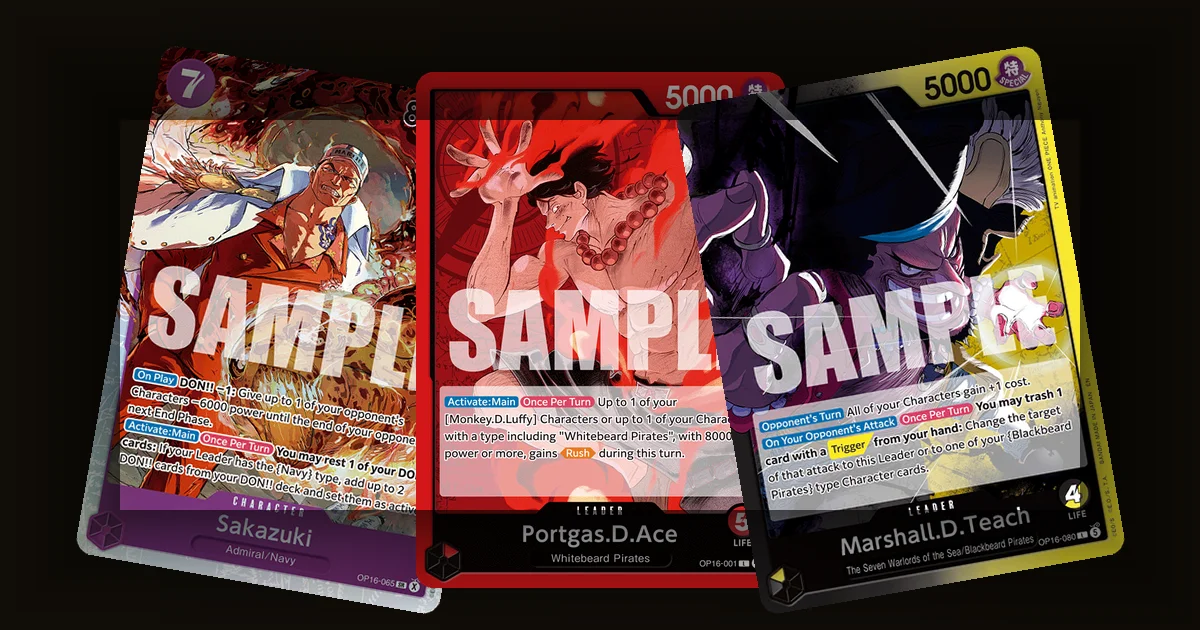
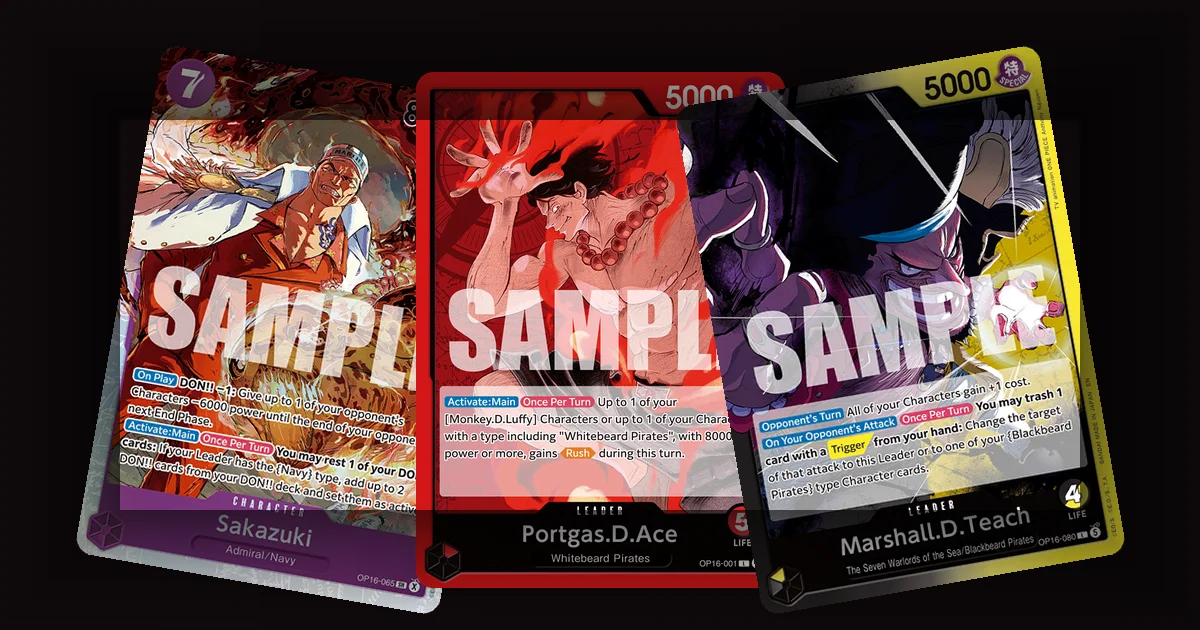
Portgas.D.Ace (OP16-118) is one of two confirmed SEC cards in OP-16, alongside Marshall.D.Teach (OP16-119). SEC cards occupy the rarity tier below Manga Rare and above SR. The Ace SEC is a collector-driven card built on the emotional weight of his Marineford death scene rather than a universal meta staple, since Ace is not one of the confirmed S-tier leaders in the settled EN meta.
If you collect chase cards from every set, buying the Ace SEC now before the market fully forms is a reasonable call. SEC cards at launch have limited supply and can spike if demand from collectors outpaces new listings.
If you play and do not currently have a deck that needs the Ace SEC as a tech piece, wait. SEC pricing in week 1 includes a real hype premium, and the settled price is typically lower once more copies enter circulation.
Check onepiece.limitlesstcg.com for the Ace SEC's actual tournament representation before deciding, now that Peoria results are in.
This is the actual workflow for making a singles purchase decision, updated for buyers checking in well after the week 1 window.
1. Write down what you actually need. Start with your current deck list and identify the OP-16 cards in it. These go in the "buy now" pile if they are SR or lower. They go in the "watch" pile if they are Admiral MR or SEC.
2. Check TCGPlayer for current prices. Go to TCGPlayer and search each card. Note the lowest Near Mint price and the market price. If those two numbers are far apart, the market is still volatile. If they are close, pricing has settled.
3. Cross-reference with Limitless for competitive context. Go to onepiece.limitlesstcg.com and check which decks are running the cards on your list. If a card is in 60%+ of a top deck's builds, it is a meta staple worth buying now. If it is in 10%, it is a tech card, and the price is partly speculation.
4. Set a watch price for anything you're not buying today. TCGPlayer lets you set price alerts. For Admiral MRs and the Ace SEC, set your target price based on where the market has actually settled and wait for a notification rather than checking manually every day.
5. Make your purchases in batches, not one card at a time. Buy your "now" cards together. Revisit your "watch" list on its own schedule and make the second purchase then. Avoid buying in seven separate small orders, since shipping costs eat your savings.
A few practical points that matter when the market is this active.
Buy from sellers with strong positive feedback and recent sales. Week 1 of a set launch brings out some low-quality listings. Check seller feedback before purchasing from anyone with fewer than 50 sales.
Near Mint is the right condition target for competitive cards. Lightly Played is fine if the price difference is significant (over 25%) and you are playing the card. Do not buy Played or worse for anything you are keeping long-term.
Local game stores are sometimes better value than TCGPlayer in week 1 because they set prices before the online market fully forms. Check your local shop's singles bin before assuming online is cheaper.
For the OP-16 most expensive cards, TCGPlayer market price is the most reliable single-source number. List prices are set by sellers and can be 2x to 3x market in week 1.
Set a total budget before you start buying. This is week 1 of a new set. It is easy to spend 2x what you planned when every card looks important.
Should I buy OP-16 singles now or wait? It depends on what you need. SRs and Rs for current meta decks are safe to buy now. They tend not to get cheaper, and supply can dry up if a deck spikes. Admiral Manga Rares and the Portgas D. Ace SEC are best held off on unless you need them competitively this week. Prices on chase cards typically settle in weeks 3 and 4.
When do OP-16 prices stabilize? For most OP-16 cards, expect prices to settle around weeks 3 and 4 post-EN launch. That is typically when enough sealed product has been opened and the market has accurate supply data. Meta staples may hold their price or continue climbing if demand stays strong at tournaments.
Are the Admiral Manga Rares worth buying in week 1? Only if you need them for competitive play right now. Manga Rares are the highest rarity tier in OPTCG as of OP-16, so week 1 prices reflect maximum hype and limited supply. JP launch history shows these cards can settle meaningfully from day-1 highs once more product enters the market.
What OP-16 cards should I buy right now? Prioritize SRs and Rs powering current meta decks. Cards feeding Nami's Blue/Yellow engine are now top priority, since she leads the format on both win rate and play share. Yamato Black and YB Blackbeard pieces are still solid buys. Rosinante's Marine package has fallen out of the top tier since July.
How do One Piece TCG single prices behave after EN launch? Typical pattern: week 1 prices are inflated from launch hype and tight supply. Week 2 starts correction as box openings flood the market. Weeks 3 and 4 are where prices stabilize around true demand. Cards in top tournament decks are the exception. They hold or climb as players build for Regionals.
Is the Portgas D. Ace SEC worth buying at launch? If you collect and want it before prices potentially climb, buying now is reasonable. If you play but do not need the Ace SEC for a current competitive deck, wait for the week 3 correction.
Where can I check OP-16 EN card prices? TCGPlayer is the primary EN singles market. Check onepiece.limitlesstcg.com for competitive context, meaning which cards are actually appearing in top tournament decks, so you can separate actual play demand from speculation.
Related
Best TCG Dice and Counters 2026: What You Actually Need
12 min read
Union Arena Bleach Ichigo Deck Guide: Purple Build 2026
8 min read
Best Deck Boxes for TCG Storage in 2026: Full Buying Guide
13 min read
Best TCG Playmats 2026: Stitched Edge Buying Guide
10 min read
Best TCG Binders and Portfolios 2026: Side-Load Guide
11 min read