

Shonen TCG · Guides
One Piece TCG Best Leaders All Time: Top 10 Ranked
One Piece TCG best leaders all time: an OP-01 to OP-15 editorial ranking using tournament data, longevity, and restriction history. Updated Sep 2026.
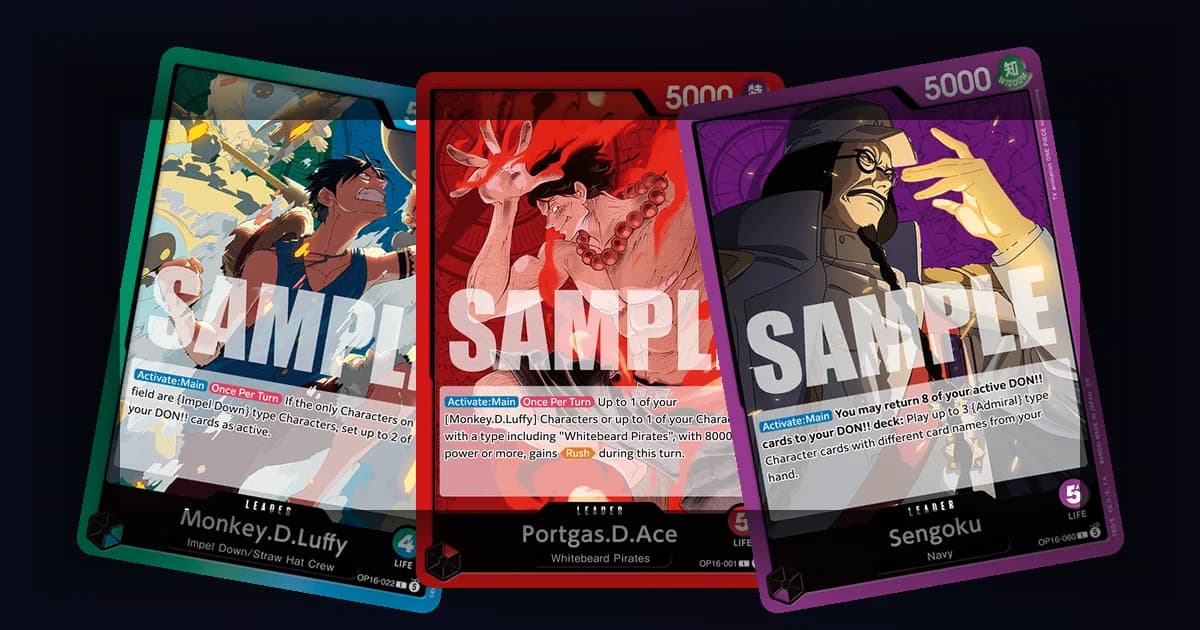
TL;DR: One Piece TCG best leaders all time is a historical editorial ranking, not an official Bandai tier list. Red Whitebeard, Red/Purple Trafalgar Law, Blue/Black Sakazuki, and Black/Yellow Monkey.D.Luffy have the strongest cases for format-defining impact. OP-16 and OP-17 are tracked separately because their current data is still early. Updated September 30, 2026: Green Mihawk's September tracker placement is historical because Bandai makes OP14-020 a Banned Card effective October 12, 2026. Check the One Piece TCG banlist and effective dates before using a current-meta comparison from this retrospective.
One Piece TCG best leaders all time? (quick answer)
There is no official all-time leaderboard. Red Whitebeard has the clearest historical representation case, while Red/Purple Trafalgar Law, Blue/Black Sakazuki, and Black/Yellow Monkey.D.Luffy represent different format-defining peaks. The list below is an editorial comparison, not a live tier list.
One Piece TCG best leaders all time: the ranking
This ranking covers OP-01 through OP-15, with the newer sets discussed separately below. It weighs historical format snapshots, tournament reports, competitive longevity, and restriction history. It is an editorial comparison rather than an official Bandai ranking or a single win-rate table. The order is most confident at the top; positions four through ten are deliberately debatable because leaders peaked in different card pools.
Standard and Extra legality now depend on the Block Number system, so historical importance does not mean every Leader is legal in every current event. For context on all 16 sets and when each was released, see the complete OP-01 to OP-16 set list.
GODEEPER: Curious how the new OP-16 leaders stack up against these legends? The full OP-16 leader breakdown covers all six. OP-16 All 6 Leaders Explained
The historical top 10
1. Red Whitebeard (OP02-001)
Edward.Newgate's Red Leader traded Life for pressure: its six-Life starting total and end-of-turn Life draw made aggressive lines unusually forgiving. The historical case is unusually measurable. In the Limitless OP03.5 all-time snapshot, Red Whitebeard accounts for 1,626 recorded decklists and 39.66% of the listed field, a stronger data point than a vague claim about early dominance.
2. Red/Purple Trafalgar Law (ST10-001)
This is the Red/Purple Leader from The Three Captains, not a generic "Kid" or a Purple Doflamingo. Its once-per-turn main effect spends three DON!! to bottom-deck an opposing Character with 3,000 power or less and play a Character costing four or less from hand. That flexible removal-plus-development loop made it a defining OP07-era shell. Bandai's current official restriction page also lists ST10-001 as a banned Leader, so its place here is historical rather than a current Standard recommendation.
3. Blue/Black Sakazuki (OP05-041)
Sakazuki's Leader effect filters a card from hand into a draw and reduces an opposing Character's cost when attacking. The real strength came from pairing that repeatable cost pressure with Blue and Black removal. Contemporary OP06 and regional reports repeatedly placed Sakazuki among the format's leading control strategies, which is why it belongs in an all-time conversation even though the exact placement depends on how much weight a reader gives tournament wins versus longevity.
4. Black/Yellow Monkey.D.Luffy (ST13-003)
The Three Brothers Leader built a game plan around face-up Life cards and a zero-Life payoff that can place two cost-five Characters into Life. That unusual defensive engine gave Black/Yellow Luffy a Tier 1 profile in the OP06 and EB01 environment, and it remains one of the clearest examples of a Leader turning a drawback into a repeatable plan.
5. Black Gecko Moria (OP06-080)
Moria's identity is trash recursion, not generic cost reduction. With DON!! attached, its attack effect can trade a card from hand and two DON!! to mill two and play a cost-four-or-less Thriller Bark Pirate from the trash. That engine gave Black a durable board-development plan while the surrounding card pool handled removal. Historical OP06 and OP07 reports placed Moria among the era's strongest control shells.
6. Green Bonney (OP07-019)
Bonney's once-per-turn ability to rest an opposing Leader or Character for one DON!! converts a small resource payment into tempo and defensive control. The Limitless OP07 all-time snapshot records Green Bonney as the second-largest archetype in that field at 724 decklists and 10.57%, which makes her OP07 impact easier to verify than a generic claim that Green was simply "quietly dominant."
7. Blue Doflamingo (OP01-060)
The original Blue Doflamingo Leader rewards an attack with two attached DON!! by paying one more to reveal the top card and play a qualifying Seven Warlords Character costing four or less rested. That top-deck deployment is the relevant identity here. It should not be confused with the later Purple Doflamingo from OP-14, whose card and role are different.
8. Red Zoro (OP01-001)
Zoro's simple effect gives all of its Characters +1,000 power during the turn when the Leader has a DON!! attached. That clean pressure plan helped define the game's first Red aggro era and made the Leader a useful benchmark for later aggressive designs.
9. Yellow Katakuri (OP03-099)
Katakuri combines a DON!!-boosted attack with a look at the top card of either player's Life, then places that card on top or bottom. The effect supplies both information and Life manipulation, which explains the Leader's long-running control-tempo identity without claiming a universal win rate.
10. Purple Enel (OP15-058)
Purple Enel is the newest entry and therefore the least settled. Its effect manipulates the DON!! deck and distributes rested DON!! to a Character, giving Purple a distinctive ramp-and-payoff plan. In the September 2026 OP-17 tracker, Purple Enel sits in A tier with 49 tracked decklists, behind current leaders such as Green Mihawk and Blue Rocks. That is enough to make the historical case worth watching, not enough to call it the game's all-time most-represented Leader.
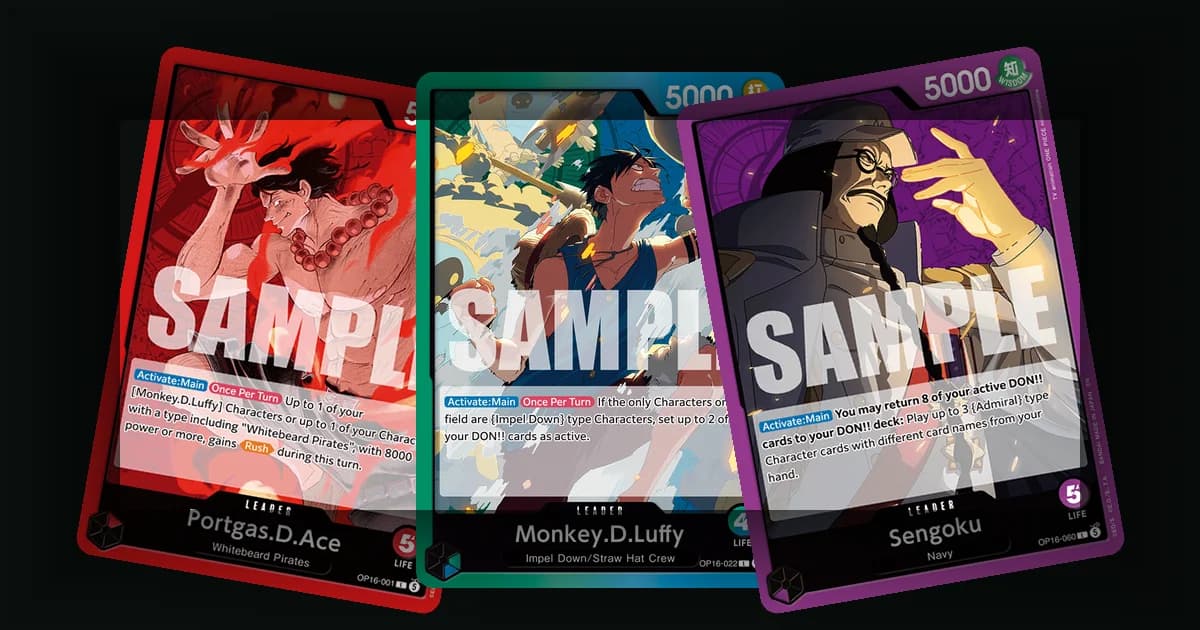
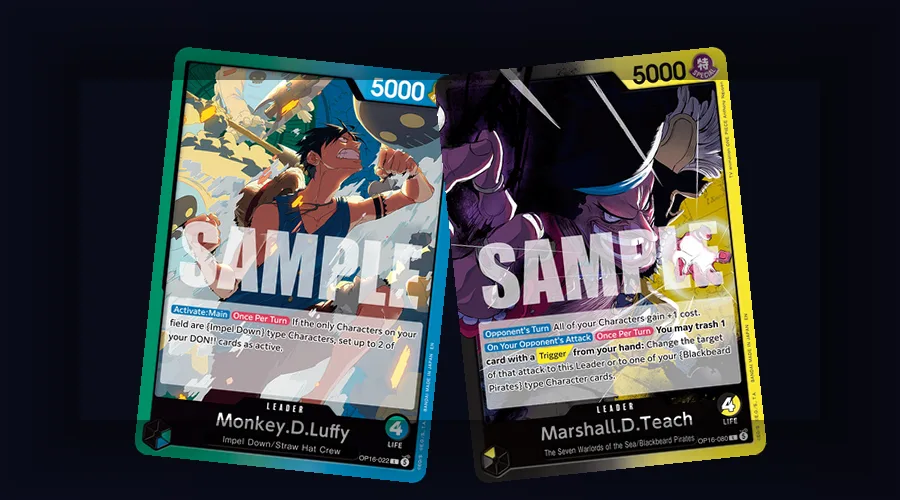 These are real OP-16 sample Leaders for Monkey.D.Luffy and Marshall.D.Teach. They illustrate the current card pool, not the historical ranking above.
What Makes a Leader Great
Looking across these ten, the common threads are clear:
A repeatable, powerful ability. Every top Leader has an effect that creates a useful decision every turn. Law's removal-plus-development loop, Whitebeard's Life pressure, and Bonney's board control are repeatable engines, not one-time tricks.
The exact effects matter. Law converts DON!! into removal and a Character, Bonney converts it into a rested opposing card, and Katakuri turns a Life peek into information. Those are different engines, but each creates decisions every turn.
Access to a deep card pool. Strong leaders sit in colors with deep support. A great ability with no Characters to support it goes nowhere.
A clear win condition. The best leaders close games decisively. Aggro leaders race Life; control leaders grind to inevitability. Muddy win conditions never reach the top tier.
Consistency. Drawing what you need when you need it. The leaders that dominated all had search, draw, or selection tools that made their game plan reliable.
How Format Legality and Restrictions Changed
The game no longer fits the simple "no rotation" description. Bandai's Block Number announcement says Standard Regulation, introduced on April 1, 2026, uses roughly the latest three years of cards. Extra Regulation keeps the broader pool. A historically dominant Leader may therefore be legal in Extra but outside the current Standard card pool.
The restriction list is a separate control. Bandai's current page lists banned cards and pairs, including ST10-001 Trafalgar Law, OP06-047 Charlotte Pudding, OP03-040 Nami, OP06-086 Gecko Moria, and OP06-116 Reject. The page also says the list can change, so a historical ranking should not be read as event legality advice.
Our One Piece TCG meta rotation guide explains the Block Number system and the difference between Standard and Extra in more detail.
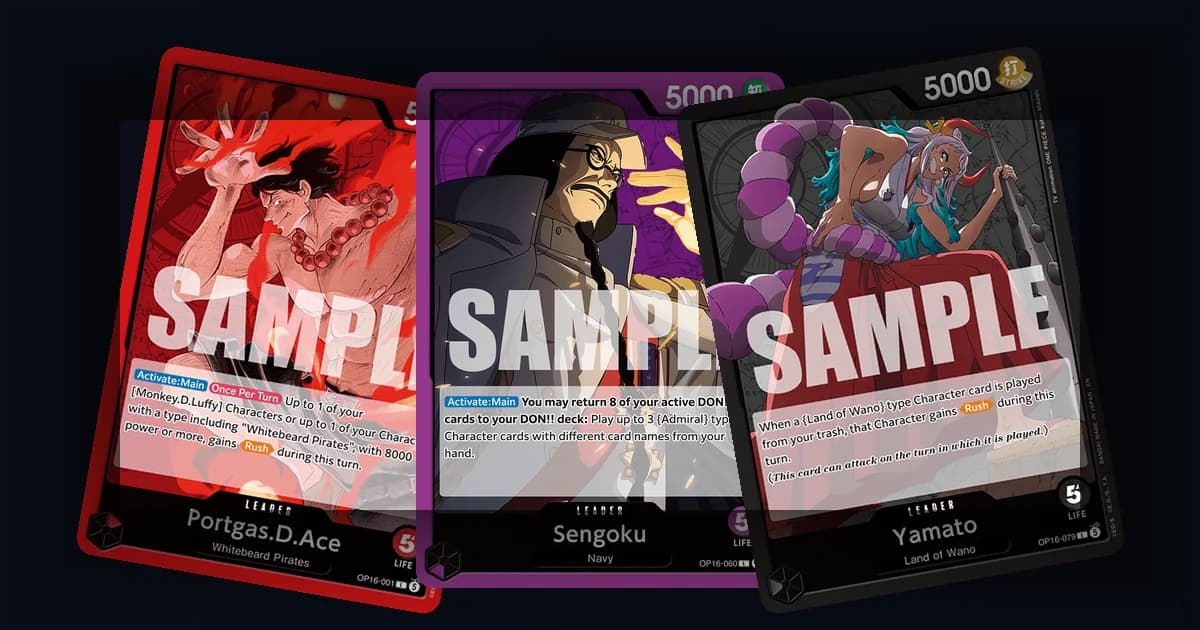
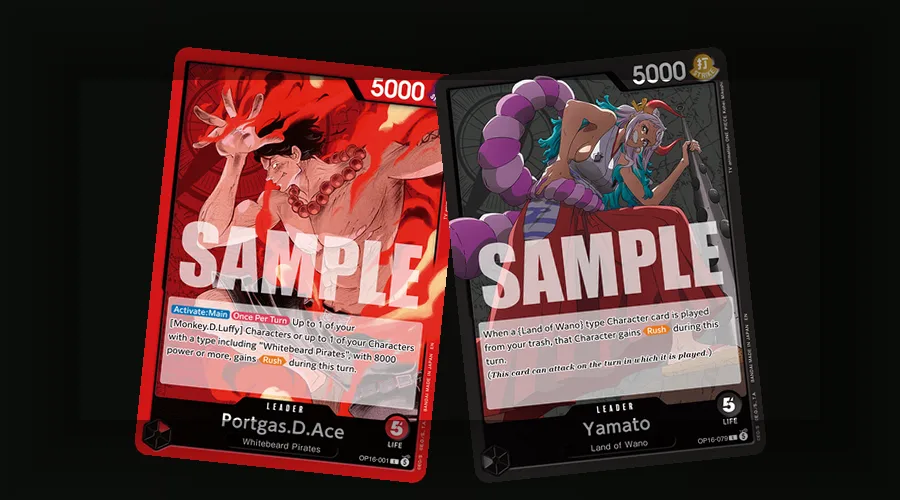 These are real OP-16 sample Leaders for Portgas.D.Ace and Yamato. They show two current cards, not Red aggro and Purple ramp, and are not evidence for the historical ranking.
Where OP-16 Leaders Landed After Launch
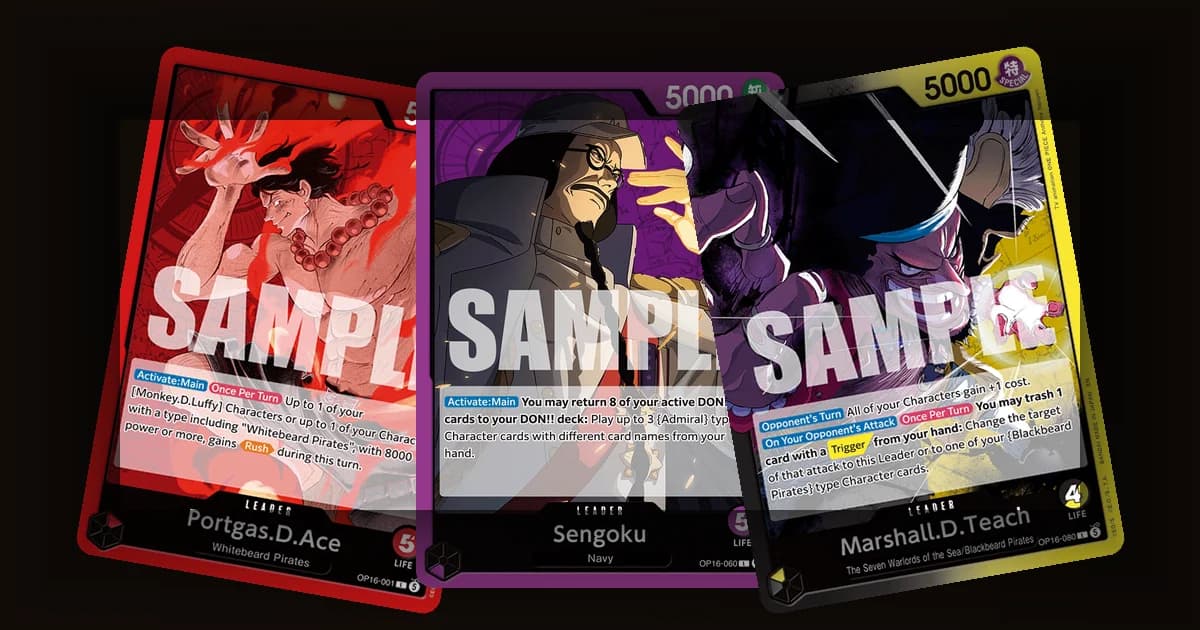
Bandai's official product page lists June 12, 2026 as the English OP-16 release date. The six Leaders entered a live environment that has since moved to OP-17, so the current figures below are a September snapshot from a fan-made tracker, not a permanent tier verdict:
- Sengoku (Purple):
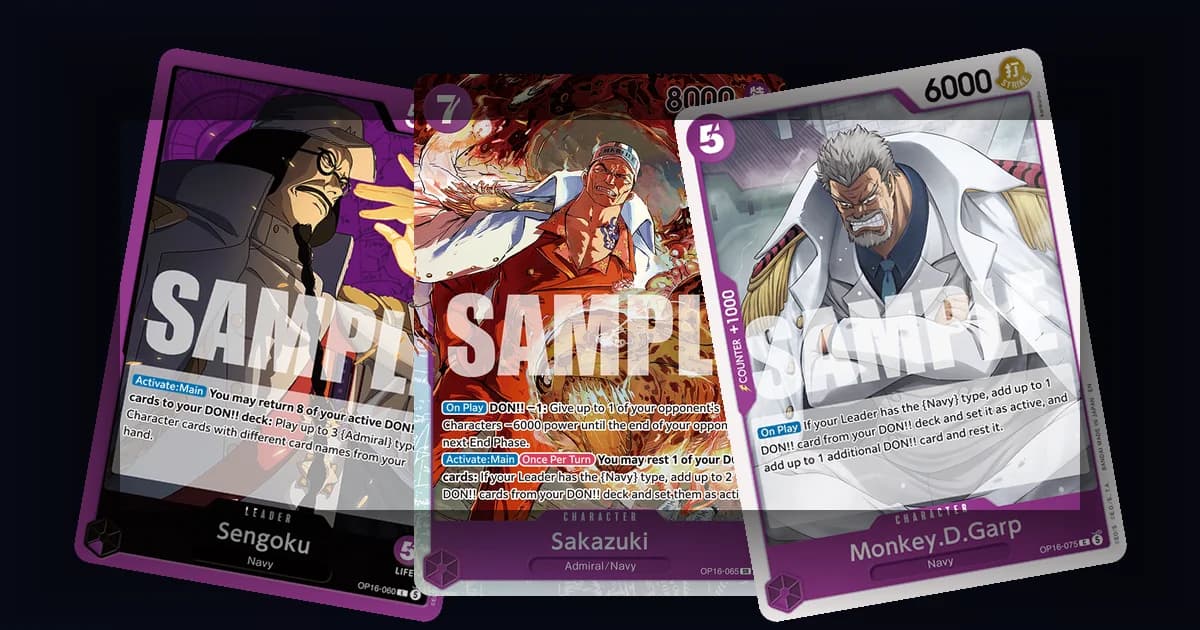
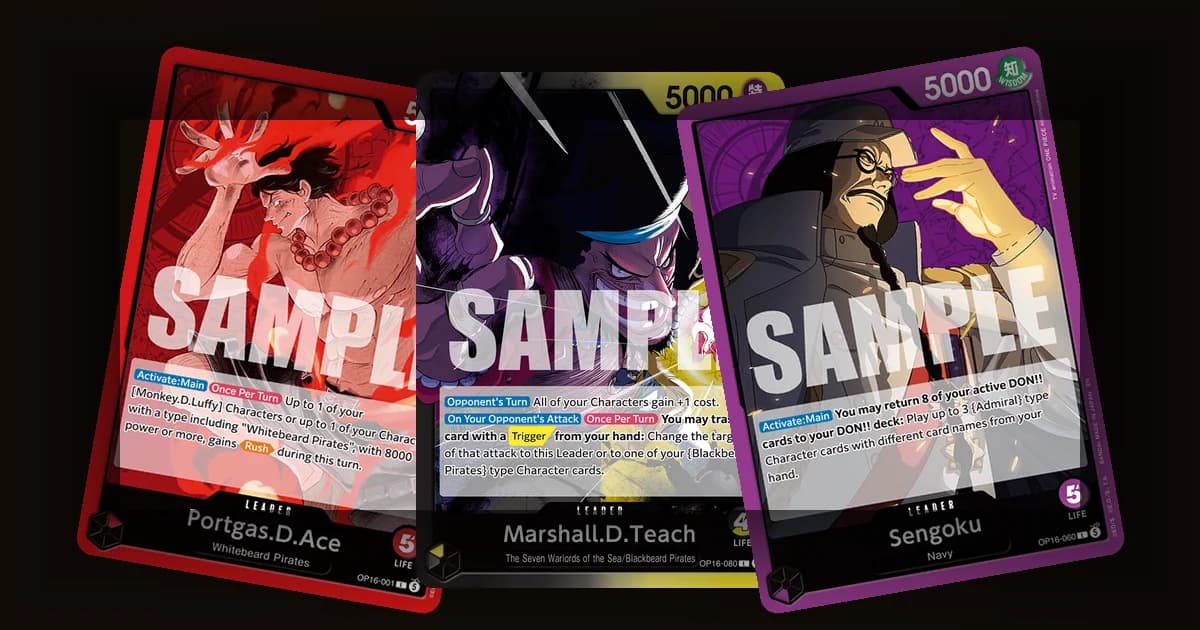
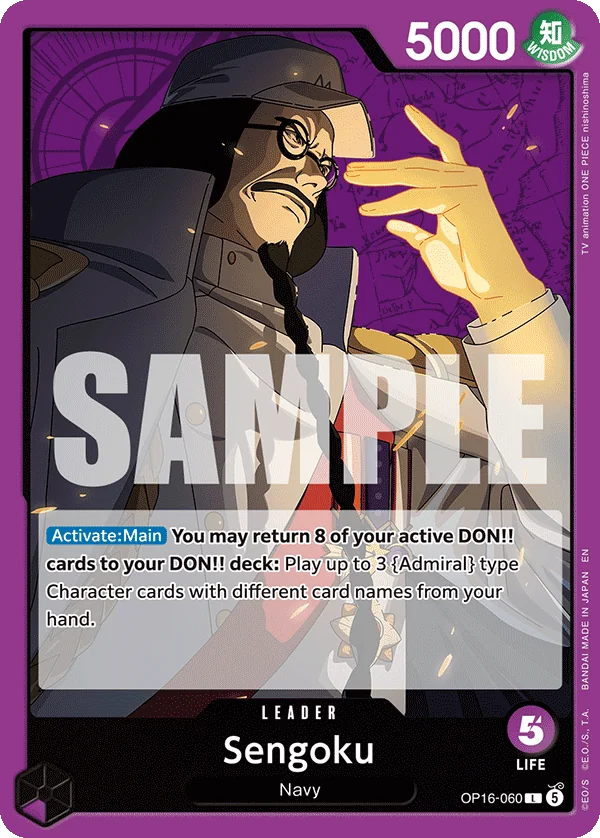 OP16-060OP16-060Shop on TCGplayer The tracker shows two Purple Sengoku decklists, too little volume for a meaningful win-rate claim.
 - Ace (Red):
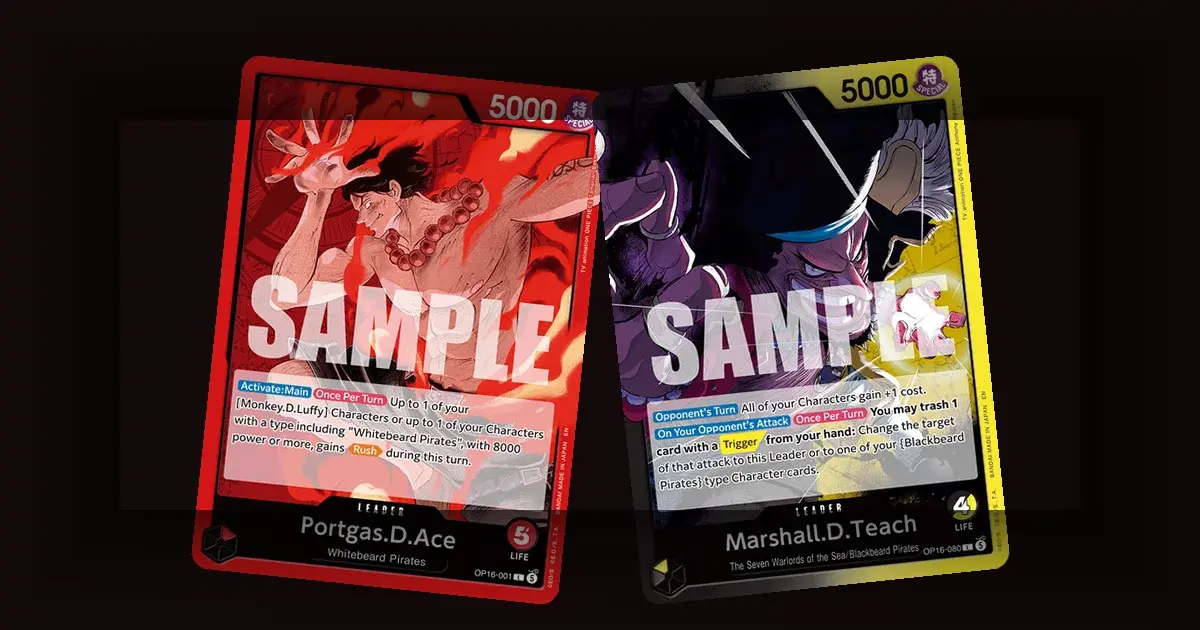
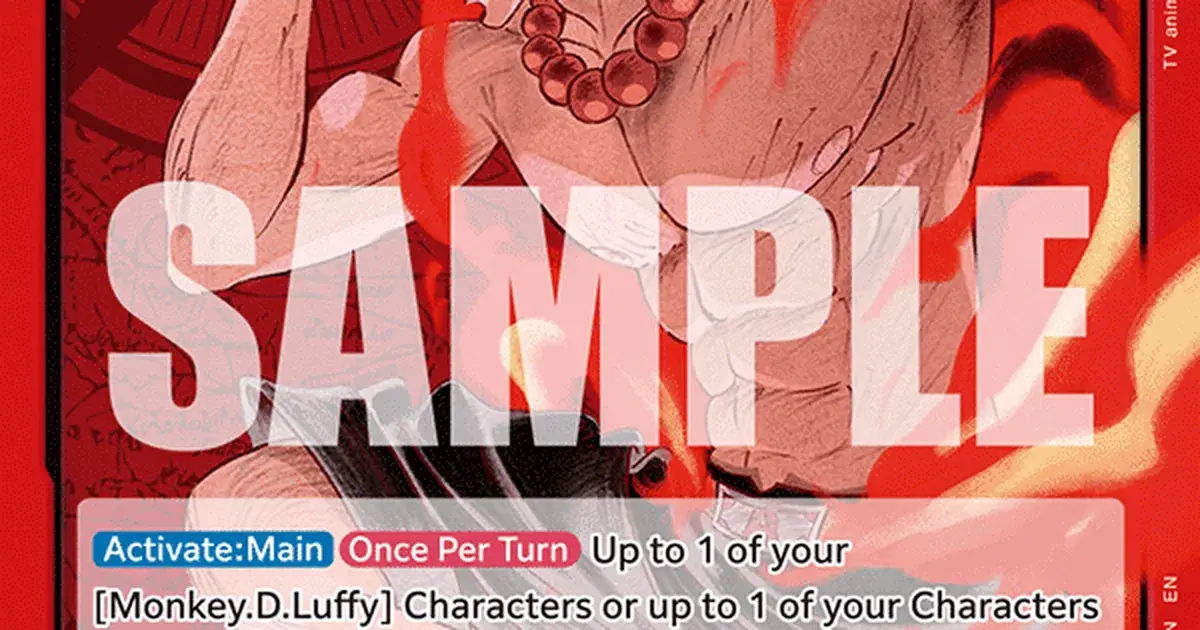
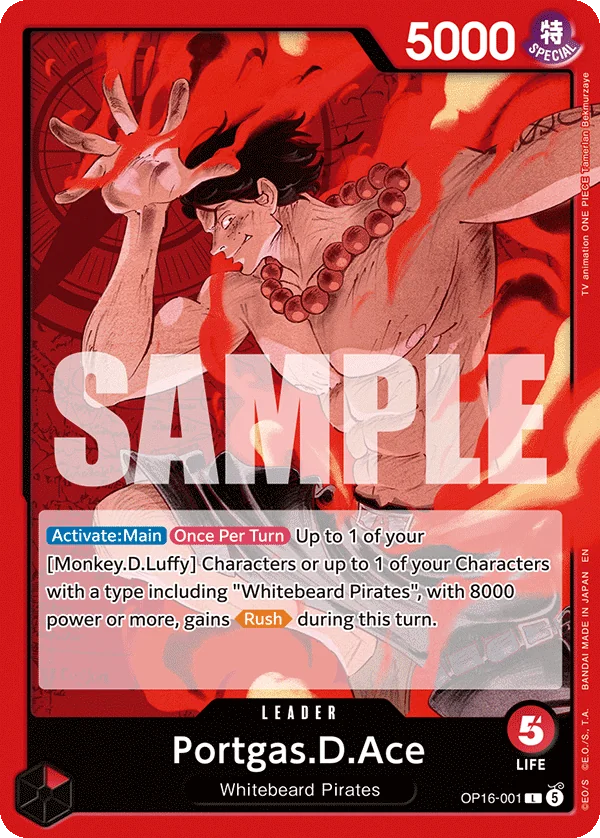 OP16-001OP16-001Shop on TCGplayer Red Ace has 54 tracked decklists and appears in the current A tier. That is the strongest current OP-16 volume, but it is not yet a multi-season all-time record.
 - Yamato (Black):
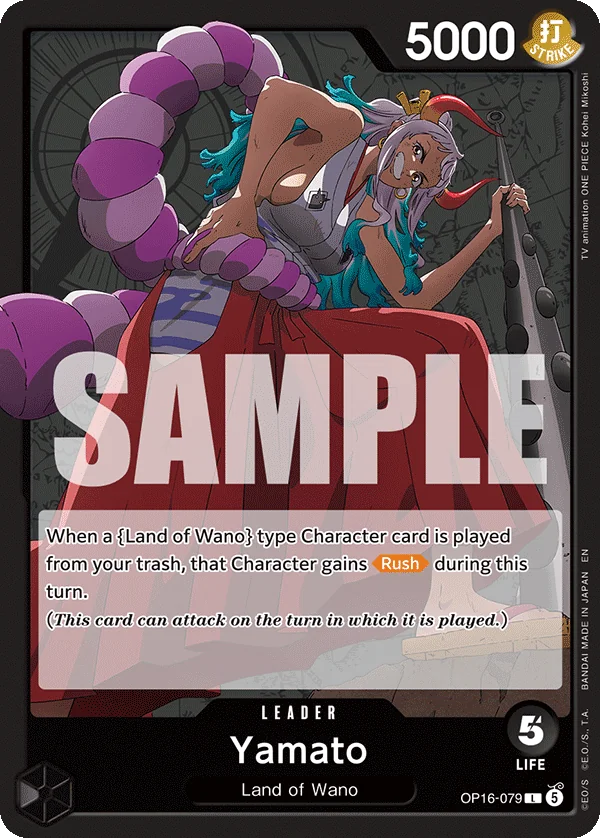 OP16-079OP16-079Shop on TCGplayer Black Yamato has 14 tracked decklists in the current B tier. Treat the tier as a live snapshot, not a guarantee for the next event.
 - Blackbeard (Black/Yellow):
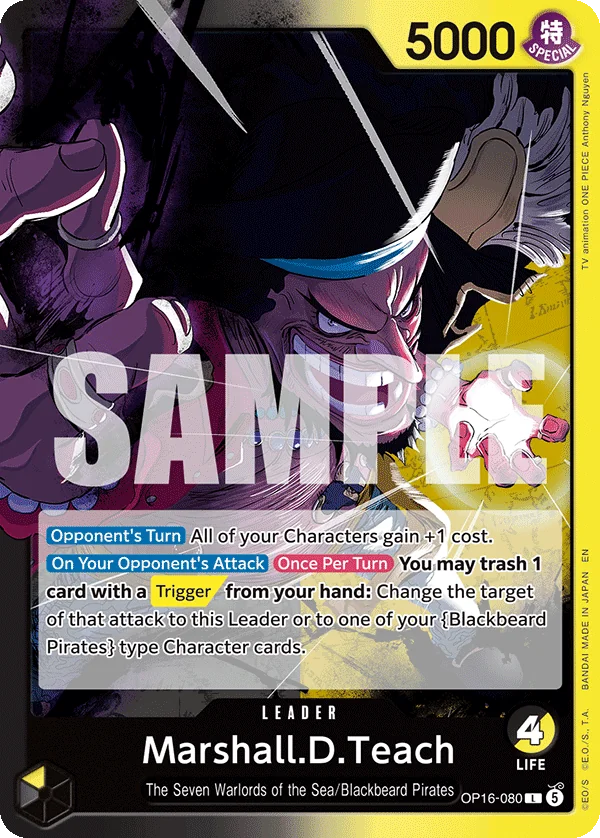 OP16-080OP16-080Shop on TCGplayer The tracker shows five Black Blackbeard decklists in A tier. The label is promising, but the small sample does not support calling it the clear second-best OP-16 Leader.
 - Luffy (Green/Blue):
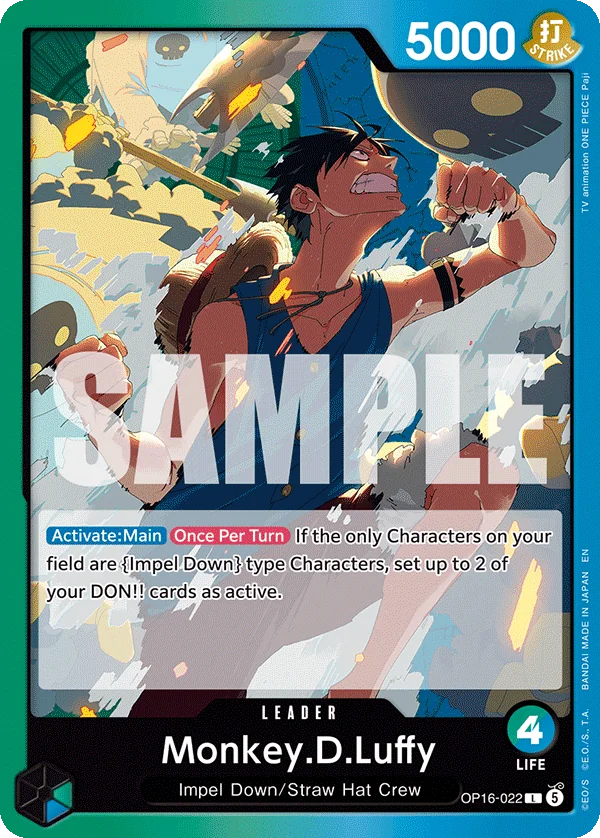 OP16-022OP16-022Shop on TCGplayer Green/Blue Luffy has 12 tracked decklists at 47.0% in the current C tier. That does not support the previous S-tier assessment.
 - Buggy: The official OP-16 lineup includes Buggy, but the current tracker does not show a large enough Buggy sample in its visible tier table to support a ranking claim.
None of these six has the multi-season record required for the historical list above. Ace has the largest current sample, while the Luffy and Blackbeard snapshots show why early projections should not be presented as settled results.
Purple Enel is also worth separating from the OP-16 group. In the same September tracker, Purple Enel is A tier with 49 decklists. Green Mihawk led that dated table with 220 decklists and a 65.0% win rate, while Blue Rocks had 110, so Purple Enel was not the most-represented Leader in that pre-ban field.
Where OP-17 Leaders Landed After Launch
OP-17 The World's Strongest Warriors released on August 22, 2026 in Japan and August 28 in English. Its six Leaders are Newgate, Luffy, Shanks, Kaido, Big Mom, and Rocks D. Xebec. The current tracker puts Blue Rocks first by tracked volume among those native OP-17 Leaders at 110 decklists, followed by Purple Kaido at 72 and Black Luffy at 66. Green Shanks appears at 16 and Yellow Charlotte Linlin at 13; the remaining sample is smaller.
That is a live OP-17 snapshot, not an all-time result. The tracker says it refreshes every six hours and uses tournament data, but it is a fan-made site rather than a Bandai publication. The full current standings are in the OP-17 meta tier list.
SHOP: Building around one of these top leaders? Check current One Piece TCG singles prices on TCGPlayer. Shop TCGplayer →
Key Takeaways
- The all-time top leaders span OP-01 to OP-15, ranked by historical competitive impact
- Red Whitebeard, Red/Purple Law, and Blue/Black Sakazuki have the strongest historical cases
- A great leader needs a repeatable ability, deep card pool, clear win condition, and consistency
- Bandai uses both Block Number legality and a changeable restriction list
- Current OP-16 and OP-17 numbers are snapshots, not all-time evidence
- Purple Enel remains a recent candidate, while Green Mihawk led the dated September OP-17 table before its October 12 ban
GODEEPER: Want to know which current OP-16 leader to invest in? The pre-launch buying guide covers cost and competitive priority. OP-16 Pre-Launch Buying Guide
Related Reading
-
One Piece TCG Beginner Guide 2026: How to Play & Rules: Core rules, DON!! system, and turn structure for players new to One Piece TCG.
-
One Piece TCG OP-16 Guide: Set Review & Leaders (2026): Full OP-16 set overview, all six leaders, and key mechanics.
-
OP-16 Green/Blue Luffy Deck Guide: The Impel Down/Straw Hat Leader and its current OP-17 snapshot.
-
One Piece TCG Colors Explained: How each color's identity shapes its leaders.
-
One Piece TCG Standard Format Guide 2026: Block Numbers, Standard and Extra legality, and the restriction list.
-
OP-16 Sengoku Deck Guide: The Purple Leader's current plan and low-volume tracker context.
-
OP-16 Ace Deck Guide: The Red Leader's current OP-17 sample and build priorities.
Frequently Asked Questions
Q: What is the best leader of all time? A: There is no official answer. Red Whitebeard has the clearest historical representation snapshot, while Red/Purple Trafalgar Law, Blue/Black Sakazuki, and Black/Yellow Monkey.D.Luffy have strong cases from different eras.
Q: Which leaders got banned or restricted? A: Bandai's current official list includes the ST10-001 Trafalgar Law Leader, plus support cards and banned pairs. Check the live list because restrictions can change.
Q: Are old leaders still playable? A: It depends on the event regulation. Standard uses Block Numbers and a limited recent card pool; Extra allows the wider pool. The restriction list can also remove a Leader or support card from legal play.
Q: What makes a leader strong? A: A repeatable ability, deep card pool, clear win condition, and consistency tools.
Q: How do OP-16 leaders compare? A: The current OP-17 tracker shows Red Ace with the largest OP-16 sample at 54 decklists, followed by Black Yamato at 14, Green/Blue Luffy at 12, Blackbeard at 5, and Purple Sengoku at 2. Those samples are still too small and too recent for an all-time ranking.
Q: Which color has the best leaders? A: Red for aggro, Purple for DON!! ramp historically. Each color had format-defining leaders in different eras.
Q: Is this ranking based on tournament data? A: It is an editorial synthesis of historical format snapshots, tournament reports, card effects, longevity, and restriction history. It is not a single official leaderboard, and current OP-17 tracker numbers are kept separate.
References
- Limitless TCG OP03.5 all-time snapshot: Historical deck representation used for the Whitebeard comparison
- Limitless TCG OP07 all-time snapshot: Historical deck representation used for the Law and Bonney comparison
- OPMetagame.com OP-17 Tier List: Live September 2026 tracker used only for current sample sizes and tiers
- One Piece Card Game Block Number System: Official Standard and Extra legality rules
- One Piece Card Game restriction list: Official banned cards and pairs
- One Piece Card Game official card list: Official Leader colors, effects, and set identities
- OnePiece.gg OP06 meta tier list: Historical OP06 competitive context
- OnePiece.gg OP07 week-one report: Historical OP07 context
- r/OnePieceCardGame: Community discussion, used only as supplemental context
- TCGPlayer One Piece TCG: Leader card pricing and availability
Cards in this article
About the author
Deck guides and meta
Pen name for the Shonen TCG desk's One Piece TCG deck guides, tier lists and meta reports.
- Lists averaged from public tournament results, sample size stated
- Card text quoted from Bandai's official card list
- Opinions marked as ours, with the reason
Keep reading
OP-16 EN Launch Guide: What Happened After Release
Guides · 12 min
OP-16 Sengoku Deck Guide: Purple Marine Admirals Build
Guides · 13 min

OP-16 vs OP-15 power level comparison: what changed?
Guides · 11 min
OP-16 Box Opening Strategy: How Many Boxes to Open
Guides · 10 min
OP-16 Collectors Guide: SEC, Manga Rare, Alt-Art Cards
Guides · 11 min
OP-16 Ace Deck Guide: Whitebeard Pirates Rush Build
Guides · 12 min
One Piece TCG Standard Format Guide 2026: Legal Sets
Guides · 12 min
One Piece TCG Trade Guide: How to Trade Cards Fairly
Guides · 13 min
Disclaimer
This article is published for informational and entertainment purposes. It does not constitute professional financial, legal, or technical advice. Game performance, online services, patch schedules, and store listings change. Verify critical details (pricing, system requirements, regional availability) with publishers and storefronts before you buy. Affiliate links, where present, help support our editorial work and are labelled in our affiliate disclosure.