Loading…


Shonen TCG · Guides
Blue Yellow Nami OP17 Deck Guide: One Piece TCG Draw Engine
Reviewing
One Piece TCG
TL;DR: Blue Yellow Nami OP17 is a Blue/Yellow OP11-041 leader guide built around a [Your Turn] [Once Per Turn] draw effect. When a card is removed from either player's Life cards during your turn, you draw 1 if your hand has 7 or fewer cards. Zeus can create one qualifying removal on your turn, but his value is a single On Play effect, not a repeatable engine. Historical OP16 representation was strong, while OP-17 data now shows a more crowded field, so every meta figure below is dated.
Nami's OP16 results made the leader a major study target. Limitless's OP16 table currently shows Blue/Yellow Nami at 23.52% share, ahead of Green/Blue Luffy at 22.91% and Purple Enel at 22.71% in that historical format view. That is useful context, not a current OP-17 placement. The live OP Meta Game tracker checked September 21, 2026 lists Green Mihawk first with 220 decklists and 65.0%, while Blue/Yellow Nami is C tier with 3 listed decklists and a 45.5% win rate. Those sources use different samples, so avoid turning either snapshot into a universal power ranking.
This guide focuses on the rules timing, hand-size discipline, Life-removal choices, a flexible 50-card framework, and matchup plans that still matter after the format shift.
Blue Yellow Nami OP17? (quick answer)
Nami (OP11-041) has two separate abilities. The draw effect is written as:
[Your Turn] [Once Per Turn] This effect can be activated when a card is removed from your or your opponent's Life cards. If you have 7 or fewer cards in your hand, draw 1 card.
That wording gives you three checks. The removal must happen during your turn, it can come from either Life area, and your hand must be at 7 or fewer when the effect resolves. The official OP-11 Q&A confirms that removing a card from your own Life can qualify, while merely reordering an opponent's Life cards does not. Once the effect has been used, another removal in the same turn does not draw again.
The critical constraint is hand size. If you're holding 8 cards when a Life card is removed, you draw nothing. So you spend a meaningful chunk of the early game deliberately trimming your hand, or holding off on plays, specifically to stay at 7 or fewer. Players who ignore this constraint waste half of Nami's value.
Her second ability is [DON!! x1] [On Your Opponent's Attack] [Once Per Turn]. You may trash 1 card from your hand to give the leader +2000 power during that turn. This is a defensive exchange, not free protection. Keep enough cards for counters and future Life-removal turns, then spend the boost when it saves a key attack or prevents lethal damage.
Building the Blue Yellow Nami OP17 deck
The card pool decision comes down to two questions: how many Life cards do you want to remove proactively, and how deep does your Blue counter package need to be?
Blue gives you event-based interaction and counter options. Yellow gives you Life manipulation and defensive tools that can create a qualifying removal during your turn. You need both colors, but the right ratio depends on the current card pool and the threats you expect.
For Blue, prioritize efficient counters, removal that answers the opposing board, and Characters that give value without leaving your hand clogged. For Yellow, prioritize effects that move a Life card when the timing benefits your hand and cards that keep you alive against aggressive starts. Check each card's exact color, trait, and timing before treating it as a package staple.
Zeus is a common engine option, not a mandatory four-of. OP11-106 is a 2-cost, 2000-power Yellow Character with a +2000 counter. Its On Play effect may add the top or bottom card of your Life cards to your hand, then K.O. up to one opposing Character with a cost of 5 or less. Played during your turn, that Life removal can qualify for one draw, but the effect happens once when Zeus enters and does not repeat on later turns. Test 0-4 copies, then fill the remaining slots with cards that cover the matchups you actually face.
GODEEPER: The Blue/Yellow combination is a consistent theme across competitive OPTCG, and the full breakdown of how dual-color leaders build their card pools is in the One Piece TCG Deck Building Guide.
Hand size discipline matters more in Nami than in most decks. Because the draw trigger only fires at 7 or fewer, you want cards with immediate value, not cards you park in hand. Cheap events and 1-cost Characters you play out the same turn you draw them keep you near the threshold. High-cost Characters you sit on for multiple turns are a liability: they clog your hand and kill draws.
Do not force the old 20 Blue, 24 Yellow, and 16 splash split. A dual-color leader already gives you access to both colors, and "splash" is not a useful rules category. Build 50 non-leader slots around counters, interaction, Life management, and finishers, then adjust after testing.
Step-by-Step: Nami's Turn-by-Turn Play Pattern
1. Turns 1-3, establish tempo and watch your hand size. Stay near the 7-card threshold and play cheap pieces when doing so improves your position. Mulligan for early interaction, counter coverage, and at least one way to create a qualifying Life removal during your turn. An opponent's attack into your Life happens on their turn, so it does not activate this [Your Turn] effect. If you remove a card from either Life area during your own turn, check the hand-size condition before expecting a draw.
2. Turns 4-5, choose the Zeus window. A turn-4 or turn-5 Zeus is a useful test point, not a rule. His On Play effect resolves once, can remove a Life card from your pile, and can answer a cost-5-or-less Character. Play him when the Life removal is useful and the hand-size check will convert it into a draw, or hold him if the board state makes a later answer more valuable. Remember that a 2-cost, 2000-power body still needs protection after the effect resolves.
3. Turns 6-9, turn cards into a buffer. When you have a qualifying removal during your turn and your hand is at the threshold, the leader can turn that action into another card. Use the extra resource to keep counters available and answer the opponent's most important threat. Do not assume the effect will fire if your hand has already reached 8.
4. Turns 10 and beyond, close it out. Board presence and the cards you preserved dictate the finish. Keep tracking the once-per-turn effect and do not spend Life or hand resources automatically. An extra Life removal does not reset a threshold or create a second draw after the leader effect has been used, so choose the removal that advances your board or protects your closing turn.
The win condition arrives when you've drawn deep enough to find your finisher package and your opponent is out of answers. Nami doesn't end games quickly. She ends them decisively.
Key Cards and Supporting Package
Zeus (OP11-106): A 2-cost, 2000-power Yellow Character with a +2000 counter. Its On Play effect may add the top or bottom card of your Life cards to your hand, then K.O. up to one opposing Character with a cost of 5 or less. It is a useful way to create one qualifying removal during your turn, but it is not a repeatable draw engine. Include 0-4 copies based on the rest of your Life package and the threats in your local field.
Blue counter events: Budget these carefully. You want enough counter value to protect a four-Life leader while still leaving room for interaction. Under-counting counters is a common way to lose before the draw engine matters.
Yellow Life effects: Cards that add or remove Life can change both your defense and the timing of the leader effect. Read the exact cost and trigger text. A Life card added back to your area is not automatically a draw, and a second removal in the same turn does not bypass the once-per-turn limit.
Straw Hat Crew and support Characters: Verify the trait and leader condition on each search card before adding it. On-play filtering can help keep the hand at 7 or fewer, but a card that only works with Land of Wano or another leader condition is not automatically part of this build.
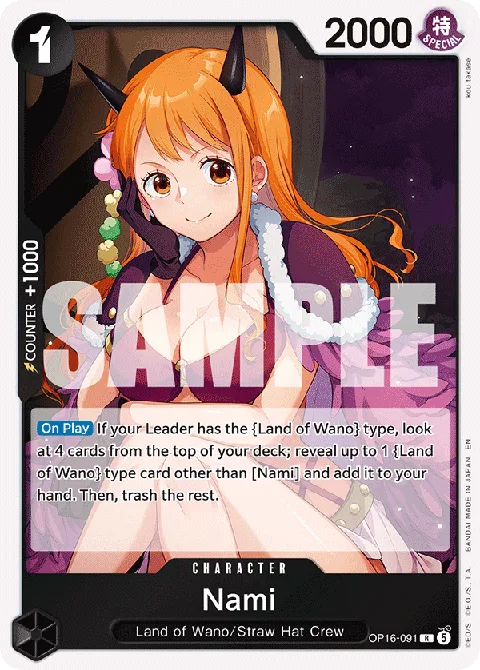 Nami
Nami 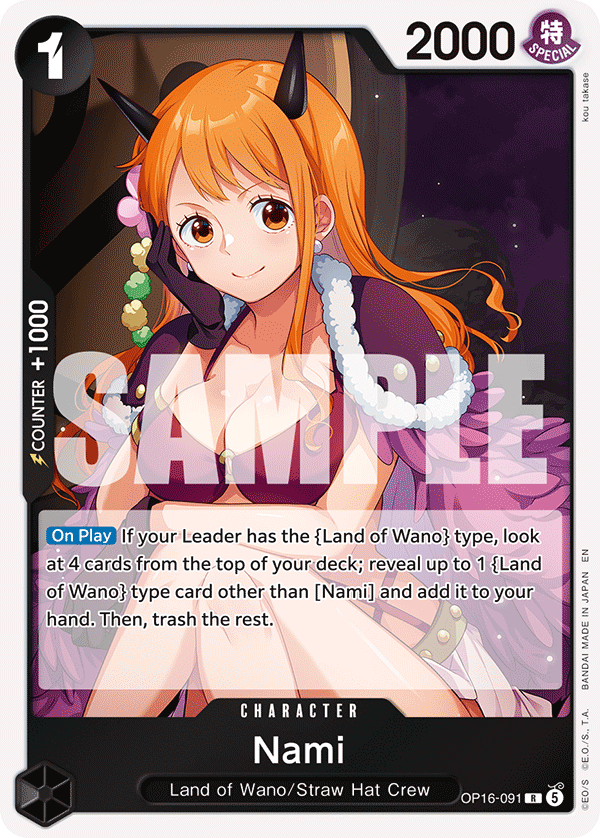 OP16-091OP16-091Shop on TCGplayer is a real Black OP16 Character with Land of Wano and Straw Hat Crew traits. Its On Play search requires a Land of Wano leader, so it is not a direct Blue/Yellow OP11-041 engine piece.
GODEEPER: Understanding how Life cards work as a resource is foundational to playing Nami correctly. The full rules breakdown is in One Piece TCG Life Cards Explained.
Matchup notes in the OP17 field
There is no single verified tournament win rate that describes every Nami list. The historical OP16 table and current online-rankings data answer different questions, while the OP-17 tracker is still a live sample. Use the following as testing priorities rather than promises of a favorable record.
Green Dracule Mihawk: The current OP-17 tracker places Mihawk first by displayed meta share. Expect early board development and test whether your removal can answer the important Character without spending the hand cards that enable your leader draw. Save counters for the turn where a wide board becomes a lethal attack, not only for the largest printed power.
Blue Rocks and other large-body decks: Zeus's cost-5 ceiling does not answer every boss. Keep Blue interaction for targets it can actually remove or bounce, and avoid spending the only answer on a low-value body. A hand full of expensive cards can also shut off the leader effect, so filter before the decisive turn.
Purple and Yellow pressure decks: Plan around fast damage and Life manipulation. An opponent's attack into your Life occurs on their turn and does not activate this [Your Turn] effect, so do not count on taking damage as your early draw plan. Protect the leader when the next attack threatens lethal, and use your own turn for the qualifying Life removal.
Green/Blue Luffy (OP16-022 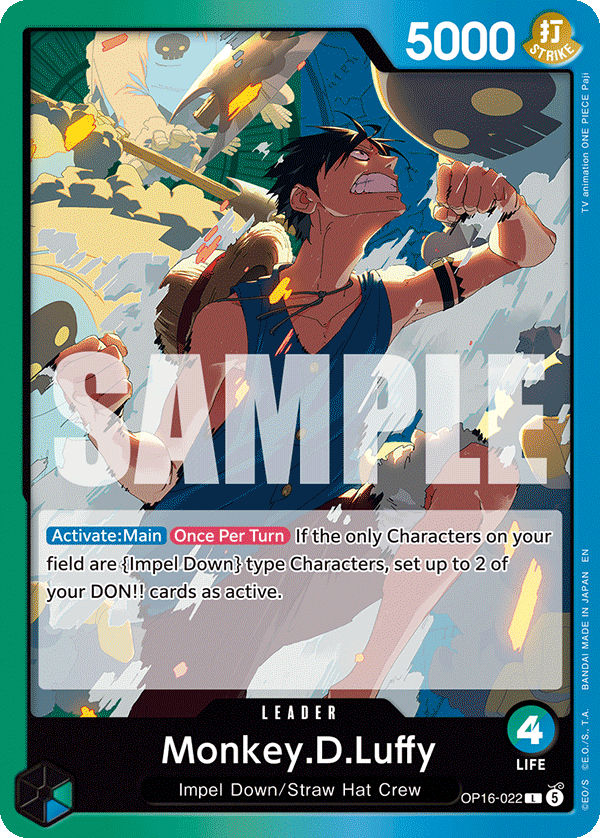 OP16-022OP16-022Shop on TCGplayer) and the historical OP16 field: Limitless's OP16 table lists this leader at 22.91% share, but that is not a current OP-17 result. If you test against the old matchup, prepare for a board that develops quickly and prioritize answers that preserve counter density.
Blue/Yellow Nami mirror: Hand size, Life-removal timing, and counter conservation matter more than a race to play Zeus. Track whether the once-per-turn draw has already been used, and do not spend a card on the defensive +2000 effect if it leaves you unable to defend the next attack.
For a current OP-17 snapshot, use the live tracker in the References section and record the date whenever you compare local results with online data.
Is Nami Worth Building?
The budget question depends on the printing mix and the current singles market. Zeus has regular and premium printings, and a premium version is optional because the regular card carries the same game text. Check live listings before buying; the old dollar ranges in this article are no longer a reliable price guide.
The competitive case also needs a date attached. Nami's historical OP16 share was strong, but the OP-17 field is more crowded and current online samples show low representation. Build it because you enjoy the hand-management plan and can find the cards at a price you accept, not because an old ranking guarantees tournament results.
The difficulty is real. Hand size, Life areas, timing windows, counter evaluation, and the opponent's next attack all matter at once. Start with short practice sets, review the turns where the draw condition failed, and only then judge the list in local play.
For players who enjoy deliberate, resource-focused games, Nami remains an interesting control project. Players who want a simpler curve may prefer a leader with fewer conditional decisions.
Common Nami Mistakes
Playing into 8+ hand size. The moment your hand hits 8, Nami's passive is inactive. New pilots regularly hold cards "for safety" and then wonder why they're not drawing. Get used to playing out at least one card per turn to stay near 7.
Protecting Zeus too late. Zeus needs protection from the turn he lands. Play him into an open board against a removal-heavy opponent and you'll probably see his effect exactly once. Plan counter coverage around Zeus specifically, not the rest of your board.
Using the +2000 activation every turn. Trashing cards to defend has a real cost: each trashed card is one fewer hand management option. Use the power boost on turns where you'd otherwise lose a key piece, not as routine defense on every attack.
Forcing damage when you're building hand advantage. Nami wins by running opponents out of answers. Skipping an attack to set up better hand positioning is often correct. New players chase damage too aggressively and disrupt their own engine doing it.
Misreading trigger timing. The draw effect is a [Your Turn] effect, so an opponent's attack removing one of your Life cards does not activate it during their turn. It can activate from either Life area during your turn, but only once per turn. Zeus's On Play effect also fires once when he is played, not on demand later.
Neglecting the counter package. Because Nami generates cards, some pilots assume they'll draw into counters as needed. Against aggressive opponents, being counter-light ends games before the draw engine matters. Keep counter ratios healthy regardless of expected draw volume.
Sample Decklist Framework
This is a structural template, not a final list. Card availability and format shifts matter. Treat it as a starting skeleton, not a prescription.
| Category | Count | Notes |
|---|---|---|
| Leader | 1 | Nami (OP11-041) |
| Zeus and other Life-removal Characters | 4 | Test 0-4 Zeus copies; fill unused slots with verified engine pieces |
| Yellow Life events | 10 | Mix Life manipulation with defensive value |
| Blue counter and removal events | 14 | Cover common attack thresholds and answer key threats |
| Straw Hat Crew and support Characters | 10 | Prefer useful on-play effects and counters |
| Filter and search cards | 6 | Improve hand quality without holding too many cards |
| Finishers and blockers | 6 | Close games or protect the final turns |
Total non-leader cards: 50
Before buying singles, verify current card availability for each OP-11 card on the official One Piece Card Game card list and check current prices. Some OP-11 cards have had supply changes since initial release.
For complete tournament decklists from players running Nami in recent EN events, Limitless TCG posts verified decklists from regional finishes.
SHOP: Building this Nami list? Check current OP-11 singles prices, Zeus and the Blue counter package especially. Shop TCGplayer →
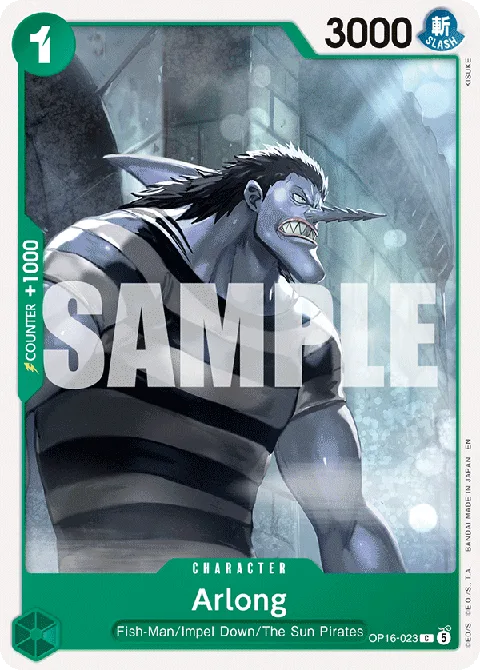 Arlong
 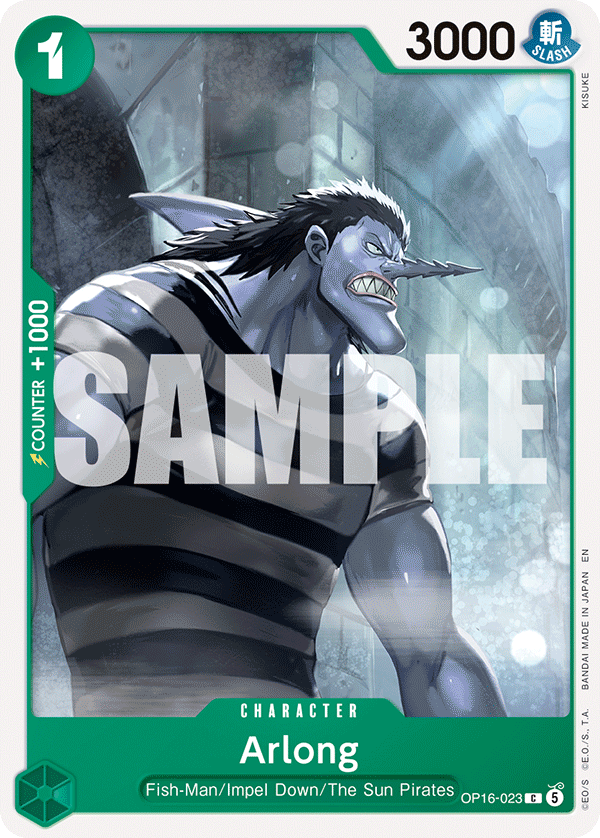 OP16-023OP16-023Shop on TCGplayer is a real Green OP16 Character costing 1 with 3000 power and Fish-Man, Impel Down, and The Sun Pirates traits. It has no printed ability and is not presented here as a Blue/Yellow Nami staple.
Related Reading
-
One Piece TCG OP-16 Guide: Set Review & Leaders (2026): Full OP-16 set overview, all six leaders, and key mechanics.
-
One Piece TCG Mulligan Guide: When to Keep or Redraw: how to evaluate opening hands, directly relevant to mulliganing for a fast Zeus.
-
OP-16 Rosinante Deck Guide: Purple-Yellow Marine 2026: a current Tier 1 rival worth knowing before you sit across from it.
-
One Piece TCG Best Leaders All Time: historical ranking of the strongest OPTCG leaders by tournament impact, with context for how Nami fits in.
-
OP-16 Meta Tier List Week 1: EN meta snapshot from OP-16 launch, showing where Nami sits relative to the new leaders.
-
One Piece TCG Colors Explained: full breakdown of Blue and Yellow color identities and what each brings to dual-color leaders.
-
One Piece TCG Blue Yellow Guide: How the Color Pair Works: deeper look at how Blue tempo and Yellow Trigger synergies actually work together in competitive play.
-
One Piece TCG Nami Counter Guide: Beat Blue Yellow 2026: matchup-by-matchup breakdown for how every OP-16 leader should approach Nami, with Zeus-tech priority.
-
OP-16 Nami Tech Cards: 7 Verified Picks by Color (2026): the card-by-card sideboard answers to Zeus and Blue Yellow, organized by color instead of by leader.
-
One Piece TCG Blue Deck Guide: Tempo and Draw 2026: the full Blue color identity breakdown covering draw power, bounce mechanics, and Don!! recovery for Nami's primary color.
-
One Piece TCG Yellow Deck Guide: Trigger Power 2026: how Yellow Triggers work, why Nami's Yellow engine is so strong, and how Life card advantage translates to game wins.
Frequently Asked Questions
What color is Nami in One Piece TCG? Nami (OP11-041) is a Blue/Yellow dual-color leader. She draws from both the Blue control card pool and the Yellow Life-manipulation package, which is what makes her engine unique.
What is Nami's leader ability? Nami (OP11-041) has a [Your Turn] [Once Per Turn] effect that can activate when a card is removed from either player's Life cards. If you have 7 or fewer cards in hand, draw 1 card. Her second [Once Per Turn] effect lets you trash 1 card when your opponent attacks, with 1 DON!! attached, to give the leader +2000 power for that turn.
Why is Nami less prominent in the current EN meta? Nami (OP11-041) held the highest deck share of any leader in the historical OP16 table on Limitless at 23.52%. OP-17 has since reshuffled the field. The live OP Meta Game tracker checked September 21, 2026 lists Green Mihawk first with 220 decklists and 65.0%, while Blue/Yellow Nami is C tier with 3 listed decklists and a 45.5% win rate. These sources measure different samples, so use the date and method rather than treating either figure as a universal tournament result.
How does Nami's draw engine work? The [Your Turn] [Once Per Turn] effect can activate when a card is removed from your or your opponent's Life cards during your turn. If your hand has 7 or fewer cards, draw 1. It does not activate during the opponent's turn, and additional Life removals do not create extra draws after the once-per-turn effect has been used.
What are Nami's key weaknesses? Nami struggles against decks that close games before her hand engine generates enough advantage, and she loses value when her hand stays above 7 at the wrong time. Her 4 Life base also makes counter planning important. Fast pressure, hand disruption, and large threats that dodge Zeus's cost-5 limit all test the list in different ways.
Is Nami good for beginners? Nami is a demanding beginner pick. She requires tracking hand size, both Life areas, timing windows, and counter math every turn. Learn the leader in short practice sets first, then move to local play once the hand-size and Life-removal decisions feel automatic. For a starting leader, see One Piece TCG Best Starter Decks 2026.
References
- Official OP-11 Q&A: confirms that OP11-041 Nami's [Your Turn] effect can activate when a card is removed from either Life area, while Life-card reordering alone does not qualify
- Official One Piece Card Game Card List: official database for checking OP-11 card IDs, colors, traits, and printed text
- Limitless TCG OP-16 Deck Standings: historical OP16 table showing Blue/Yellow Nami at 23.52% share, ahead of Green/Blue Luffy and Purple Enel in that format view
- One Piece TCG Meta Tier List and Best Decks, OP-17: current September 21, 2026 OP-17 snapshot, including Green Mihawk and Blue/Yellow Nami's live tracker entries
- Nami OP11-041 card page, OPTCG Apps: independent card-text reference for the leader
- Blue Yellow Nami Guide: Best Decks and Strategy, onepiece.gg: independent strategy reference that treats Zeus as an optional 0-4 copy choice rather than a mandatory playset
Was this guide helpful?
Cards in this article
About the author
KT
Competitive TCG Analyst
Competitive One Piece TCG player and deck builder with 3 years of tournament experience. Covers meta analysis, tier lists, and leader builds.
- 3 years competitive OPTCG tournament experience
- Regional top 8 finisher
- Deck builder and meta analyst
- Covers every set since OP-01
Disclaimer
This article is published for informational and entertainment purposes. It does not constitute professional financial, legal, or technical advice. Game performance, online services, patch schedules, and store listings change. Verify critical details (pricing, system requirements, regional availability) with publishers and storefronts before you buy. Affiliate links, where present, help support our editorial work and are labelled in our affiliate disclosure.