

Shonen TCG · Guides
Best Starter Decks One Piece TCG 2026: Which to Buy
This best starter decks One Piece TCG guide uses Bandai's official English deck catalog and rules pages checked on September 16, 2026. The current catalog lists ST-31 Red Monkey.D.Luffy, ST-32 Green Roronoa Zoro, ST-33 Blue Kuzan, ST-34 Purple Charlotte Katakuri, ST-35 Red/Black Sabo, and ST-36 Yellow Eustass "Captain" Kid, alongside older products.
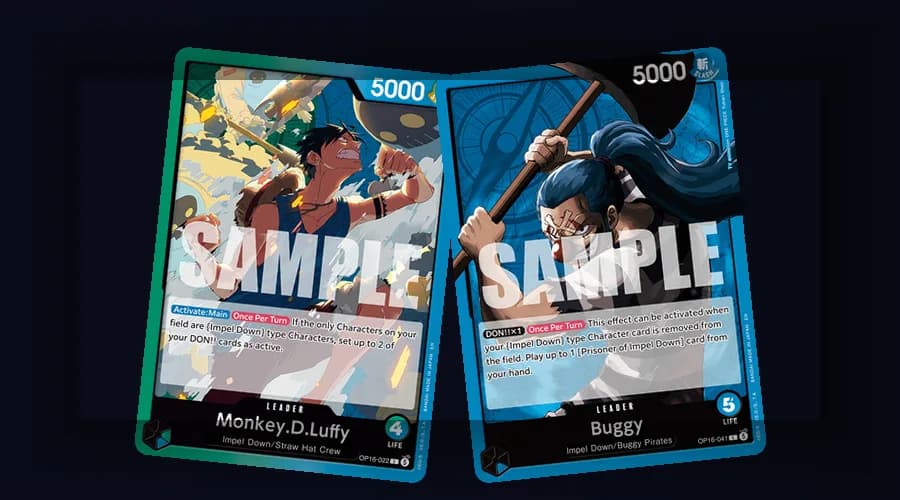
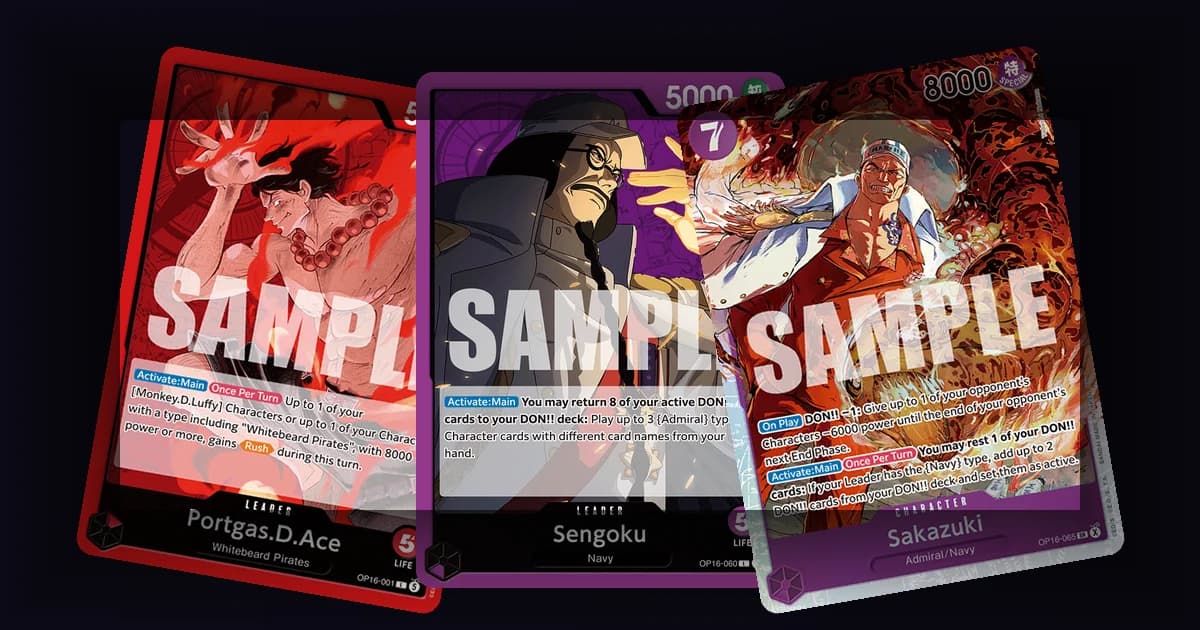
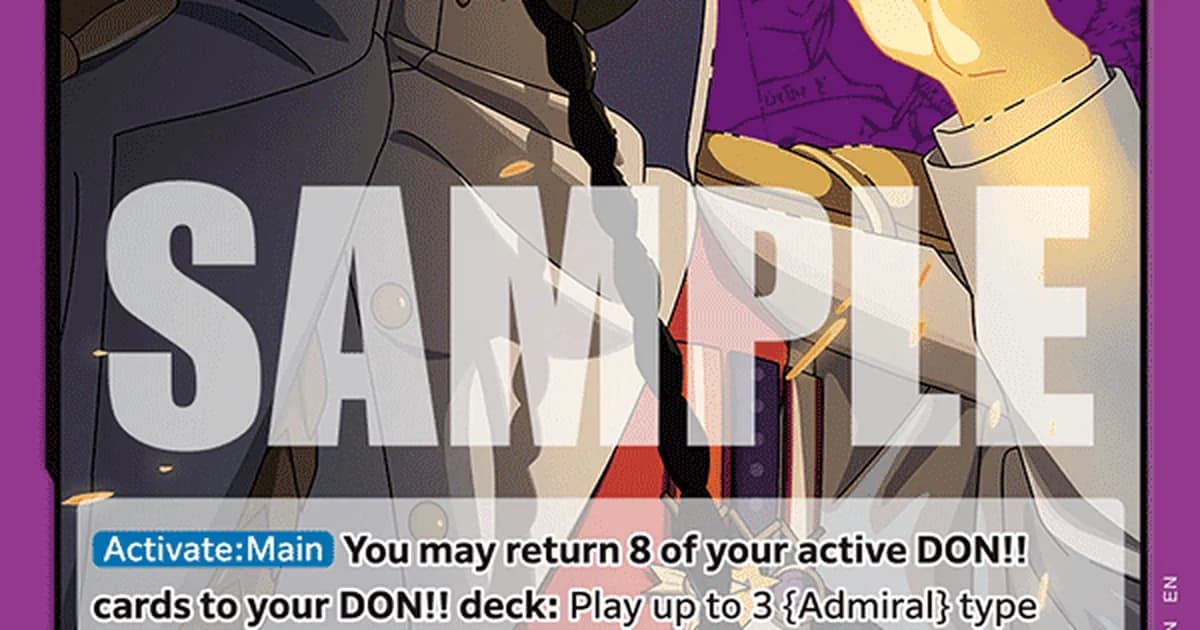
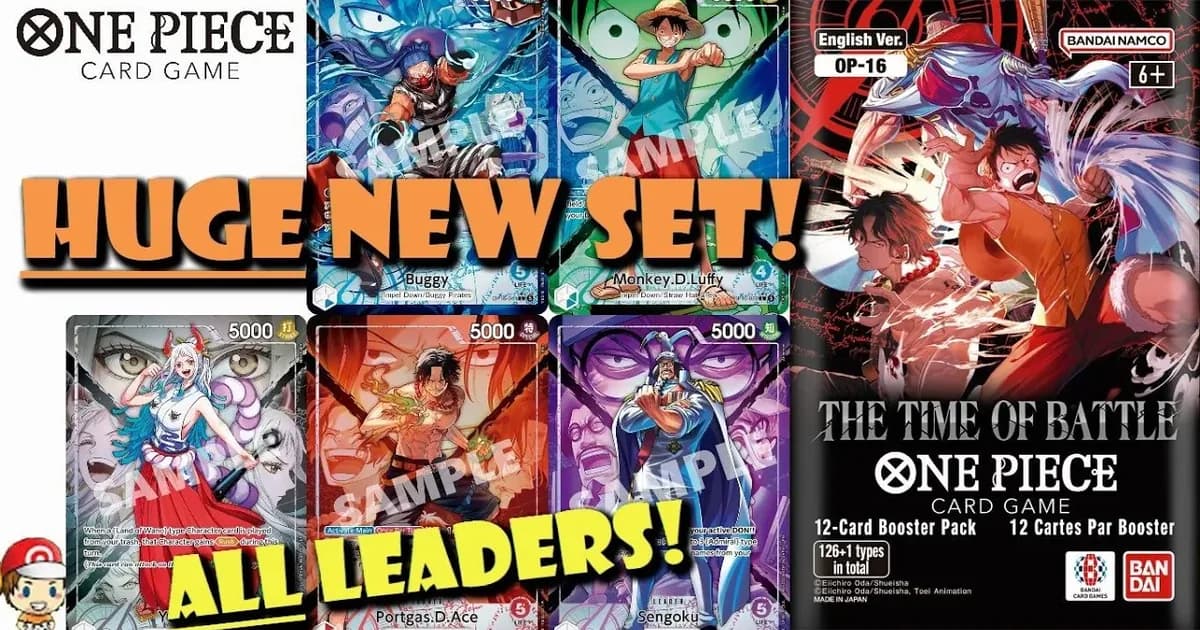
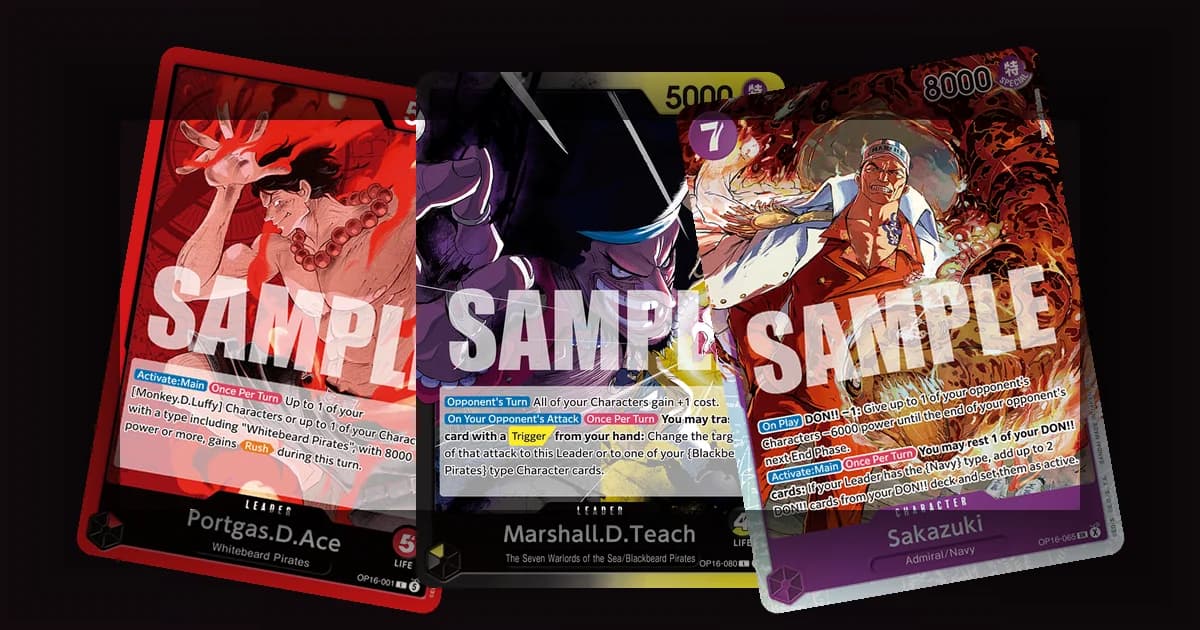
Real OP-16 Leader cards are shown as a representative comparison of color and Leader decisions, not as a photograph of the current starter boxes.
TL;DR: Choose a starter by the decisions you want to learn, not by an old price ranking. The current official catalog spans Red, Green, Blue, Purple, Red/Black, and Yellow options. Red is a direct first test for pressure, while the other colors teach different board, resource, removal, or Life patterns. Buy one, learn its lines, then upgrade a demonstrated weakness.
best starter decks One Piece TCG: quick answer
If you want the simplest first lesson, begin with a current starter whose Leader has a clear plan and whose color you enjoy. Red is often the most direct way to practice attacking, but “easiest” is not a permanent product rating. Blue may suit a player who enjoys bounce decisions, while Purple may be a better fit for someone who likes planning resource growth.
If the store only has an older starter, do not reject it automatically. Check the official product page, card list, and current event legality. A familiar Leader that you will actually play is more useful than a newer sealed box that does not match your preferred decisions.
Key Takeaways
- The official catalog currently lists ST-31 through ST-36 as current starter options.
- Product availability and legality can change, so recheck the official page before buying for an event.
- Choose by Leader text and color identity, not by a stale “strongest starter” claim.
- Red commonly teaches pressure, Green board timing, Blue bounce, Purple resource growth, Black removal, and Yellow Life decisions.
- One starter is enough to learn the deck. A second copy is a purchase decision, not a rule.
- Upgrade after testing. Buy the cards that fix a real opening, curve, or matchup problem.
- Starter decks are foundations. They are not automatic guarantees of regional-level results.
best starter decks One Piece TCG: current catalog
Bandai's official English deck products page currently lists:
| Product | Color | Beginner lens |
|---|---|---|
| ST-31 Monkey.D.Luffy | Red | Direct attacks and pressure |
| ST-32 Roronoa Zoro | Green | Board position and timing |
| ST-33 Kuzan | Blue | Bounce and hand management |
| ST-34 Charlotte Katakuri | Purple | DON!! growth and large plays |
| ST-35 Sabo | Red/Black | Mixed pressure and removal decisions |
| ST-36 Eustass "Captain" Kid | Yellow | Life and defensive timing |
This table is a learning map, not a card-by-card deck rating. A Leader's printed abilities can make a product feel different from the usual color stereotype. Read the exact product and card list before deciding that a color will play one particular way.
The catalog also contains older starters and special products. Those can still be useful for casual play or for a player who wants a specific character, but a current catalog page is a better starting point than a list written before ST-31 through ST-36 appeared.
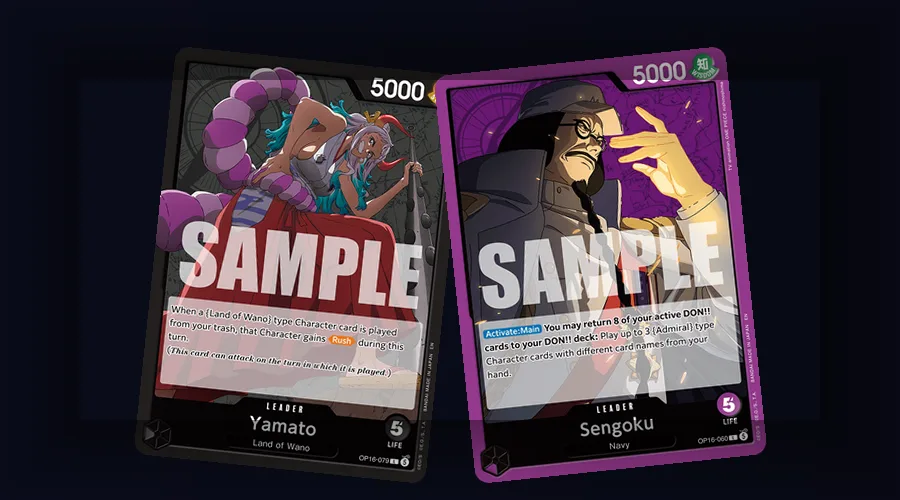 Real Leader cards show why the Leader text and color identity matter more than a generic starter ranking.
SHOP: Choosing your first One Piece starter? Compare current One Piece Card Game listings before committing to a color. Shop TCGplayer →
How each color teaches the game
Red. Red is a natural first test for players who want to attack early and ask the opponent to answer pressure. It teaches power comparisons, attack targets, DON!! attachment, and when to trade cards for damage. A Red starter can still require careful sequencing, so direct does not mean automatic.
Green. Green usually rewards board positioning, rested and active states, and choosing which Character should be protected or targeted. It is a good fit for players who want combat decisions instead of a simple curve. Read the Leader text before assuming every Green list controls the board in the same way.
Blue. Blue commonly uses bounce and hand management. Returning a card to hand is not the same as K.O., so the timing question is whether you are denying a developed board or merely giving the opponent a useful replay. This is rewarding for players who like interactive decisions.
Purple. Purple emphasizes DON!! development and turns where resource acceleration changes what can be played. It teaches planning beyond the current Main Phase. A new player should track what the acceleration costs, not only the large Character it enables.
Black. Black often asks you to compare card costs and removal efficiency. It suits a player who enjoys answering a specific threat, but the right target and timing still depend on the Leader and event text.
Yellow. Yellow makes Life decisions and Trigger timing central to the learning process. It is a good fit for a player who likes calculating risk, but it can feel less obvious while you are still learning when to take a hit.
Red/Black. A multicolor starter can expose you to two color identities at once. That may offer more options, but it also gives you more color and sequencing details to check. Choose it if the extra decisions sound interesting, not because “two colors” automatically means higher power.
Step-by-Step: Choose and test your first starter
1. Read the Leader before looking at rankings. Identify what the Leader rewards: attacks, rested Characters, Life changes, DON!! totals, costs, or a specific type.
2. Match the deck to your preferred decisions. Ask whether you want to pressure, control the board, bounce cards, grow DON!!, reduce costs, or manage Life. The answer narrows the catalog faster than a tier list.
3. Play the sealed list without changes. Use the official setup, draw five cards, mulligan once if needed, and learn the deck's first three turns. Do not replace cards before you know what the list is trying to do.
4. Keep a short test log. After each game, write down whether you missed an early play, lacked a counter, drew too many expensive cards, or could not answer a common threat. Separate a rules mistake from a deck weakness.
5. Compare with a current list. Use a recent local or regional list as a reference, then check every card in the official card database. An older upgrade article can contain rotated, reprinted, or unavailable cards.
6. Buy only the first fixes. Start with cards that improve consistency, early development, or the matchup your group actually plays. Test again before buying a second wave.
What to upgrade first
The first upgrade should make the deck's main plan happen more often. That usually means one of four things:
- a lower-cost Character that gives you an early board;
- a search or draw effect that finds the Leader's key line;
- a counter or defensive card that protects the turn you need to survive;
- a removal or bounce effect that answers the threat your test games exposed.
Do not assume that the most expensive or newest card is the correct first purchase. A single finisher cannot fix a deck that misses its first two turns. Likewise, adding cards from a different color without checking the Leader restriction can make an exciting pile illegal.
The deck-building guide covers ratios and cuts, while the mulligan guide helps you evaluate opening hands. Use both after you have played the starter enough to see its actual problems.
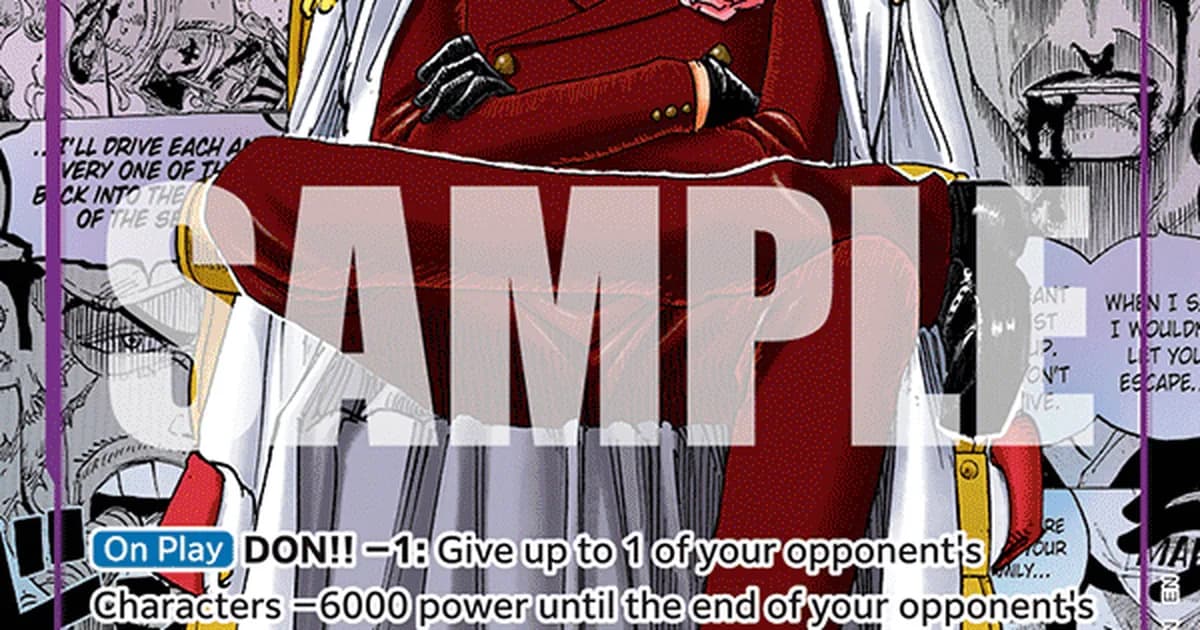
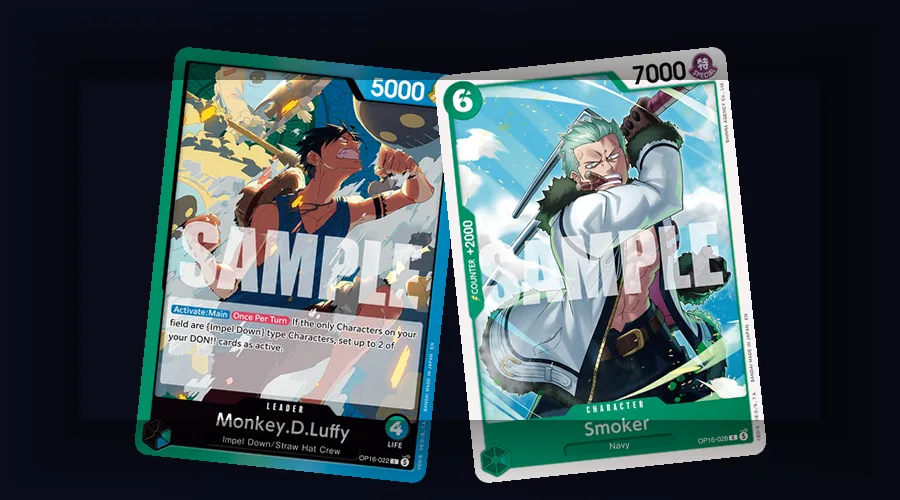 Real Leader and Character cards show the kind of board and timing decisions to examine during starter testing.
One starter or two?
Buy one first if you are new to the game or unsure about the Leader. That gives you a complete list to test and tells you whether the play pattern is enjoyable. A second copy can be sensible when you have identified specific repeated cards that improve your final list, but the value depends on the product contents and live singles market.
Do not buy multiple starters only because an old article says every list needs two. Check the current product page and card list, count the cards you would keep, and compare that with the current cost of singles. A second box is a tool for a known upgrade plan, not a substitute for testing.
Starter decks and current legality
“Starter Deck” describes a product category, not a permanent competitive ranking. New releases, official restrictions, errata, and event formats can change which cards are legal or desirable. Before entering an event, check:
- the event's format and deck-construction rules;
- the official Rules page and any current notices;
- the card list and card number for every upgrade;
- the organizer's language, block, or proxy policy.
For casual games, a mixed collection may be fine if both players agree. For organized play, use the event's rules as the final authority.
Common buying mistakes
Buying by character alone. Liking Luffy, Zoro, Kuzan, Katakuri, Sabo, or Kid is a good reason to try a deck, but it does not tell you whether you will enjoy the decisions. Read the Leader first.
Treating a color label as a full deck guide. Two Red Leaders can want different attack patterns. Two Yellow Leaders can handle Life differently. Use color as a filter, then read the actual text.
Buying upgrades before learning the baseline. If you change ten cards at once, you will not know which change helped. Start with a complete list and improve one problem at a time.
Using old prices as a current budget. Market prices and availability change after set releases and tournament results. Use official MSRP pages and live listings instead of a fixed upgrade total.
Assuming newer means stronger. A newer product may have cards that fit a current strategy, but a familiar older deck can be a better learning tool. Check the event format before making the comparison.
Related Reading
- One Piece TCG Beginner Guide 2026: setup, phases, DON!!, and the first game.
- One Piece TCG Deck Building Guide: build a legal list after choosing a Leader.
- One Piece TCG Mulligan Guide: decide what to keep in the opening five.
- One Piece TCG Colors Explained: compare color identities beyond a single starter.
- One Piece TCG Budget Competitive Guide 2026: plan upgrades without relying on stale fixed prices.
Frequently Asked Questions
Which current starter is best for beginners?
There is no permanent best product. The current catalog includes Red Luffy, Green Zoro, Blue Kuzan, Purple Katakuri, Red/Black Sabo, and Yellow Eustass Captain Kid. Choose the Leader whose decisions sound enjoyable, verify the current product page, and test the sealed list before buying upgrades.
Which color is easiest to learn?
A clear single-color plan is often easier to teach, but the Leader text matters more than the color label. Red commonly teaches pressure, while Blue, Purple, Black, and Yellow add different timing decisions. Choose the game pattern you want to repeat, then learn its actual cards rather than a stereotype.
Should I buy two starter decks?
Start with one and play several games. Buy a second only after checking which repeated cards you need and comparing the product contents with live singles. A second sealed product can help a known list, but it is not automatically more efficient than one box plus targeted cards.
Can a starter become a competitive deck?
It can become a foundation for a tested list, but no starter is a permanent guarantee of tournament performance. New sets, results, legality, and local matchups change the target. Compare a recent event or local list, verify each card, and upgrade the weakness your own games reveal.
What should I upgrade first?
Prioritize early plays, search or draw, counters, and answers to the threat your local opponents use. A flashy high-cost card is not a useful first upgrade if the deck cannot reach its first three turns. Test one small package at a time so you can measure the change.
Are old ST-01, ST-25, or ST-28 decks still worth buying?
They may be worthwhile for casual play, collecting, or a player who prefers that Leader, but the current catalog and event rules should decide a competitive purchase. Check availability, card list, reprints, and legality before treating an older starter as a current recommendation.
Where can I check current starter products?
Use Bandai's official English deck products page for the current catalog, release details, and listed MSRP. Then use the Rules page and the event's own regulations for legality. A search result or an old ranking can lag behind a new product or rule notice.
References
- ONE PIECE CARD GAME Deck Products: current starter catalog and listed MSRP
- ONE PIECE CARD GAME Play Guide: official setup, deck structure, DON!!, zones, and turn phases
- ONE PIECE CARD GAME Rules: current manuals, tournament rules, and official updates
- ONE PIECE CARD GAME Learn the Rules to Play: official beginner materials and teaching app
Was this guide helpful?
About the author
Beginner guides and anime crossover
Pen name for the Shonen TCG desk's beginner guides, starter decks and anime-to-card-game explainers.
- Rules checked against the official rulebook and card text
- Every claim traced to a cited source
- Opinions marked as ours, with the reason
Keep reading
One Piece TCG Beginner Guide 2026: How to Play and Rules
Guides · 13 min
OP-16 Paramount War Leaders & Factions Guide (2026)
Guides · 12 min

One Piece TCG Colors: All 6 Colors and Deck Rules (2026)
Guides · 11 min

One Piece TCG How to Play: Rules & Mechanics (2026)
Guides · 16 min
OP-16 All 6 Leaders Explained: Colors & Which to Build
Guides · 12 min
One Piece TCG OP-16 Guide: Set Review & Leaders (2026)
Guides · 20 min
One Piece TCG Manga Rare Cards: Guide & Values (2026)
Guides · 12 min
OP-16 Chase Cards: Best to Pull & Value Guide (2026)
Guides · 12 min
Disclaimer
This article is published for informational and entertainment purposes. It does not constitute professional financial, legal, or technical advice. Game performance, online services, patch schedules, and store listings change. Verify critical details (pricing, system requirements, regional availability) with publishers and storefronts before you buy. Affiliate links, where present, help support our editorial work and are labelled in our affiliate disclosure.