

Shonen TCG · Guides
One Piece TCG Standard Format Guide 2026: Legal Sets
Mihawk's card still prints a legal block icon, and he's still banned. Read the icon and the banlist.
Our callBlock icon 2 to 5 and not on the October 12 banlist? Then it's Standard-legal until March 31, 2027.
One Piece TCG Standard format guide, short answer: if a card's printed block icon is 2, 3, 4 or 5, you can play it in Standard until March 31, 2027, unless Bandai has banned it, and that list grew to six cards on October 12, 2026 when Mihawk OP14-020 went. Three checks cover almost every case before an event: the icon on the card, the restriction notice and the event listing.
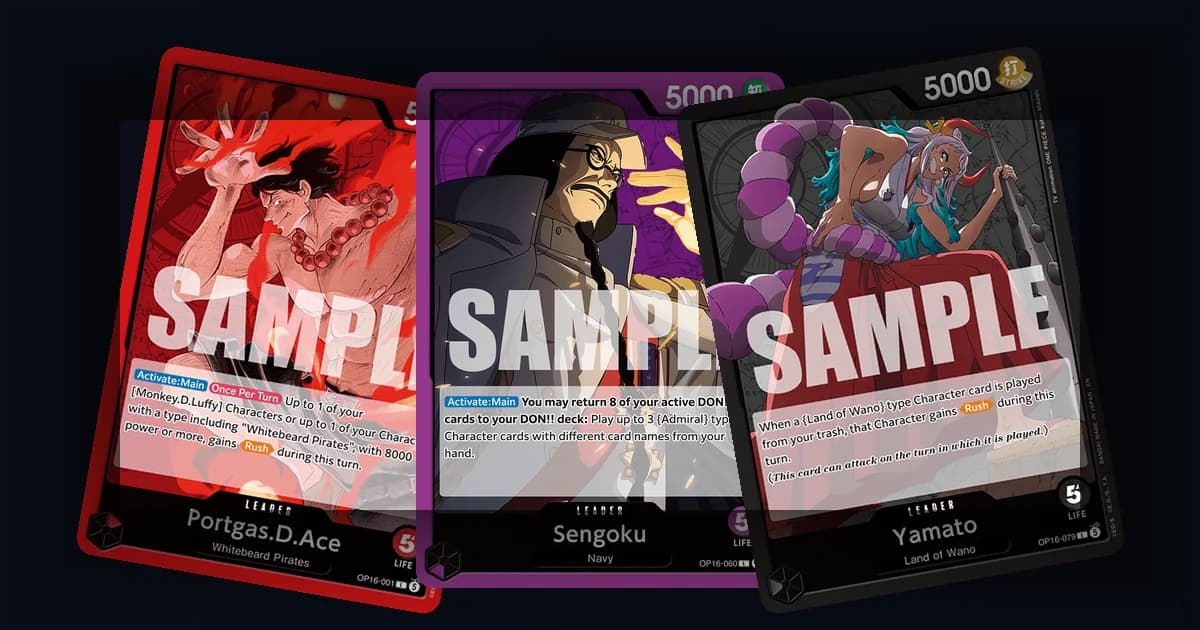
TL;DR: One Piece TCG Standard format guide for 2026: the current Standard window is Blocks 2 through 5 from April 1, 2026 through March 31, 2027. OP14-020 Dracule Mihawk has been banned since October 12, 2026. Check the printed block icon, the current restriction notice, and the event listing before registering. A legal list has one Leader, 50 main-deck cards, and 10 DON!! cards.
Updated October 13, 2026: OP14-020 Dracule Mihawk, including parallel cards, is now banned (effective October 12, 2026), so the notice lists six banned cards. Added the Block ④ exception list, the Block X rule for Super Parallel Rares, and the 7-day release rule for Level 2 and 3 events. OP-18 is listed for November 20, 2026, and does not itself rotate the Blocks 2 through 5 window.
Last checked: The official rules, Block Number announcement, Block update page, restriction notice, OP-18 product page, and tournament manual were checked on October 13, 2026. Format legality can change after a new notice or an event organizer's ruling.
One Piece TCG Standard format guide? (quick answer)
Bandai's Block Icon System is now the starting point for legality. For the published window from April 1, 2026 through March 31, 2027, Standard uses Blocks 2 through 5. The next published window moves to Blocks 3 through 6 on April 1, 2027. The official Block Number announcement describes Standard as a card pool of approximately 3 years' worth of the latest cards. Bandai's official OP-18 product page lists that booster for November 20, 2026; its release does not itself change the current block window.
The block number is printed on the card. Set codes are useful for finding a product, but they are not a substitute for checking the individual card. This matters for starter products, reprints, Super Parallel Rare cards, and cards that share a card number across different illustrations. Bandai's current Block Number update, last updated August 21, 2026, is the best place to check exceptions:
- Block X: Super Parallel Rare cards from past products, and cards sharing their card number, generally stay legal in Standard whether or not they were reprinted. New Super Parallel Rares from April 2026 carry the Block Number "X".
- Treated as Block ④: a list of older cards, such as OP01-055 You Can Be My Samurai!! and ST01-011 Brook, counts as Block ④ regardless of reprints, which makes them legal in Standard from April 1, 2026, to March 31, 2029.
Bandai's rule is booster packs 1 to 4 in Block 1, packs 5 to 8 in Block 2, "and so on", so the main booster sets map as follows:
- Block 1: OP-01 through OP-04
- Block 2: OP-05 through OP-08
- Block 3: OP-09 through OP-12
- Block 4: OP-13 through OP-16
- Block 5: OP-17 onward (OP-17 cards carry the 5 icon)
That map is useful context, not a permission to guess. Use the printed icon and current official update for any card you plan to register, especially if it came from a starter deck or a later reprint.
Block 1 cards did not disappear when they left Standard. Bandai's announcement describes Extra Regulation as a format using Block 1 through the latest block, but the announcement also says further regulation details are being prepared. Extra Regulation is therefore an event format to confirm with the organizer, not a reason to assume every older card is legal in every event.
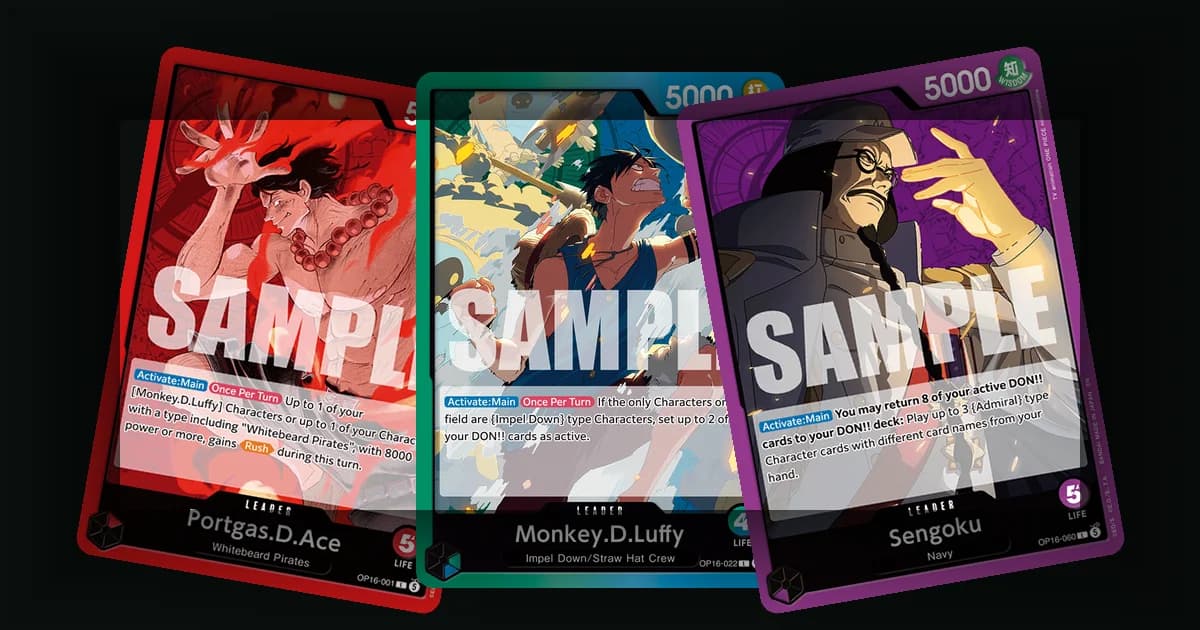
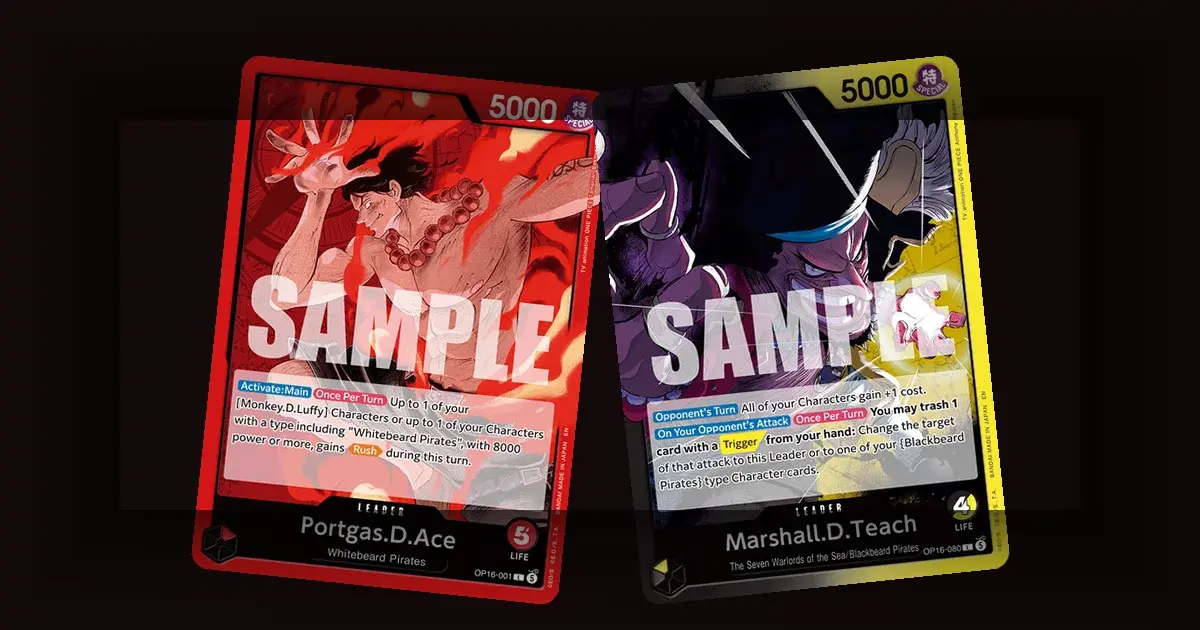
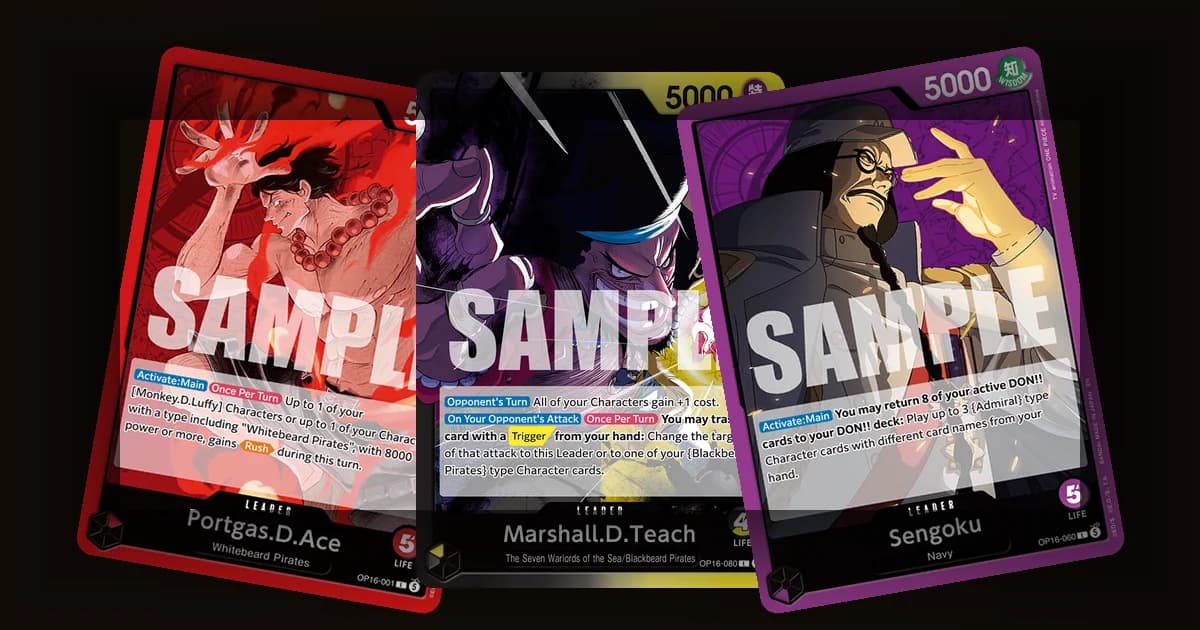
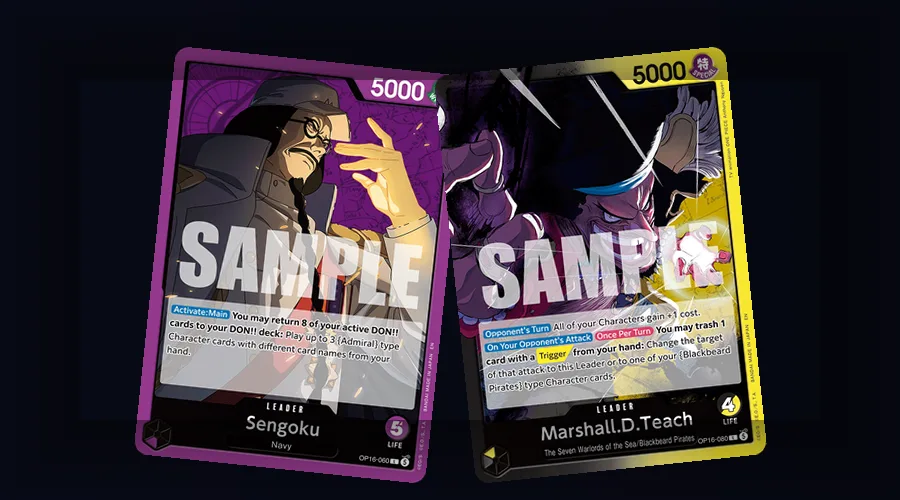 Image: Bandai official sample cards (OP16-060, OP16-080). These real sample Leaders show Sengoku and Marshall.D.Teach. Their artwork is illustrative only; the current block icon and restriction notice determine tournament legality.
How the rotation and restriction systems fit together
Rotation and restrictions answer different questions:
- Block legality: Is the card inside the event's Standard window?
- Card restrictions: Is the card banned, restricted, or part of a banned pair?
- Event legality: Does the tournament use Standard, Extra Regulation, Draft, or another announced format?
The official Banned and Restricted Card Addition Notice is separate from the Block Icon System. Announced September 24, 2026, OP14-020 Dracule Mihawk, including parallel cards, has been banned since October 12, 2026, even though its block icon is still inside the current window. The notice now lists six banned cards (OP06-047 Charlotte Pudding, OP03-040 Nami, OP06-086 Gecko Moria, ST10-001 Trafalgar Law, OP06-116 Reject and Mihawk), three banned pairs, and no restricted cards. Bandai says it typically revises the list once after Championship Season 1 in Japan and once after the World Championship, but can add a card at any time.
Do not treat a recent deck list as automatically legal. A list can fail because one card rotated, because a copy limit changed, because a pair was banned, or because the event uses a different regulation. A live list from a deck tracker is useful for research, but the official notice and the tournament listing control your registration.
Deck construction rules for Standard
The current Comprehensive Rules set the core counts for a constructed list:
- One Leader card
- Exactly 50 Character, Event, and Stage cards in the main deck
- Exactly 10 DON!! cards in the DON!! deck
- No more than four cards with the same card number, unless a restriction says otherwise
- Every main-deck card must match one of the Leader's colors
The four-copy rule is by card number, not by card name. If two illustrations use the same card number, count them together. A different-looking parallel card does not create a new four-copy allowance. If you are unsure whether two printings share a card number, compare the printed number and consult the official card list before submitting the list.
The Leader is separate from the 50-card main deck. It determines the colors available to the list and has its own printed Life value and ability. The DON!! deck is also separate, so do not count its 10 cards as part of the 50-card total.
Step-by-Step: Checking if your deck is Standard-legal
1. Read the event listing first. Confirm the regulation, event level, release cutoff, match structure, and deck-registration deadline. The Tournament Rules Manual says the Tournament Organizer announces these details. Do not assume that a local event uses the same format as a Regional.
2. Check the Leader and every main-deck card. Look at the printed block icon on each card. For the current Standard window, start with Blocks 2 through 5, then use Bandai's current Block update for reprints and exceptions. A set code or an old deck guide is not enough.
3. Check the current restriction notice. Compare every card and any known banned pair with the official page immediately before registration. A card can be inside the correct block and still be unavailable or limited.
4. Check color identity and copy counts. Confirm that every main-deck card matches the Leader's color or colors. Count copies by card number, including alternate illustrations that use the same number, and apply any lower limit from the restriction notice.
5. Count the decks separately. Confirm one Leader, 50 main-deck cards, and 10 DON!! cards. There is no side deck under the current Tournament Rules Manual.
6. Check release and card-condition rules. The Tournament Rules Manual makes new sets legal at Level 2 and 3 events 7 days after release, and at Level 1 events on release day, including pre-release. Bandai's OP-18 page repeats it: "Tournament Legal after 7 days." The manual also covers card language and opaque sleeves. Call the organizer if a new product is close to the event date.
7. Save the final list and sources. Keep the event page, official restriction notice, and Block update beside the deck list. This makes a last-minute legality check much easier if a new notice appears.
Starter products, reprints, and special cards
Starter deck labels are not a safe shortcut for legality. A card from an older starter can rotate even when a similar card from a later product remains legal. Conversely, a reprint or a card with a new block icon can have a different legality result from the original printing.
Use this order when the answer is unclear:
- Read the card's block icon and card number.
- Search the official card list.
- Read the current Block Number update for Special Rare Parallel and same-number treatment.
- Confirm the event regulation with the organizer.
This is also why a visual similarity check is not enough. Two cards can look nearly identical but have different printed numbers, while two art versions with the same number share the same copy limit.
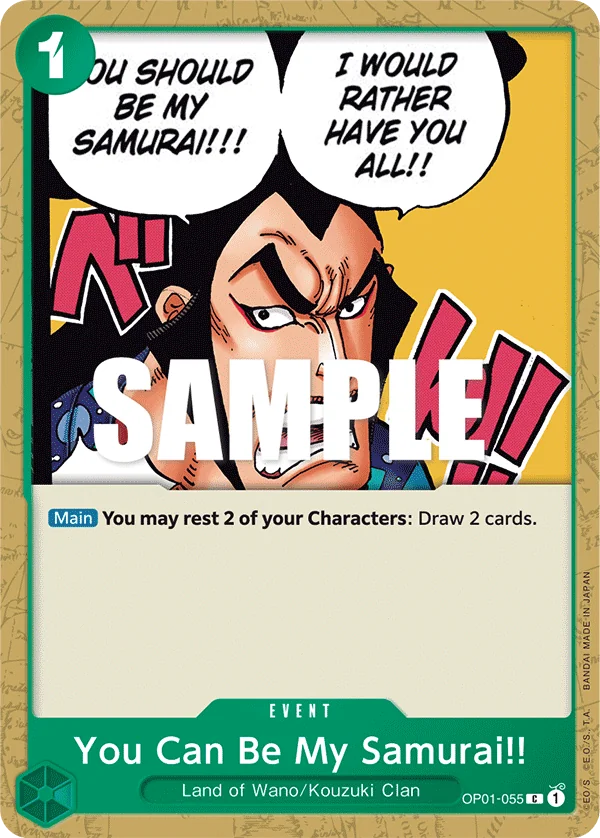 Image: Bandai official card image (OP01-055). The original printing shows Block icon 1, but Bandai's update list treats this card number as Block ④, legal in Standard through March 31, 2029.
Players run into this in real stores. In an October 7 thread asking whether OP04-083 Sabo is playable in Standard, the top reply was "Every card that got a manga is immune to rotation, and this was the OP04 manga card" (u/Robofly8901). OP04-083 Sabo is on Bandai's Block X list, though Bandai's own wording is that these cards "will generally remain legal", not that they can never change. Another reply cleared up the word itself: "Blocks aren't being rotated in and out, it is just a linear set of blocks where the oldest block is phased out every year" (u/drew__breezy).
MarinefordTCG's video walks through the block system as it stood in March 2026, before the Mihawk ban:
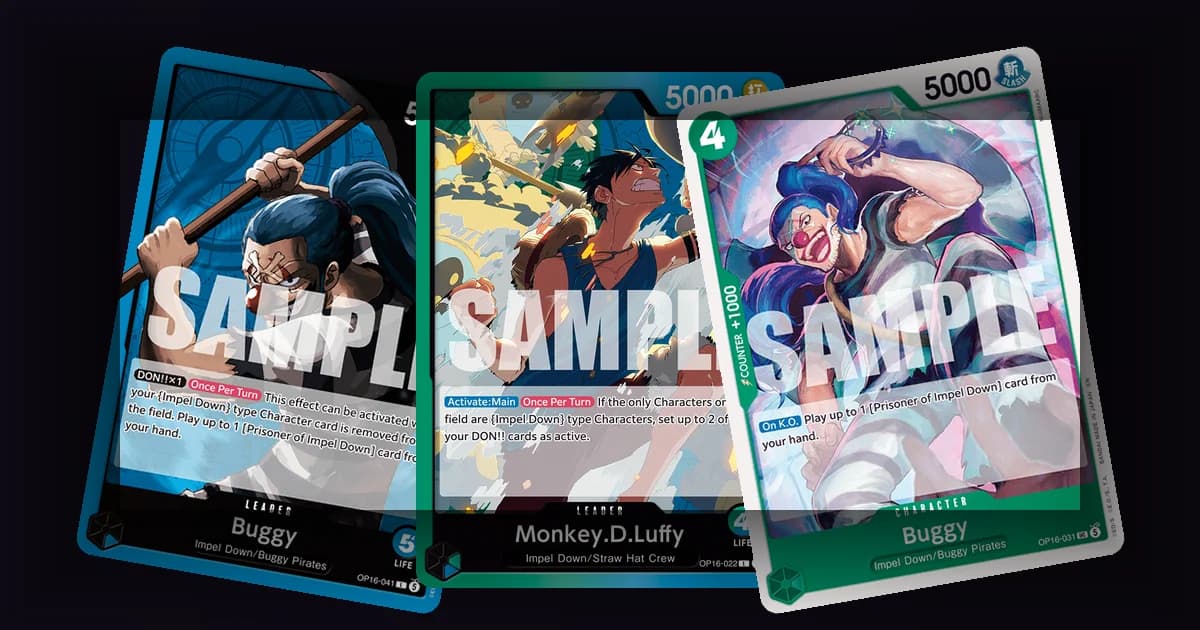
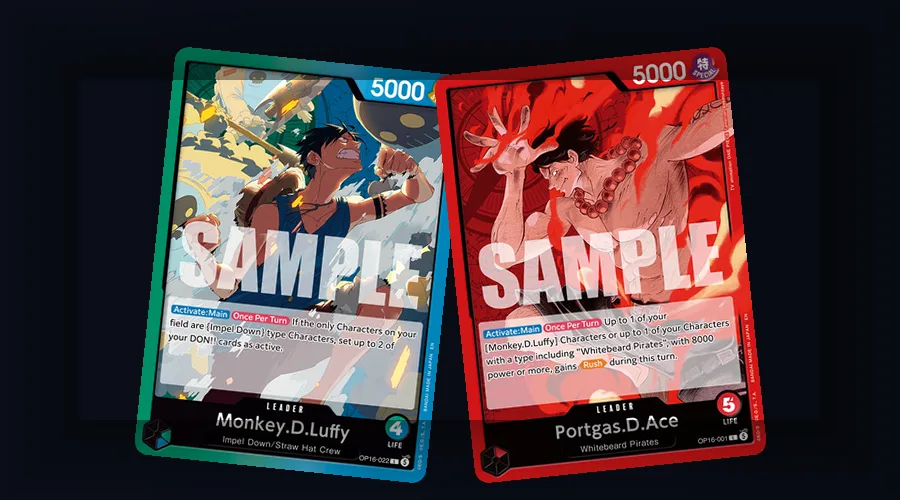 Image: Bandai official sample cards (OP16-022, OP16-001). These real sample Leaders show Monkey.D.Luffy and Portgas.D.Ace. They illustrate color and Life-value differences, not a complete list of currently legal cards.
What tournament rules add beyond deck legality
The Tournament Rules Manual adds practical requirements that a deck database may not show. The Tournament Organizer announces the tournament type, regulation, round time, number of rounds, and top-cut details. Match structure is therefore event-specific. Do not assume every sanctioned tournament uses the same best-of-three schedule.
The manual does not permit side decks. Your registered 50-card main deck must handle the matchups without swapping a reserve package between games. It also covers sleeves, deck checks, card condition, language rules, and release timing. Read the event announcement when any of those details affect your list.
Use current results without confusing them with legality
Tournament results can help you decide what to test, but they do not replace a legality check. Limitless TCG's tournament database and deck database are useful for finding recent lists and match results. Before copying a list, check its posting date, the event's regulation, the Block icons of every card, and the current restriction page.
Avoid making a current tier claim from an old result. A leader can gain or lose relevance after a new set, restriction notice, or rotation shift. This guide explains how to verify the format; it does not promise that any leader will remain a top choice.
GODEEPER: Want to see which leaders are winning in the current Standard window? OP-17 Meta Tier List: September 2026 Pre-Ban Snapshot →
Common Standard format mistakes
- Checking only the set code: Set numbers do not replace the printed block icon or the current exception list.
- Counting by card name: The current rule uses the card number. Different illustrations with the same number still share the four-copy limit.
- Treating Extra Regulation as universal: Extra Regulation must be listed by the event organizer, and its exact event rules still matter.
- Using an old starter-deck assumption: Check the card itself rather than assuming every card in a product is current.
- Ignoring restrictions after rotation: A card can be in a legal block and still be banned, restricted, or part of a banned pair.
- Counting DON!! in the main deck: The 10-card DON!! deck is separate from the 50-card main deck.
- Assuming match structure: The organizer announces rounds and match format. Do not build a registration plan around an assumed universal best-of-three rule.
Key takeaways
- Standard uses a rolling four-block window. The published April 1, 2026 through March 31, 2027 window is Blocks 2 through 5.
- Block 1 cards remain relevant to Extra Regulation and casual play, but their Standard legality ended when the new window began.
- The printed block icon, current Block Number update, restriction notice, and event listing all matter.
- OP14-020 Dracule Mihawk has been banned since October 12, 2026; the notice now lists six banned cards and three banned pairs.
- OP-18 releases November 20, 2026, but that product release does not itself rotate the current Standard blocks.
- A constructed list has one Leader, 50 main-deck cards, and 10 DON!! cards.
- The copy limit is four cards with the same card number unless a current restriction says otherwise.
- Main-deck colors must match the Leader, and the current Tournament Rules Manual does not permit a side deck.
- Tournament results are useful context, not proof that an old deck list is still legal.
Our take
We'd treat the printed block icon as the first check, never the last one: OP01-055 prints a 1 and is still legal, and Mihawk prints a legal icon and is banned. Before every event, open three pages, the restriction notice, the Block Number update list and the event listing, and check your list against all three. It takes a few minutes and covers every case in this guide. Don't rely on a deck tracker's "legal" tag or an old Reddit answer for the last word; the October 7 Sabo thread above is a good example of a mostly-right answer that skips Bandai's "generally".
GODEEPER: Need the game fundamentals before checking rotation? Read the One Piece TCG Beginner Guide 2026 for the DON!! system and turn flow.
Related Reading
- One Piece TCG Meta Rotation Guide: When to Sell Cards: How block rotation changes legality and collection decisions.
- One Piece TCG All Sets OP-01 to OP-16: A set-by-set reference to the product history.
- One Piece TCG Colors Explained: How Leader colors shape deck construction.
- One Piece TCG Deck Building Guide: A practical framework for turning legality checks into a playable list.
- One Piece TCG Banlist and Restrictions Explained: How restrictions differ from annual rotation.
Frequently Asked Questions
Q: Which blocks are legal in Standard right now? A: The published April 1, 2026 through March 31, 2027 window is Blocks 2 through 5. Confirm the individual card and current event notice before registering.
Q: Is the copy limit four cards by name? A: No. The current Comprehensive Rules use the same card number. Different illustrations with the same number count together.
Q: Can a Block 1 card be used anywhere? A: It is outside the current Standard window, but Bandai's Block Number announcement describes Extra Regulation as using Block 1 through the latest block. Confirm the exact event rules because organizers control the listing.
Q: Does every tournament use best-of-three? A: No universal match structure should be assumed. The Tournament Organizer announces the format and round details for the event.
Q: Can I use a side deck? A: No side decks are permitted under the current Tournament Rules Manual.
Q: What should I check immediately before an event? A: Check the event regulation, every card's block icon, the current Banned and Restricted Card Addition Notice (OP14-020 Dracule Mihawk is banned from October 12, 2026), and the Block ④ and Block X exception lists. Then check the 50 plus 10 card counts, color identity, release cutoff, sleeves, and language rules.
References
- One Piece Card Game Official Rules: Official rules hub and current documents.
- Introduction of the Block Number System: Block windows, rotation timing, and Extra Regulation overview.
- Current Block Number Update: Current card and block treatment updates.
- Banned and Restricted Card Addition Notice: Current restriction categories and policy.
- OP-18 product page: Official November 20, 2026 release date.
- Comprehensive Rules: Deck construction and copy-limit rules.
- Tournament Rules Manual: Event format, release, sleeve, and side-deck rules.
- Official Card List: Card numbers, block icons, and product records.
- Limitless TCG OPTCG: Tournament results and deck research.
Was this guide helpful?
About the author
Pen name for the Shonen TCG desk's tournament coverage, format analysis and cross-game comparisons.
- Results taken from event pages and standings
- Other games checked against their own official rules
- Opinions marked as ours, with the reason
Keep reading
One Piece TCG Trade Guide: How to Trade Cards Fairly
Guides · 13 min
OP-16 Ace Deck Guide: Whitebeard Pirates Rush Build
Guides · 12 min
One Piece TCG Budget Competitive Guide 2026 Under $100
Guides · 13 min

One Piece TCG Deck Building Guide: Build From Scratch
Guides · 12 min
OP-16 Collectors Guide: SEC, Manga Rare, Alt-Art Cards
Guides · 11 min
One Piece TCG Meta Rotation Guide: When to Sell Cards
Guides · 15 min
OP-16 Box Opening Strategy: How Many Boxes to Open
Guides · 10 min

OP-16 vs OP-15 power level comparison: what changed?
Guides · 11 min
Disclaimer
This article is published for informational and entertainment purposes. It does not constitute professional financial, legal, or technical advice. Game performance, online services, patch schedules, and store listings change. Verify critical details (pricing, system requirements, regional availability) with publishers and storefronts before you buy. Affiliate links, where present, help support our editorial work and are labelled in our affiliate disclosure.