Loading…
Shonen TCG · Guides
OP-16 GY Law Deck Guide: Full Supernova Combo 2026
Reviewing
One Piece TCG
This OP-16 GY Law deck guide fills a gap that most One Piece TCG content sites leave open. Green/Yellow Law is a technically demanding Supernova deck built around the Royal Blood OP10-022 leader, and many published lists come from the OP11 or OP12 environment. OP-17 is now live, so this update separates the historical OP-16 shell from the September 2026 Standard picture. The latest Limitless OP16 Standard snapshot, checked September 21, shows only fringe visibility for OP10 Trafalgar Law: 4 deck entries, 0.09% share, and a 5-9-1 record. That is not enough to call it a proven tier deck. It is not the same card as the OP-16 Heart Pirates Law build, which runs OP16-030 Trafalgar Law as a Character in a different DON!! strategy.
TL;DR: The OP-16 GY Law deck guide covers Green/Yellow OP10-022 Trafalgar Law, a Supernova deck that pre-loads qualifying Characters into Life and can play one of them for free once per turn. Its historical Limitless page records 18 placings including 2 wins through OP12, while current Standard data shows only 4 OP10 Law entries at 0.09% share. The list below is a historical 50-card shell, not a current legality guarantee: OP01-047 and OP01-051 are marked Extra legal but not Standard legal on their current card pages. Check the event format before using it unchanged.
OP-16 GY Law deck guide: quick answer
GY Law remains functional, but current evidence supports calling it a rogue deck rather than a proven OP-16 or OP-17 meta choice. The engine generates tempo through a once-per-turn Life reveal, and its key OP10 leader is currently listed as Standard legal.
On Limitless One Piece, Green/Yellow Law has 18 tournament placings including 2 outright wins and 233 ranking points, but every one of those results predates OP-16. The most recent placing on record is from a November 2025 regional, played in the OP12 format. That's a real, consistent history for the deck under older rules; it is not evidence of OP-16 viability.
The latest Limitless Standard decks table covers the post-OP17 field. At the time of this audit it reports 135 tournaments, 4,575 players, and 10,185 matches, with OP10 Trafalgar Law at 4 deck entries, 0.09% share, and a 5-9-1 record. That places the deck well outside the established leaders by aggregate representation. The guide's matchup advice below is therefore an OP-16 framework based on verified leader text, not a current win-rate claim.
Short version for players evaluating the deck now: if you already know it, it is a functional rogue option, but its current results do not justify a tier placement. If you are picking it up fresh, practice the Life-management discipline before taking it to a local and expect to pilot it from mechanics and older-format experience rather than a deep current matchup sample.
OP-17 is now part of the English Standard environment, so OP-16 share snapshots should not be presented as current standings. Current Limitless card pages list OP10-022 and OP10-119 as Standard legal, but legality is card-specific: the historical list below also contains OP01 cards that are not Standard legal. Check the official restriction page and the event's format rules before registering the shell. The OP-17 OP-16 crossover format guide provides additional set-transition context.
GODEEPER: Before committing to GY Law, check where every OP-16 leader sits. The full tier picture shows which decks GY Law is favored into and which it should avoid. OP-16 Meta Tier List Week 1 →
How the OP10-022 leader ability works
OP10-022 Trafalgar Law reads: "[DON!! x1] [Activate: Main] [Once Per Turn] If the total cost of your Characters is 5 or more, you may return 1 of your Characters to the owner's hand: Reveal 1 card from the top of your Life cards. If that card is a {Supernovas} type Character card with a cost of 5 or less, you may play that card." An earlier version of this guide quoted the ability without the "Once Per Turn" tag and described later cards as able to fire the leader again in the same turn. The official text caps the trigger at once per turn.
Four things to internalize before you play a single game.
It's once per turn. No card in the deck removes that restriction. One leader activation gets you at most one free Supernova from the field-cost-into-Life-reveal line per turn; any additional Supernovas onto the board that turn have to come from your hand at their normal cost, not from a second leader trigger.
It's a conditional trigger, not a free one. Your characters on the field need to total 5 or more combined cost. One 2-cost blocker does nothing. You need a small board first, which is why the early game is entirely about cheap characters.
You return a character to activate, not pay extra cost. You bounce one of your characters, then reveal the top Life card. If it is a Supernova at cost 5 or less, it enters the field free. A 7-cost card such as OP10-119 Trafalgar Law cannot qualify. If the reveal is an Event or another non-qualifying card, it returns to the top of Life face-down, and you have lost the returned character for no gain.
Life setup is the entire first phase of the game. Turns 1 through 3 aren't about building a combat board. They're about getting Supernovas into your Life cards so that when you start triggering the leader, every reveal hits.
For more on how Life cards function as a resource, the One Piece TCG life cards explained guide covers the mechanic in full detail.
The Life-setup-into-Supernova-chain sequencing is a lot to track in text; it clicks faster watching a real game.
OP-16 GY Law deck guide: decklist and legality note
This is a historical OP12 shell based on the list piloted by Bouzyyy to 15th place at the Toronto, ON regional event, reported on Limitless. It is useful for studying the archetype, but it is not a current Standard legality guarantee. The source shell contains OP01-047 and OP01-051; current Limitless card pages mark both as Extra legal and not Standard legal. Check every slot against the event's format before registering it.
Leader (1):
- 1x Trafalgar Law (OP10-022)
Setup and threshold pieces:
- 4x Capone "Gang" Bege (OP10-103)
- 4x Capone "Gang" Bege (OP11-101)
- 4x Jewelry Bonney
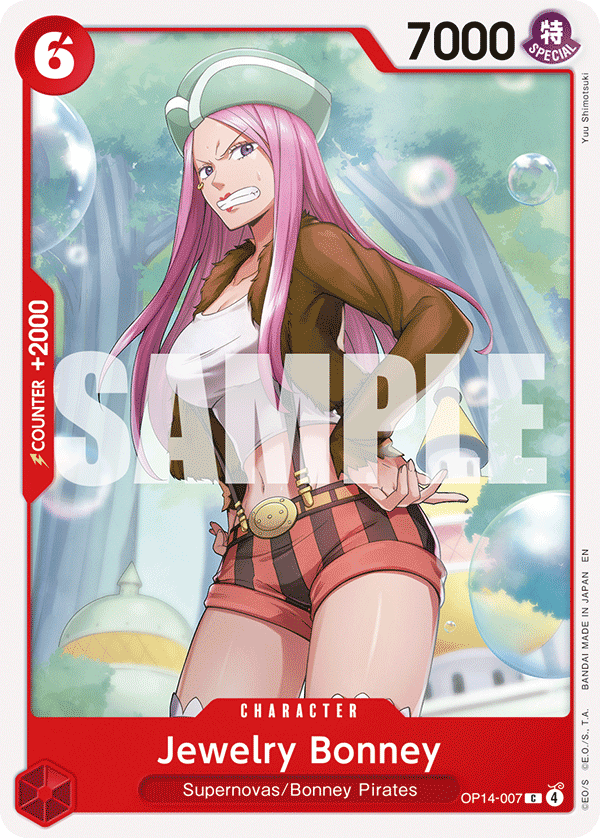 OP14-007OP14-007Shop on TCGplayer (OP10-107)
 - 4x Jewelry Bonney (OP07-026)
- 2x Jewelry Bonney (ST02-007)
- 3x Zeus (OP11-106)
Supernova reveal pieces (the leader can only play cost 5 or less):
- 4x Monkey D. Luffy (OP10-111)
- 4x Cavendish (EB01-012)
- 4x Trafalgar Law (OP01-047)
- 4x Kid & Killer (ST24-002)
- 2x X. Drake (OP10-114)
- 2x Scratchmen Apoo (EB01-015)
Hand-played tempo and top-end pieces:
- 3x Hody Jones (OP06-035)
- 4x Trafalgar Law (OP10-119)
- 2x Eustass "Captain" Kid (OP01-051)
Main deck total: 50 cards, plus 1 leader.
Running multiple Jewelry Bonney versions across three prints and both Capone Bege prints is intentional design. Each print is a different card with a different cost point, giving the deck redundancy in the setup package that keeps the leader trigger consistent across varied opening hands. The headings describe the cards' primary roles, not a promise that every historical slot is legal in current Standard.
SHOP: Building this GY Law Supernova shell? Check current OP-16 singles prices on TCGPlayer. Shop TCGplayer →
The Supernova chain: how to execute it
Bandai's official Green/Yellow Law feature presents the sequence as a setup turn followed by a leader activation that deploys a qualifying Supernova from Life. In actual games, the once-per-turn restriction means the leader provides one free reveal each turn, not every Supernova in Life at once.
In practice it breaks into distinct phases.
Turns 1-2: load the Life. Don't try to trigger the leader yet unless the setup is unusually strong. Play low-cost Characters from your hand, consider accepting selected combat hits to cycle Life cards into favorable positions, and use search effects to arrange your Life so the top card is a Supernova when you want to trigger. Blocking every attack is not automatically correct, but taking a calculated hit can be worth the Life setup.
Turn 3-4: first trigger. Once your field reaches 5 total cost, activate the leader (once per turn, per the card's own "Once Per Turn" tag). Return a Character that has done its job, reveal the top Life card, and play the Supernova free if it hits. Cavendish (EB01-012) is a strong reveal when its condition is met because its own On Play or When Attacking effect can set up to two DON!! active for a Supernovas leader; that improves your resources, but it does not create a second leader activation.
Turn 4-5: set up the next trigger. OP10-119's real On Play effect (7-cost, 9000 power, Yellow) reveals up to 1 Supernovas Character from your hand and puts it on top of your Life face-down, then gives up to 1 rested DON!! to a Supernovas leader. Because it costs 7, the leader cannot play OP10-119 from a Life reveal. When you can pay its normal cost from hand, it reloads a fresh qualifying card for a future activation and returns a rested DON!! to your leader, which can help pay for the next [DON!! x1] leader cost. A two-Supernova turn is possible through one leader-triggered play plus another card from hand at its normal cost, but the leader ability itself does not repeat.
The chain requires Life management discipline throughout. If you enter it without Supernovas in the correct positions, the reveals miss and you've wasted the tempo. Experienced GY Law players weigh early attacks against their hand and board rather than defending every hit automatically, because a Life cycle can be worth the risk.
GODEEPER: The DON!! system shapes how you build toward this combo. Understanding attachment timing tells you exactly when to start the chain without falling behind on board. One Piece TCG DON!! System Explained →
Step-by-Step: running the GY Law turn plan
The phase breakdown above explains why each turn matters. This section turns it into a checklist you can follow at the table, from mulligan through the first chain activation and beyond.
1. Mulligan for the setup package, not the top end. A strong opening hand has two or three pieces from Capone Bege, Jewelry Bonney, or Zeus, plus at least one card that lets you dig or arrange Life. Keep a hand heavy on expensive Supernovas and you can stall on turn 2 with nothing to play toward the cost threshold. Mulligan hands with zero early setup pieces even if they hold strong finishers.
2. Build toward 5 total cost across turns 1 and 2, and weigh each incoming hit. Deploy your cheapest Characters first. Taking selected damage can cycle Life cards into positions where a Supernova ends up on top, but do not treat every attack as free. By the end of turn 2, aim to have a field that can reach the 5-cost line and at least one Supernova confirmed near the top of your Life.
3. Activate the leader once your field clears 5 cost, usually turn 3 or 4. Confirm a Supernova is actually revealable before you activate. The 5-cost condition is checked on your field before you choose the Character to return, so do not subtract that returned Character and require the remaining board to clear 5 as well. Reveal the top Life card and play it free if it is a Supernovas Character costing 5 or less. If your setup does not support a hit, hold the activation rather than losing a Character to a blind whiff.
4. Reload with OP10-119 Law around turn 4 or 5, then reassess your board. Playing OP10-119 from hand costs 7 and adds a fresh Supernova to the top of your Life deck for a future trigger, while giving your leader a rested DON!! toward next turn's [DON!! x1] cost. It is not a legal free-play target for OP10-022. Count your remaining Supernovas in Life and decide whether to play another qualifying card from hand this turn, since the leader itself only fires once per turn.
5. Adjust the plan once you know your opponent's leader. Against Purple Enel, expect an early "free" hit to sometimes carry DON!! power, so budget more caution before deliberately taking hits in turns 1-2. Against Black/Yellow Blackbeard, remember the redirect is capped at once per turn, so a board built across several turns should still get damage through. Against Black Yamato's recursion plan, favor a faster first activation since the matchup rewards outpacing repeated attackers rather than grinding.
Tech choices and card-by-card reasoning
Running four copies each of OP01-047 and OP10-119 Law looks redundant until you understand their different roles. OP01-047 is a 5-cost Supernovas Character that can be played from a qualifying Life reveal, while OP10-119 is a 7-cost hand-played reload and top-end card. The leader cannot play OP10-119 for free because its reveal cap is 5 cost or less. Current Limitless pages mark OP01-047 as Extra legal but not Standard legal, so verify the format before using this historical slot.
Hody Jones (OP06-035) raises eyebrows in a Supernova deck. He is a 7-cost Green Character, not a Supernova, so he cannot be played by the leader's Life-reveal effect. His Rush and On Play effect can rest up to a total of 2 opposing Characters or DON!! cards, then add the top Life card to your hand. That makes him a hand-played tempo piece with a real Life cost, not a cheap filler or setup card.
Zeus (OP11-106) covers the Yellow side of the Green/Yellow split. He's a counter or DON!! target depending on the game state. Older lists sometimes trimmed him, but the Bouzyyy regional build kept three copies, and that feels correct for OP-16 where you need reach in the Yellow half to survive longer games.
Some older GY Law lists ran Dracule Mihawk (ST12-003) as an alternative chain enabler. It is outside this historical shell. If you test it as a budget placeholder for Cavendish, verify its legality and its cost role against the event rules rather than assuming older lists remain current.
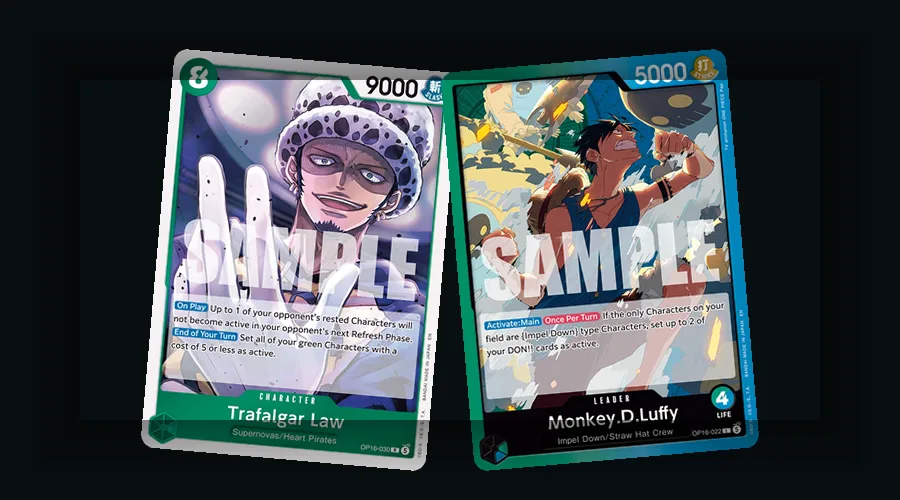 This sample image shows OP16-030 Trafalgar Law beside the OP16-022
  OP16-022OP16-022Shop on TCGplayer Monkey D. Luffy leader, two OP-16 cards that are separate from the OP10-022 GY Law engine discussed here.
GY Law matchups in the OP-16 meta
A note before this section: the latest Standard aggregate lists only four OP10 Law entries, and it does not provide a matchup spread for this archetype. What follows is an OP-16 strategic framework built from each opposing leader's verified card text, not asserted win/loss verdicts. OP-17 is now live, so treat this as format-specific guidance rather than a current scoreboard.
Vs Purple Enel (OP15-058): Enel's leader ability runs on a compressed 6-card DON!! deck. From turn 2 on, once per turn he can set up to 1 DON!! active and 4 more rested, then load up to 4 rested DON!! onto a single Character for a sharp power spike. That matters against GY Law because the setup plan may involve accepting selected attacks to cycle Life cards into position. Against Enel, an early hit can come from a Character carrying several DON!! worth of bonus power instead of a small filler blocker, which makes the Life setup more expensive than it is against slower decks. There is no matchup sample here to turn that interaction into a win-rate claim.
Vs Black/Yellow Blackbeard (OP16-080 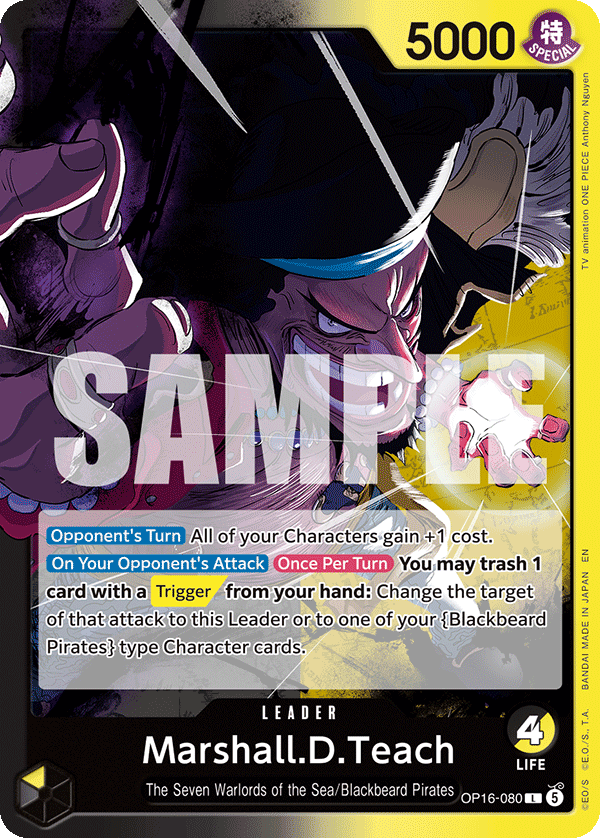 OP16-080OP16-080Shop on TCGplayer): Blackbeard's leader text is a defensive attack redirect, not a Life-attack tool: once per opponent's turn, he may trash a card with [Trigger] from hand to redirect that attack to his Leader or a Blackbeard Pirates Character. That redirect is capped at once per turn. GY Law's leader trigger is also once per turn, so building a wide board takes multiple turns plus whatever you can afford from hand, not a same-turn burst. Once several Characters are attacking, one redirect cannot stop all of them. The matchup is therefore about preserving enough attackers to make that single redirect inefficient, not about disrupting Blackbeard's Life zone.
Vs Black Yamato 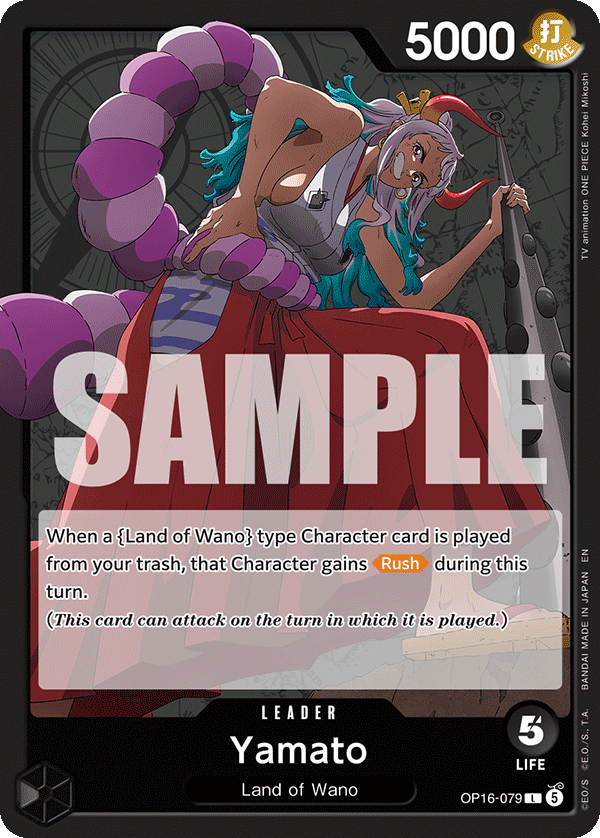 OP16-079OP16-079Shop on TCGplayer (OP16-079): Yamato's ability gives Rush to Land of Wano Characters played from the trash, which is a recursion engine built around repeatedly bringing back attackers rather than a one-time board wipe. That is a different threat profile from removal. GY Law should plan for steady pressure from reanimated attackers across several turns and prioritize a clean first activation, but the interaction is not supported by a meaningful matchup sample here.
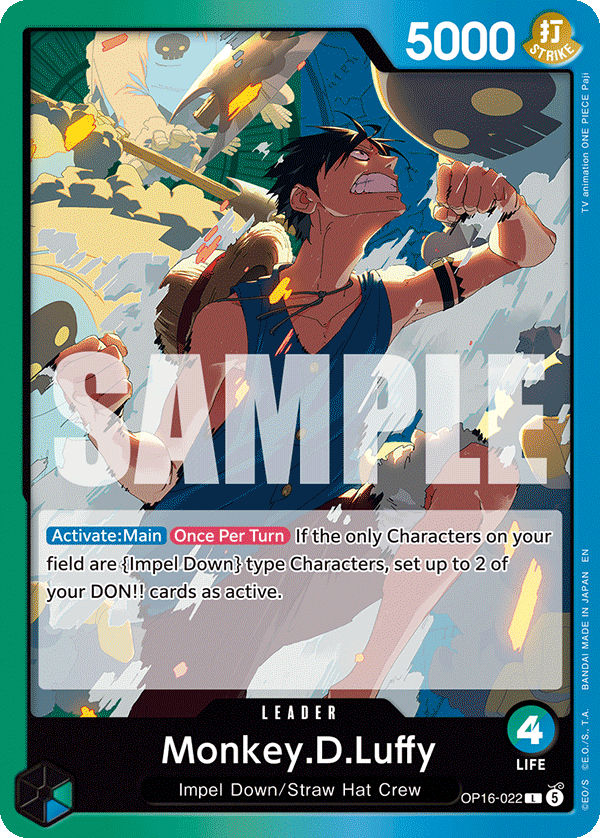
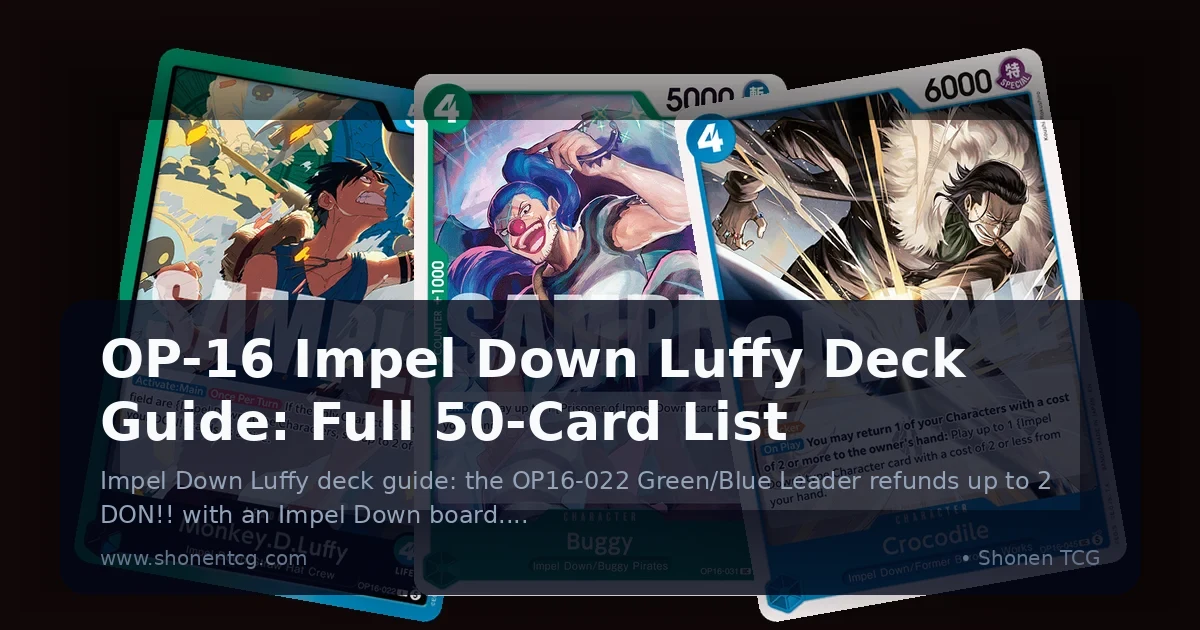
Vs Green/Blue Luffy (OP16-022): Luffy's leader ability only fires when every Character on the field is Impel Down type, once per turn, setting up to 2 DON!! active. That is a real efficiency tool, but it is a self-imposed deckbuilding restriction on Luffy's side rather than something GY Law can play around directly. Study the Impel Down curve, keep enough pressure to punish a slow setup, and do not treat historical OP-16 field share as a current OP-17 matchup forecast.
Vs the other OP-16 Law cards: Worth a direct clarification here: Trafalgar Law is not a leader in OP-16 at all. The OP-16 Law cards guide covers the two real Character versions: OP16-030 (Green, keeps one opposing rested Character from refreshing) and OP16-068 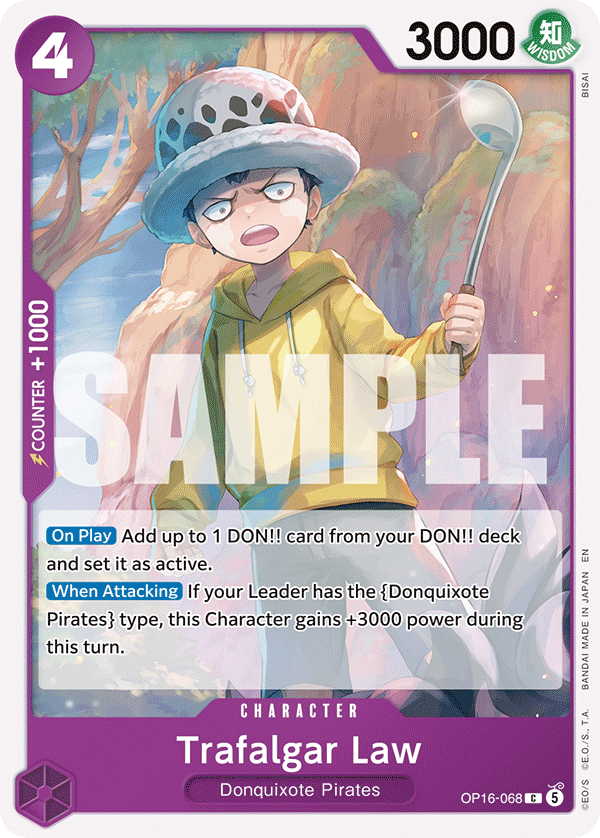 OP16-068OP16-068Shop on TCGplayer (Purple, adds a DON!! card from the DON!! deck and is a real include in Purple/Yellow Rosinante). GY Law's own leader trigger is based on total combined Character cost on the field, not on DON!! attachment or refresh timing, so neither OP16-030 nor OP16-068 interacts with the combo condition directly, they simply don't appear in this deck.
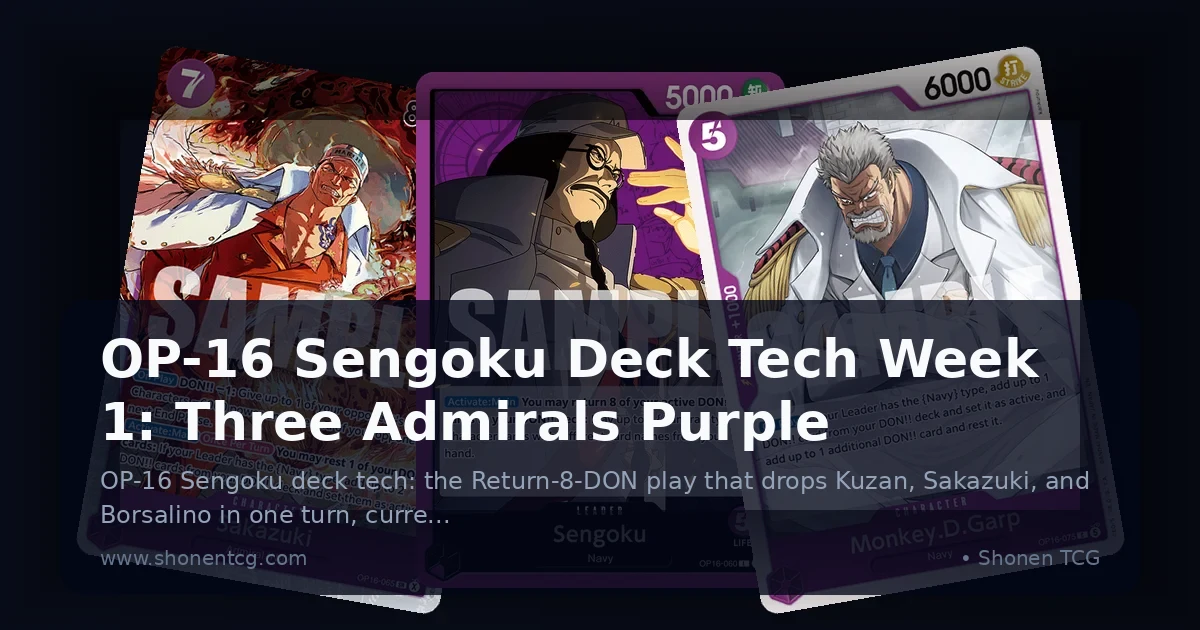
Vs Purple Sengoku 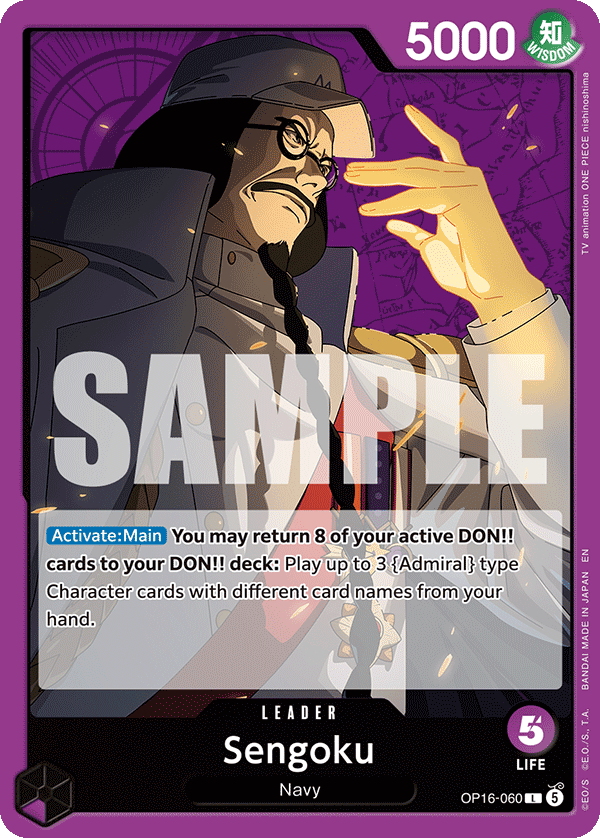 OP16-060OP16-060Shop on TCGplayer (OP16-060): Sengoku's leader ability requires returning 8 active DON!! to the DON!! deck to play up to 3 differently-named Admiral Characters from hand in one turn. That is a large DON!! investment that takes several turns of banking before it pays off. If GY Law completes its Life setup before Sengoku accumulates that much active DON!!, the tempo race favors the deck that finishes its setup first. This is mechanics reasoning, not a result from actual games.
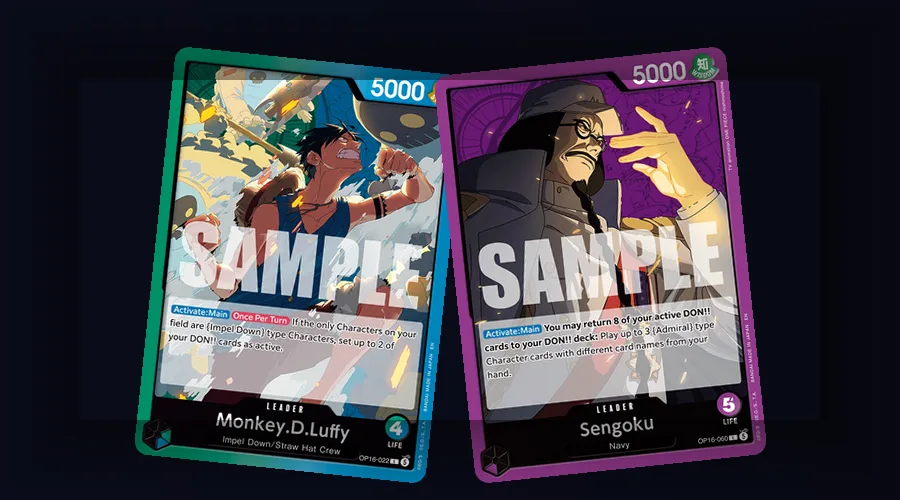 This sample image shows the OP16-022 Monkey D. Luffy and OP16-060 Sengoku leaders, examples of the OP-16 card pool used for the matchup framework above.
Tips for new GY Law pilots
Do not block every early attack automatically. Every other deck you've played may have trained you to protect Life cards because Life is precious. In GY Law, a calculated hit in turn 1 or 2 can cycle your Life cards into position. If you have a Supernova buried three cards deep and the attack is safe to take, letting it through may be the correct call.
Never activate the leader before you've confirmed a Supernova is in a revealable position. Activating blind and whiffing means you returned a character for nothing and handed your opponent tempo. Patience before the first chain activation is the skill separator between new and experienced GY Law pilots.
Count the cost on your field before every leader activation. You need 5 total or higher from Characters on the field before choosing the Character to return. Do not subtract the returned Character and apply the 5-cost check again after the bounce. This sounds obvious, but it is easy to misread at the table.
OP10-119 Law is a hand-played reload and top-end card, not a free Life reveal. At 7 cost, it exceeds OP10-022's cost 5 cap. When you can pay it, use its On Play effect to put a Supernovas Character from hand on top of Life face-down and give a rested DON!! to your Supernovas leader. If OP10-119 is already in Life, do not expect the leader to pull it out for free.
Don't cut Jewelry Bonney copies to save money on budget builds. The twelve Bonney cards across three prints are what make the low-cost base consistent enough to trigger the leader on schedule. Cutting Bonneys makes the deck awkward in turns 1-2 and pushes the first chain back by a full turn on average.
Key Takeaways
- GY Law uses OP10-022 from Royal Blood, not any OP-16 leader. They share a character name but no strategic overlap.
- The core combo: build a field totaling 5 cost, activate the leader, return a Character, play a Supernova free from Life.
- OP10-119 Trafalgar Law is a 7-cost hand-played reload and top-end card. It cannot be played by OP10-022's free-play effect and does not re-trigger the leader.
- Current Standard data lists OP10 Trafalgar Law at 4 entries and 0.09% share, so treat GY Law as a rogue pick rather than a proven tier deck. Its historical record is 18 placings including 2 wins through OP12.
- Life management is the skill floor. Deliberately accepting early hits to load Supernovas into favorable Life positions is the deck's defining discipline.
- The historical shell below contains OP01-047 and OP01-051, which current Limitless pages mark Extra legal but not Standard legal. Verify every slot before a Standard event.
Related Reading
- OP-16 Blackbeard Deck Guide: Black/Yellow Teach Decklist: The redirect mechanic and defensive timing to study before facing Blackbeard.
- OP-16 All 6 Leaders Explained: Every OP-16 leader compared on color, cost, and difficulty, including where GY Law sits among the meta competitors.
- OP-16 Format July 2026: Full Meta Update and Outlook: Historical OP-16 context for comparing this shell with the leaders it was originally built to face.
- One Piece TCG All Sets OP01 to OP16: Full set history showing where OP10-022 Law came from and how the format has evolved.
- Best One Piece TCG Decks for Beginners: Lower-learning-curve options if GY Law feels too technical as a first competitive deck.
- OP-16 Complete Guide: Full OP-16 set overview and every leader, for context on where GY Law sits in the format.
- OP-17 Release Date Confirmed: Aug 22 JP, Aug 28 EN: Release context for the set transition that makes old OP-16 snapshots harder to use as current metagame evidence.
- OP-17 Spoilers: All Confirmed Cards and Leaders 2026: A card and leader reference for the OP-17 environment now surrounding this historical shell.
Frequently Asked Questions
Q: What does GY mean in One Piece TCG? A: GY stands for Green/Yellow, the two ink colors of the OP10-022 Trafalgar Law deck. It's community shorthand that distinguishes this Supernova-combo archetype from other Law leaders in the card pool.
Q: What leader does GY Law use? A: OP10-022 Trafalgar Law from the Royal Blood set. 5000 power, 4 Life, Heart Pirates/Supernova/Dressrosa types. His leader ability triggers when your total character cost on the field reaches 5 or more.
Q: What is the GY Law combo? A: Total Character cost of 5 or more on your field, return 1 Character, reveal top Life card. If it's a Supernova at cost 5 or less, play it free. Pre-load Supernovas into Life during turns 1-2 so reveals hit reliably.
Q: Is GY Law good in OP-16? A: It is a functional rogue option, not a verified tier placement. The current Standard aggregate lists OP10 Law at 4 entries and 0.09% share, while the historical deck page records 18 placings and 2 wins through OP12. Check current legality before using the historical list.
Q: What are the key cards in GY Law? A: EB01-012 Cavendish, OP10-111 Luffy, OP10-107 Bonney, and OP10-103 Capone Bege form the core setup and reveal package. OP10-119 Law is a 7-cost hand-played reload, not a free-play target.
Q: How does GY Law differ from the OP-16 Heart Pirates Law deck? A: Trafalgar Law isn't a leader in OP-16 at all; the confirmed OP-16 leaders are Ace, Luffy, Buggy, Sengoku, Yamato, and Blackbeard. The Heart Pirates build runs OP16-030 Law as a Character with DON!! removal. GY Law uses the separate OP10-022 leader and the Supernova chain combo. They share a name and nothing else.
Q: When should I activate the GY Law leader? A: After turns 1-2 of Life setup, once you have at least one confirmed Supernova in a revealable Life position. Activating before Life setup is complete wastes the returned character and hands your opponent tempo.
References
- Green/Yellow Law Deck Overview, Limitless One Piece: Historical tournament data showing 18 placings and 2 wins through the OP12 environment
- Green/Yellow Trafalgar Law Bouzyyy regional list, Limitless: Historical Toronto, ON regional decklist used as the shell for the list above
- (Green/Yellow) Trafalgar Law Official Feature, ONE PIECE CARD GAME: Bandai strategy overview for the Life setup and leader activation
- Official OP10 Royal Blood card list: Official text for OP10-022, OP10-103, OP10-107, OP10-111, OP10-114, and OP10-119
- Official OP06 card list: Official text for OP06-035 Hody Jones
- Official OP16 card list: Official text for the OP-16 leader and Law Character references in the matchup section
- Current Standard decks, Limitless One Piece: Post-OP17 aggregate field totals and current OP10 Trafalgar Law representation, checked 2026-09-21
- OP10-022 Trafalgar Law, Limitless card page: Current card text and legality listing
- OP10-119 Trafalgar Law, Limitless card page: Current 7-cost reload effect and legality listing
- OP01-047 Trafalgar Law, Limitless card page: Current cost, type, effect, and Standard legality listing
- OP01-051 Eustass "Captain" Kid, Limitless card page: Current cost and Standard legality listing
- Official restriction and legality rules: Event-date reference for checking restrictions before registering a historical shell
- TCGPlayer One Piece TCG: card pricing reference
Was this guide helpful?
Cards in this article
About the author
RN
Beginner Guides & Crossover Writer
Anime fan turned TCG content creator. Bridges the gap between anime fandom and card game strategy. Covers beginner guides, anime-to-TCG crossover content, and Union Arena.
- TCG content creator since 2022
- Specializes in onboarding new players
- Covers Union Arena multi-IP content
- Bridge between anime fandom and TCG community
Disclaimer
This article is published for informational and entertainment purposes. It does not constitute professional financial, legal, or technical advice. Game performance, online services, patch schedules, and store listings change. Verify critical details (pricing, system requirements, regional availability) with publishers and storefronts before you buy. Affiliate links, where present, help support our editorial work and are labelled in our affiliate disclosure.