

Shonen TCG · Guides
OP-16 vs OP-15 power level comparison: what changed?
OP-16 vs OP-15 power level comparison: compare the new leaders and mechanics, with dated tournament data and a clear post-OP17 Standard context.
This OP-16 vs OP-15 power level comparison is now a historical set review, not a live OP-16 tier list. OP-16 released in June 2026 and introduced six new Leaders, including the Yamato and Marshall.D.Teach designs that made the set feel mechanically different from earlier releases. The official product page lists 126+1 types and calls out those Leaders, its Secret Rares, and the Three Admirals Super Alt-Art treatment.

The timing matters. OP-17 is now the latest update on the main Limitless database, and Standard uses Bandai's Block Number system rather than a simple “newest set wins” rule. The useful question is therefore narrower: did OP-16 raise the ceiling over OP-15, and what evidence supports that conclusion?
TL;DR: OP-16 introduced more noticeable Leader mechanics than a routine stat upgrade, especially Yamato's trash-to-Rush condition and Marshall.D.Teach's attack redirection. Its historical OP-16-only Limitless snapshot was led by Blue/Yellow Nami, Green/Blue Luffy, and Purple Enel, with Blackbeard below them. That supports a meaningful format shift, but not a blanket claim that every OP-16 card outclasses OP-15 or that the old set became illegal.
OP-16 vs OP-15 power level: quick answer
OP-16 changed how several decks generate pressure and defend their board. That is a stronger powercreep signal than printing a few larger numbers, but it is not enough to rank two complete sets without looking at leaders, support, restrictions, and tournament results separately.
| Comparison point | What can be verified |
|---|---|
| OP-16 release | June 12, 2026 in the English product page |
| OP-16 product scope | 126+1 types, with Commons through Secret Rares, Leaders, Specials, Treasure Rare, and DON!! cards listed |
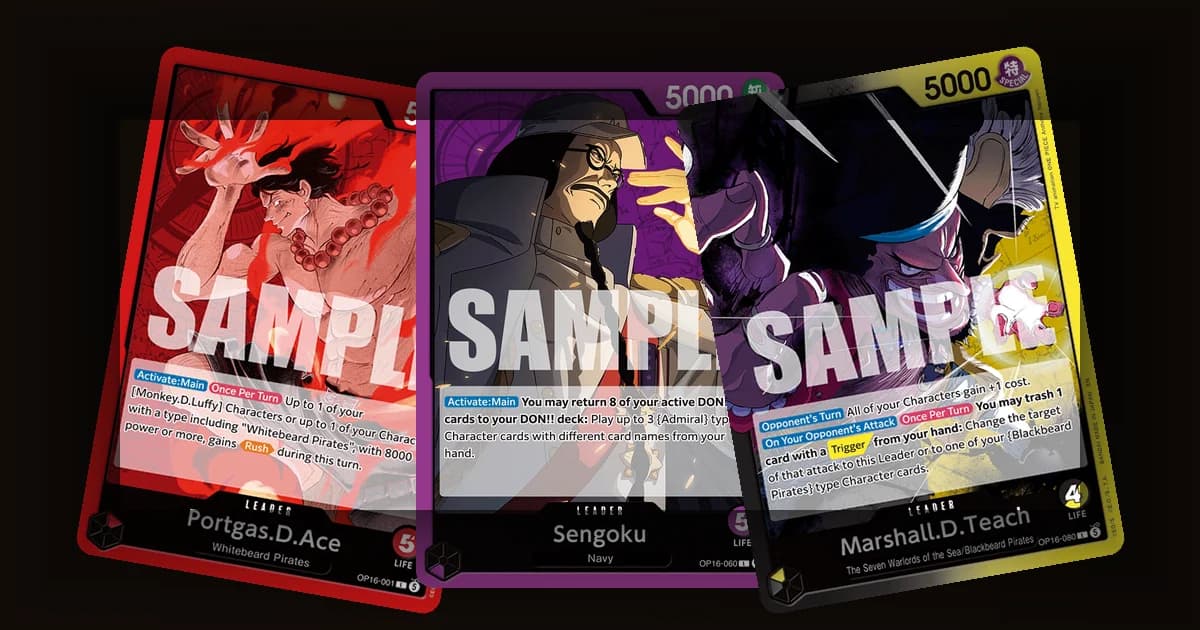
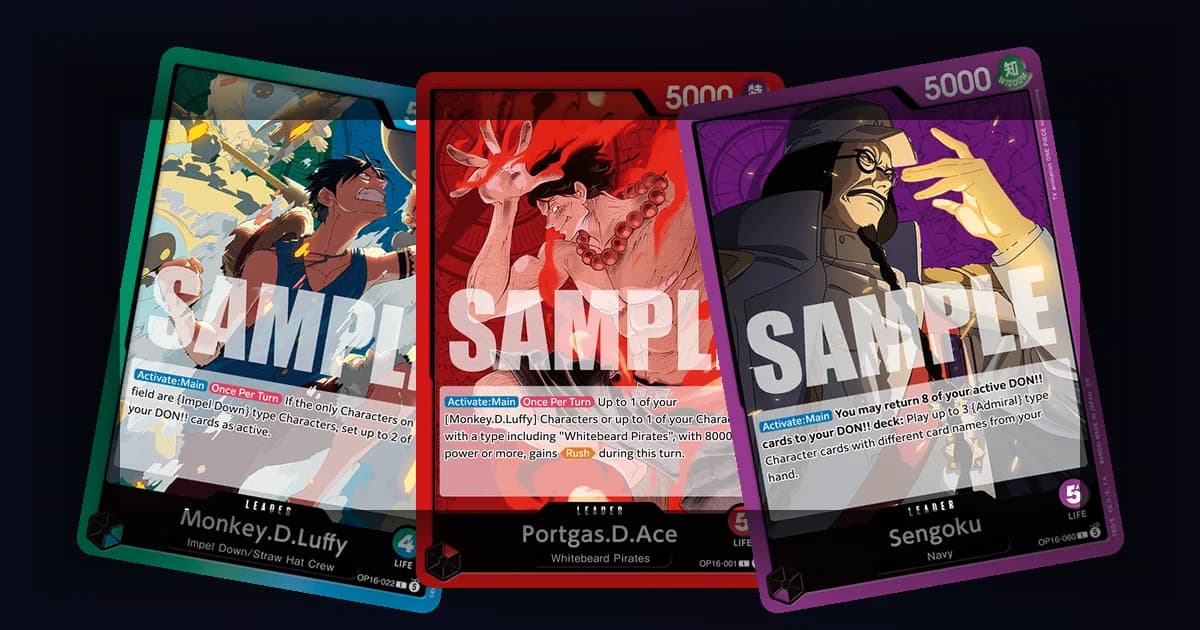
| New Leader designs | Portgas.D.Ace, Monkey.D.Luffy, Buggy, Sengoku, Yamato, and Marshall.D.Teach |
| Standout text | Trash-based Rush with Yamato, attack redirection with Teach, and conditional Rush support with Ace |
| Historical OP-16 field | Nami, Green/Blue Luffy, and Purple Enel led Limitless points share; Blackbeard was fifth in that snapshot |
| Current context | Limitless now identifies OP-17 as the latest update, so this is not a current Standard ranking |
The comparison is strongest when it describes what the cards do. It becomes unreliable when it turns one dated metagame table into a permanent verdict about power.
What powercreep means in One Piece Card Game
Powercreep can be split into two useful categories:
- Stat or rate creep: a card costs less, has more power, draws more cards, or removes a larger target than an older card with a similar job.
- Mechanic creep: a card creates a new line of play, such as attacking immediately from the trash or changing the target of an attack.
Mechanic creep can feel larger because opponents must learn new combat patterns. It still needs a functioning shell. A novel effect that is slow, inconsistent, or poorly supported is not automatically stronger than an older deck.
The official rules also make one old sentence in this article unsafe: One Piece Card Game no longer treats the entire history as one unchanging Standard pool. Bandai introduced Block Numbers in April 2026. Standard Regulation uses roughly three years of recent card pools, while Extra Regulation is intended to allow the broader history. Check the block number and current restriction list before calling an OP-15 card legal or obsolete.
The OP-16 Leader designs that changed the comparison
The official card list is more reliable than a generic mechanic summary. These three entries show why the set created a different testing problem for OP-15 decks.
Yamato and trash-to-Rush pressure
Yamato 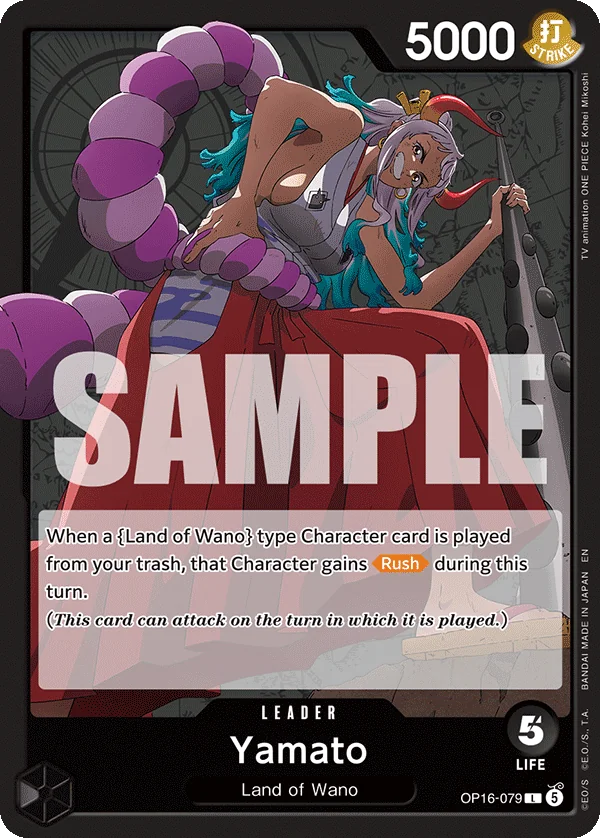 OP16-079OP16-079Shop on TCGplayer
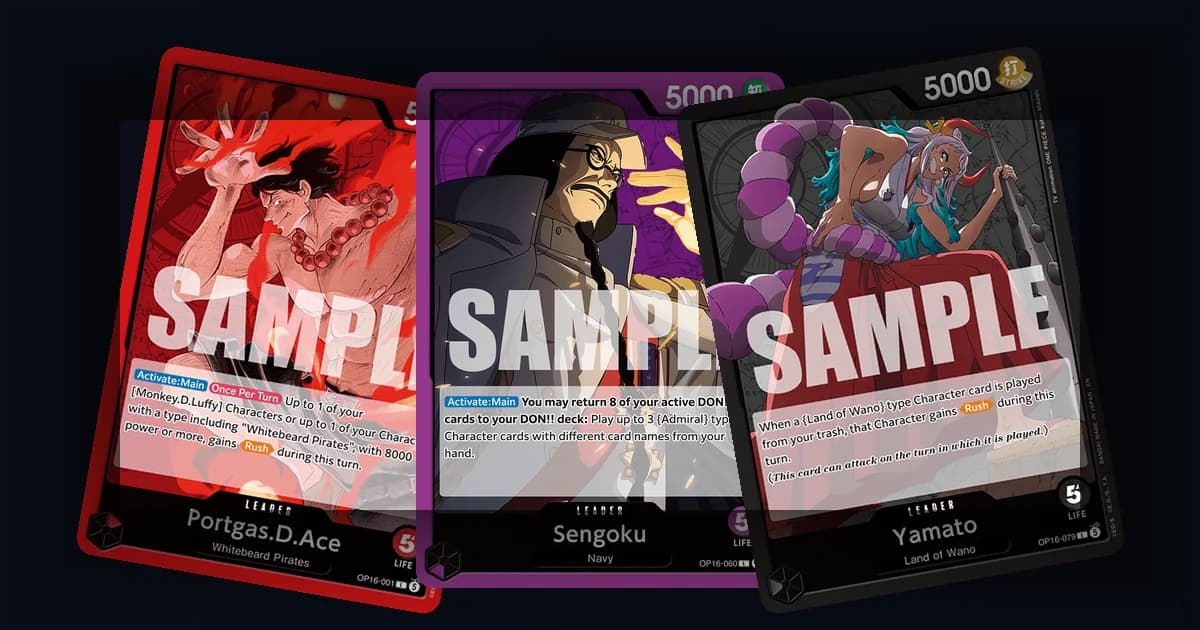
 OP16-079 is a black Leader with five Life and 5000 power. Its effect gives Rush to a Land of Wano Character played from your trash for that turn. That means the payoff is tied to both the card's type and the way it enters play. It is not a universal recursion effect for every black deck.
The design changes the value of trading Characters. An OP-15 deck that expects a KO to permanently remove a threat must account for the opponent converting that trash into immediate pressure. The effect is powerful when the list can fill the trash and find the right Wano Characters, but the Leader alone does not prove that every Yamato build is stronger than every older black shell.
Marshall.D.Teach and attack redirection
Marshall.D.Teach 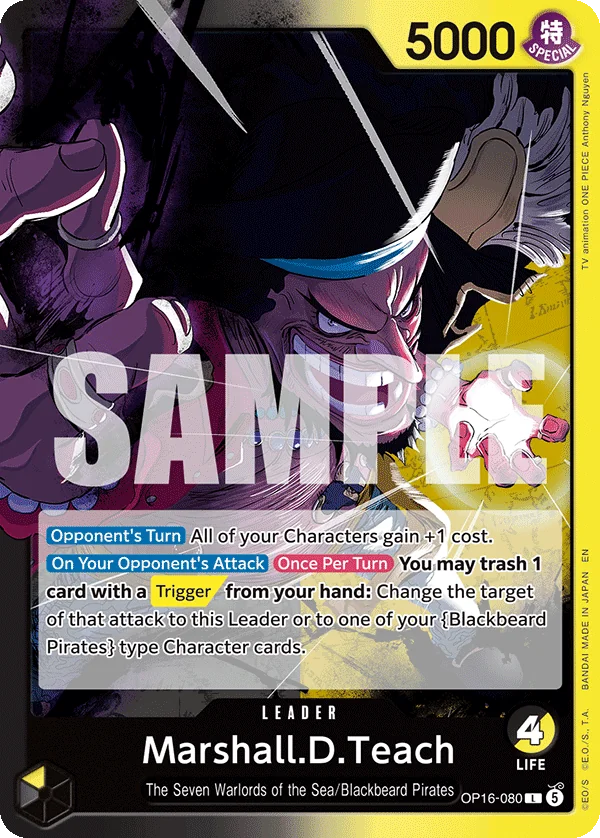 OP16-080OP16-080Shop on TCGplayer
 OP16-080 is a black/yellow Leader with four Life and 5000 power. During the opponent's turn, all of your Characters gain one cost. Once per turn, when the opponent attacks, you may trash a card with a Trigger from your hand to change that attack's target to Teach or one of your Blackbeard Pirates Characters.
This is a defensive resource decision, not a blanket attack cancellation. You still discard a card, the replacement target must be legal, and the effect only redirects an attack. The cost increase also affects your own Characters, so the card asks you to build around the restriction rather than treating it as free protection.
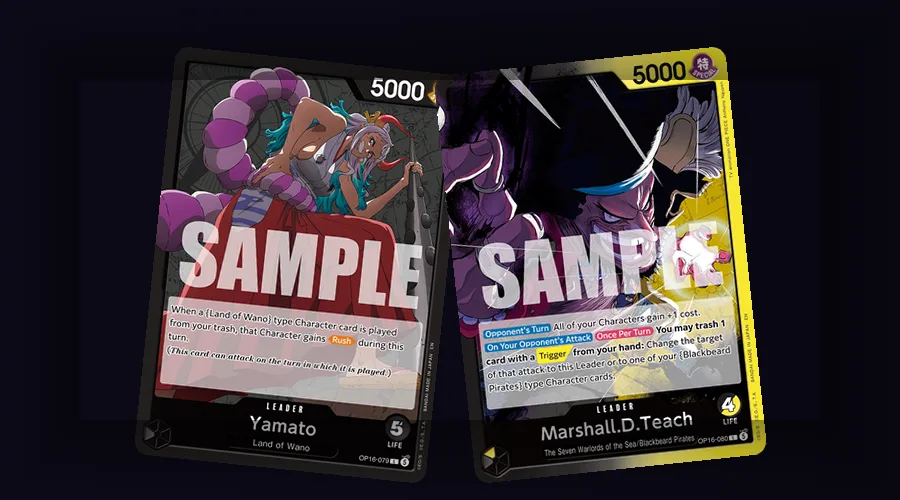 Yamato and Marshall.D.Teach are both OP-16 Leaders, but their pressure and defense patterns are different rather than interchangeable.
Portgas.D.Ace and conditional Rush
Portgas.D.Ace 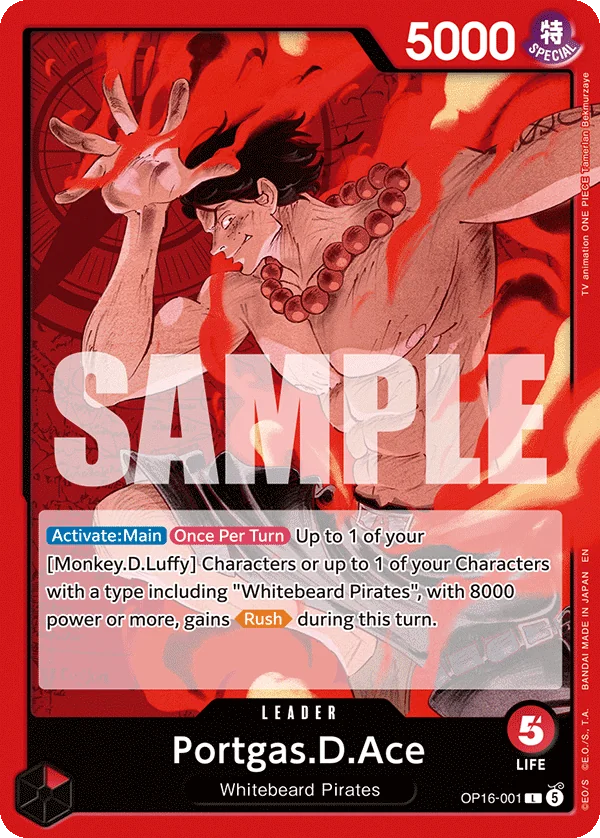 OP16-001OP16-001Shop on TCGplayer
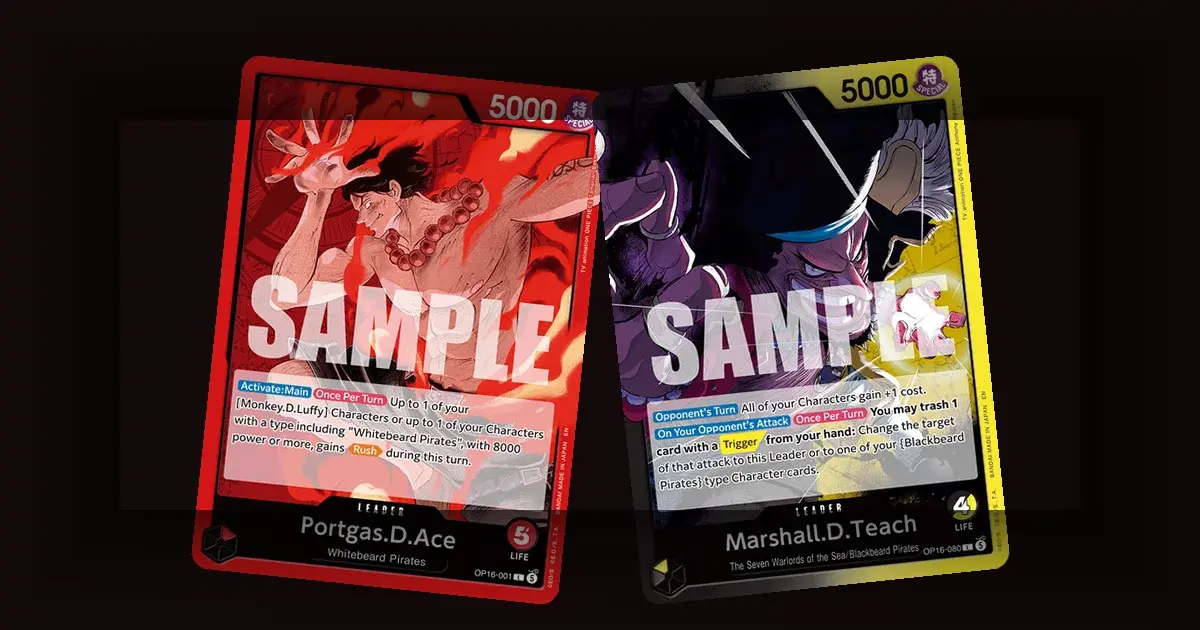
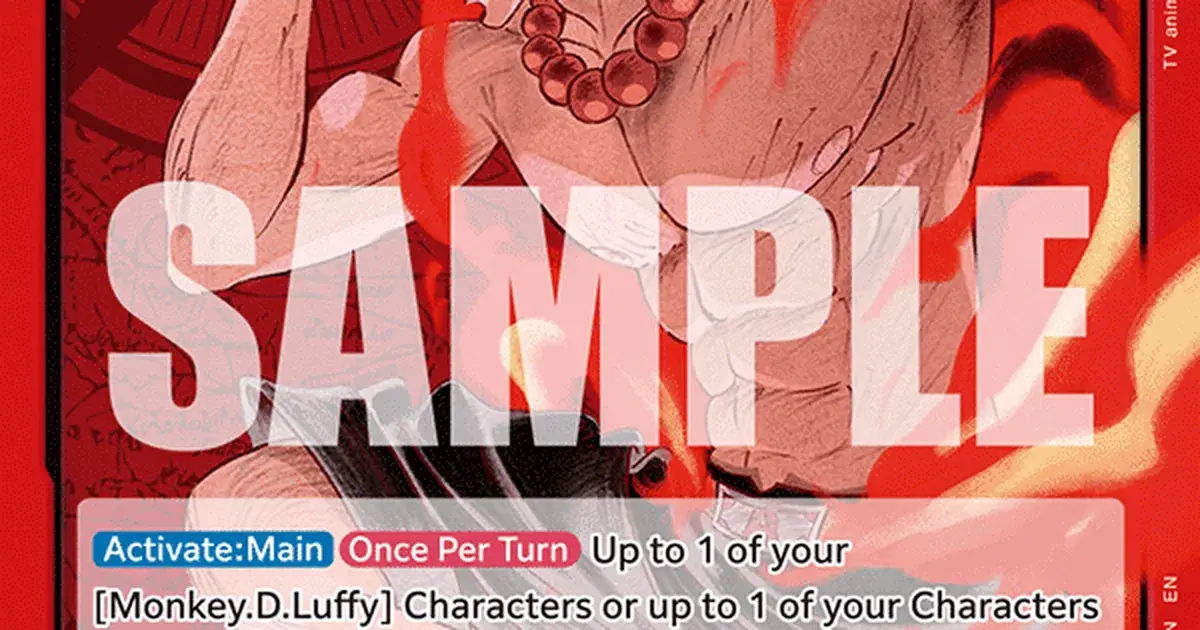
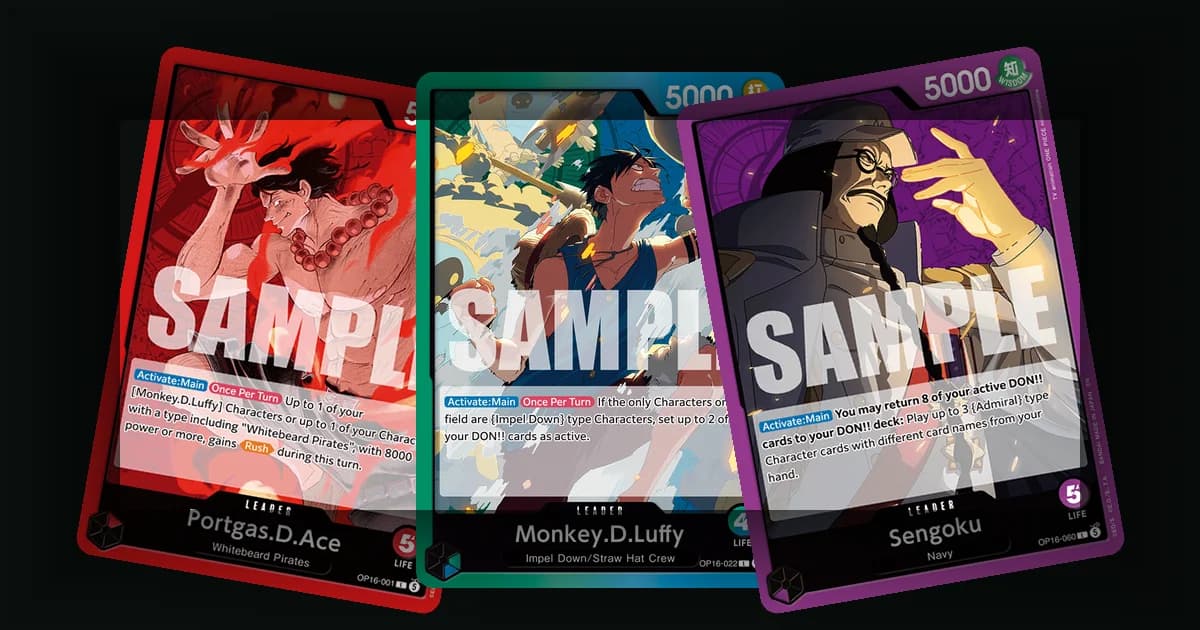
 OP16-001 is a red Leader with five Life and 5000 power. Once per turn, it can give Rush to an eligible Monkey.D.Luffy Character or a Whitebeard Pirates Character with 8000 power or more. This is a conditional finisher tool: the deck must meet the name, type, and power requirement before the Leader can create the attack.
Ace is a useful reminder that “has Rush” is not the same as “has unconditional extra attacks.” Comparing the requirement and the support cards is more informative than counting keyword appearances across OP-15 and OP-16.
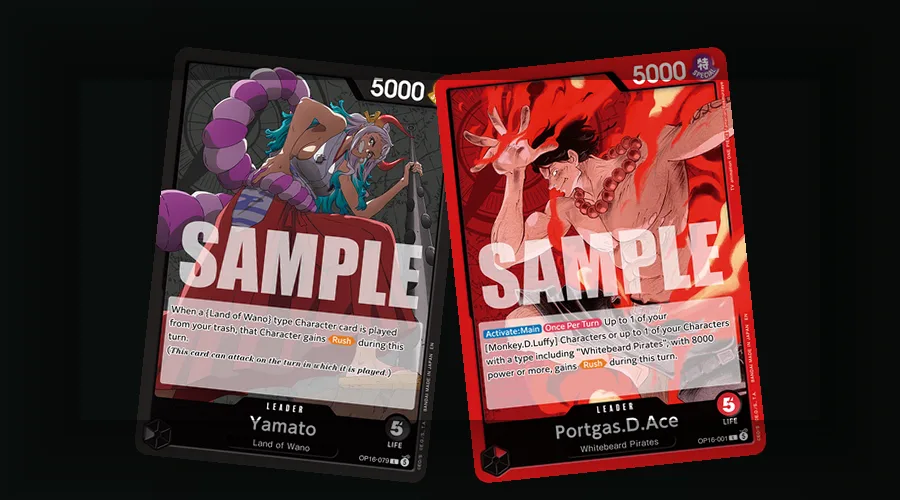 The visible Yamato and Portgas.D.Ace sample cards both create pressure, but through different deck-building conditions.
What the historical OP-16 data says
Limitless provides a useful dated snapshot when its format filter is set to OP16. The page records points and share, not a universal win-rate table. In the snapshot checked for this audit, the leading entries were:
- Blue/Yellow Nami: 23.52%
- Green/Blue Luffy: 22.91%
- Purple Enel: 22.71%
- Purple/Yellow Rosinante: 9.88%
- Black/Yellow Blackbeard: 8.86%
That distribution supports two restrained conclusions. First, the OP-16 field had several leading shells rather than one Leader taking every visible result. Second, Blackbeard was a real part of the format but not at the same points-share level as the top three in that snapshot.
It does not prove that OP-16 cards have a higher average power level than OP-15 cards. Limitless points are an aggregate database measure, and a Leader's share depends on pilots, deck availability, event coverage, and which card pool the filter includes. Do not rewrite those percentages as win rate, tournament conversion, or a permanent tier placement.
OP-16 vs OP-15 power level after OP-17
The current context changes how this article should be used. Limitless now shows OP17 as its latest update and its default Standard view contains a different field, including Black/Yellow Luffy, Blue/Black Sakazuki, and Blue Doflamingo among the highest points entries at the time of review. That does not erase the OP-16 comparison. It simply means the comparison should be labeled as a set-jump analysis rather than a recommendation for today's best deck.
The same caution applies to buying advice. A card from OP-15 can still matter if its block is legal, if its effect fits a current deck, or if later support gives it a new role. A card from OP-16 can fall out of the field when the surrounding card pool changes. Newer is a data point, not a guarantee.
Are OP-15 decks obsolete?
No blanket answer is defensible. Bandai's Block Number announcement says Standard Regulation is built from approximately three years of recent card pools and that Block Numbers identify which cards are eligible for official tournaments. It also describes Extra Regulation as the broader format for older cards.
The official OP-16 card list shows Block 5 on the set's cards, while the official OP15-EB04 list shows Block 4 entries. Under Bandai's published 2026-2027 example, Blocks 2 through 5 are allowed in Standard. That makes many OP-15 and OP-16 cards relevant at this snapshot, subject to the exact card number, reprint, ban list, and event rules.
For deck testing, ask three questions instead of asking whether an entire set is dead:
- Is the exact card legal in the format and region?
- Does its effect solve a problem in the current field?
- Does newer support improve or replace its role?
The One Piece TCG Standard format guide covers the format framework, while the One Piece TCG meta rotation guide explains why legality and metagame relevance are separate decisions.
Buying and deck-building implications
If you play an OP-15 deck: test the exact list against the current card pool before selling it. Keep a legal staple when it still performs a job that the newer set does not replace.
If you are building OP-16: start with the Leader's actual conditions. Yamato needs Land of Wano Characters and trash access. Teach needs Trigger cards and Blackbeard Pirates targets. Ace needs the right Character names, types, and power. A Leader's headline mechanic is only as good as the support that meets those conditions.
If you collect: treat the comparison as historical context, not a price forecast. Set age, character demand, print treatment, condition, reprints, and current playability can move in different directions. Check a dated market source for a specific card rather than applying a blanket “OP-16 premium.”
For a broader look at the set's cards, use the OP-16 complete guide. For the black Leader's actual list-building decisions, see the OP-16 Yamato deck guide.
Key Takeaways
- OP-16's strongest powercreep signal is its Leader text, not a claim that every card has better numbers.
- Yamato, Marshall.D.Teach, and Portgas.D.Ace create distinct conditions for trash pressure, attack redirection, and Rush support.
- The historical OP-16 Limitless snapshot led with Nami
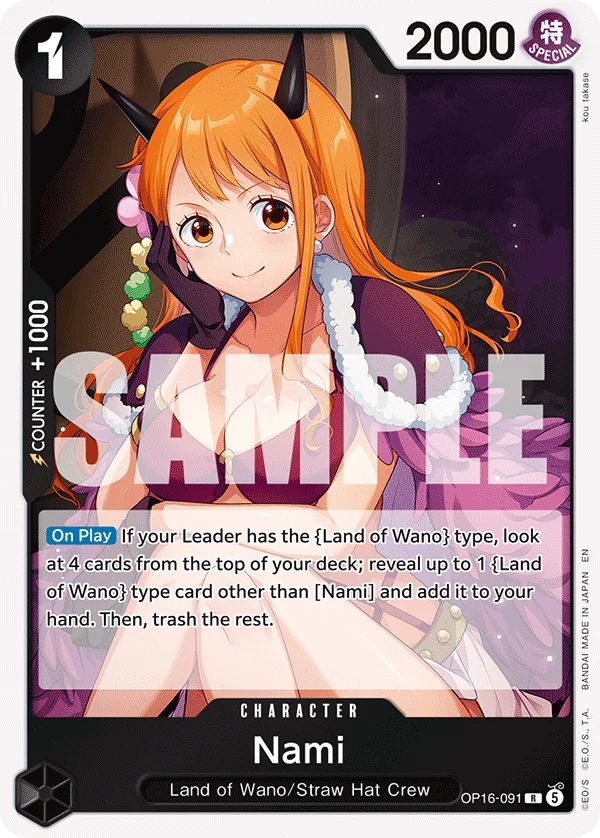 OP16-091OP16-091Shop on TCGplayer, Green/Blue Luffy, and Purple Enel by points share, while Blackbeard placed fifth.
 - Points share is not win rate, and a dated OP-16 filter is not a current OP17 Standard tier list.
- OP-15 is not automatically obsolete. Check Block Number, card number, restrictions, and current support.
- Compare specific deck roles and card text before making a buying or selling decision.
Related Reading
- OP-16 meta tier list week 1: Read the first dated metagame snapshot with its limitations.
- One Piece TCG card rarities explained: Separate printed rarity from competitive power.
- One Piece TCG best Leaders of all time: Compare Leader design across releases.
- One Piece TCG locals etiquette guide: Prepare for the local events where new decks are tested.
Frequently Asked Questions
Is OP-16 automatically stronger than OP-15?
No. OP-16 introduced notable Leader mechanics, but set-wide power requires card-by-card and tournament evidence. The historical OP-16 snapshot supports a format shift, not a universal ranking of every card.
What is the most important OP-16 mechanic?
That depends on the deck. Yamato's trash-to-Rush effect changes how Wano Characters trade, Teach's effect changes attack targeting and defense resources, and Ace rewards a specific high-power Character package.
Did OP-16 remove the need for OP-15 cards?
No. Some older cards can remain useful or legal under the Block Number system. A specific card's role matters more than the set label.
Why are the Limitless percentages not called win rates?
The OP-16 filter labels those figures as points and share. They describe the database's tracked distribution, not the percentage of games each deck won.
Is this still a current OP-16 meta guide?
No. It is a dated comparison. Limitless now identifies OP17 as the latest update, so use a current Standard source for today's deck choices.
References
- Bandai Namco official OP-16 product page
- Bandai Namco official OP-16 card list
- Bandai Namco Introduction of the Block Number System
- Bandai Namco current rules page
- Limitless historical OP-16 format snapshot
- Limitless current Standard deck distribution
- Limitless current deck database with OP17 latest update
Cards in this article
About the author
Pen name for the Shonen TCG desk's tournament coverage, format analysis and cross-game comparisons.
- Results taken from event pages and standings
- Other games checked against their own official rules
- Opinions marked as ours, with the reason
Keep reading
OP-16 Sengoku Deck Guide: Purple Marine Admirals Build
Guides · 13 min
OP-16 Box Opening Strategy: How Many Boxes to Open
Guides · 10 min
OP-16 Collectors Guide: SEC, Manga Rare, Alt-Art Cards
Guides · 11 min
OP-16 EN Launch Guide: What Happened After Release
Guides · 12 min
OP-16 Ace Deck Guide: Whitebeard Pirates Rush Build
Guides · 12 min
One Piece TCG Best Leaders All Time: Top 10 Ranked
Guides · 13 min
One Piece TCG Standard Format Guide 2026: Legal Sets
Guides · 12 min
One Piece TCG Trade Guide: How to Trade Cards Fairly
Guides · 13 min
Disclaimer
This article is published for informational and entertainment purposes. It does not constitute professional financial, legal, or technical advice. Game performance, online services, patch schedules, and store listings change. Verify critical details (pricing, system requirements, regional availability) with publishers and storefronts before you buy. Affiliate links, where present, help support our editorial work and are labelled in our affiliate disclosure.