

Shonen TCG · Guides
OP-16 Sengoku Deck Guide: Purple Marine Admirals Build
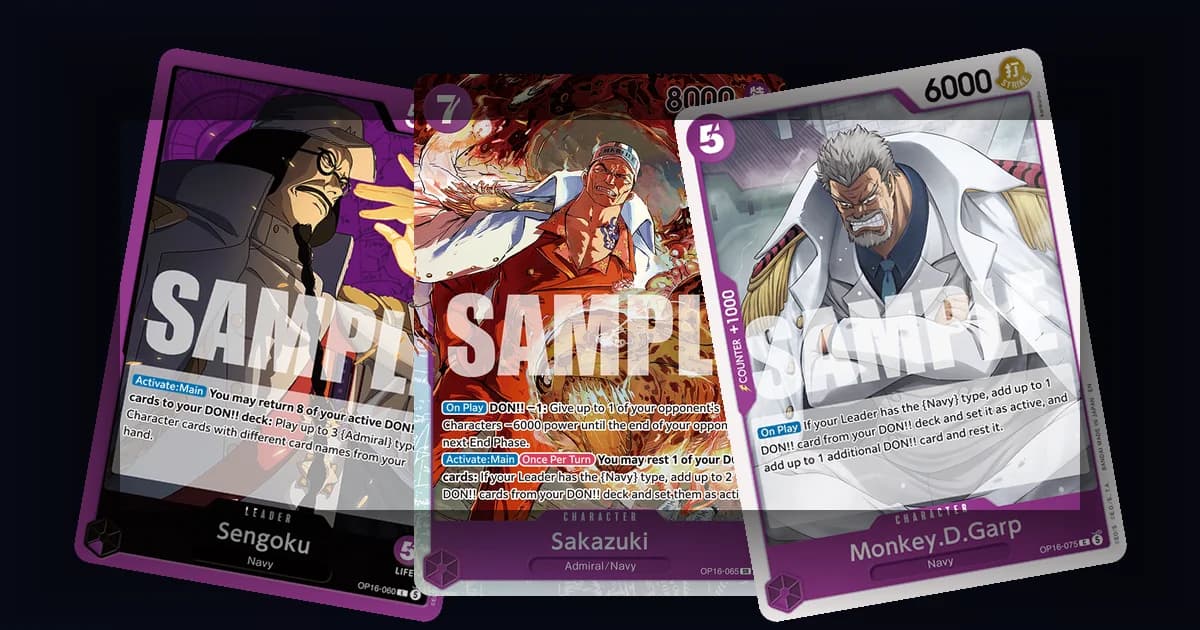
TL;DR: OP-16 Sengoku deck guide: the Purple Marine leader (OP16-060) who uses Purple's DON!! ramp to deploy the Three Admirals, Akainu/Sakazuki (OP16-065), Kizaru/Borsalino, and Aokiji/Kuzan, ahead of curve. Marine synergy deck. Standard prints are the playable core, while Manga and Super Alt-Art variants are optional collector chases. Card text below is checked against the official EN list, and price notes use a September 16, 2026 snapshot.
Correction (2026-07-27): this guide has been fully post-launch verified, replacing the "confirm at launch" placeholder language from June. Sengoku is confirmed mono-Purple (5000 power, 5 life). His real leader ability, verified against the official card list: Activate: Main, DON!!-8, return 8 active DON!! cards to your DON!! deck, then play up to 3 Admiral-type Characters with different names from hand without paying their cost. An earlier version of this guide also listed Smoker (OP16-028) as a supporting piece; Smoker is printed Green, not Purple, and cannot legally be run in a mono-Purple Sengoku deck. That reference has been removed below.
OP-16 Sengoku deck guide: quick answer
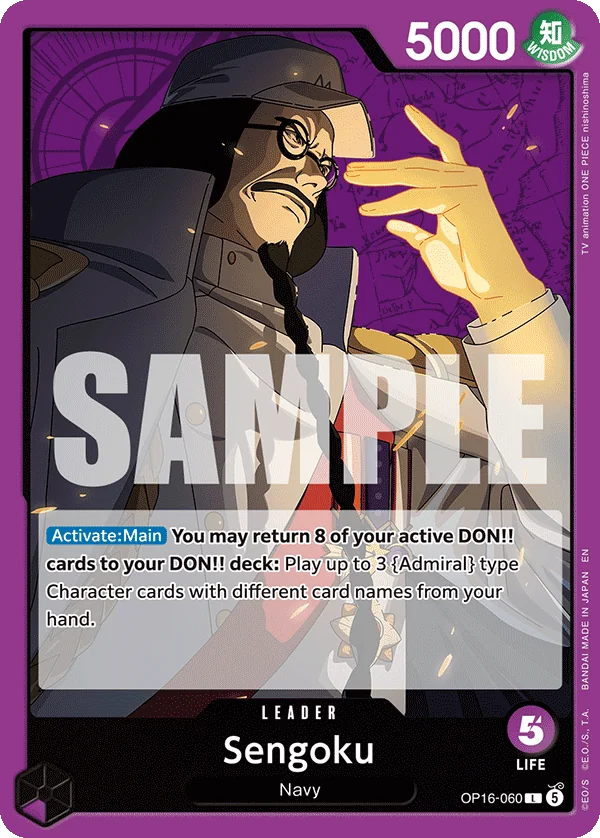 OP16-060OP16-060Shop on TCGplayer Sengoku is the Purple Leader in OP-16, the Fleet Admiral commanding the Marines. His deck is the "Three Admirals" Marine build: Akainu/Sakazuki
 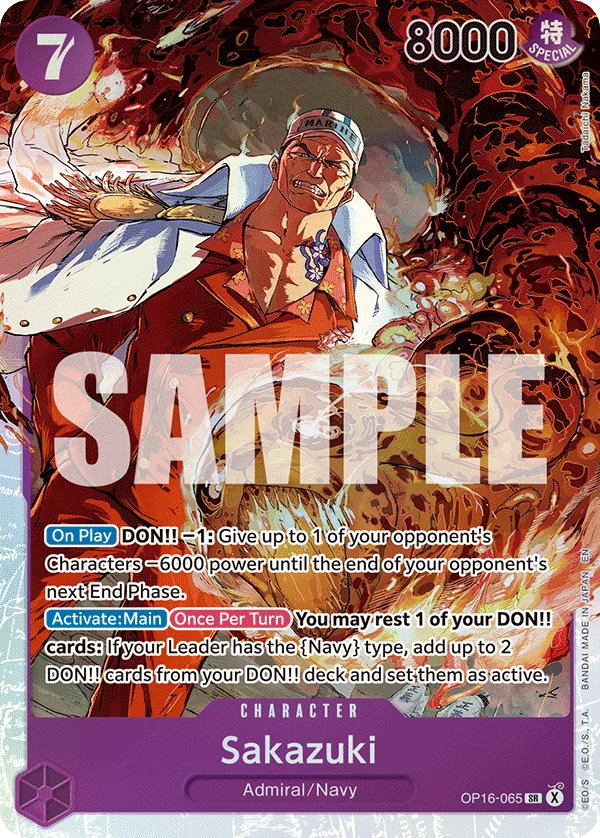 OP16-065OP16-065Shop on TCGplayer (OP16-065), Kizaru/Borsalino
 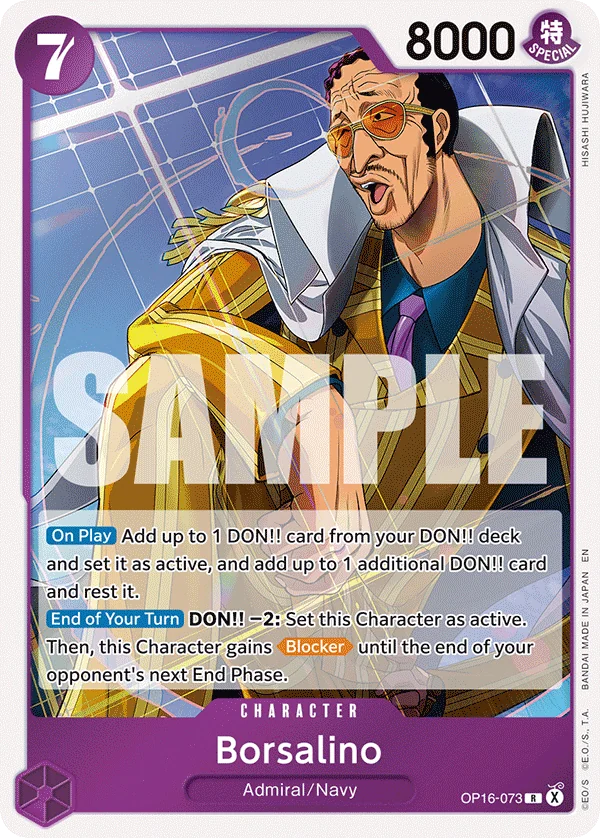 OP16-073OP16-073Shop on TCGplayer, and Aokiji/Kuzan
 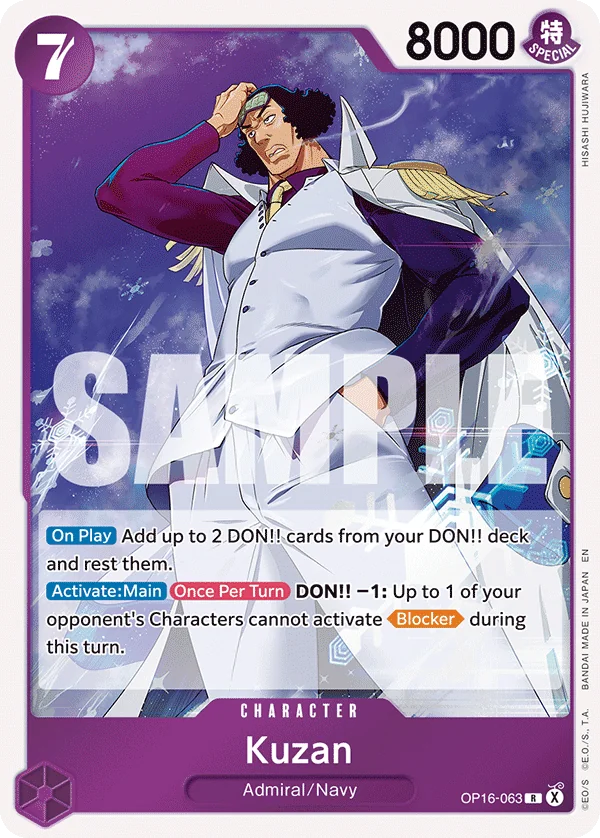 OP16-063OP16-063Shop on TCGplayer as key Character cards. Akainu and the Admirals are NOT leaders; Sengoku is. Garp (OP16-075) is also a Character here.
Because Sengoku is Purple, this is not a draw-go control deck. Purple is OPTCG's DON!! ramp color. Sengoku accelerates his resources to deploy expensive Admiral Characters ahead of the normal curve, then overwhelms with a board the opponent cannot match on time.
GODEEPER: Want to see how Sengoku ranks against the other five OP-16 leaders? The full comparison covers play style, colour, and cost. OP-16 All 6 Leaders Explained
OP-16 Sengoku deck guide: why the Admirals matter
Purple's identity in OPTCG is resource acceleration: generate or manipulate DON!! so you play cards above your normal curve. Sengoku turns that into a Marine payoff. Instead of grinding slowly to the late game, he ramps to drop high-impact Admiral Characters earlier than a normal high-cost deck could.
The Three Admirals are the payoff. Akainu/Sakazuki is the marquee removal-and-pressure Admiral; Kizaru/Borsalino and Aokiji/Kuzan complete the trio. Each is a powerful Marine Character, and Sengoku's leadership plus a Marine-heavy board makes them efficient.
This shapes deckbuilding around two pillars: ramp enablers (Purple DON!! acceleration) and the Admiral payoffs. The supporting Marine cast (Garp and cheaper Purple Marines) bridges the early turns and feeds the synergy count the Admirals reward.
Confirmed Character Lineup
Leader: Sengoku (OP16-060)
Purple, 5000 power, 5 life. Real leader ability (Activate: Main): DON!!-8, return 8 active DON!! cards to your DON!! deck, then play up to 3 Admiral-type Characters with different names from your hand without paying their cost. The ability becomes available when you can pay its 8 active DON!! cost and have the Admirals in hand, so do not treat a specific turn as guaranteed.
Mulligan target? Keep a ramp enabler plus an early Marine. You want to be accelerating by turns 2-3 so an Admiral lands while it still swings the game.
The Three Admirals (the payoff + the chase)
- Akainu / Sakazuki (OP16-065): 7-cost, 8000 power. On Play, DON!!-1: give 1 opponent Character -6000 power until the end of their next End Phase. It is one of OP16's three premium Manga variants and also has a Super Alt-Art version.
- Kizaru / Borsalino (OP16-073 Super Alt-Art): 7-cost, 8000 power. On Play, adds 1 active + 1 rested DON!! from your DON!! deck. End of Your Turn, DON!!-2: sets itself active, then gains Blocker until the end of the opponent's next End Phase.
- Aokiji / Kuzan (OP16-063 Super Alt-Art): 7-cost, 8000 power. On Play, adds 2 rested DON!! from your DON!! deck. Activate: Main, once per turn, DON!!-1: 1 opponent Character cannot activate Blocker this turn.
Price snapshot (September 16, 2026): OnePiece Terminal lists Manga Sakazuki at $1,127, Manga Kuzan at $1,114, and Manga Borsalino at $1,043. Those are moving market snapshots, not fixed values; standard copies are the relevant comparison for a playable list.
You do NOT need the premium variants to play. Standard prints preserve the card functions, while Manga and Super Alt-Art versions are optional collector upgrades.
Key Character: Garp (OP16-075)
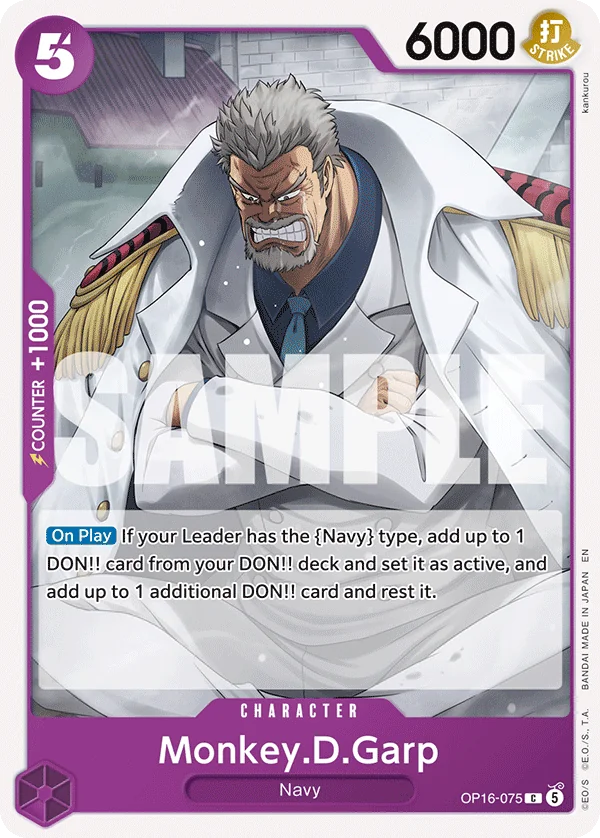 OP16-075OP16-075Shop on TCGplayer 5-cost, 6000 power, +1000 counter, Navy. On Play: if your Leader has the Navy type, add 1 active DON!! and 1 rested DON!! from your DON!! deck. A second DON!! engine alongside Kuzan and Borsalino, and a high-power body in his own right.
Correction: an earlier version of this guide listed Smoker 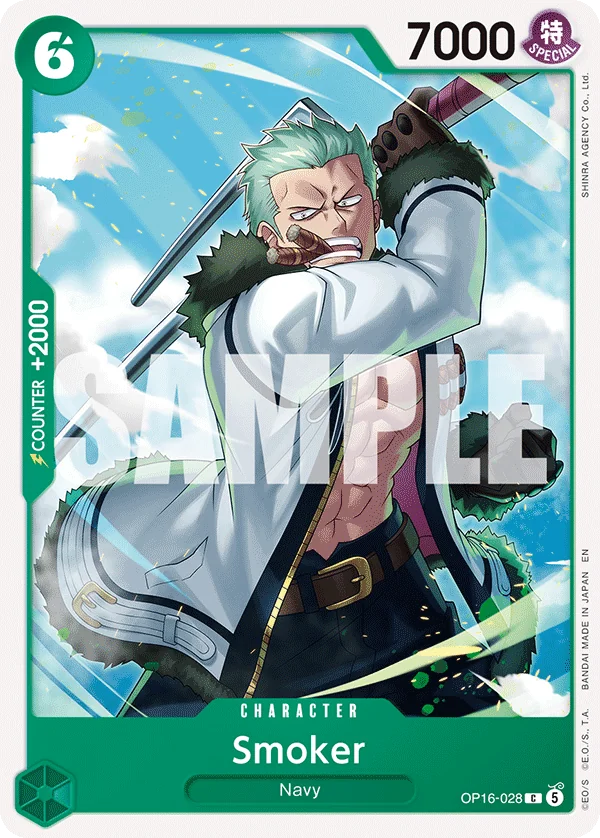 OP16-028OP16-028Shop on TCGplayer (OP16-028) as a Sengoku support piece. Smoker is a real OP-16 card, but he's printed Green, not Purple, so he cannot legally be included in a mono-Purple Sengoku deck. This section has been removed.
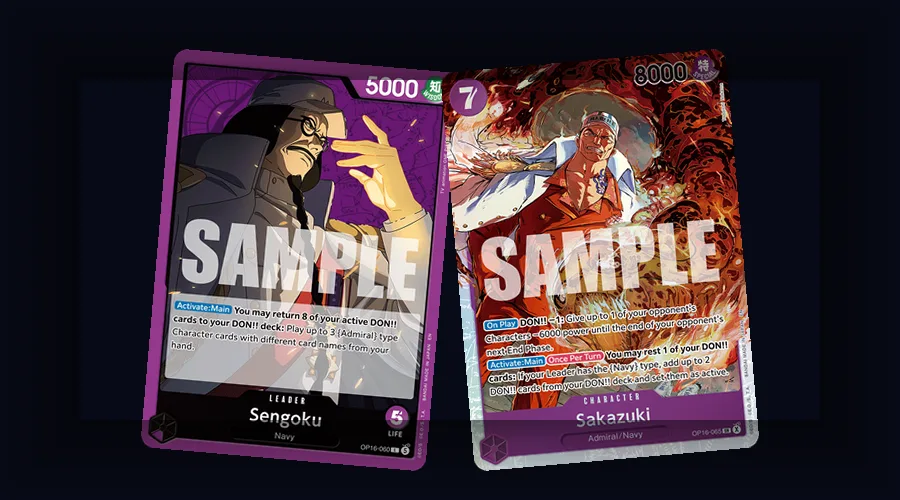 Sengoku is the Purple Marine leader; Sakazuki is his marquee Admiral Character and one of OP16's Manga chase variants.
Step-by-Step: playing the DON!! ramp curve
Purple plays differently from a slow control deck: you are proactively ramping, not passively surviving.
1. Mulligan for a ramp enabler plus an early Marine. You want to be accelerating by turns 2-3 so an Admiral lands while it still swings the game, so a hand with no ramp piece and nothing cheap to play is worth sending back.
2. Deploy cheap Marines and ramp enablers in turns 1 and 2. The goal here is banking extra DON!! access for an early Admiral, not applying pressure yet.
3. Keep developing cheap Purple Marines through turn 3 while ramp continues underneath. Garp, at 5-cost, comes down once your ramp catches up, not this early; treat turn 3 as more setup, not the payoff turn.
4. Land your first Admiral once ramp pays off, usually turns 4 or 5. Akainu/Sakazuki swings the board the moment he lands, so this is the turn the deck's plan actually starts converting into pressure.
5. Follow up with additional Admirals from turn 5 through 7, and lean harder on ramp if you're behind. A full Marine Admiral board generates more attacks than the opponent can answer. If you're behind on board, prioritize whatever enabler keeps you on the accelerated curve rather than trading for small value.
Matchup Notes
These notes combine play-pattern guidance with the latest available OP16 data. Limitless records Enel (OP15-058) at 13-11 over Sengoku in 24 OP16 games (54.17%), while OP13 Ace is 4-4 against Sengoku across 8 games. A current Sengoku guide also labels Purple Enel the worst matchup and places Ace and Yamato in its even band. Samples are limited and lists change, so use these as signals rather than fixed tier claims.
vs Ace (Red aggro)
Limitless currently shows OP13 Ace at 4-4 against Sengoku across 8 OP16 games. Ace pressures early, so Sengoku's edge is ramping into a stabilizing Admiral before the burst closes. If the ramp stalls, Ace can win the race, but the available sample does not support calling this a fixed loss.
vs Purple Enel
This is the matchup to respect most in current community guidance. Limitless records Enel at 13-11 over Sengoku across 24 OP16 games, and the current Sengoku guide labels Purple Enel the archetype's worst matchup. Enel's resource engine can recover after the Admiral turn, so prioritize efficient attacks and avoid spending every card on a board that gets out-valued.
vs Buggy (Blue swarm)
Buggy floods the board with cheap Blue Characters. The Admirals' impact and removal answer a wide board, but you must ramp to them before the swarm overwhelms.
vs Yamato (Black)
Yamato recurs Wano Characters from trash with Rush. A resilient, recursive board can grind; Sengoku wants to ramp to a dominant Admiral state before the recursion snowballs. Current community guidance treats this pairing as closer to even than an automatic Sengoku favorite.
vs Luffy (Blue/Green tempo)
A tempo race. Luffy pressures the board; Sengoku's ramped Admirals out-size him if they land on time.
Data note: current sources point to Purple Enel as the matchup to respect, but the available samples are small. Limitless shows Enel at 13-11 over Sengoku and OP13 Ace at 4-4, while a current Sengoku guide places Ace and Yamato in an even band. See the OP-16 Sengoku Deck Tech Week 1 guide (linked below in Related Reading) for the historical week-one breakdown.
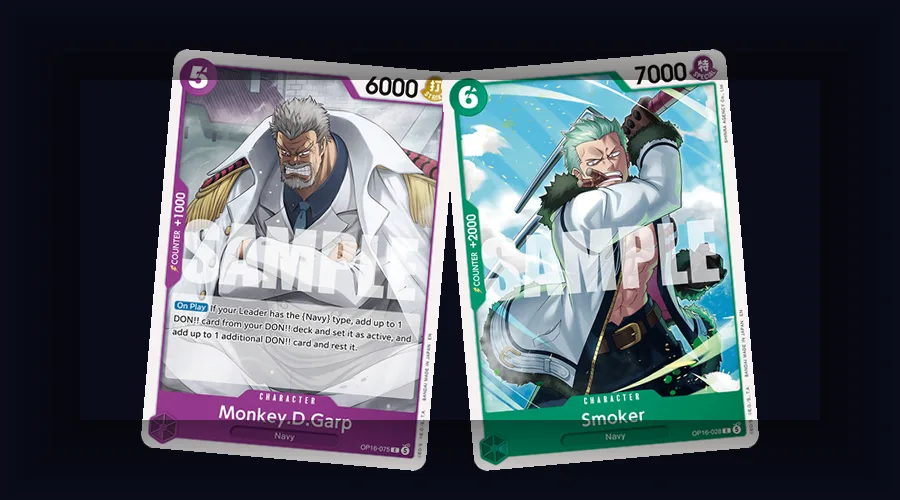 This real card composite shows Garp beside OP16-028 Smoker. Smoker is Green and is shown for the correction above, not as a legal card for this mono-Purple build.
Budget vs Optimized Build
Budget: Standard-print Admirals plus reprinted Marines (Tashigi, Helmeppo) and Purple ramp enablers. The Marine ramp shell functions well below chase prices.
Optimized: Full Admiral suite at standard rarity, premium ramp enablers, and a tuned curve. Add Manga Rare or Super Alt-Art Admirals only for collection; they do not change competitive function.
The real cost spike is the Admiral Manga variants. The September 16 snapshot above places Sakazuki, Kuzan, and Borsalino at the top of OP16's raw-card values, but prices move. For play, buy standard prints; for collection, see the dedicated chase guide.
Playing Around the Ramp Curve
The skill in Sengoku is sequencing. Because Purple lets you access DON!! ahead of curve, the decisive question each turn is whether to develop now or bank toward an Admiral. Ramp too greedily and you fall behind on board against aggro; ramp too cautiously and you deploy the Admirals too late to matter. The sweet spot is keeping just enough early Marine presence to not die while you set up the turn an Admiral lands and swings the game. Against fast decks, prioritize survival pieces first and ramp second; against slower decks, ramp aggressively because you have time and the bigger payoff wins the long game. Learning which matchups want which approach is what separates a good Sengoku pilot from a clunky one, and it is why the deck rewards practice despite a fairly linear plan.
Collector Note: the Admirals
Worth repeating for buyers: the Three Admirals are both your competitive payoff and OP16's premium collector cards. The September 16 snapshot lists Manga Sakazuki at $1,127, Kuzan at $1,114, and Borsalino at $1,043. You never need those variants to play. For the deck, buy standard-rarity Admiral prints; for a display piece, compare current Manga and Super Alt-Art listings. Treat the chase and the deck as two separate budgets.
Key Takeaways
- Sengoku (OP16-060) is the mono-Purple Marine Leader, 5000 power, 5 life (not Blue, an earlier pre-release error)
- Leader ability, verified: DON!!-8, return 8 active DON!! to deploy up to 3 differently-named Admiral-type Characters for free
- Akainu/Sakazuki (OP16-065), Kizaru/Borsalino (OP16-073), Aokiji/Kuzan (OP16-063) are Characters, not leaders, each 7-cost/8000 power
- OP16's September 16 price snapshot lists Manga Sakazuki at $1,127, Kuzan at $1,114, and Borsalino at $1,043; prices move
- Premium Manga and Super Alt-Art variants are collector chases; you do NOT need them to play
- Smoker (OP16-028) is Green and cannot legally run in this mono-Purple deck; an earlier version of this guide listed him by mistake
GODEEPER: The Admirals are also the most valuable cards in the set. The chase guide covers their real prices and pull rates. OP-16 Best Cards to Pull
Related Reading
-
One Piece TCG OP-16 Guide: Set Review & Leaders (2026): Full OP-16 set overview, all six leaders, and key mechanics.
-
OP-16 Sengoku Deck Tech Week 1: Three Admirals Purple: EN week 1 tournament performance and the return-8-DON activation timing explained with matchup notes.
-
OP-16 Ace Deck Guide: Whitebeard Pirates Rush Build: OP-16 Ace deck guide covers the Red leader's Rush-granting Whitebeard Pirates strategy.
-
OP-16 Law Deck Guide: No Leader, Rosinante's Key Piece: What the real OP16-030
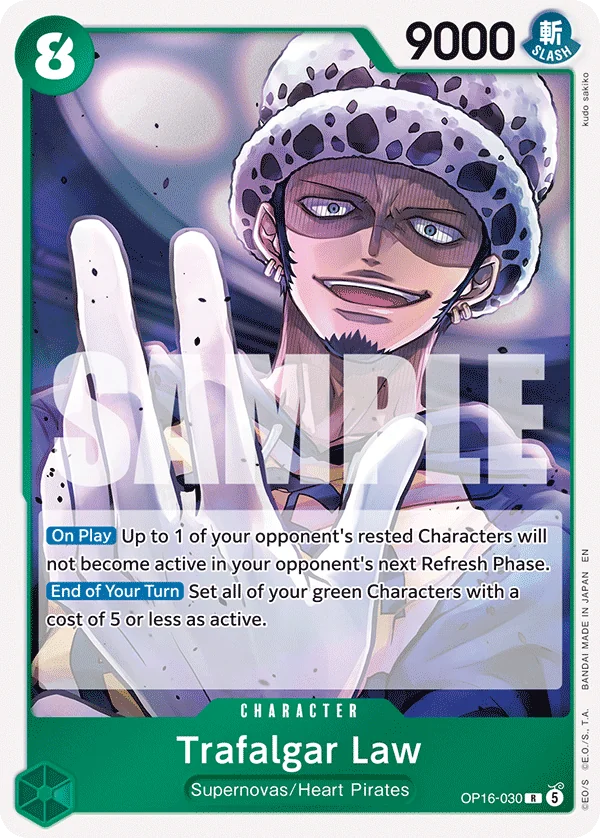 OP16-030OP16-030Shop on TCGplayer and OP16-068
 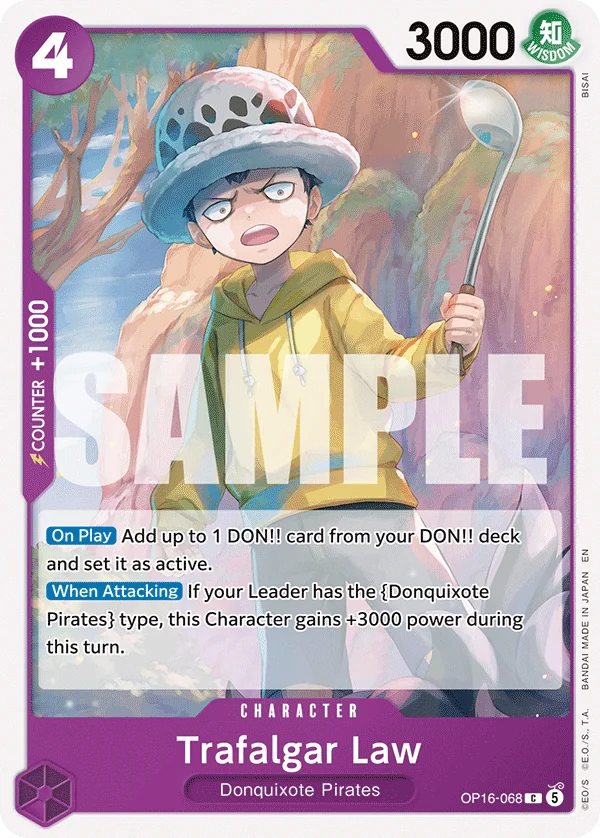 OP16-068OP16-068Shop on TCGplayer Trafalgar Law cards do, and where Law actually sees competitive play.
 -
OP-16 Akainu Deck Guide: Akainu as the key Admiral Character in Sengoku's deck.
-
One Piece TCG How to Play: Rules and Mechanics: DON!! system and turn structure.
-
One Piece TCG Purple Deck Guide: DON Ramp and Control: how Purple's DON!! ramp works, Sengoku and Enel compared, and when Purple beats the meta.
-
OP-16 Meta Tier List Week 1: Where Sengoku ranks against every other OP-16 leader and returning deck.
-
OP-17 Spoilers Complete Tracker: Every confirmed OP-17 leader, card, and release detail as spoilers drop.
Frequently Asked Questions
Q: Is Sengoku a leader in OP-16? A: Yes. Sengoku (OP16-060) is the Purple Marine Leader. He ramps into the Three Admirals (Akainu, Kizaru, Aokiji) as Character cards.
Q: What color is Sengoku? A: Purple, the DON!! ramp color. This lets him deploy the Admirals ahead of curve. (Earlier pre-release guides wrongly said Blue.)
Q: Where does Akainu fit? A: Akainu/Sakazuki (OP16-065) is a Character, not a leader. He is one of the Three Admirals and one of OP16's top Manga variants in the current price snapshot.
Q: Is the deck expensive? A: The playable shell uses standard prints. In the September 16 price snapshot, Manga Sakazuki was $1,127, Kuzan $1,114, and Borsalino $1,043. Those prices move, and none of the premium variants is required for the playable list.
Q: Good for beginners? A: Moderate. Purple ramp sequencing takes practice but is proactive and rewarding. Ace or Buggy are gentler first decks.
Q: Best Characters in the deck? A: The Three Admirals (Akainu/Sakazuki marquee), plus Garp for a second DON!! engine and Marine pressure. Smoker is not part of this deck: he's printed Green and cannot legally run alongside a mono-Purple leader.
Q: How does Sengoku match up vs Ace? A: Limitless currently shows OP13 Ace at 4-4 against Sengoku across 8 OP16 games. Ace pressures early, so the game turns on whether the ramp reaches a stabilizing Admiral before Red aggro closes. Treat that small sample as directional, not a guaranteed matchup result.
References
- Official OP-16 Card List: official card names, colours, types, stats, and effects
- OnePiece Terminal OP16 prices: current Manga and alternate-card price snapshot, dated September 16, 2026
- Limitless Enel versus Sengoku matchup data: OP16 matchup record and sample size
- Limitless OP13 Ace versus Sengoku matchup data: OP16 matchup record and sample size
- OPDeckGuide Sengoku OP16 guide: current curve and matchup guidance
- One Piece Meta Tracker Sengoku guide: current simulated matchup context and community assessment
- Limitless TCG OPTCG: card database and tournament data
- r/OnePieceCardGame: community analysis
Was this guide helpful?
Cards in this article
About the author
Beginner guides and anime crossover
Pen name for the Shonen TCG desk's beginner guides, starter decks and anime-to-card-game explainers.
- Rules checked against the official rulebook and card text
- Every claim traced to a cited source
- Opinions marked as ours, with the reason
Keep reading

OP-16 vs OP-15 power level comparison: what changed?
Guides · 11 min
OP-16 EN Launch Guide: What Happened After Release
Guides · 12 min
OP-16 Box Opening Strategy: How Many Boxes to Open
Guides · 10 min
OP-16 Collectors Guide: SEC, Manga Rare, Alt-Art Cards
Guides · 11 min
One Piece TCG Best Leaders All Time: Top 10 Ranked
Guides · 13 min
OP-16 Ace Deck Guide: Whitebeard Pirates Rush Build
Guides · 12 min
One Piece TCG Standard Format Guide 2026: Legal Sets
Guides · 12 min
One Piece TCG Trade Guide: How to Trade Cards Fairly
Guides · 13 min
Disclaimer
This article is published for informational and entertainment purposes. It does not constitute professional financial, legal, or technical advice. Game performance, online services, patch schedules, and store listings change. Verify critical details (pricing, system requirements, regional availability) with publishers and storefronts before you buy. Affiliate links, where present, help support our editorial work and are labelled in our affiliate disclosure.