

Shonen TCG · Guides
One Piece TCG Counter Rules: Counter Step and Values
Ties go to the attacker, so a Counter that only matches the attacker's power is a wasted card.
Our callCounter only when it lifts your defender strictly above the attacker and the hit would cost more than the card.
One Piece TCG counter rules come down to one comparison that's easy to get backwards: your defender has to finish the battle with more power than the attacker, because ties go to the attacker. In the Counter Step you trash a Character with a Counter value from hand, or pay for and trash an Event with [Counter], and add that power to your Leader or a Character for that battle only. Nothing you counter with ever touches the field.
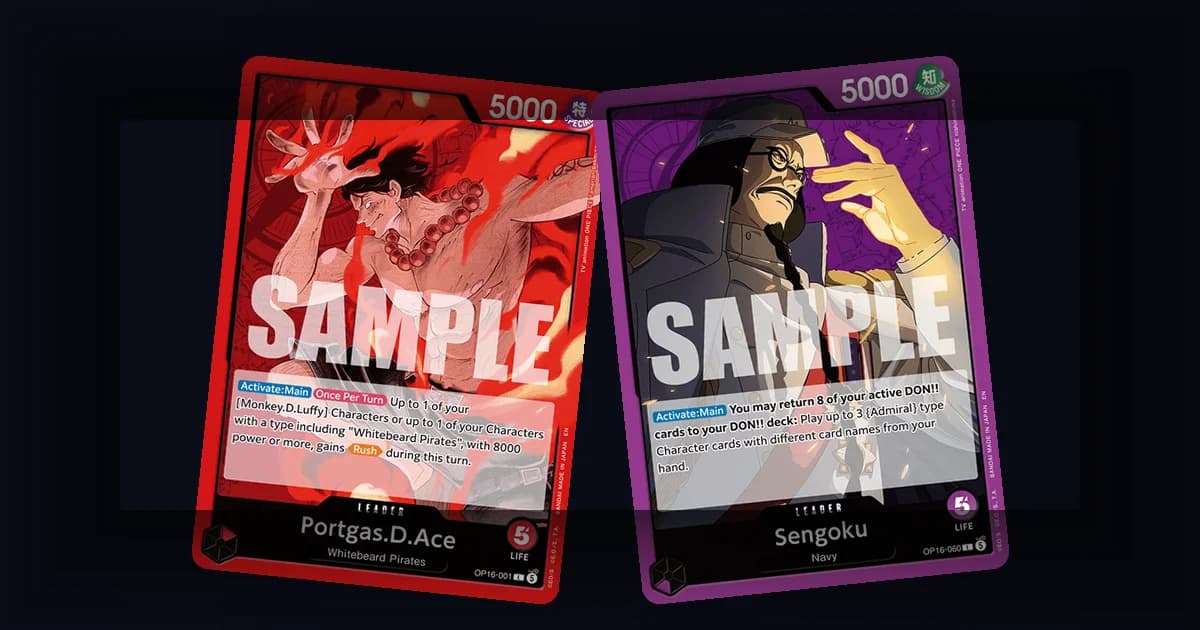
TL;DR: One Piece TCG counter cards are not played onto the field. During the Counter Step, trash a Character with a Counter value from hand or activate an Event with a Counter effect to increase the defending Leader or Character's power for that battle. A Blocker changes the attack target during the earlier Block Step.
Last checked: The current Comprehensive Rules (sections 7-1-2 to 7-1-4, 10-1-4 and 10-2-4) were re-read on October 13, 2026. Fixed this pass: a tie at the Damage Step goes to the attacker, When Attacked effects activate in the Attack Step, and Counter values sit on the left edge of the card. Card text can add its own conditions, so read the exact Counter or Blocker wording on the card.
One Piece TCG counter cards: quick answer
The official battle sequence separates Blocking and countering into two steps. After an attack is declared, the player being attacked may activate a [Blocker] effect during the Block Step. After that, the Counter Step allows the defending player to use Character and Event Counter effects.
For a Character with a Counter value, the current Comprehensive Rules say to trash that Character card from hand to activate its Counter effect. It does not enter the Character area. For an Event with a [Counter] effect, pay the Event's cost and trash it from hand during the Counter Step. The effect then increases the power of your Leader or one Character for that battle, according to the card text.
At the Damage Step, compare the attacker's power with the defending card's power. If the attacker is greater than or equal to the defender, the battle succeeds. If the defender's power is higher, the attack does not deal battle damage. The boost from a Counter effect lasts for that battle only.
The most important habit is to ask two questions in order:
- Do I need to change the attack's target with a Blocker?
- If not, is this battle important enough to spend a card from hand?
GODEEPER: New to the game? The One Piece TCG Beginner Guide 2026 explains the full turn and attack flow before you optimize hand resources.
Step-by-Step: How the Counter Step works
1. The attack is declared. The attacking player rests an active Leader or Character and chooses the opponent's Leader or one of the opponent's rested Characters as the target.
2. Resolve the Block Step. The defending player may activate a [Blocker] effect once during that battle. Activating it rests the Blocker and makes that card the new attack target, following the Blocker text.
3. Reach the Counter Step. If the battle is still proceeding, the defending player can use Counter effects in any order and as many times as they wish. Effects that read When Attacked or On Your Opponent's Attack already activated back in the Attack Step.
4. Use a Character Counter correctly. Trash a Character card with a printed Counter value from hand. Add its value to the defending Leader or Character for that battle. The card is not played to the field.
5. Use an Event Counter correctly. Pay the Event's cost and trash an Event with a [Counter] effect from hand. Follow its full text, including any conditions beyond the power increase.
6. Compare power at the Damage Step. A defending power higher than the attacking power prevents battle damage. Equal power is not enough for the defender, because the attacker wins ties under the battle rules.
7. Resolve the result. If a Leader is successfully attacked, the defending player normally adds the top Life card to hand, or may activate its Trigger instead when applicable. If the target is a Character and the attacker wins, the Character can be K.O.'d by the battle result unless another effect changes that result.
The boost is temporary. A 5000-power defender with two +2000 Counter effects reaches 9000 for that battle, then returns to its normal power after the battle finishes.
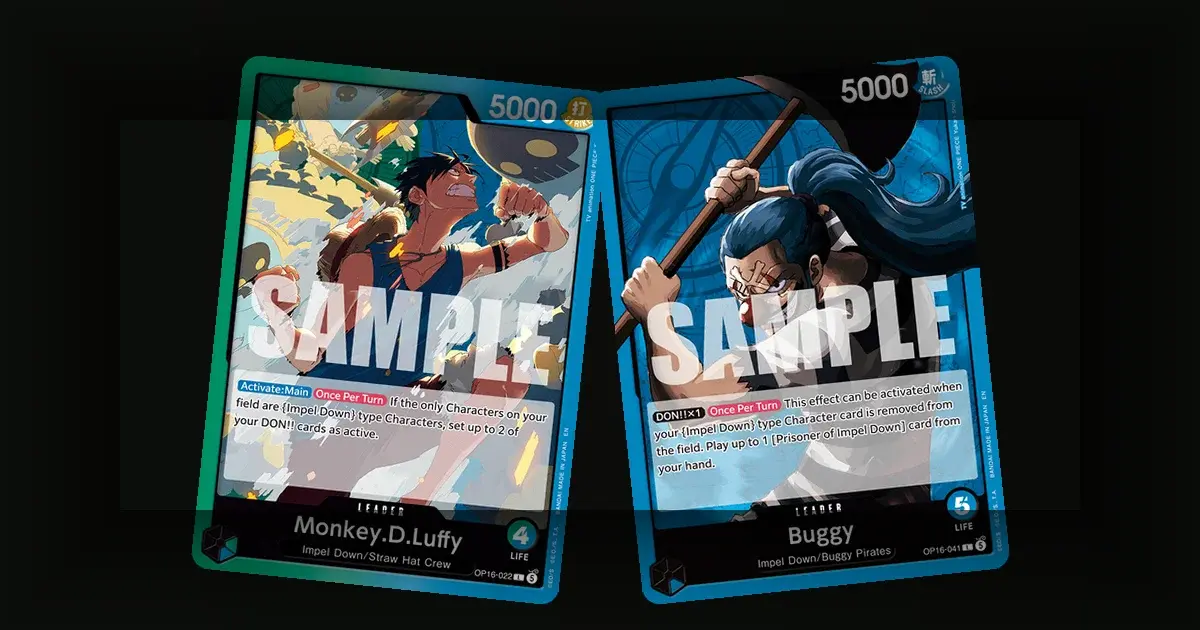
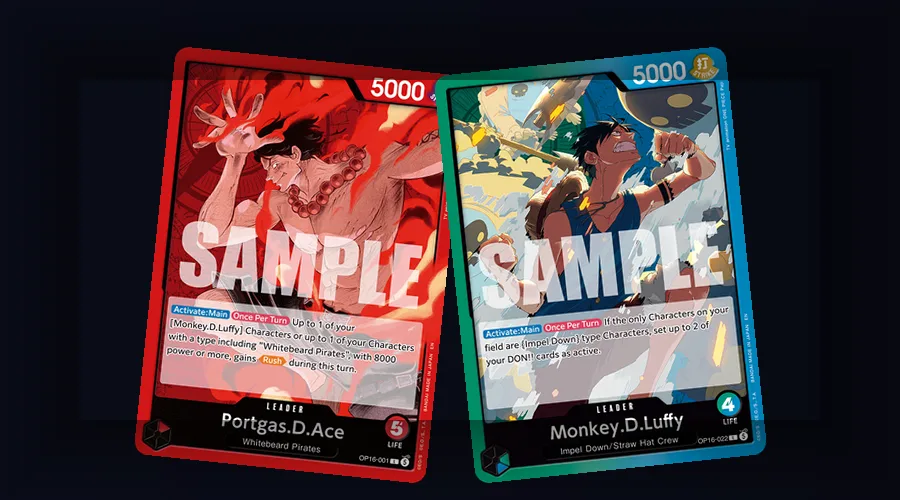 Image: Bandai official sample cards (OP16-001, OP16-022). These real sample Leaders show Portgas.D.Ace and Monkey.D.Luffy. They illustrate attack targets and card identities, not printed Character Counter values.
Where Counter values come from
Character cards with Counter
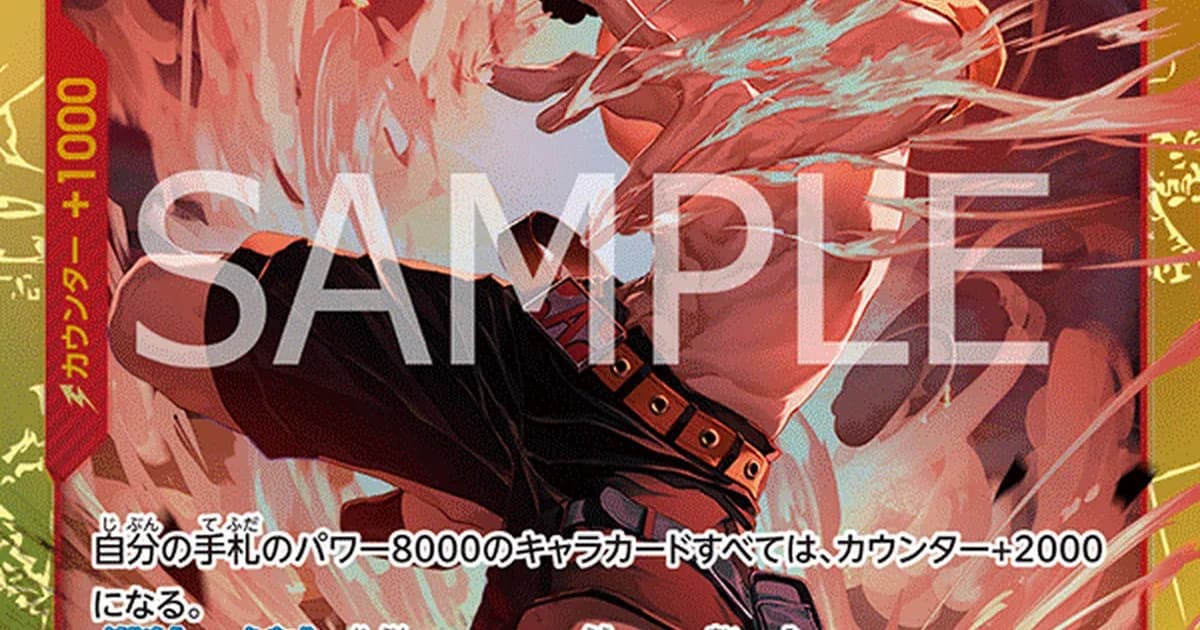
Character cards print their Counter value along the left edge, and only Characters have one. A +1000 or +2000 Character can be played on your turn as a board card, or trashed from hand during an opponent's Counter Step. That choice is the central tradeoff: immediate board development versus preserving power for defense.
Some powerful Characters have no Counter value: Loki OP17-119, a cost 6 with 8000 power, has none. They may still be useful on the field, but they cannot be used as Character Counter effects unless their exact card text provides another way to defend.
Event cards with [Counter]
An Event with a [Counter] effect is activated from hand during the Counter Step. It can add power, but it may also reduce power, move a card, or create another effect. Read the card's conditions carefully. A large printed number is not automatically better if the Event costs resources you need for the next turn.
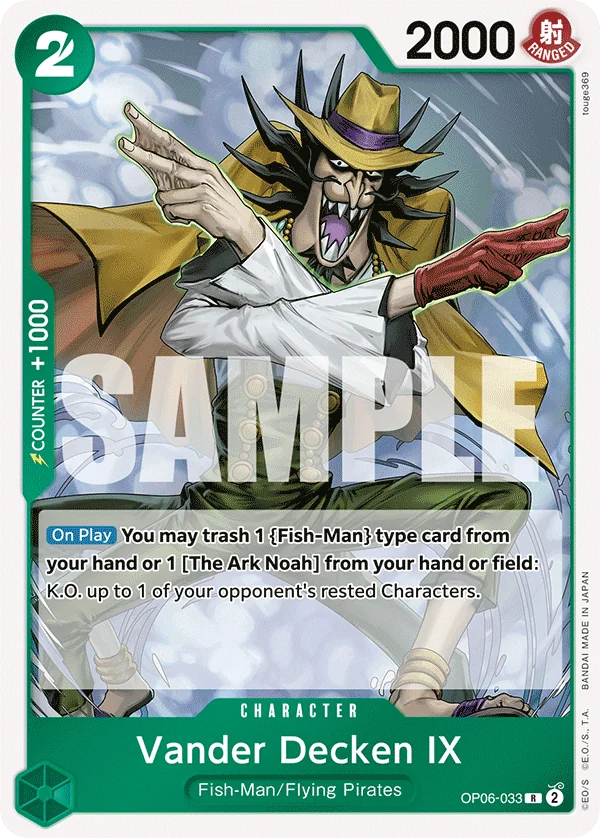 Image: Bandai official card image (OP06-033). The Counter value, +1000 here, runs along the left edge of a Character card.
Character Counter values and Event Counter effects do not work identically. Character Counters are paid by trashing the Character card. Event Counters are paid by paying the Event cost and trashing the Event. Both use the hand, but the timing and text are different.
Blocking versus countering
Blocking uses a Character with [Blocker] on your field. When the opponent declares an attack, you can activate Blocker during the Block Step, once during that battle. The Blocker becomes the new attack target and is rested as part of the effect.
Countering uses a Character card with Counter from hand or an Event with [Counter]. It does not change the attack target. It increases the power of the Leader or Character already being attacked for that battle.
Neither tool is automatically better:
- Use a Blocker when moving the attack onto a disposable or protected Character is the best exchange.
- Use a Counter when the original target must survive or when the attack would otherwise deal important Leader damage.
- Do not assume a Blocker is already rested before activation. The effect handles resting it when activated.
- Read effects that prevent [Blocker], because those effects can remove the option before the Counter Step.
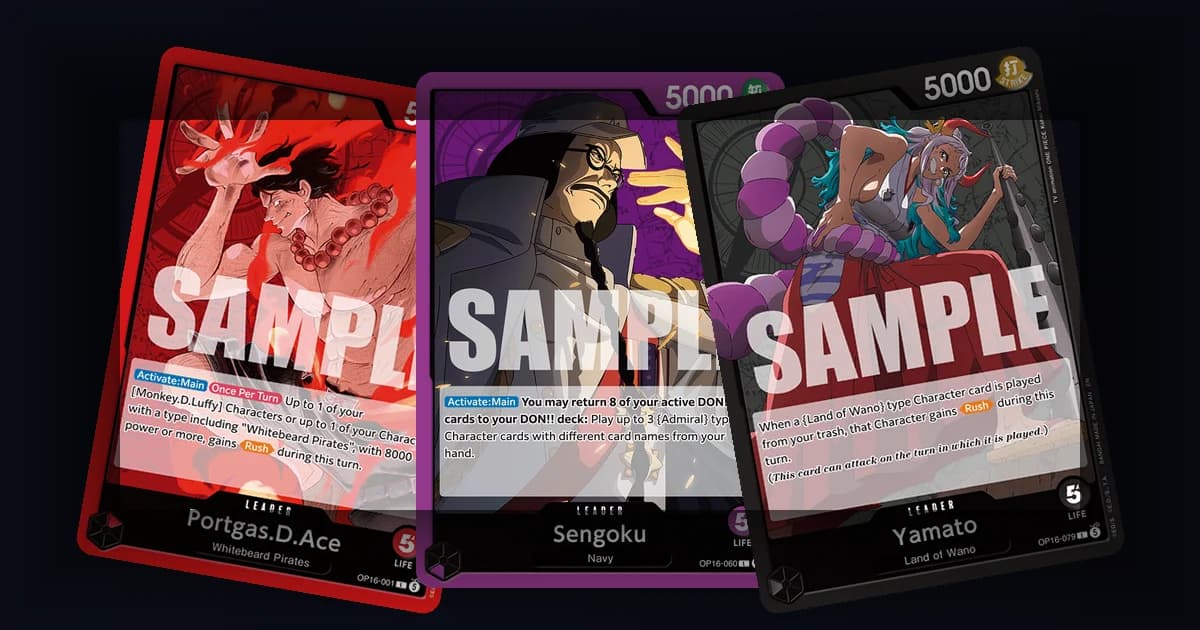
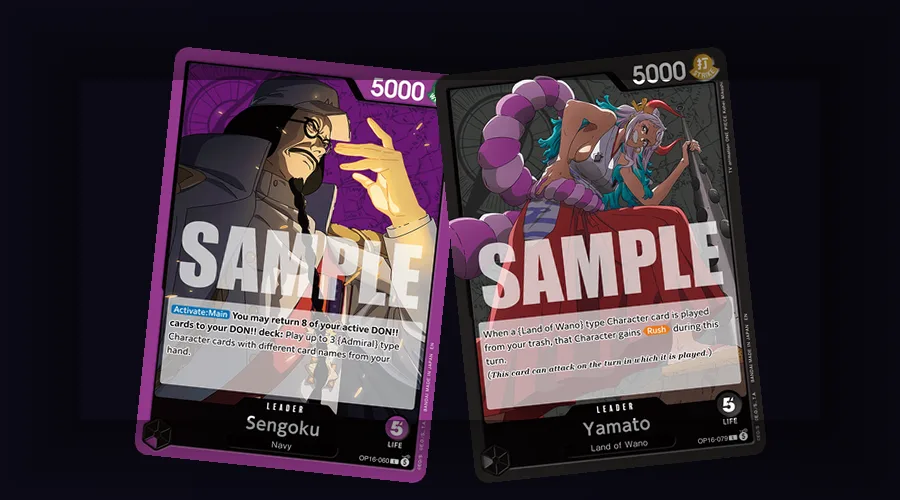 Image: Bandai official sample cards (OP16-060, OP16-079). These real sample Leaders show Sengoku and Yamato. They are representative images only, not examples of a Blocker or Counter card.
How many Counter cards to run
There is no official Counter ratio and no single number that fits every Leader. A Counter card competes with a Character, Event, Stage, searcher, removal piece, or resource card. The correct number depends on the curve and on whether the Leader already supplies defensive effects.
Use a test range rather than a rule:
- Count Character cards with +1000 or +2000 Counter values.
- Count Events with [Counter] effects separately, because they also consume DON!! or other costs.
- Record how often your opening hand has no early play, no defense, or too many cards that cannot be used as Counter effects.
- Test the same list for several games before changing the ratio.
We are not giving a target number here, because we have no published survey of Counter counts to cite. A ramp or combo deck may need more room for engine cards; a defensive list may accept fewer early bodies in exchange for more hand protection.
The deckbuilding guide's 50-card framework is useful here. Count the defensive cards together with the cards that make your Leader's plan function, not in isolation.
When to spend a Counter
Counter when the result changes the game state:
- The attack would remove a Character with an important ongoing effect.
- The attack would take the last Life card before your next meaningful turn.
- Winning this battle preserves a board advantage or creates a lethal attack next turn.
- A small Counter prevents a larger future cost, such as losing a Character that would have searched or ramped.
Consider taking the hit when:
- The target is expendable and losing it does not change your plan.
- Spending multiple cards would empty your hand and expose the next turn.
- The Leader has enough Life and the damage may provide a Trigger or a card in hand worth the risk.
- The opponent is using a low-value attack to make you waste a high-value Counter.
Taking a Life is not automatically good or bad. A successful Leader attack normally moves the top Life card to hand, with a Trigger card offering the choice to activate its Trigger instead. Counter when the attack's consequence is worse than the card you would spend, not simply because any Life loss feels dangerous.
New players hit this decision early. In an October 7 thread from a player who kept losing, one reply boiled it down: learning to counter is basically "Can I keep my board alive if they swing into it?" (u/Initial_Shame4309). Another told them to "watch tutorials on fundamentals. Tempo, countering, going for lethal" (u/Previous_Procedure28). Minhooty's five-minute video covers exactly that decision, when to Counter and when to take the hit:
Counter decisions by game phase
Early game: Preserve enough hand to develop your board. Spending two cards to stop a minor attack can be worse than accepting one Life and playing your next Character.
Midgame: Protect the Characters that carry your engine and prevent the opponent from winning the important combat. This is often where one +2000 Counter changes the board trade.
Late game: Count lethal lines. A Leader Counter can prevent the final damage, but only if the resulting hand and board still let you survive the opponent's next attack. Do not spend every card on one non-lethal attack without checking the next sequence.
The right decision is contextual. A Counter value is not worth a fixed amount of Life or board power in every turn.
Common Counter mistakes
Over-countering early: Emptying your hand to save a minor Character can leave you unable to defend the actual kill turn.
Forgetting the Counter Step: After every attack declaration, identify the target and decide whether a Blocker or Counter matters before the battle resolves.
Confusing a Counter with playing a Character: A Character with +2000 is trashed from hand for its Counter effect. It does not enter play, trigger [On Play], or remain on the board.
Ignoring Event conditions: Ground Death OP14-096 gives +4000 for 1 cost, but only with 10 or more cards in your trash. Read the complete Counter text, including the cost you pay from your DON!!.
Treating every Life attack as lethal: Check the Life count, hand, Trigger risk, and next turn before spending a card.
Using a fixed color ratio: Color identity can suggest a play pattern, but a specific Leader's curve and engine decide the final Counter count. Published decklists are snapshots, not rules.
Key takeaways
- The Block Step comes before the Counter Step.
- A Blocker changes the attack target by activating and resting the Blocker.
- A Character Counter is activated by trashing the Character from hand, not by playing it.
- An Event with [Counter] is activated from hand during the Counter Step by paying its cost and trashing it.
- Power boosts last for the battle, and the attacker wins equal-power comparisons.
- There is no official Counter ratio. Start with a test range, then tune around your curve and Leader plan.
- Spend hand cards where the battle outcome changes your next turn or the game's result.
Our take
We'd drill the tie rule before anything else: the attacker wins at equal power, so a Counter that only matches the attacker does nothing but cost you a card. Before you trash anything, add up the exact numbers and make sure the defender ends higher. The second habit is to read Event Counters to the end, because conditions like Ground Death's 10-card trash requirement decide whether the +4000 happens at all.
GODEEPER: Want to apply the resource rule to opening hands? Read the One Piece TCG Mulligan Guide for keeping the right mix of engine cards and defense.
Related Reading
- One Piece TCG Attack and Battle Rules Explained: The full battle sequence around the Counter Step.
- One Piece TCG How to Play: Rules and Mechanics: Core turns, DON!!, and combat basics.
- One Piece TCG Common Beginner Mistakes: Avoid early-game errors while learning combat timing.
- One Piece TCG Standard Format Guide 2026: Current deck legality and event rules.
- One Piece TCG Trade Guide: Compare card condition and exact printing when upgrading a collection.
Frequently Asked Questions
Q: How does the Counter mechanic work? A: During the Counter Step, trash Character cards with Counter values from hand or activate Events with [Counter] effects. They increase the defending Leader or Character's power for that battle.
Q: What is a Counter value? A: It is the +1000 or +2000 printed along the left edge of a Character card. Trash that Character from hand to activate the value during the Counter Step.
Q: Does a Blocker need to be rested first? A: No. Activate the Blocker during the Block Step. The effect rests it and changes the attack target, following the card text.
Q: Can I use an Event as a Counter? A: Yes. Pay its cost and trash an Event with a [Counter] effect during the Counter Step.
Q: How many Counter cards should I run? A: There is no official ratio. Test a range, count both Character Counter values and Event Counter effects, and adjust around your Leader's curve.
Q: Can I Counter an attack on my Leader? A: Yes. Increase the Leader's power during the battle. The attacker wins ties at the Damage Step, so the Leader's power has to end higher than the attacker's to stop the damage.
Q: What happens to a Life card after a successful attack? A: The defending player adds the top Life card to hand, or may activate its Trigger instead when that card has a Trigger effect.
References
- One Piece Card Game official rules hub: Current official rules and documents.
- One Piece Card Game Comprehensive Rules: Attack, Block, Counter, and Damage Steps.
- One Piece Card Game official site: Card text and keyword reference.
- Limitless TCG OPTCG card database: Card records and Counter values.
Was this guide helpful?
About the author
Pen name for the Shonen TCG desk's tournament coverage, format analysis and cross-game comparisons.
- Results taken from event pages and standings
- Other games checked against their own official rules
- Opinions marked as ours, with the reason
Keep reading
OP-16 Full Card List & Spoilers: What's in the Set
Guides · 10 min
OP-16 Most Expensive Cards: Best & Top 6 Chase Picks
Guides · 7 min
OP-16 Where to Buy: Post-Launch Buying Guide for 2026
Guides · 10 min

OP-16 Japanese vs English Price Guide: Which to Buy
Guides · 10 min
One Piece TCG Mulligan Guide: When to Keep or Redraw
Guides · 11 min
One Piece TCG Card Grading: Is It Worth It in 2026?
Guides · 16 min
OP-16 3 Admirals Guide: Characters, Not Leaders (2026)
Guides · 10 min
OP-16 Green Blue Luffy Deck Guide: Top-Tier Tournament List
Guides · 14 min
Disclaimer
This article is published for informational and entertainment purposes. It does not constitute professional financial, legal, or technical advice. Game performance, online services, patch schedules, and store listings change. Verify critical details (pricing, system requirements, regional availability) with publishers and storefronts before you buy. Affiliate links, where present, help support our editorial work and are labelled in our affiliate disclosure.