

Shonen TCG · Guides
OP-17 One-Month Meta Report: Leaders After Release
OP-17 one-month meta report: compare launch predictions with September results, tournament placements, and current leader tiers after the English release.
Reviewing
One Piece TCG
OP-17 one-month meta report: September 28 marks one month since the English wide release of The World's Strongest Warriors. This report was researched on September 21, seven days before that cutoff, so it separates verified launch-week evidence from the later results that still need a publish-day refresh. It does not invent a September 28 tournament result. For a page designed to replace its snapshot each month, use the Best One Piece TCG Decks Right Now tier page.
TL;DR: Green Dracule Mihawk leads the September 21 tracker at 65.0% across 220 listed decklists. Blue Rocks D. Xebec is also S tier at 52.5% across 110 lists. Purple Kaido has more representation than Purple Enel, but both are A tier at nearly identical tracked win rates. The early tournament picture is broad: Blue Rocks won a September 2 Asia Flagship, while Blue/Yellow Boa Hancock won on September 6 and Green Mihawk, Red/Black Sabo, and Purple/Yellow Nico Robin all appeared repeatedly in the recorded field. Mihawk's result is pre-ban because OP14-020 becomes banned effective October 12, 2026. Updated September 30, 2026: Bandai's September 24 notice makes OP14-020 Dracule Mihawk a Banned Card effective October 12, 2026. Read the One Piece TCG banlist and effective dates before using this report for event registration.
OP-17 one-month meta report: quick answer
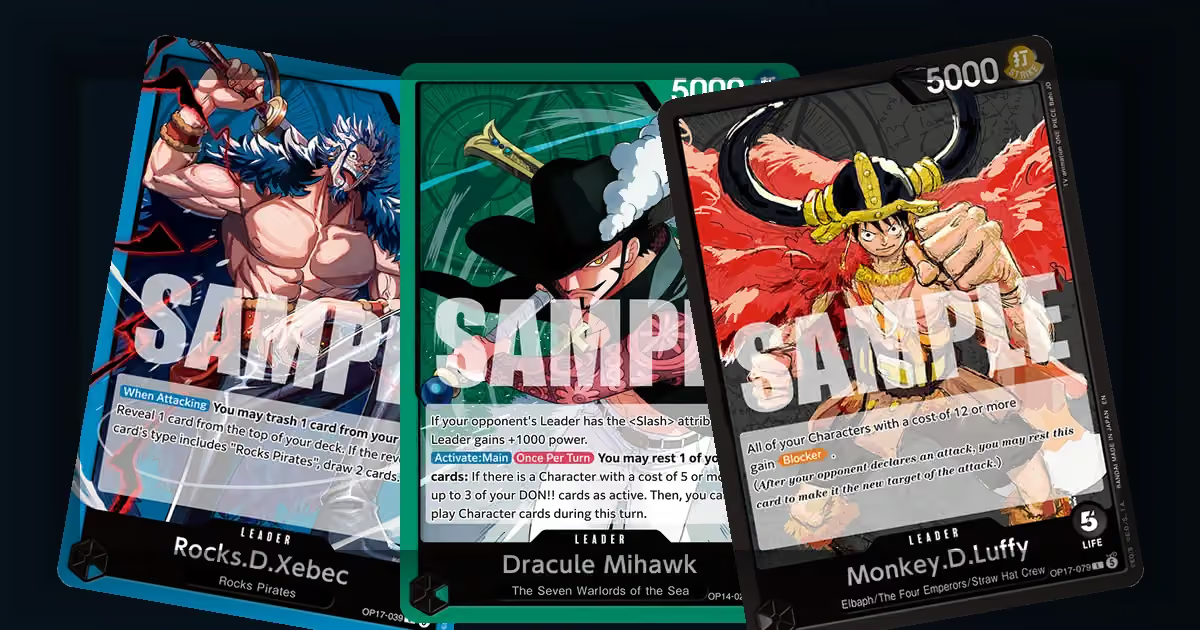
The short answer is that the first month did not produce one uncontested OP-17-native winner. The strongest deck by the most visible September tracker metrics was Green Dracule Mihawk 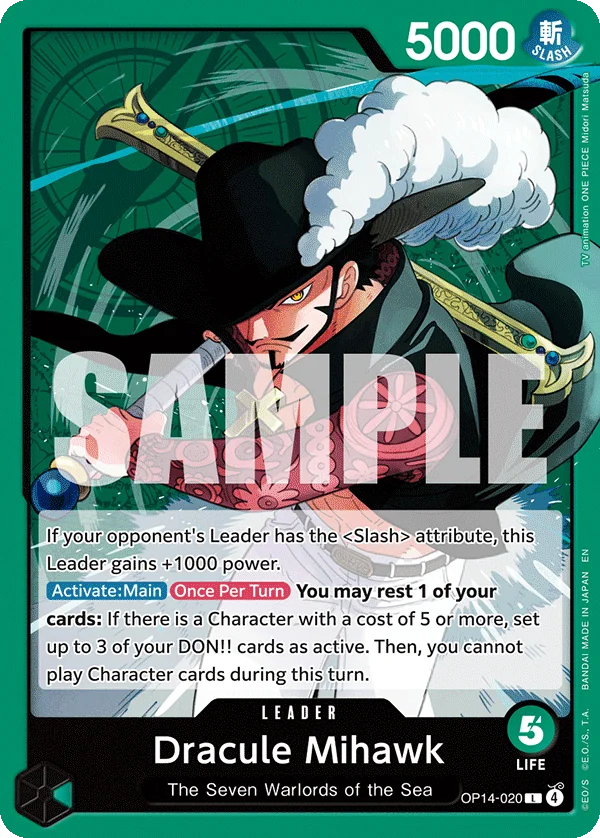 OP14-020OP14-020Shop on TCGplayer, an older Leader using the new card pool. Among the six native OP-17 Leaders, Blue Rocks D. Xebec
 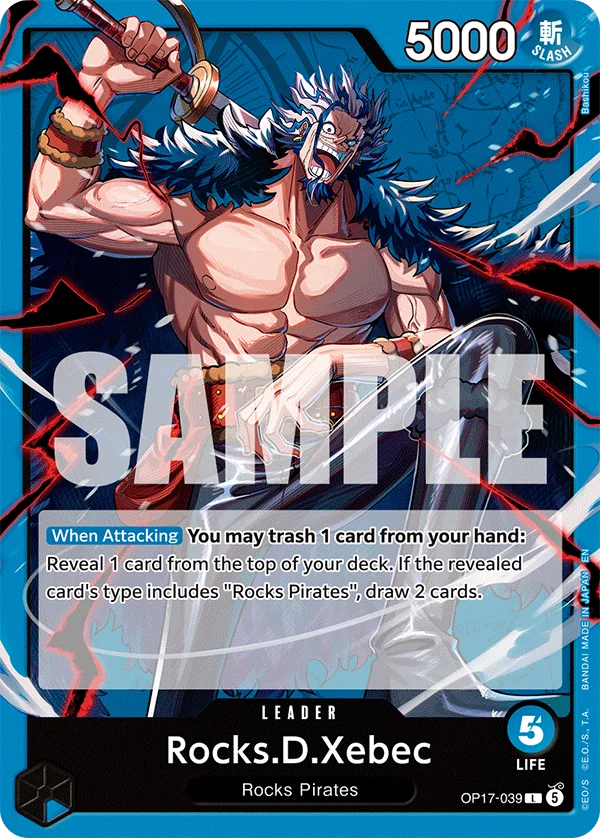 OP17-039OP17-039Shop on TCGplayer has the clearest combination of volume and a recorded event win. The Mihawk result is a pre-ban snapshot, not a post-October 12 Standard recommendation.
The September 21 tier page places Green Mihawk in S tier at 65.0% with 220 listed decklists. Blue Rocks is S tier with 110 lists and a 52.5% tracked win rate. Sabo, Nico Robin, Luffy, Red Luffy, and Yellow Charlotte Linlin are also in S tier on that page, although the source does not expose the same comparable percentage for each entry.
The A tier is just as important for understanding the month. Purple Kaido 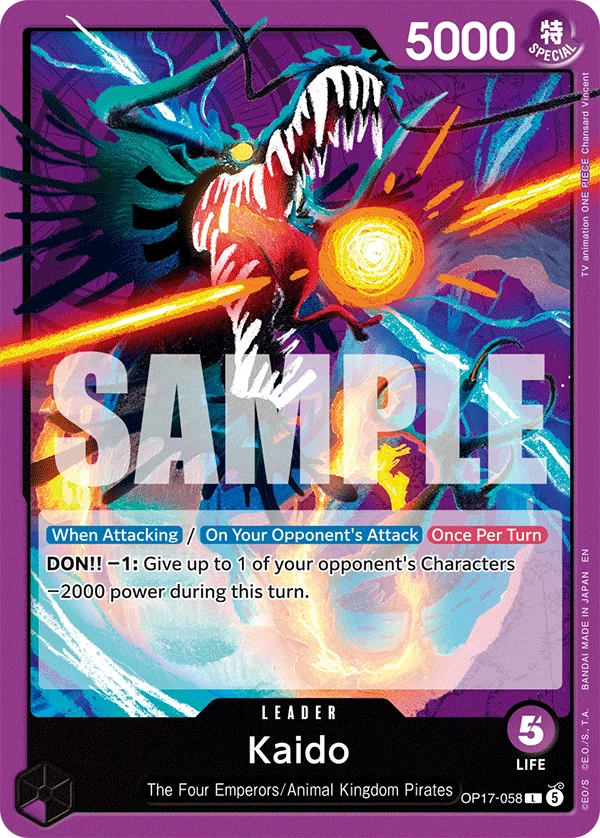 OP17-058OP17-058Shop on TCGplayer has 72 lists at 50.6%, Black Luffy
 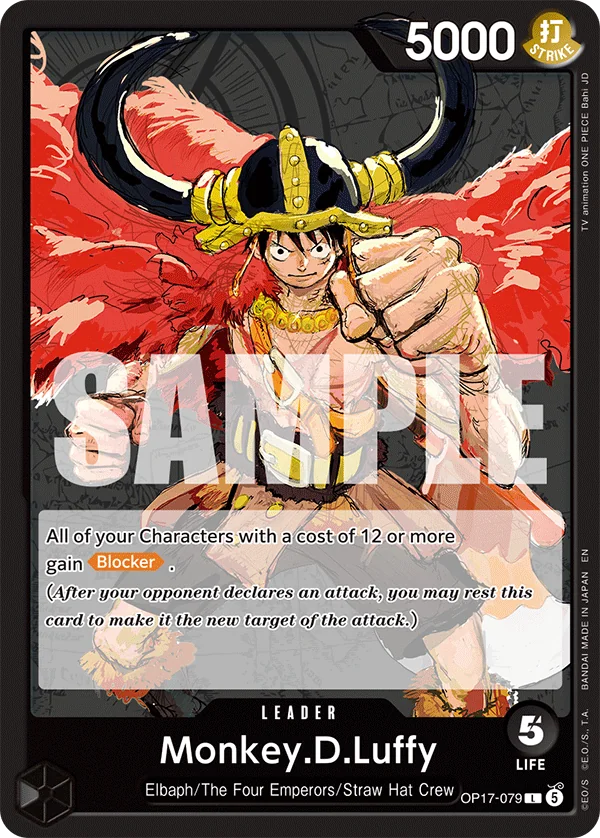 OP17-079OP17-079Shop on TCGplayer has 66 at 50.3%, Red Ace has 54 at 49.3%, and Purple Enel has 49 at 50.1%. The numbers describe one tracker snapshot, not a universal win rate across every sanctioned event.
OP-17 one-month meta report: the September 21 snapshot
The two OP Meta pages use related but different views of the same live database. The tier page groups leaders by win rate and tournament performance. Its companion decks page reports 114 decks and 56 leaders in the current OP-17 format view, then lists meta share and tracked win rate for many individual entries. That distinction matters when comparing results.
| Leader or archetype | Current tier | Listed decks | Tracked win rate |
|---|---|---|---|
| Green Dracule Mihawk | S | 220 | 65.0% |
| Blue Rocks D. Xebec | S | 110 | 52.5% |
| Purple Kaido | A | 72 | 50.6% |
| Black Luffy | A | 66 | 50.3% |
| Red Ace | A | 54 | 49.3% |
| Purple Enel | A | 49 | 50.1% |
| Purple/Yellow Nico Robin | B | 57 | 54.3% |
| Red/Black Sabo | B | 54 | 54.0% |
| Black Yamato | B | 14 | 46.5% |
| Green Shanks | C | 16 | 47.0% |
| Green/Blue Luffy | C | 12 | 47.0% |
| Blue/Yellow Nami | C | 3 | 45.5% |
The table looks strange at first because B-tier decks can show a higher percentage than some A-tier decks. That is not necessarily a contradiction. The tracker says its tiers use both win rate and competitive placements, while its displayed deck totals are not an all-event census. A 54.3% result across 57 listed Purple/Yellow Nico Robin decks is useful evidence, but it should not be compared as if it were calculated from exactly the same pool as Green Mihawk's 65.0%.
The native OP-17 Leaders are similarly uneven. Blue Rocks is the clear volume leader among the new group. Black Luffy and Purple Kaido have large enough samples to sit in A. Yellow Charlotte Linlin appears in S with 13 listed decks and a 45.7% figure on the companion table, while Green Shanks sits in C with 16 lists. The label and sample must be reported together.
What the launch-week narrative got right
The first post-release coverage described OP-17 as unusually open. TCGplayer's August 29 article presented six lists, one for each color, and called the format open while offering a starting point for the new card pool. Its August 31 follow-up framed the early winners as a starting snapshot rather than a settled historical ranking. Those pieces were useful launch-week orientation, but the September 21 data now gives us a larger comparison point.
The strongest early call was Rocks adoption. The pre-launch prediction article expected Rocks to draw the biggest early turnout among the new Leaders, while warning that registration interest would not automatically translate into long-term wins. The current tracker gives Blue Rocks 110 listed decks, 8.71% of the companion page's reported share, and S tier status. That supports the adoption part of the prediction. It does not prove that Rocks is the best deck in every room.
The Kaido prediction is more mixed. Purple Kaido has 72 listed decks and a 50.6% tracked win rate. Purple Enel has 49 and 50.1%. Kaido therefore has more representation in this snapshot, but the win-rate difference is small. The evidence supports Kaido becoming a serious Purple option. It does not prove that Kaido caused players to abandon Enel or that the matchup is solved.
The collector prediction from the same pre-launch cycle is a separate question. A premium card's market result cannot be used as evidence for a Leader's competitive strength, so this report keeps price speculation out of the meta ranking. The OP-17 final predictions article records that distinction and labels its market call separately.
What rose after release
Green Mihawk rose above the set's native Leaders. Mihawk was already a known Green Leader from OP-14, but OP-17 gave the shell new pressure tools. The September 6 Flagship page shows a Green Mihawk list using Shanks 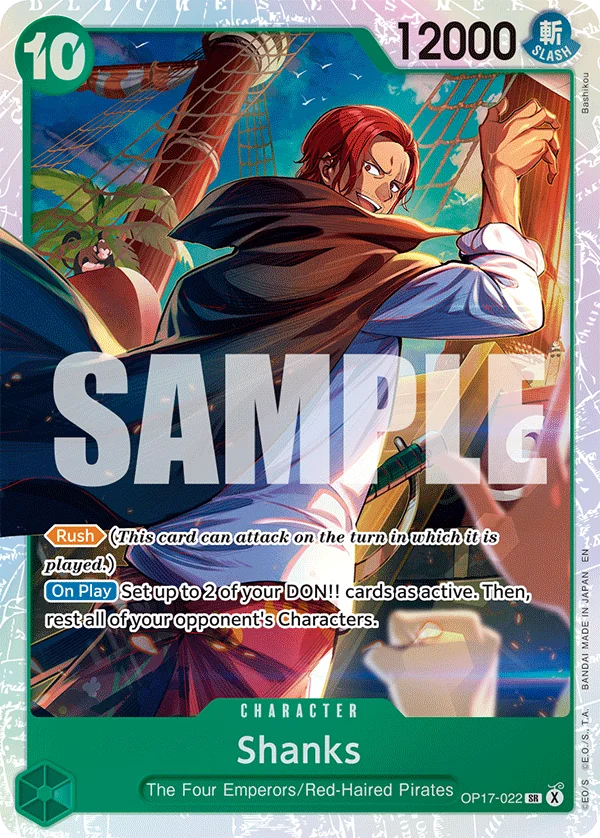 OP17-022OP17-022Shop on TCGplayer and Yasopp
 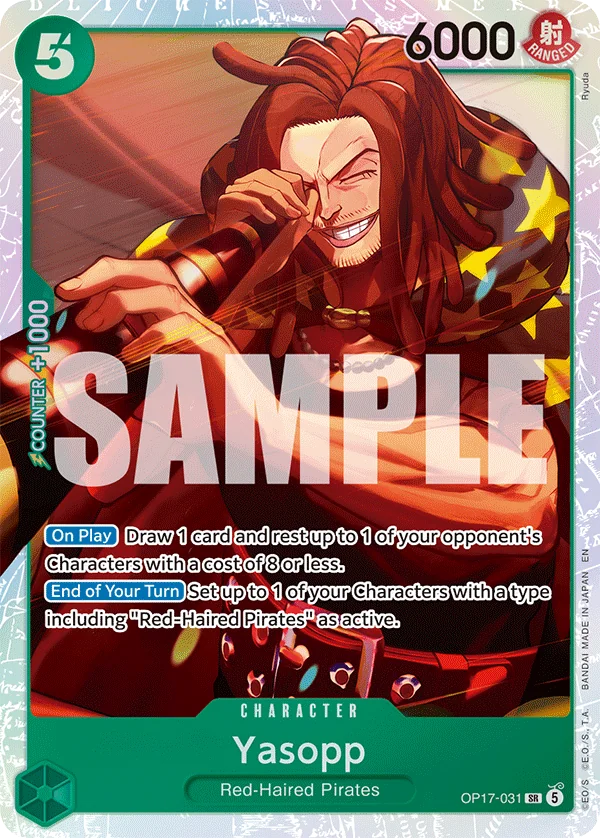 OP17-031OP17-031Shop on TCGplayer, and the same Leader appears five times in that event's 16 recorded finishes. The current 220-list sample is the clearest sign that this is not only a one-event spike.
Rocks became the native reference point. Leader OP17-039OP17-039Shop on TCGplayer and the Rocks Pirates package turn the set's theme into a coherent deck rather than a collection of isolated cards. The September 2 Asia Flagship recorded Blue Rocks in first place, with two Purple/Yellow Nico Robin lists among the three recorded finishes. That result is small, but it is a real event result that fits the larger adoption signal.
The Rocks shell also has a verified top-end package. The same September 2 list included OP17-040 Edward Newgate and Rocks D. Xebec OP17-118. The card database identifies Newgate as a Blue Character and the latter as a Blue Character, so those names are kept tied to the official card list rather than treated as Leader duplicates.
The multi-color field deserves more respect than a single-set ranking. The September 6 event was won by Blue/Yellow Boa Hancock. Green Mihawk appeared five times, Red/Black Sabo four times, Blue/Yellow Boa Hancock three times, and Purple/Yellow Nico Robin three times among 16 recorded finishes. Purple Enel appeared once. That result does not displace the live tier table, but it shows why a month-one report should include event composition instead of copying a leaderboard.
What fell or stalled
The biggest disappointment is not one card. It is the expectation that every new Leader would immediately occupy the top tier. The native roster is spread across the table: Blue Rocks and Yellow Charlotte Linlin are in S on the current tracker, Black Luffy and Purple Kaido are in A, and Green Shanks is in C. The result is a format with several viable entry points, not a clean six-Leader hierarchy.
Green Shanks 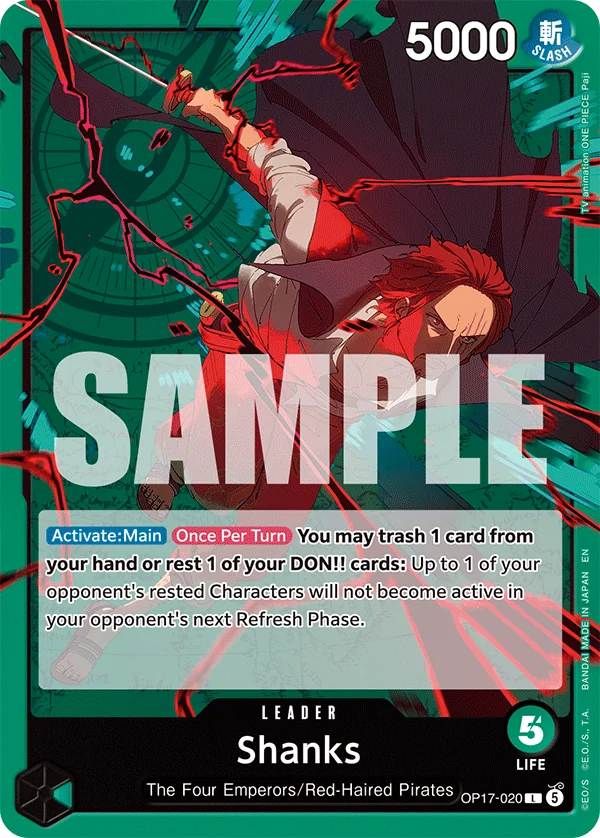 OP17-020OP17-020Shop on TCGplayer is the clearest lower-volume example. The current page records 16 lists and a 47.0% tracked win rate. Green/Blue Luffy
 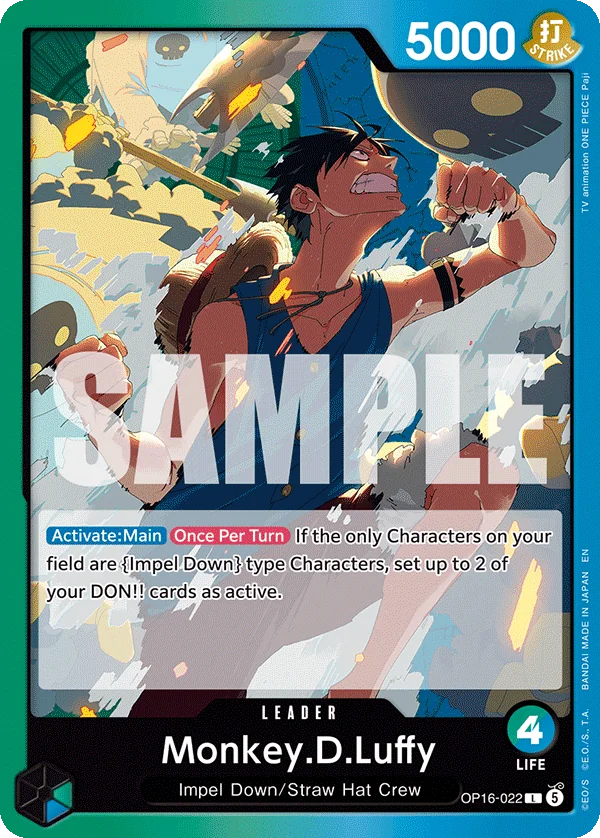 OP16-022OP16-022Shop on TCGplayer is also in C with 12 lists and 47.0%. These are not proof that either deck is bad. They are warnings against presenting early reveal-season excitement as a confirmed competitive placement.
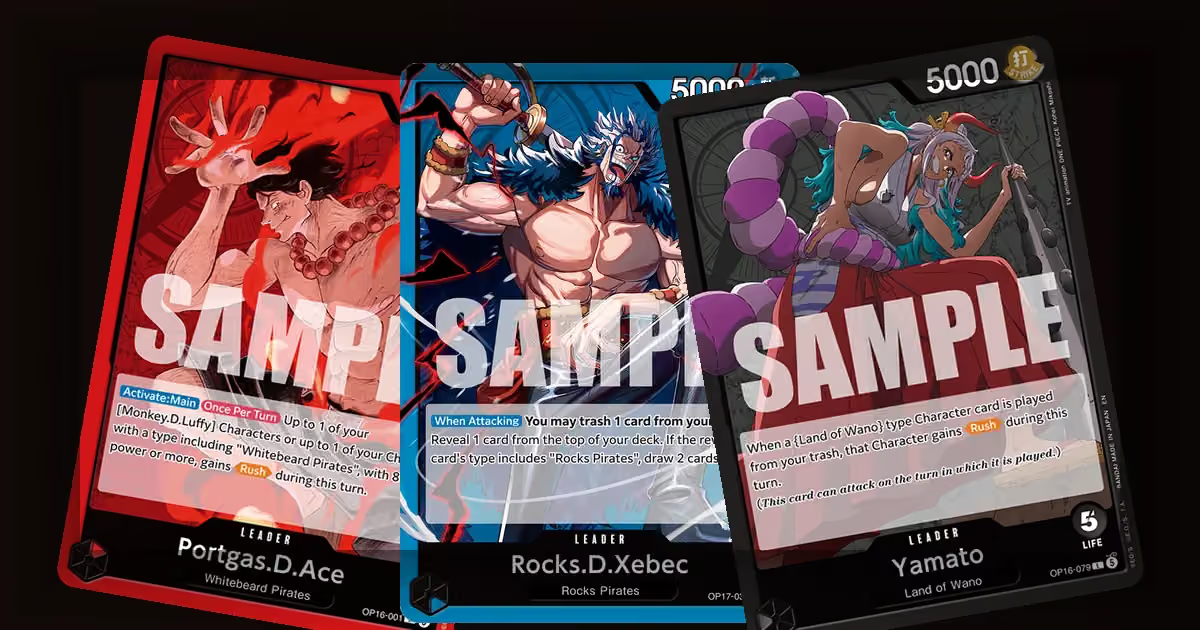
The older OP-16 shells also changed position rather than disappearing. Purple Enel remains A tier with 49 lists, Red Ace is A with 54, and Black Yamato 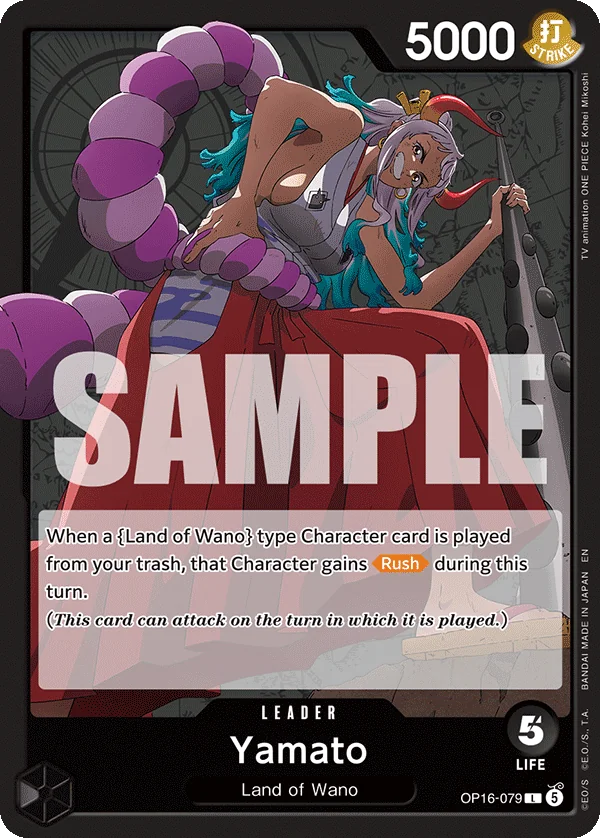 OP16-079OP16-079Shop on TCGplayer is B with 14. The old OP-16 story was about individual Leader identity. The post-release story is about whether a list can use new cards while surviving the expanded field.
Purple/Yellow Nico Robin and Red/Black Sabo illustrate the same caution from the other direction. Each has a B-tier label on the tier page but a tracked percentage above 54%. That is a reminder that tier labels are composite judgements. The cleanest writing is to report the label, the sample, and the metric together instead of calling either deck secretly S tier.
SHOP: Building an OP-17 list after the first month of results? Compare current singles for the leaders and support cards that fit your testing plan. Shop TCGplayer →
The tournament results that changed the story
The current tracker is not a substitute for event coverage, so the dated Flagship pages are worth reading on their own.
September 2, Asia Flagship: Hoge took first place with Blue Rocks D. Xebec. The page records three complete decklists: one Blue Rocks list and two Purple/Yellow Nico Robin lists. This is a modest event sample, but it is the report's clearest dated result for an OP-17-native Leader.
September 6, Asia Flagship: Blue/Yellow Boa Hancock took first place. The page records 16 complete lists, with Green Mihawk making up five, Red/Black Sabo four, Blue/Yellow Boa Hancock three, and Purple/Yellow Nico Robin three. Purple Enel appears once. The distribution is more useful than the headline winner because it shows several archetypes reaching the recorded finishes.
The difference between those events and the live tier page explains why the month-one snapshot should remain dated. The tier page refreshes every six hours. A Flagship page is a fixed event record. One answers “what is in the tracker now?” and the other answers “what happened at this event?” Neither one alone describes the whole format.
How to read the first month without overclaiming
Start with the date. OP-17 released in Japan on August 22, 2026, then had its English wide release on August 28. The report's planned September 28 publication is the one-month calendar mark, but the numbers above were checked on September 21. Any standings after that date require a new check.
Next, separate three kinds of evidence:
- Decklist volume: how many lists a tracker has stored under a leader label.
- Tracked win rate: a source-specific percentage that may use a different denominator from the decklist count.
- Tournament placement: a fixed event record with a date, format, and recorded finishes.
For example, Blue Rocks has both 110 listed decks and a September 2 Flagship win. That makes its September case stronger than volume alone. Green Mihawk has 220 lists, a 65.0% tracker rate, and five recorded finishes on the September 6 page. That was a stronger snapshot than a single reveal-season prediction, but it does not make the Leader legal after October 11. Neither proves that the same deck will win the next event.
The same discipline applies to cards. 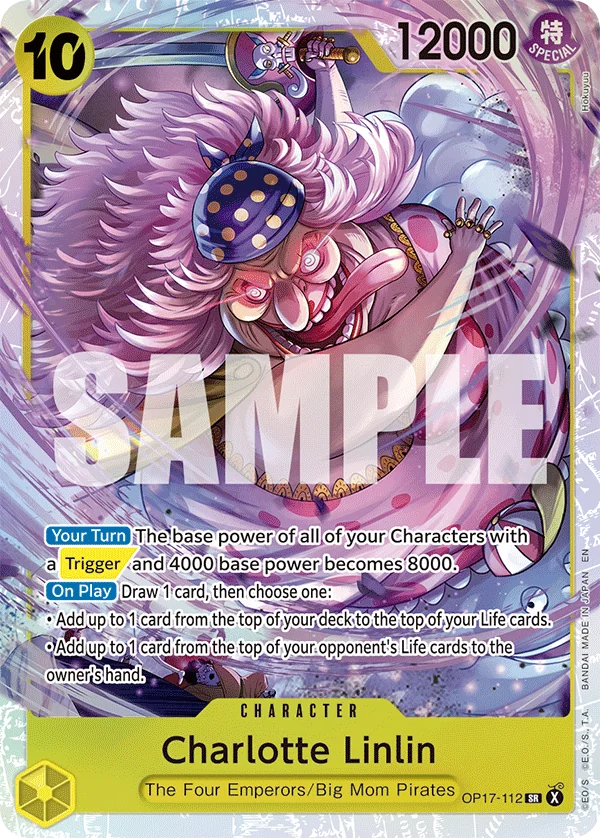 OP17-112OP17-112Shop on TCGplayer Charlotte Linlin,
 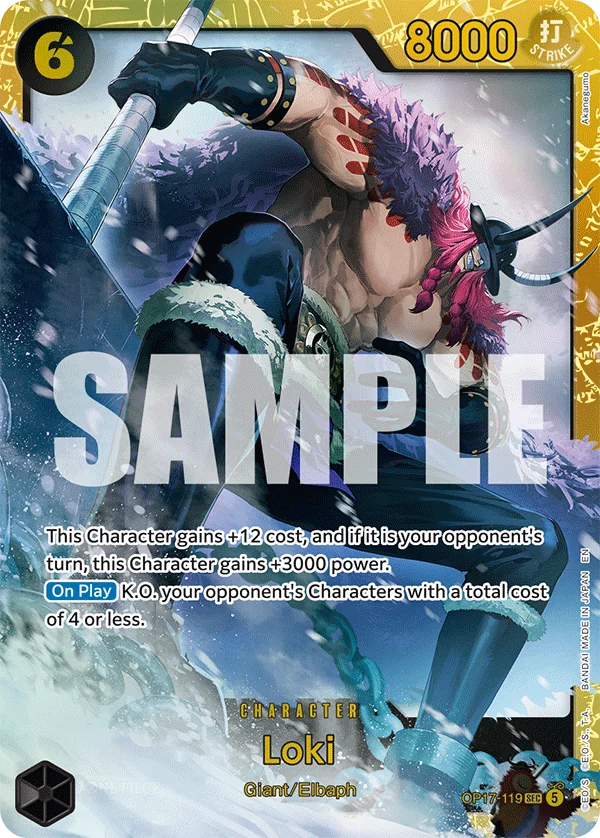 OP17-119OP17-119Shop on TCGplayer Loki, and
 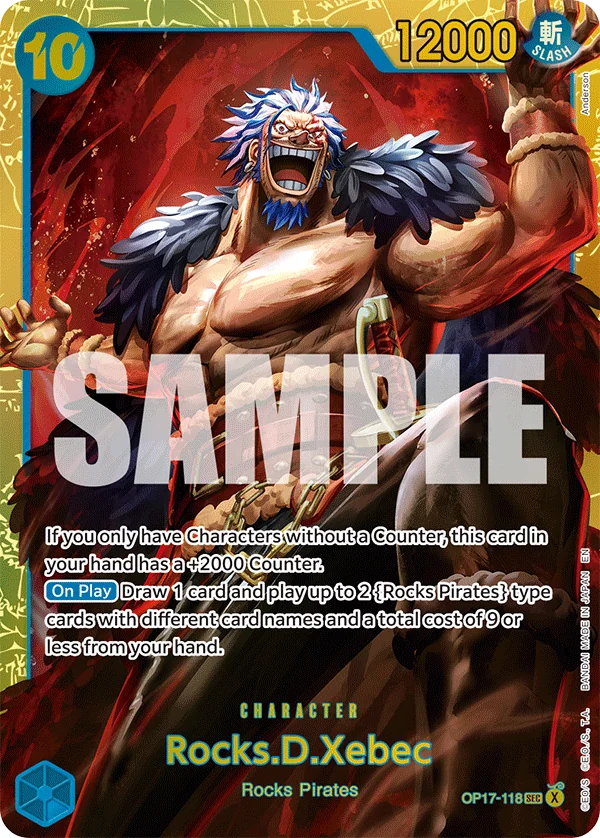 OP17-118OP17-118Shop on TCGplayer Rocks D. Xebec are real OP-17 Characters that show up in released decklists. Their inclusion in one successful list does not establish a four-of requirement for every build. Use the official card list for identity and the event decklist for actual copy counts.
What to play next
For the pre-ban September snapshot, Green Mihawk or Blue Rocks had the deepest samples. Mihawk was the better choice for a player who wanted a proven older Leader with new support. For events on or after October 12, use Blue Rocks or another currently legal Leader instead, because Bandai makes OP14-020 a Banned Card effective that date. Rocks is the better choice for a player who wants the most established native OP-17 engine.
Purple Kaido and Purple Enel are reasonable alternatives for players who already own Purple staples. Their current percentages are close enough that the choice should come from play style, matchups, and card access rather than a headline claim that one has already replaced the other.
Black Luffy, Red Ace, Purple/Yellow Nico Robin, and Red/Black Sabo are also worth testing. The latter two are especially easy to misread because the tier label and tracked percentage do not point in the same direction. Treat them as event-capable options with a different evidence profile, not as hidden guarantees.
For Shanks, Green/Blue Luffy, Nami, or any list with a tiny sample, test locally before buying a complete shell. The current C-tier label may reflect a real matchup problem, a thin database sample, or both. A low volume result is not a reason to fabricate confidence in either direction.
Key Takeaways
- Green Mihawk was the September 21 tracker leader at 65.0% across 220 listed decklists, before OP14-020's October 12 ban.
- Blue Rocks is the strongest native OP-17 adoption signal at 110 listed decks and won the September 2 Asia Flagship recorded on the tracker.
- Purple Kaido has more listed decks than Purple Enel, but both are A tier with nearly identical tracked win rates.
- September 6 results were broad: Blue/Yellow Boa Hancock won, while Green Mihawk, Red/Black Sabo, and Purple/Yellow Nico Robin appeared repeatedly in the recorded field.
- Green Shanks and Green/Blue Luffy are in C with 16 and 12 listed decks, so native OP-17 Leaders are not all performing alike.
- These numbers were checked September 21. Refresh the live tracker on the September 28 publish date before treating them as current.
Frequently Asked Questions
What is the best deck one month after OP-17 released?
The September 21 tracker places Green Dracule Mihawk in S tier at 65.0% across 220 listed decklists. Blue Rocks is also S tier at 52.5% across 110 lists. Those are strong dated signals, not permanent rankings, and the Mihawk result predates the October 12 ban.
Did Rocks D. Xebec live up to the OP-17 launch hype?
Rocks has the largest OP-17-native sample in the current tier snapshot at 110 listed decks, and Blue Rocks won the September 2 Asia Flagship recorded on the source page. That supports early adoption and one dated result. It does not prove that Rocks is always the best choice.
Is Purple Kaido better than Purple Enel after OP-17?
The tracker places both in A tier. Kaido has 72 lists at 50.6%, while Enel has 49 at 50.1%. Kaido is ahead in representation, but the close percentages do not establish a decisive competitive separation.
Which OP-17 Leaders are underperforming?
Green Shanks is in C at 47.0% across 16 lists, and Green/Blue Luffy is in C at 47.0% across 12. The samples are smaller than Mihawk or Rocks, so describe them as lower-sample current placements rather than final verdicts.
What did the OP-17 pre-launch predictions get right?
The prediction that Rocks would draw strong early adoption is directionally supported by its 110-list sample. The Kaido-versus-Enel call is only partially supported because Kaido has more listed decks while both remain A tier with similar tracked rates.
Are these official Bandai results?
No. The tier labels and percentages come from a fan-run tracker that combines tracked decklists and tournament data. Official event results, card text, and regulation notices remain the authority.
Should I buy an OP-17 deck from this report?
Use the snapshot to choose a testing direction, then check current singles, a complete recent list, local matchups, and the event's legality notice. Do not treat a tier label as a guarantee of card value or future results.
Related Reading
- OP-17 World's Strongest Warriors Set Guide: the set-level hub for the released card pool, product facts, and current format context.
- OP-17 Meta Tier List: the dated S, A, B, and C snapshot with the September leader table.
- OP-17 Xebec Deck Guide: Blue Rocks Pirates Build 2026: a list-focused look at the current native leader with the strongest adoption signal.
- OP-17 Mihawk Deck Guide: Green Dracule Mihawk 2026: the pre-ban shell behind the tracker leader.
- OP-16 One Month Meta Report: the earlier month-one format report this article mirrors.
References
- One Piece TCG Meta tier list: current OP-17 tier labels, listed decks, and tracked win rates, checked September 21, 2026.
- One Piece TCG Meta decks page: current OP-17 format total, meta share, and per-leader table, checked September 21, 2026.
- September 2, 2026 Asia Flagship results: Blue Rocks first place and three recorded decklists.
- September 6, 2026 Asia Flagship results: Blue/Yellow Boa Hancock first place and 16 recorded decklists.
- Bandai official OP-17 product page: English release timing, product details, and listed rarity categories.
- Bandai official OP-17 card list: card numbers, Leader identities, colors, and released card text.
- TCGplayer: 6 One Piece Decks to Try in the OP-17 Format: August 29 launch-week deck coverage.
- TCGplayer One Piece Card Game article index: August 31 early-winner article listing and current competitor context.
Cards in this article
About the author
Competitive TCG Analyst
Competitive One Piece TCG player and deck builder with 3 years of tournament experience. Covers meta analysis, tier lists, and leader builds.
- 3 years competitive OPTCG tournament experience
- Regional top 8 finisher
- Deck builder and meta analyst
- Covers every set since OP-01
Keep reading
Best One Piece TCG Decks Right Now: Current OP-17 Meta
Guides · 16 min
OP-18 Leaders: What Bandai Confirmed vs What's Reported
News · 4 min
OP18 Franky Leader: Stage Counters and a Free Play Effect
Guides · 6 min
OP-18 Saint Gunko: Purple-Black Leader Text Explained
Guides · 6 min
One Piece TCG Release Schedule: October and November 2026
News · 4 min
One Piece TCG Budget Decks: Current Lists Under $100
Guides · 18 min
Purple Enel Deck Guide: OP-17 Sky Island Build 2026
Guides · 11 min
Nico Robin Deck Guide: OP-17 Purple Yellow Build for 2026
Guides · 11 min
Disclaimer
This article is published for informational and entertainment purposes. It does not constitute professional financial, legal, or technical advice. Game performance, online services, patch schedules, and store listings change. Verify critical details (pricing, system requirements, regional availability) with publishers and storefronts before you buy. Affiliate links, where present, help support our editorial work and are labelled in our affiliate disclosure.