Loading…


Shonen TCG · Guides
One Piece TCG Blue Deck Guide: Tempo and Draw 2026
Reviewing
One Piece TCG
One Piece TCG Blue deck: Blue does not need to race. It builds a hand of options, returns opposing Characters to hand or deck, and uses leader-specific DON!! effects to create openings. In the post-OP-17 field, Blue Rocks.D.Xebec (OP17-039  OP17-039OP17-039Shop on TCGplayer) has recent top finishes, while Green/Blue Luffy (OP16-022
 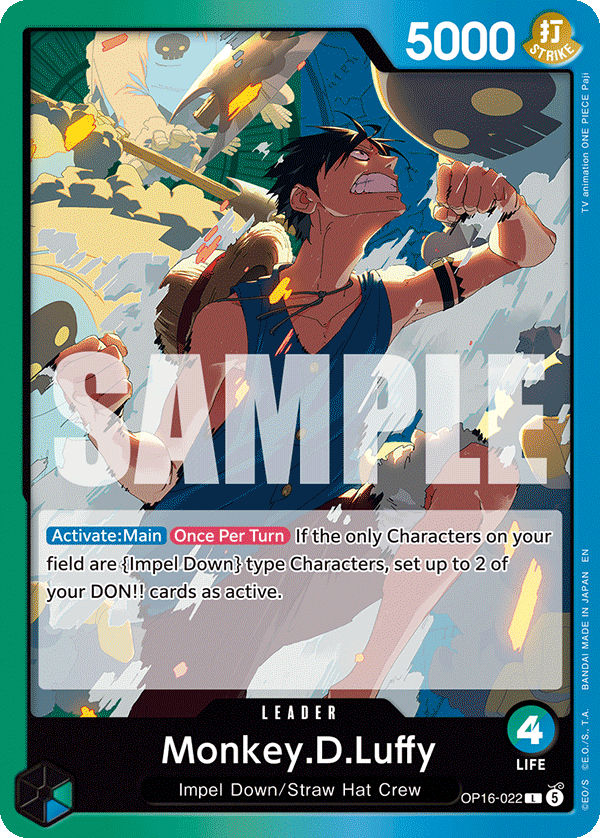 OP16-022OP16-022Shop on TCGplayer) and Blue/Yellow Nami (OP11-041) are better treated as established OP-16-era examples than current #1 recommendations.
TL;DR: Blue is the draw and tempo color in One Piece TCG. It wins through card advantage, bounce effects, and leader-specific DON!! timing. Blue Rocks.D.Xebec (OP17-039) is the current Blue leader with the clearest recent OP-17 results; Green/Blue Luffy and Blue/Yellow Nami remain useful older shells to study. Blue is technically demanding, but it rewards careful sequencing and resource tracking.
What Is a One Piece TCG Blue Deck?
Blue is the card-advantage color. Its game plan is to build more options than the opponent through draw, hand filtering, and carefully timed interaction. That can mean more cards, more counter options, and more DON!! available at the moments that matter.
Three tools define the Blue identity.
Draw power. Blue has a deep pool of draw and hand-filtering effects. Characters, Events, and Stage cards with draw text appear throughout the pool. Over several turns, those effects can leave Blue players with more counter options and more threats to deploy.
Resource timing. Blue does not have a universal DON!! recovery mechanic. Some leaders and cards move or ready DON!! under specific conditions. Green/Blue Luffy (OP16-022), for example, can set up to two DON!! cards as active once per turn when only Impel Down Characters are on the field. Treat those effects as part of a particular leader's shell, not as a rule for every Blue deck.
Bounce effects. Blue returns opposing Characters to hand or deck instead of relying only on K.O. effects. The opponent spent DON!! playing that Character, and returning it can force them to spend those resources again. Two well-timed bounce effects can waste the opponent's entire game plan for several turns.
Key Takeaways
- Blue's draw and hand-filtering effects can create extra counter and threat options over a full game
- DON!! movement is leader- and card-specific; it is not a universal Blue recovery mechanic
- Bounce creates tempo gaps without relying only on K.O. effects: the opponent's card may return to hand or deck, but the spent DON!! is not automatically refunded
- Blue Rocks.D.Xebec (OP17-039) has the clearest recent OP-17 results among Blue leaders; Green/Blue Luffy and Blue/Yellow Nami are established older shells, not current #1 claims
- Many defensive Blue lists start around 12 counter sources, but the correct count depends on the leader and curve
- Blue rewards careful sequencing: the best line often depends on what the opponent can replay next turn
Blue's Core Identity and Mechanics
Draw Power: The Blue Engine
The "Blue engine" is a term competitive players use to describe the draw package that Blue decks build around. In practice, this means a combination of Characters that draw on play, Events that draw multiple cards in one action, and Stage cards that generate ongoing card advantage over multiple turns.
A well-constructed Blue deck looks for extra cards and better information each turn. That gap compounds: by turn five or six, even a few additional cards can create more counter options and more ways to answer the opponent's next threat. The opponent is making do with what they drew naturally; Blue is choosing from a more curated hand of answers.
Blue doesn't need to rush because of this. Rushing trades cards for tempo. Blue trades tempo for cards, then converts those cards into better tempo than any rush deck can generate.
DON!! Timing: Rethinking the Resource
In One Piece TCG, attaching DON!! to a Character boosts its Power but costs you flexibility. Most Blue decks should treat that attachment as a real tradeoff, not assume the color will refund it later.
Some leaders and cards move or ready DON!! under specific conditions. Green/Blue Luffy (OP16-022), for example, can set up to two DON!! cards as active once per turn if the only Characters on the field are Impel Down type Characters. That is a leader-specific payoff, not a universal Blue mechanic.
This is part of why Blue is demanding to play. You are tracking which DON!! are attached where, which effects are worth spending, and which turns it is worth bouncing your own cards to recycle On-Play effects. Getting this right is the difference between a good Blue pilot and a great one.
Bounce: Wasting the Opponent's Turns
Bounce effects in Blue target opponent Characters. Depending on the card, the target can return to the opponent's hand or deck rather than going to trash. That can be weaker than permanent removal, but it also forces the opponent to spend DON!! again if they want the same Character back.
Against a deck that plays a 7-cost Character on turn five, a single bounce can erase that turn's board development. The opponent holds the card again, the Character is off the field, and the spent DON!! is not automatically refunded. If they replay it next turn, you may be able to bounce it again.
Blue doesn't always bounce the moment a threat appears, though. Sometimes holding the bounce is correct, waiting for a specific threat or a more exposed position. That read-dependent timing is another layer of what makes Blue hard to pilot well.
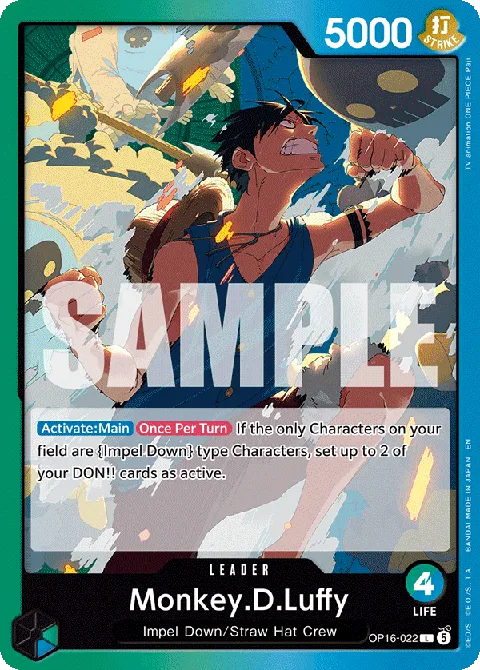 Luffy (OP16-022) is a Green and Blue Impel Down leader whose card-specific DON!! effect shows why resource timing must be evaluated by leader, not by color alone.
GODEEPER: Luffy is an OP-16 Green and Blue leader, but his results should be read as an OP-16-era snapshot after the OP-17 release. OP-16 Green Blue Luffy Deck Guide →
Blue Leaders in the 2026 Standard Format
Luffy (OP16-022): Green/Blue Impel Down
Luffy is an important OP-16 example of a dual-color Blue shell. His Green/Blue Impel Down build pairs Blue's draw and bounce tools with Green's disruption, and his leader effect can set up to two DON!! cards as active once per turn when only Impel Down Characters are on the field. The post-OP-17 field has changed, so do not treat old Luffy results as a current #1 ranking.
If you play Blue, Luffy is still a useful shell to study. The deck rewards careful sequencing around the Impel Down Character pool and punishes opponents who cannot answer its board presence early.
For a full breakdown of how to build and play Luffy, see the OP-16 Green Blue Luffy Deck Guide linked above.
Nami (OP11-041): Blue/Yellow Control
Nami combines Blue's draw engine with Yellow's Trigger synergy, creating a deck that generates card advantage from both the deck and Life card effects. Her leader ability draws when a Life card is removed while your hand has 7 or fewer cards, as confirmed in Bandai's OP11 Q&A. Current OP-17 trackers still list Blue/Yellow Nami, but below the leading decks.
The Zeus package supports Nami's Life and hand plan, while Trigger cards can create board presence as they leave Life. Exact rankings shift week to week and by tracker, so use current event data rather than treating Nami as a permanent top-tier deck.
Nami is the more accessible pick if you'd rather lean into Blue's card-advantage plan than Luffy's tempo-and-disruption shell. For a full breakdown of how to build and play Nami, see the One Piece TCG Nami Deck Guide.
Buggy Blue (OP-16 Variant)
The OP-16 Buggy leader, OP16-041, brought another Blue option to the format. Its once-per-turn effect can play up to one Prisoner of Impel Down card from hand when an Impel Down Character leaves your field, giving the shell a way to keep developing its board.
Buggy Blue is a better choice if you want Blue's draw tools without committing to Nami's Life-based plan. The deck still runs a Blue draw and bounce package, but its Impel Down payoff and matchup spread are different from Nami's.
See the OP-16 Buggy Blue Deck Guide for a complete card-by-card breakdown.
Current and Older Blue Leaders
Rocks.D.Xebec (OP17-039) is the current Blue leader to start with after OP-17. Recent tournament listings include a September 5 Flagship Battle win and later top finishes, while current Standard tables also show Blue/Black Sakazuki and Blue Doflamingo among the more represented Blue shells. Older leaders such as Donquixote Doflamingo and the OP-16 Luffy and Buggy builds remain useful for casual play or historical format study.
How to Build a One Piece TCG Blue Deck
Counter Package (Start Around 12 Sources)
Blue needs counters. The color's strategy is to survive early turns while the draw engine builds advantage, and that means countering attacks rather than trading in combat. Many defensive Blue builds start around 12 counter sources, often using low-cost Characters with 2000 counter value, then adjust for the leader and local field.
Don't cut counters to fit in more threats. Blue wins the late game, not the early game. Getting to the late game requires enough counters to survive the turns when your draw engine isn't online yet.
Draw Events and Characters
Fill 12-16 slots with cards that draw on entry or have draw text. The exact number depends on your leader, but Blue decks that run fewer than 10 draw sources often stall out in the mid-game. Draw Events cost 0-2 Don!! and refill hand after you've spent resources bouncing or defending.
Bounce Package (6-10 Cards)
Six to ten bounce effects is the standard range. Below six, you don't have enough to apply consistent tempo pressure. Above ten, you're taking up slots that could go to draw or counter cards. Most bounce effects in Blue target Characters at a certain cost threshold, so check your local meta to know which cost ranges need covering.
DON!! and Curve Management
Do not reserve four to six slots for a generic Blue DON!! recovery package, because no such color-wide mechanic exists. Instead, choose resource effects that match your leader. Luffy's Impel Down shell can use the leader's active-DON!! effect, while Rocks.D.Xebec asks you to preserve hand quality for its draw trigger. The right curve leaves enough DON!! to defend without abandoning your draw or bounce plan.
GODEEPER: Blue's hardest matchups require specific tech answers that change by opponent. OP-16 Nami Tech Cards: 7 Verified Picks by Color →
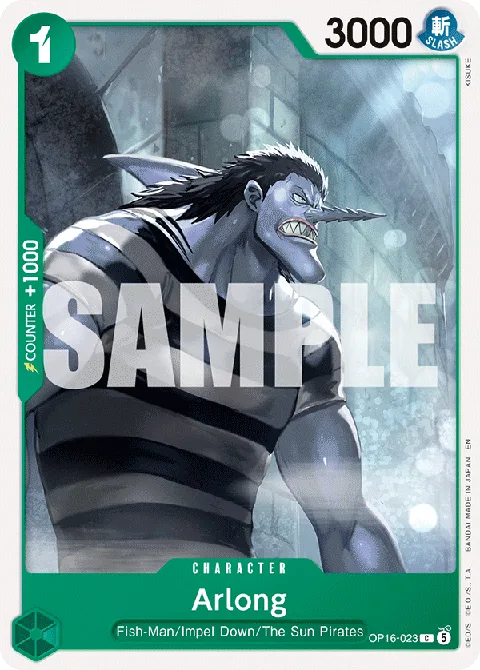 Arlong
 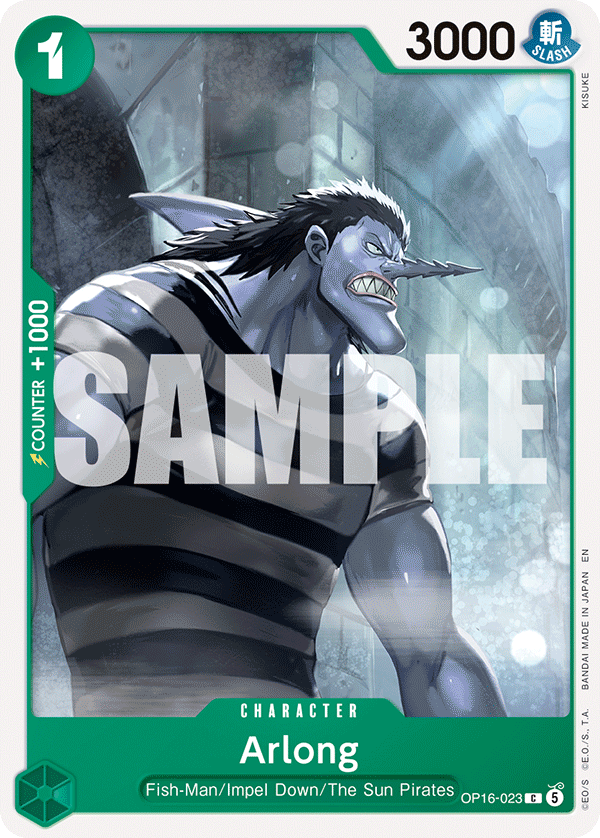 OP16-023OP16-023Shop on TCGplayer (OP16-023) is printed in Green, not Blue; check a card's actual ink before assuming a character fits a color's identity.
SHOP: Building a Blue One Piece deck? Compare current One Piece Card Game singles for the leader and bounce package. Shop TCGplayer →
Step-by-Step: Piloting a Blue Deck Turn by Turn
1. Hold counters instead of trading in combat early. In the first few turns, protect the hand and board resources that keep your engine online. The exact counter count depends on the leader, but defensive lists often start around 12 sources.
2. Fire draw effects whenever spare DON!! allows. After countering or deploying a body, spend leftover DON!! on a draw Event or an On-Play Character. By turn five or six, even a small card advantage gap can create several extra options.
3. Bounce the opponent's biggest investment, not the first threat you see. When a bounce effect is live, target the Character the opponent spent the most DON!! on, wasting a full turn's tempo instead of a cheap body they can happily replay.
4. Sequence leader-specific DON!! effects with a purpose. Use Luffy's active-DON!! effect or another resource effect when it advances the next attack, draw line, or defensive turn rather than firing it automatically.
5. Decide bounce timing by read, not by reflex. Sometimes holding a bounce for a more exposed position, after the opponent has already committed more DON!! to that target, beats firing it the instant a threat lands.
6. Convert the card-advantage lead into board control from turn five onward. Once your hand is consistently ahead, use the extra options to answer everything the opponent plays while your own board catches up.
When to Play Blue vs Other Colors
Blue is the right color if you want precise decisions to matter more than the cards you draw. No other color rewards correct play as visibly. But it's genuinely not the right choice for every player or every meta.
Blue fits you if you're comfortable with multi-step decision trees, want to be favored in long games, and prefer winning through information advantage over board pressure. If the local meta is full of value decks and mid-range strategies, Blue thrives there.
If you'd rather win fast and simply, Red is a better fit. Red's aggro-rush is easier to execute and punishes Blue's slow setup turns hard. The One Piece TCG Red Color Guide covers how Red applies that early pressure.
Purple scratches a similar "out-resource the opponent" itch through cost reduction rather than draw power. If you want expensive Characters in play faster rather than a full hand of options, check the One Piece TCG Purple Color Guide.
If you'd rather just remove threats permanently instead of bouncing them back, Black might suit you better. Black's removal is cleaner in metas full of high-value single targets. The One Piece TCG Black Color Guide explains when that matters.
Green disrupts the opponent's hand and deck rather than building your own resources. Where Blue generates cards, Green destroys them. The One Piece TCG Green Color Guide goes deep on how disruption-first compares to draw-first.
For the full OP-16 card list and set overview, the One Piece TCG OP-16 Complete Guide covers everything from leaders to chase cards.
Related Reading
- Purple Enel Deck Guide (OP-16 Format): Purple Enel is an OP-16-era benchmark and a useful matchup test for Blue's resource plan.
- OP-16 Meta Report July 2026: Historical tier standings from the OP-16 format, useful for comparing how Blue changed after OP-17.
- OP-16 All 6 Leaders Explained: Colors and identities of every OP-16 leader for broader context on the format.
- OP-16 Blackbeard Deck Guide: The Black/Yellow control deck that's one of Blue's key rivals at the top of the format.
Frequently Asked Questions
What does Blue do in One Piece TCG? Blue is the draw and tempo color. It generates card advantage through draw and hand-filtering effects, returns opposing Characters to hand or deck, and uses leader-specific resource effects to create openings. Blue usually plays a patient, resource-positive game rather than trying to win through raw power or speed.
Who are the best Blue leaders in One Piece TCG in 2026? Rocks.D.Xebec (OP17-039) is the clearest current Blue leader to study after OP-17, with recent top finishes. Blue/Black Sakazuki and Blue Doflamingo also appear near the top of current Standard data, while Blue/Yellow Nami and Green/Blue Luffy are older competitive examples that remain playable.
How is Blue different from Green in One Piece TCG? Blue is more closely associated with returning Characters to hand or deck, forcing the opponent to replay them or rebuild. Green's primary interaction is resting opposing Characters and DON!! cards, denying blocks and attacks without relying on the same bounce plan. Check the exact card text because individual effects can vary by set.
How does Blue manage DON!! in One Piece TCG? Blue does not have a universal DON!! recovery mechanic. Resource movement is leader- and card-specific: for example, Green/Blue Luffy (OP16-022) can set up to two DON!! cards as active once per turn when its field meets the Impel Down condition. Build those effects around the leader's shell instead of treating recovery as a generic Blue package.
Is Blue good for beginners in One Piece TCG? Blue can be demanding to play optimally. Every turn involves multiple decisions: whether to bounce now or attack, which DON!! to attach and which to hold, and when to use draw effects. Nami starter products can still give beginners a more forgiving way to learn Blue's timing.
What matchups is Blue strong against? Blue handles slow, value-heavy strategies well. Bounce effects punish opponents who spend several Don!! on a single Character. Draw advantage lets Blue out-resource Purple ramp decks over long games. Blue struggles most against aggro-rush decks that rebuild the board faster than Blue can bounce.
How many counters should a Blue deck run? Many defensive Blue builds start around 12 counter sources, but the right number depends on the leader, curve, and local field. Blue plays a reactive game and needs enough counters to survive while its draw and bounce package comes online.
References
- Limitless TCG Standard deck standings: current post-OP-17 Standard representation and points by leader
- One Piece Card Game OP-11 Q&A: official Nami rules clarifications, including Life-card removal timing
- OP11-041 Nami card record: Blue/Yellow leader identity and hand-size condition
- OP16-022 Monkey.D.Luffy card record: Green/Blue leader identity and Impel Down DON!! effect
- OP16-023 Arlong card record: Green Character identity shown in the inline image
- OP16-041 Buggy card record: Blue Impel Down leader effect
- OP17-039 Rocks.D.Xebec card record: current Blue Rocks leader identity
- OPDeckGuide tournament decklists: dated OP-17 Flagship Battle and Standard Battle results
- Rocks.D.Xebec OP17 decklists: recent OP-17 tournament placements for the Blue leader
Was this guide helpful?
Cards in this article
About the author
KT
Competitive TCG Analyst
Competitive One Piece TCG player and deck builder with 3 years of tournament experience. Covers meta analysis, tier lists, and leader builds.
- 3 years competitive OPTCG tournament experience
- Regional top 8 finisher
- Deck builder and meta analyst
- Covers every set since OP-01
Disclaimer
This article is published for informational and entertainment purposes. It does not constitute professional financial, legal, or technical advice. Game performance, online services, patch schedules, and store listings change. Verify critical details (pricing, system requirements, regional availability) with publishers and storefronts before you buy. Affiliate links, where present, help support our editorial work and are labelled in our affiliate disclosure.