Loading…
Shonen TCG · Guides
OP-16 Format July 2026: Full Meta Update and Outlook
OP-16 format July 2026: Luffy, Enel, Blackbeard lead S-tier at 7 weeks post EN launch, with OP-17 previews already shifting which singles are worth buying.
Reviewing
One Piece Card Game
OP-16 format July 2026 at seven weeks into EN has said most of what it's going to say before OP-17 shows up. The week 1 hype decks have either proven themselves or found their ceiling. The late bloomers -- Blackbeard especially -- have climbed as players figured out the right build. What's left for this OP-16 format July 2026 window is refinement, a last buying opportunity before OP-17 prices shuffle everything, and the first serious look at how the incoming set changes what's worth holding.
TL;DR: OP-16 format July 2026 at 7 weeks in. Luffy Blue/Green (65.0% WR), Enel Purple (64.6%), and Blackbeard Black/Yellow (61.5%) form S-tier; Nami OP11, the format's mid-June win-rate leader, has cooled to Tier 2 at 56.5%. Ace has dropped to Tier 2 after control players adapted. OP-17 lands late August -- singles for current decks are still a reasonable buy, but the SEC Character cards' prices are near their floor. The format shape won't change much in the remaining weeks.
Note (updated Aug 19): This is a dated snapshot of the format as it stood on July 29, 2026 (week 7). It's now three weeks later and the picture has moved. Live Limitless tournament data through mid-August shows Nami has reclaimed the top spot in both win rate and play share (roughly 23.5%, versus Luffy's ~22.9% and Enel's ~22.7%), not the cooled Tier 2 deck described below. Purple/Yellow Rosinante, an older OP-12 leader given a major boost by OP-16's own Marineford support, has also climbed into a genuine top-four spot, something this article didn't originally cover. Blackbeard has settled lower, around fifth by play share. OP-17 is no longer in preview either: all six leaders are officially confirmed and the set launches within days (Japan August 22, EN wide release August 28). The tier breakdown below reflects late July, not today; read it as a historical checkpoint in the OP-16 story rather than the current standings.
OP-16 format July 2026: where does it stand at 7 weeks?
OP-16 format July 2026 sits at seven weeks post EN launch, which is enough for real data to accumulate and player skill on new archetypes to mature. We're past the week 1 hype phase and well past the "wait for the meta to settle" window -- the meta has settled. The EN Standard format runs OP-09 through OP-16, plus any legal pre-OP-09 cards.
Three tiers are clearly defined:
S-tier (confirmed at multiple EN events): Luffy Blue/Green (65.0% WR), Enel Purple (64.6%), Blackbeard Black/Yellow (61.5%) Tier 2 (competitive, top-8 regular): Nami OP11 (56.5%, cooled from her 57.3% mid-June peak), Yamato Black, Sengoku Purple, Ace Red Lower tier (functional, ceiling established): Buggy Blue
The callout that matters for any honest OP-16 format July 2026 snapshot: Nami isn't an OP-16 leader. She's OP-11, fully legal in Standard, and was the #1 deck by tournament wins into the OP-16 launch window. Seven weeks in, three OP-16 leaders (Luffy, Enel, Blackbeard) built decks specifically tuned to beat her draw engine, and her win rate has settled to 56.5%, a strong Tier 2 deck rather than the format's benchmark.
Key takeaways
- Luffy (65.0% WR), Enel (64.6%), and Blackbeard (61.5%) are the S-tier OP-16 leaders at 7 weeks
- Nami OP11 was the format's mid-June win-rate leader at 57.3% but has cooled to 56.5% and Tier 2
- Luffy Blue/Green is the most accessible path to top-table finishes among the S-tier trio
- Ace dropped from week 1 hype to Tier 2 as control players found the right counter-pattern
- Buggy's still being solved at 7 weeks; the ceiling is real but the list isn't locked
- Sengoku Purple rewards preparation in the Nami matchup specifically
- This is the last 3-4 week window of pure OP-16 format before OP-17 hits late August
- SEC Character card prices have stabilized from launch peaks; week 7 is a more predictable buy window than week 1-2
The OP-16 tier list at 7 weeks in
S-tier OP-16 leaders: Luffy, Enel, and Blackbeard
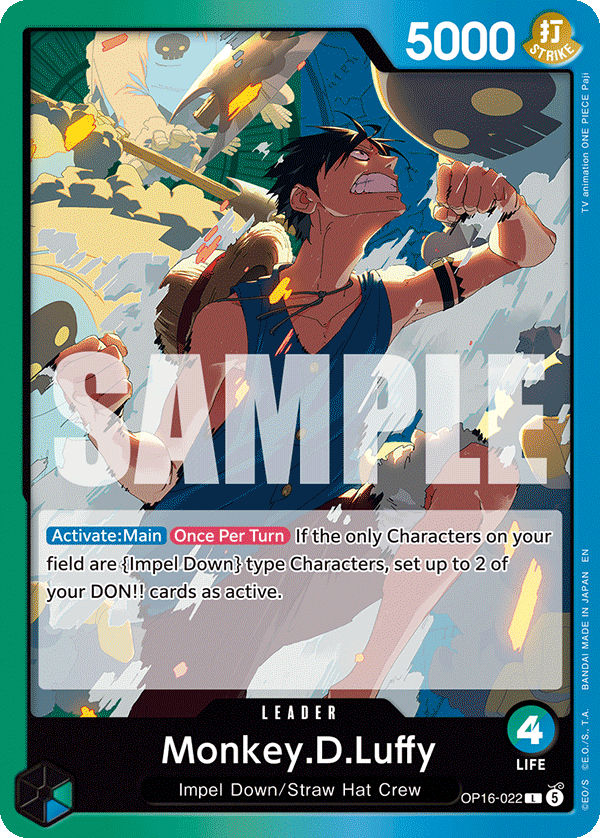 OP16-022OP16-022Shop on TCGplayer Luffy Blue/Green leads the format at a 65.0% win rate. Blue/Green's dual character pools -- Impel Down prisoners and Straw Hat Crew -- give the deck removal and draw in the same build. The leader ability applies continuous pressure without Blackbeard's tight sequencing demands, and that consistency is exactly why he's outpacing decks with flashier individual cards.
Enel Purple is the biggest riser of the format, climbing to a 64.6% win rate after being off the radar at launch. The deck rewards patient Purple ramp into disruptive, high-impact plays that shut down the aggressive and draw-engine decks Nami used to prey on. Enel's rise is a large part of why Nami's own win rate has slid over the last several weeks.
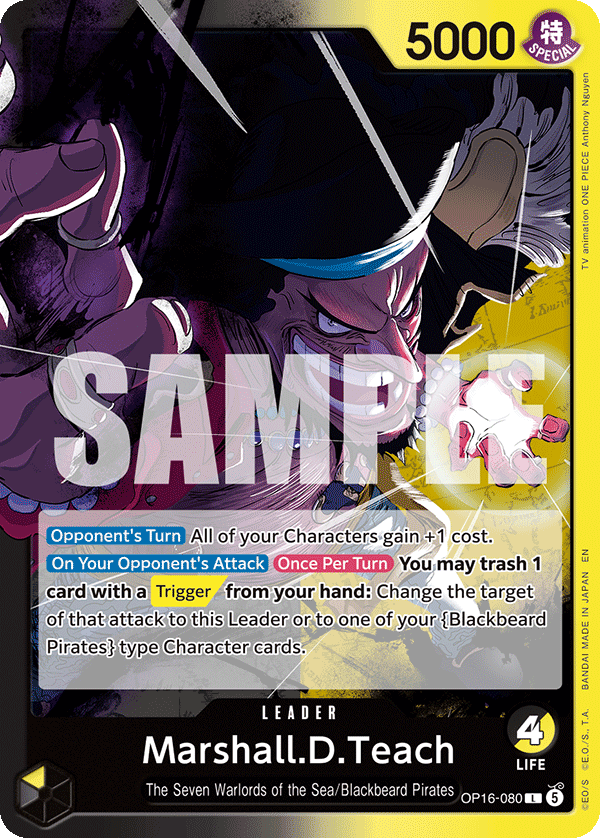 OP16-080OP16-080Shop on TCGplayer Blackbeard Black/Yellow climbed the most over the 7-week span among OP-16-native leaders, rounding out S-tier at 61.5%. Week 1 players ran trigger counts that were too low and got beaten by Nami's draw speed. By weeks 4-5, the right ratio had spread through the competitive community, and Blackbeard's matchup numbers against Nami improved. The control plan -- trash a Trigger card to redirect attacks onto Blackbeard Pirates Characters, then grind advantage -- is well-understood now. It punishes sequencing mistakes harder than any other top-tier choice, so the skill floor is genuinely higher, but the ceiling is real.
GODEEPER: Want the full week-by-week breakdown that led here? One Piece TCG OP-16 Meta Report July 2026: EN Settled
Tier 2: Nami, Yamato, Sengoku, and Ace
Nami (OP11-041), the format's mid-June win-rate leader at 57.3%, has cooled to 56.5% and settled into Tier 2. Her Zeus draw engine is still genuinely strong and she remains a widely played deck worth a dedicated counter plan, but the S-tier trio built specific answers to her: Enel's disruption and Blackbeard's grind both interrupt the hand-size advantage she relies on.
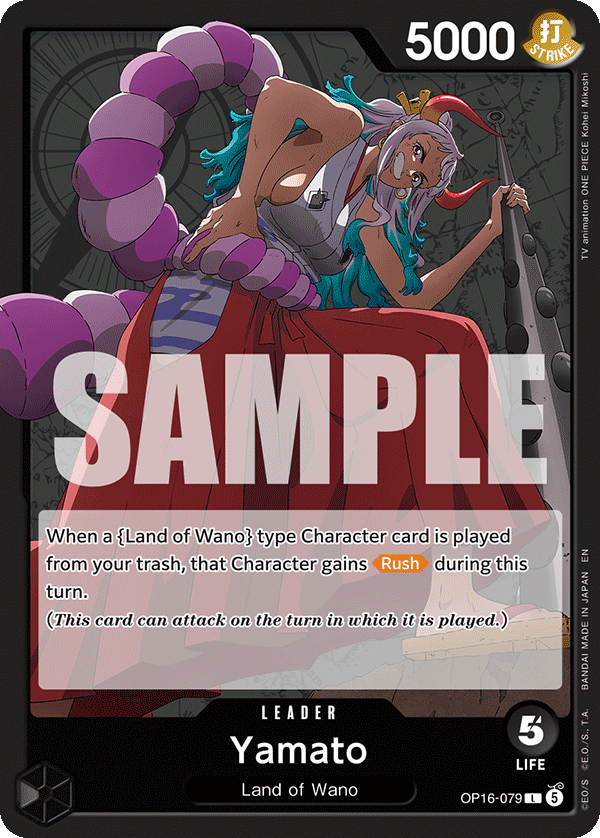 OP16-079OP16-079Shop on TCGplayer Yamato Black has also dropped out of S-tier alongside her. The trash recursion plan -- sending Wano characters to trash and giving them Rush when they return -- still builds real board pressure that most decks can't match, and the Yamato mirror remains a genuine skill test. What week-1 coverage missed: Yamato's mid-format improvement came mostly from sideboard evolution, not main deck changes, but the deck hasn't kept pace with Luffy, Enel, and Blackbeard's win rates through July.
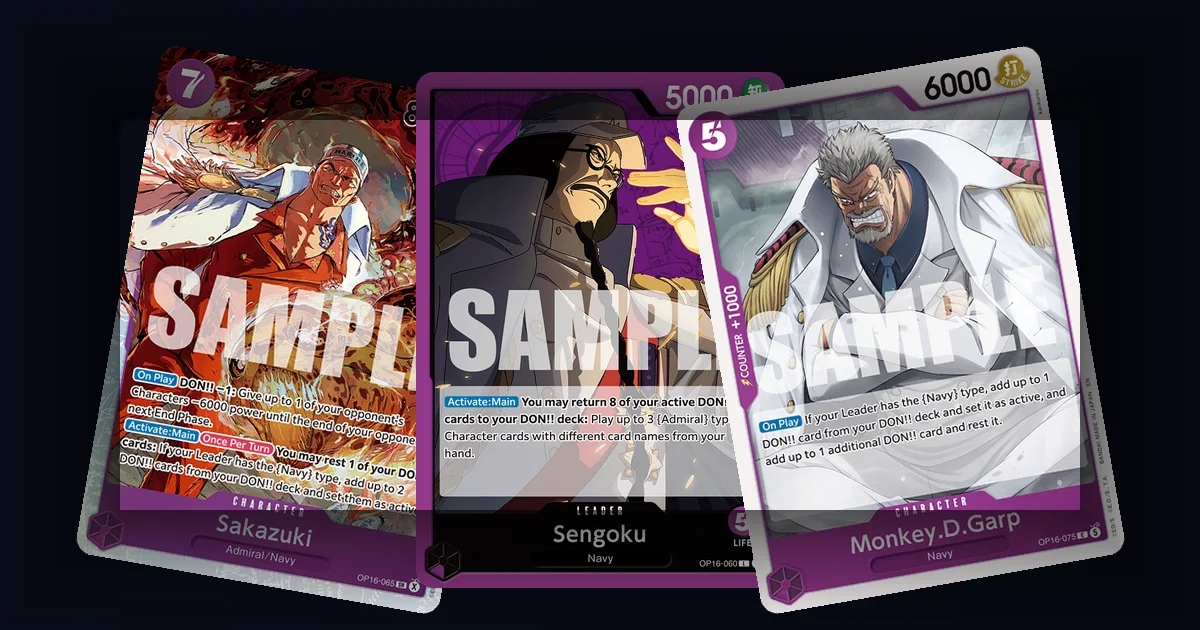
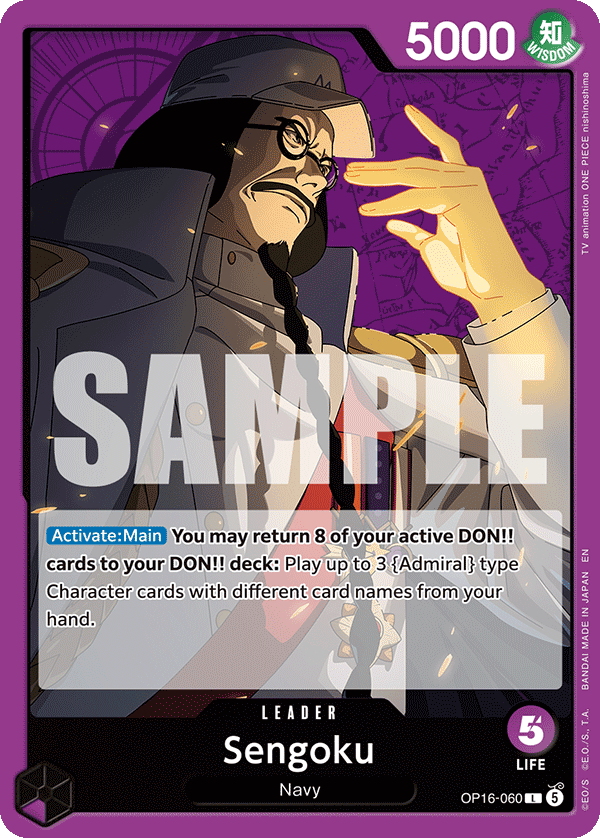 OP16-060OP16-060Shop on TCGplayer Sengoku Purple is the slowest Tier 2 deck and the most polarizing. The Admiral finisher plan -- ramp Purple DON!!, drop Akainu as the board-clear payoff -- works cleanly against mid-speed opponents. Against the S-tier three, Enel's disruption and Blackbeard's removal both threaten Sengoku's ramp turns before the Admirals land. At locals and mid-level regionals with a broader field, Sengoku's a real Tier 2 pick. At top-8 tables stacked with the S-tier trio, the setup liability shows every time.
The full Admiral timing problem, including why Akainu is a Character and not a leader, and why that distinction changes how you build the deck, is covered in more depth elsewhere on the site.
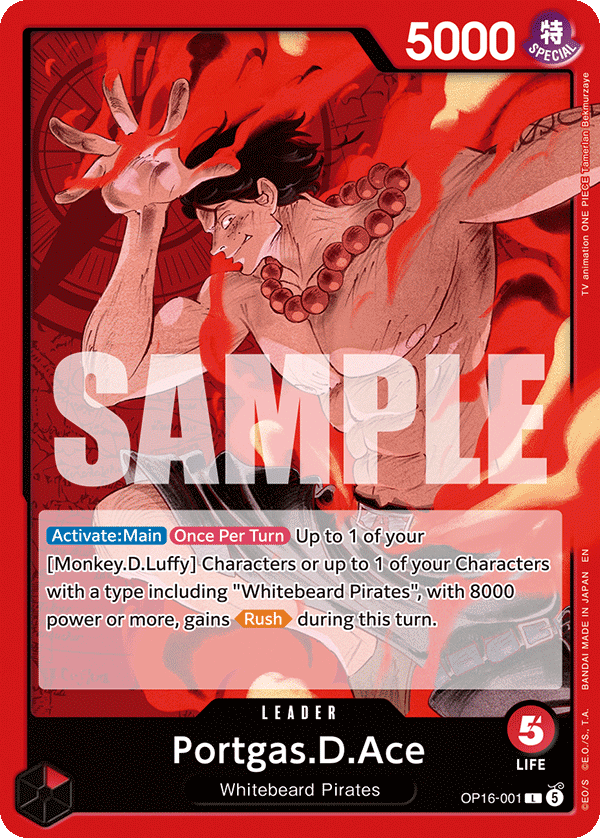 OP16-001OP16-001Shop on TCGplayer Ace Red had the best week 1 story, a fast start that put him on the radar early. But weeks 2-3 saw control players adapt. Blackbeard players specifically tuned trigger packages against him. By week 4, Ace's matchup numbers against the S-tier decks had dropped enough to push him down to Tier 2. He'll still win locals. You need a rehearsed plan for the Blackbeard matchup and genuine speed to close before Sengoku or Enel stabilize the board.
Lower tier: Buggy Blue
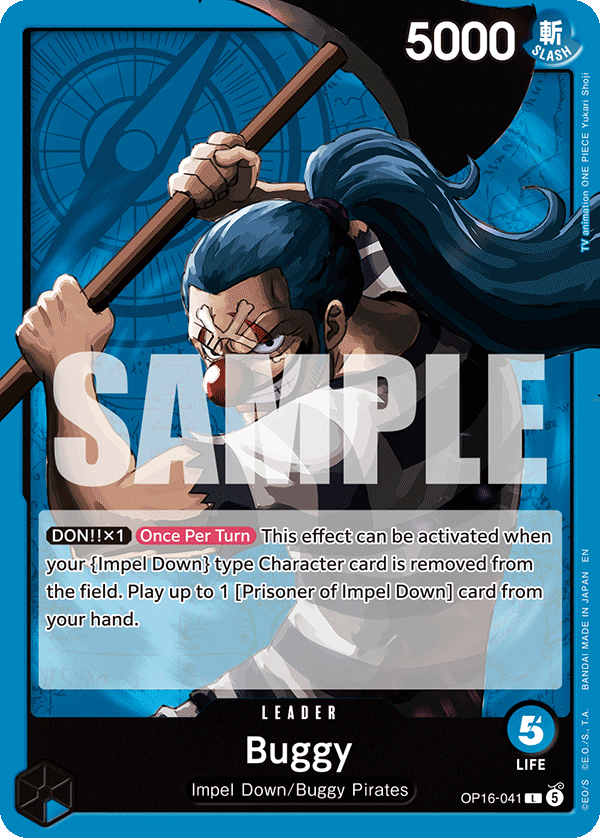 OP16-041OP16-041Shop on TCGplayer Buggy Blue is the most interesting unresolved story at 7 weeks. The wide-flood plan has a higher ceiling than early builds showed -- players are still testing different Event counts and Blue support packages. Honestly, that's weird. Most decks find their list shape within 3-4 weeks. Buggy at week 7 still having genuine debate about the right 20-card support suite means either the deck is legitimately complex or the optimal shell hasn't been published yet. Lower tier now, but the community isn't done with him.
What changed from week 1 to week 7
The biggest shift is Blackbeard's rise, alongside Enel's. Blackbeard entered week 1 as a theoretically powerful leader with an execution problem: the right trigger ratio wasn't known, and players were losing the Nami matchup badly because Nami's draw speed outpaced Blackbeard's setup at incorrect ratios. By weeks 3-4, enough tournament data accumulated that the community converged on a configuration. Enel followed a similar arc from an off-radar Purple deck to a format-defining riser once players worked out the ramp-into-disruption sequencing that shuts Nami down.
Ace's fall is the mirror story. Week 1 success put him in the spotlight. The spotlight accelerated counter-tech development. Control players who knew the Ace matchup was coming prepared specifically for it; Ace players didn't have the same luxury of a fresh matchup. This is the standard hype-to-reality cycle for aggressive decks in One Piece TCG: week 1 is the best window, and each subsequent week narrows the edge.
Nami and Yamato, for the record, haven't gotten worse. Both are still capable, widely played decks. What changed is that the field built specific answers to them, which is enough to knock both out of S-tier and into a competitive Tier 2.
GODEEPER: Running Sengoku and want the Admiral setup to land more consistently? OP-16 Akainu Deck Guide: Sakazuki in the Three Admirals Navy
How OP-17 previews are already shifting buying decisions
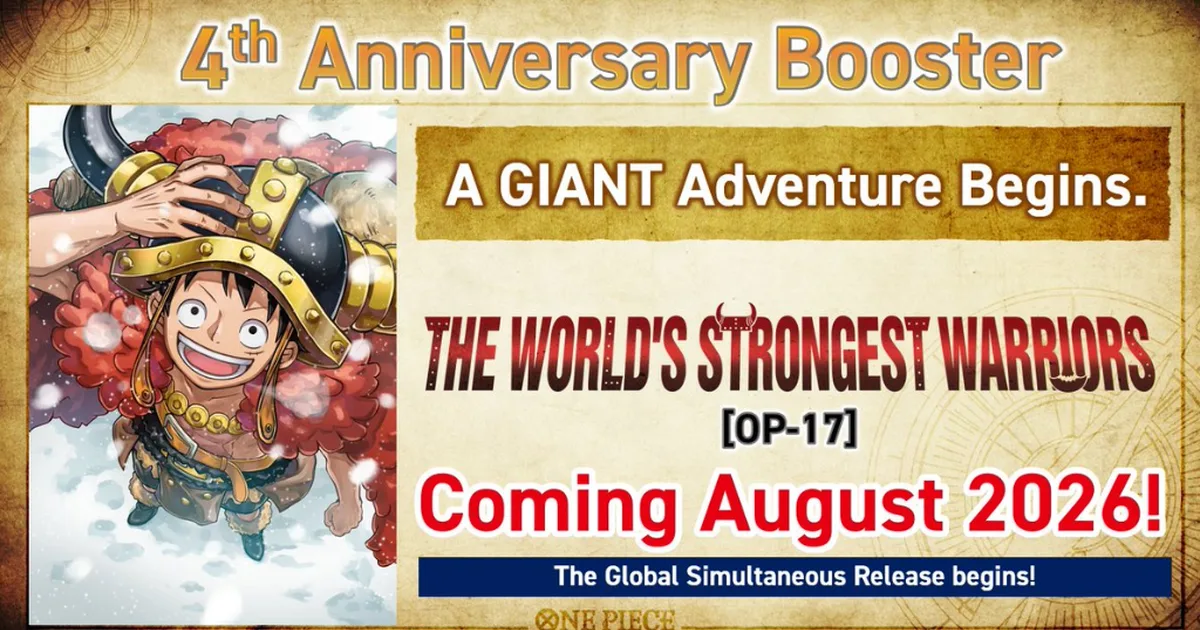
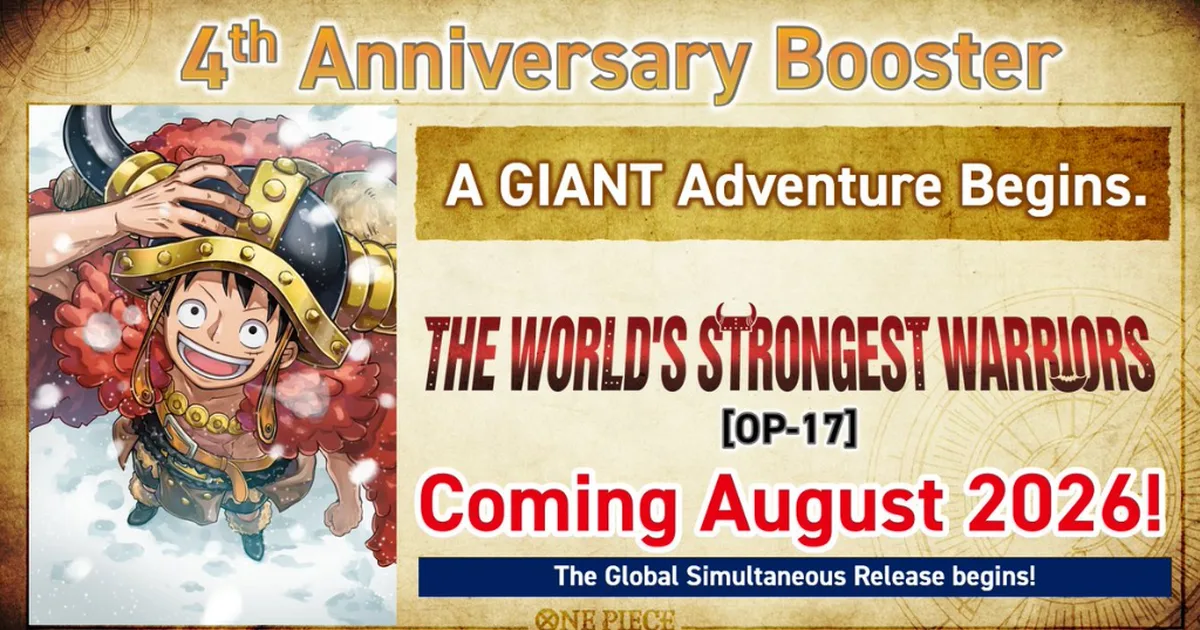
OP-17 "The World's Strongest Warriors" launches in Japan on August 22 and gets its EN wide release on August 28, 2026, both confirmed dates rather than estimates at this point. All six leaders are officially revealed, and full spoilers are already moving prices on the secondary market. A few dynamics worth tracking before the OP-16 format window closes.
Nami counter-tech is getting more tools. OP-17's confirmed Red leader, Edward Newgate (Whitebeard), is an aggressive body-count option in the mold Ace occupied for OP-16, but on a different DON!! curve. Whether he hard-counters Nami's draw engine won't be known until OP-17 has live tournament data, but the possibility hasn't stopped Nami from reclaiming the top play-share spot in the meantime. Holding Nami as a value card into OP-17 still carries real risk.
Blackbeard has genuine OP-17 crossover potential. Black/Yellow is a two-color identity that can absorb new Yellow support cards from any set. If OP-17 adds strong Yellow Trigger characters or Events, Blackbeard lists may upgrade the support suite without changing the core gameplan. That's one reason the SEC Blackbeard Character card (OP16-119) has held value better than Ace (OP16-118) in secondary market pricing -- buyers are factoring in upgrade potential.
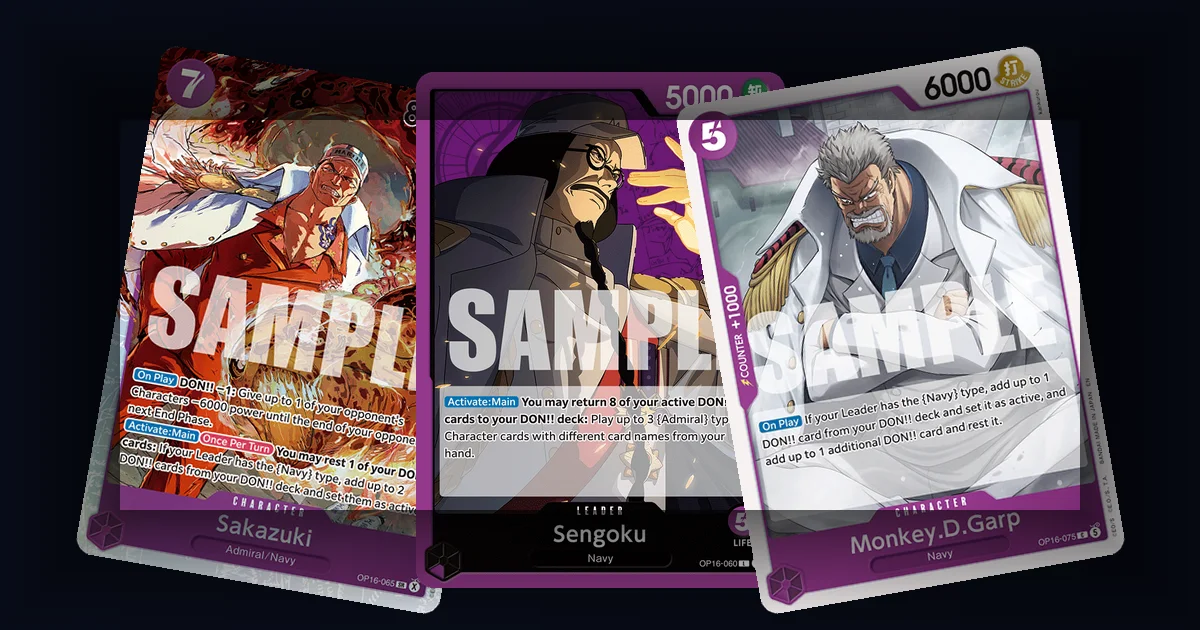
The Admiral Manga Rares aren't OP-17 targets. Akainu (OP16-065 Manga Rare), Kizaru (OP16-073 Manga Rare), and Aokiji (OP16-063 Manga Rare) are tied to Sengoku Purple as a gameplan. Without specific Navy support from OP-17, they don't gain crossover value. They're powerful in one deck.
The OP-17 Leader Preview article covers which current decks survive the format shift and what the new leaders look like.
Price snapshot at 7 weeks: what to buy now vs wait
OP-16 singles have moved from the wild week-1-2 pricing into more predictable territory. Not financial advice -- card prices move -- but the week-7 pattern is clearer than it's been.
Buy now:
- Non-SEC leaders for decks you plan to play. Yamato (OP16-079), Luffy (OP16-022), Buggy (OP16-041), and Sengoku (OP16-060) are all non-SEC and have settled. You're not catching a falling knife at week 7.
- Core Impel Down prisoner characters for Buggy and Luffy decks. Common and uncommon rarity, stable prices ($0.50-2 range). No reason to wait.
- Event cards for Yamato and Blackbeard. The Black counter Events winning those Nami matchups aren't expensive and are well understood at this point.
Consider waiting:
- SEC Character cards (Ace OP16-118, Blackbeard OP16-119). Both drifted from $180-250 at launch toward the $120-160 range. OP-17's imminent launch (days away) introduces volatility. If you want either for play, buying now is reasonable. Buying as a spec is riskier.
- Admiral Manga Rares (Akainu, Kizaru, Aokiji). Settled from $130-180 launch prices. Still expensive pieces tied to one archetype. Buy when you're ready to commit to Sengoku, not before.
The OP-16 budget deck guide post-launch covers the cheapest competitive builds and what to skip.
Related Reading
- One Piece TCG OP-16 Complete Guide: All six leaders explained with colors, archetypes, and set overview.
- OP-16 Green Blue Luffy Deck Guide: The full build for the S-tier leader anchoring this week's tier list.
- OP-16 Blackbeard Deck Guide: How the S-tier Black/Yellow deck plays its removal-and-trigger control game.
- OP-17 Treasure Rare Revealed: Edward Newgate Is the Card: What the incoming set's headline chase rarity means for OP-16 secondary prices.
- OP-16 Nami Matchup Guide: How each OP-16 leader plays the Nami matchup, with specific counter lines for Yamato and Blackbeard.
Frequently Asked Questions
What is the best deck in OP-16 format in July 2026? Luffy Blue/Green leads the format at a 65.0% win rate, with Enel Purple (64.6%) and Blackbeard Black/Yellow (61.5%) rounding out S-tier. Nami (OP11-041) isn't an OP-16 leader but remains fully legal in Standard; she's cooled to Tier 2 at 56.5% as the S-tier trio built decks that answer her draw engine.
Is OP-16 a good time to buy into One Piece TCG? Week 7 is a more predictable window than launch. The SEC Character cards have settled from $200+ peaks toward the $120-160 range. Non-SEC leaders (Yamato, Luffy, Buggy, Sengoku) are accessible and price-stable. OP-17 arriving late August introduces secondary market volatility. Singles for decks you'll actually play are the most defensible buy right now.
Which OP-16 leaders are S-tier at week 7? Luffy Blue/Green (65.0%), Enel Purple (64.6%), and Blackbeard Black/Yellow (61.5%). Luffy's been the format's floor leader since early on, Enel climbed fastest of the three, and Blackbeard reached S-tier by weeks 4-5 once the community found the right trigger ratios. Yamato has dropped to Tier 2 alongside Nami.
How does OP-17 affect the current OP-16 format? No rotation -- OP-16 cards stay legal in Standard. OP-17 releases in Japan August 22 and EN wide August 28, 2026, adding six confirmed leaders: Newgate (Red), Luffy (Black), Shanks (Green), Kaido (Purple), Big Mom (Yellow), and Rocks D. Xebec (Blue). Newgate's aggressive Red shell is expected to pressure Nami's draw engine. Blackbeard has crossover upgrade potential via new Yellow support. The Admiral Manga Rares don't benefit without specific new Navy cards.
Has the meta changed significantly from week 1 to week 7? Yes. Blackbeard and Enel both rose into S-tier as players figured out their execution, pushing Nami and Yamato down to Tier 2. Ace dropped from week 1 hype to Tier 2 once control players targeted him specifically. Sengoku settled at Tier 2. The week 3-7 refinements matter if you're trying to top 8 a regional.
Should I sell my OP-16 SEC Character cards before OP-17? Depends on whether you play either deck. Blackbeard SEC (OP16-119) still has OP-17 crossover potential via Yellow support, though he's cooled from S-tier to roughly fifth in play share since late July, so the case for holding is weaker than it was. Ace SEC (OP16-118) is more dependent on aggro staying viable, and OP-17's confirmed Red leader (Edward Newgate) could pressure his price further. Neither is an urgent sell.
What does the OP-16 format look like heading into August? Less settled than a late-July read suggested. Live tournament data through mid-August shows Nami has reclaimed the top spot in both win rate and play share, and Purple/Yellow Rosinante climbed into a genuine top-four deck. Blackbeard has slipped to roughly fifth in play share. With OP-17 landing within days, expect the format to keep moving rather than settle further.
References
- Limitless TCG: One Piece TCG EN tournament results (win rates and top-8 data referenced throughout)
- OP-17 The World's Strongest Warriors: Official Bandai announcement (launch timing and set identity confirmed)
- One Piece TCG official rules and Standard format card pool (OP-09 through OP-16 Standard legality confirmed)
- gumgum.gg: JP format data and OP-16 leader archetype usage (JP data referenced for archetype distribution comparison)
Cards in this article
About the author

TCG Deck Analyst
Former card game tournament organiser turned analyst. Covers One Piece TCG meta, deck efficiency, and card valuation. Builds spreadsheets for decks most people just play.
- Regional TCG tournament organiser
- One Piece TCG meta specialist
- Competitive deck analysis

Disclaimer
This article is published for informational and entertainment purposes. It does not constitute professional financial, legal, or technical advice. Game performance, online services, patch schedules, and store listings change. Verify critical details (pricing, system requirements, regional availability) with publishers and storefronts before you buy. Affiliate links, where present, help support our editorial work and are labelled in our affiliate disclosure.